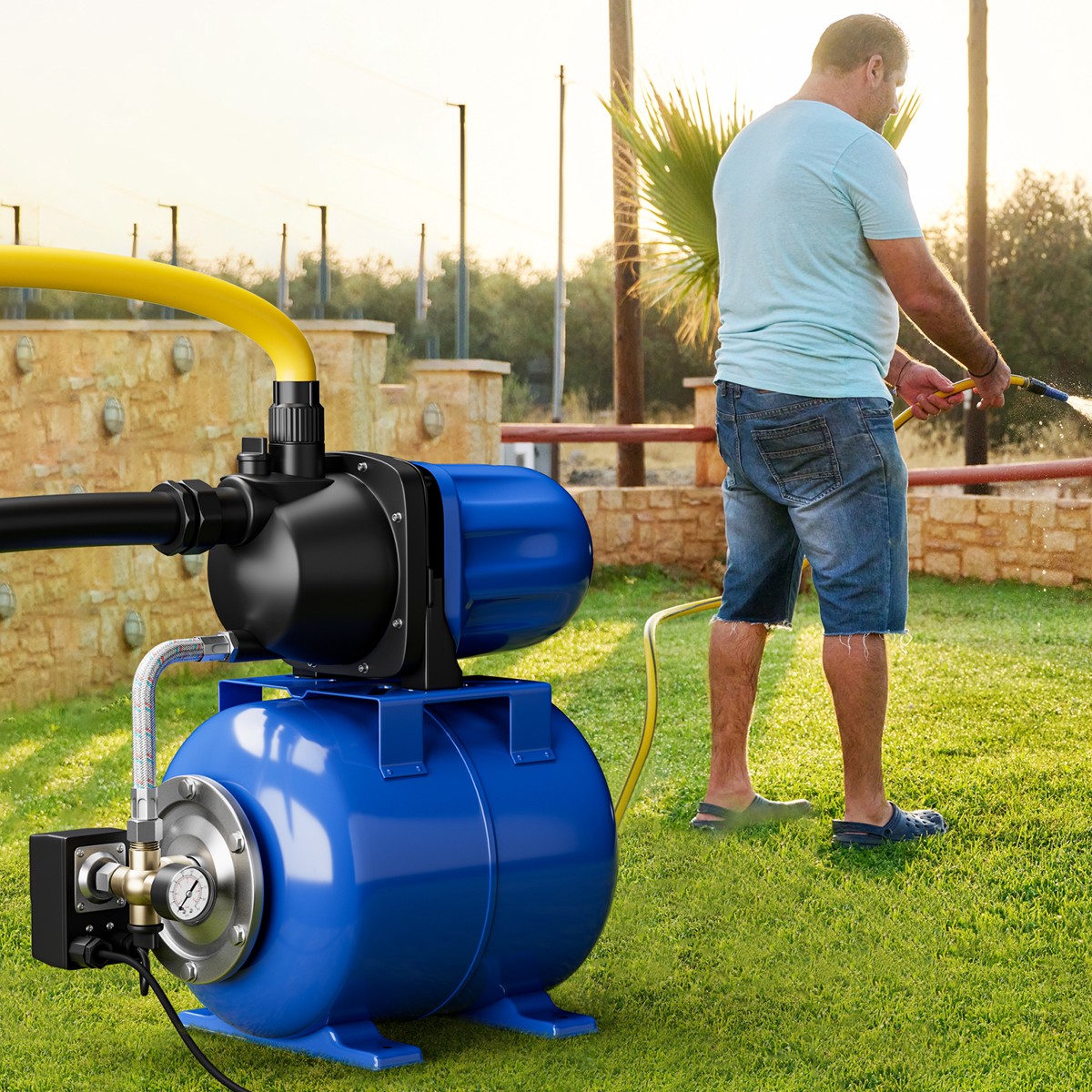

Photos from current listings. Actual item, color, and included accessories may vary.
Water Pump Buying Guide
Water pumps for irrigation range from tiny solar fountain circulators to shallow-well jet boosters, and the decisive split is between low-voltage decorative pumps and line-powered pressure pumps rated for continuous duty. Buyers must match pump type (jet, centrifugal, submersible, solar) to the water source and required pressure/flow, then size HP, voltage, and port diameter to the sprinkler zone demand. A durable irrigation pump uses cast-iron or stainless wet ends, thermal overload protection, and NPT ports; plastic-bodied decorative pumps are only for fountains and small features.
Key takeaways
- Shallow-well jet pumps typically pair 0.5–1.5 HP motors with a 1-1/4" NPT inlet and 1" NPT outlet, delivering 40–70 GPM at 20–40 PSI for 1–4 sprinkler zones.
- Dual-voltage 115/230 V pumps must be wired to the correct line voltage; a 1.5 HP jet pump draws roughly 12–15 A at 115 V versus 6–8 A at 230 V, affecting breaker and wire gauge.
- Solar fountain pumps use 6–10 W PV panels with built-in battery backup and IP68 submersible motors; they circulate 50–200 GPH at low head and cannot pressurize irrigation lines.
At a glance
- Category
- Watering & Irrigation
- Last updated
- Nov 28, 2026
Current offers
Highlights
- Shallow-well jet pumps typically pair 0.5–1.5 HP motors with a 1-1/4" NPT inlet and 1" NPT outlet, delivering 40–70 GPM at 20–40 PSI for 1–4 sprinkler zones.
- Dual-voltage 115/230 V pumps must be wired to the correct line voltage; a 1.5 HP jet pump draws roughly 12–15 A at 115 V versus 6–8 A at 230 V, affecting breaker and wire gauge.
- Solar fountain pumps use 6–10 W PV panels with built-in battery backup and IP68 submersible motors; they circulate 50–200 GPH at low head and cannot pressurize irrigation lines.
- Cast-iron or stainless-steel pump housings resist corrosion and heat better than plastic; plastic wet ends are limited to clean water, low pressure, and intermittent duty.
Best use cases
- Best fit: a 1.5 HP cast-iron shallow-well jet pump (115/230 V, 1" outlet) for pulling from a lake, cistern, or shallow well to feed 2–4 pop-up sprinkler zones; skip solar fountain pumps for this duty.
- Best fit: a 1200 W garden booster pump for boosting low household pressure to drip or soaker lines; choose a jet or centrifugal booster with 1" NPT ports, not a submersible fountain pump.
- Best fit: a 6 W solar fountain pump with battery backup for a birdbath or patio water feature up to 9.84 ft cable run; wrong fit for any pressurized irrigation or long hose run.
- Wrong fit: using a decorative solar pump to drive sprinklers—its flow and head are far below the 10–20 PSI and 10+ GPM a single sprinkler zone needs.
Buying tips
- Size HP to zone count: 0.5 HP for 1–2 zones, 1 HP for 2–3 zones, 1.5 HP for 3–4 zones at 30–40 PSI; add 10 PSI per 10 ft of lift from the water source.
- Match port diameter to plumbing: 1-1/4" NPT inlet and 1" NPT outlet is the shallow-well jet standard; reducing to 3/4" hose threads cuts flow and should be avoided on irrigation mains.
- Choose dual-voltage 115/230 V motors only if the breaker and wire support the selected voltage; 230 V halves amperage and is preferred for 1.5 HP continuous runs.
- For fountains, pick IP68 submersible pumps with battery backup and LED only for features under 3 ft head; confirm panel wattage and cable length cover the spray height you need.
Specs
| Pump Type | Jet / Booster / Submersible / Solar |
|---|---|
| Power Class | 6–1200 W solar; 0.5–1.5 HP line |
| Voltage | 115/230 V AC or 6–10 W PV |
| Port / Outlet | 1-1/4" NPT in / 1" NPT out |
Related searches
What to check before buying
- Measure static water level and lift height from source to pump; shallow-well jet pumps are limited to about 25 ft suction lift.
- Confirm the electrical circuit: 115 V needs a 15–20 A GFCI breaker; 230 V needs a dedicated double-pole breaker and correct wire gauge for the run.
- Verify sprinkler zone demand in GPM and PSI, and ensure pump curve exceeds total zone flow at the required pressure.
- Check plumbing thread standard (NPT vs hose thread) and plan adapters; confirm the pump location is dry, ventilated, and above flood level.
FAQ
Data sources: eBay / Amazon listings and product attribute feeds. Updated Nov 28, 2026.
Some links on this page are affiliate links. If you buy after clicking one, we may earn a commission at no extra cost to you. This does not change which products appear here or their order. Affiliate disclosure.