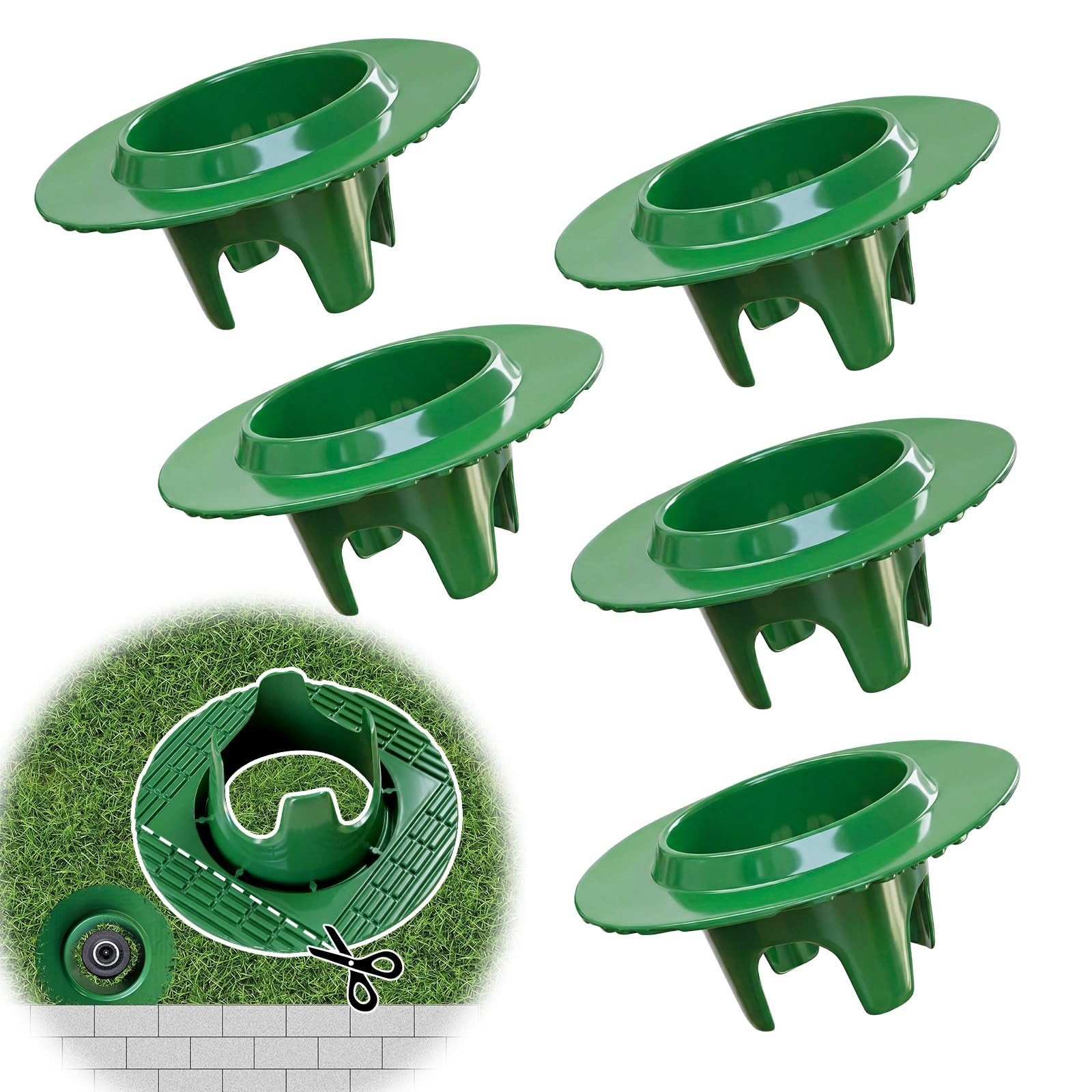

Photos from current listings. Actual item, color, and included accessories may vary.
Sprinkler Head With Drip Line Buying Guide
Shoppers searching for a sprinkler head with drip line are usually trying to replace a single zone's spray head with a drip emitter without running a second valve or trench. The right pick depends on whether you need a simple threaded adapter for a pop-up body or a full conversion kit with pressure regulation and filtration. Most failures come from skipping the pressure regulator or mismatching thread standards, not from the drip tubing itself.
Key takeaways
- Pop-up conversion kits thread onto standard 1/2-inch NPT risers and replace the spray nozzle with a drip adapter, keeping the existing zone valve and solenoid.
- Pressure-compensating drip emitters regulate flow between roughly 15 and 50 PSI, while non-compensated drip line varies output with pressure and runs unevenly on long runs.
- A 200-mesh filter or equivalent is required upstream of drip tubing to prevent clogging; many kits include a screen washer but full filtration is separate.
At a glance
- Category
- Watering & Irrigation
- Last updated
- Nov 28, 2026
Current offers
Highlights
- Pop-up conversion kits thread onto standard 1/2-inch NPT risers and replace the spray nozzle with a drip adapter, keeping the existing zone valve and solenoid.
- Pressure-compensating drip emitters regulate flow between roughly 15 and 50 PSI, while non-compensated drip line varies output with pressure and runs unevenly on long runs.
- A 200-mesh filter or equivalent is required upstream of drip tubing to prevent clogging; many kits include a screen washer but full filtration is separate.
- Thread standards differ: 1/2-inch NPT is common in North America, while 3/4-inch GHT and metric threads appear on hose-end and imported fittings and will leak if forced.
Best use cases
- Best fit: converting one pop-up spray zone to drip for a flower bed or foundation planting — choose a kit with a 1/2-inch NPT threaded adapter, 25-PSI regulator, and 200-mesh filter.
- Best fit: replacing a single broken sprinkler head with a drip line feed for a raised bed — pick a head-to-drip adapter with a barbed outlet sized to your tubing (typically 1/4-inch or 1/2-inch).
- Wrong fit: replacing an entire multi-zone lawn irrigation system with drip — skip head-by-head conversions and use a dedicated drip zone with its own valve, regulator, and filter.
- Wrong fit: using a drip adapter on a hose-end sprinkler without a pressure regulator — household hose pressure often exceeds 60 PSI and will blow fittings or distort non-compensated emitters.
Buying tips
- Check the riser thread first: most pop-up bodies use 1/2-inch NPT male threads, while hose faucets use 3/4-inch GHT; adapters are not interchangeable without a threaded bushing.
- Prioritize pressure-compensating emitters or a 25-PSI inline regulator when supply pressure is unknown, since uncompensated drip line runs unevenly above 40 PSI.
- Avoid kits without a filter or screen washer if your water source is well or municipal with sediment; 200-mesh filtration is the practical minimum for 1/4-inch drip tubing.
- Choose barbed or compression fittings based on tubing wall thickness: thin-wall 1/4-inch tubing works with barbed connectors, while thick-wall or 1/2-inch line needs compression or clamp fittings.
Specs
| Riser Thread | 1/2 in NPT vs 3/4 in GHT |
|---|---|
| Pressure Regulation | 25 PSI inline vs unregulated |
| Emitter Type | Pressure-compensating vs turbulent |
| Filtration | 200-mesh screen minimum |
Related searches
What to check before buying
- Measure the existing sprinkler body's riser height and thread diameter before ordering an adapter, since 1/2-inch NPT and 3/4-inch GHT are visually similar but not compatible.
- Confirm the zone's static water pressure with a gauge; anything above 50 PSI needs a regulator before the drip line to protect emitters and fittings.
- Count the total drip emitter flow for the zone and compare it to the valve's flow rate — a single pop-up zone typically supports 10-20 emitters at 0.5-1 GPH each.
- Verify the tubing outer diameter matches your fittings: 1/4-inch drip line is nominal OD, and 1/2-inch line is nominal OD, so measure before mixing brands.
FAQ
Data sources: eBay / Amazon listings and product attribute feeds. Updated Nov 28, 2026.
Some links on this page are affiliate links. If you buy after clicking one, we may earn a commission at no extra cost to you. This does not change which products appear here or their order. Affiliate disclosure.