
Photos from current listings. Actual item, color, and included accessories may vary.
Smart Sprinkler Timer Buying Guide
A smart sprinkler timer is a Wi-Fi or RF-connected controller that automates hose faucets or in-ground zones, trading upfront cost for water savings and remote scheduling. The primary trade-off is wireless protocol and zone count against valve quality and weatherproofing. Buyers should choose a timer with a gateway-backed RF or direct Wi-Fi link rated for outdoor temperatures, and skip standalone Bluetooth-only units for unattended watering.
Median $65.00
Key takeaways
- Direct Wi-Fi timers connect to a 2.4 GHz router without a hub, while RF gateway kits use a separate bridge for longer range and lower battery drain on the valve unit.
- Zone count dictates valve hardware: 1-2 zone hose timers typically use a single solenoid, while 3-4 zone models add independent latching valves and require higher water pressure.
- IP54 or better weatherproofing with UV-stabilized ABS plastic is the baseline for year-round outdoor mounting; indoor-only plastic housings crack below freezing.
At a glance
- Category
- Watering & Irrigation
- Last updated
- Nov 28, 2026
Current offers
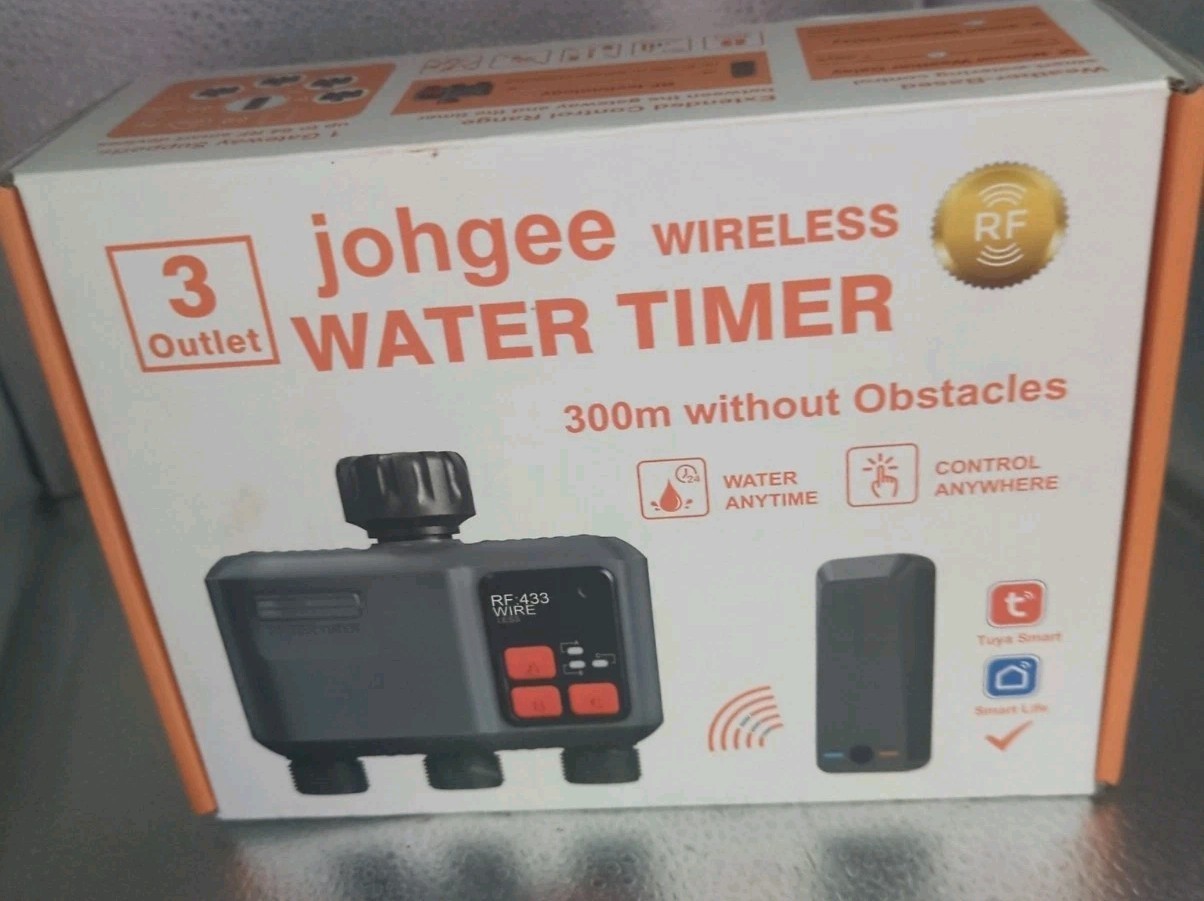 WiFi Sprinkler Timer 3 Zone with 984 Feet RF Gateway, 3 Outlet Smart Water Timer$64.00Last checked Nov 22, 2026View on eBay
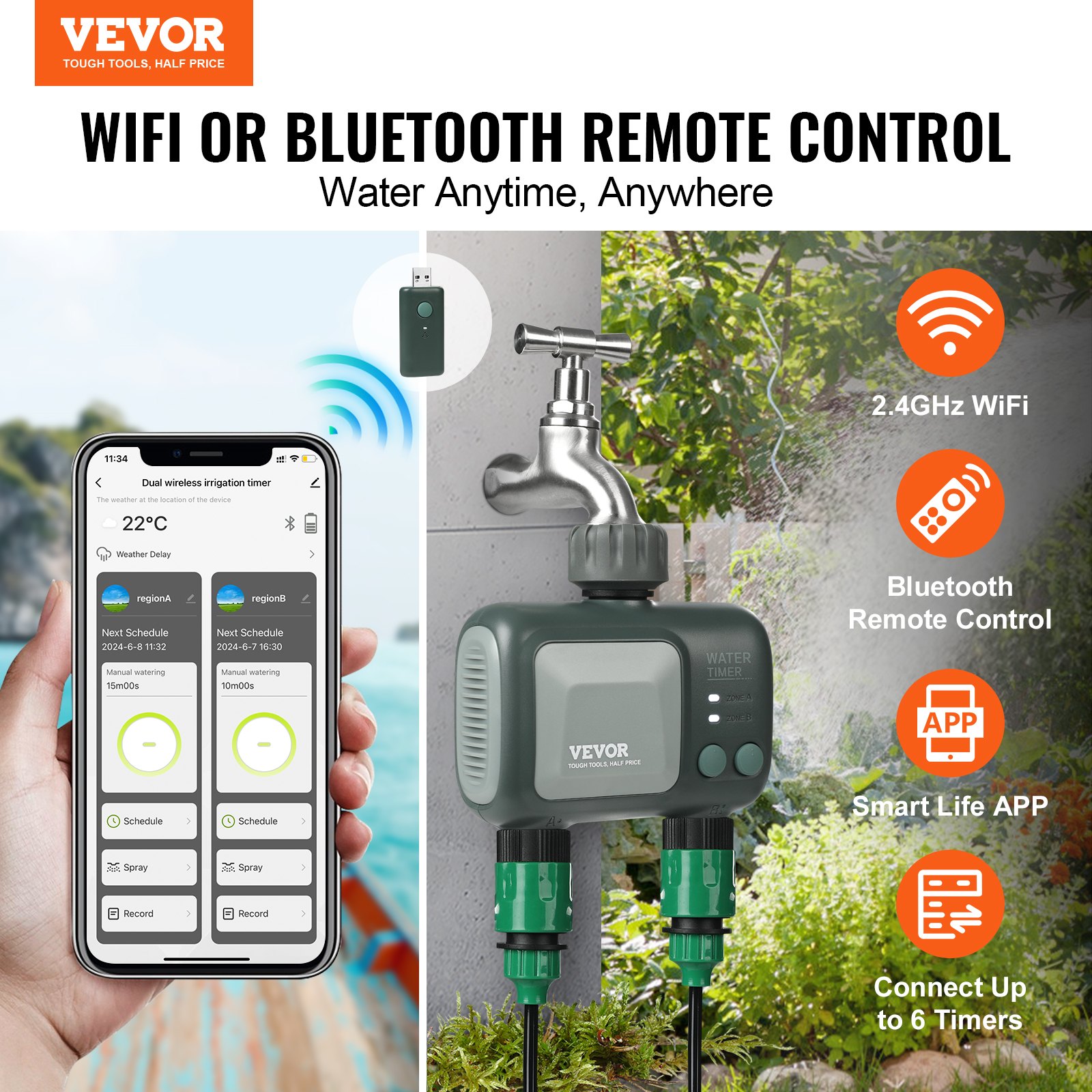 WiFi Sprinkler Timer, 2 Outlets, Smart Hose Faucet Water With Brass Inlet, APP Control Via 2.4Ghz Or Bluetooth, Voice Alexa And Google Assistant, IPX6 For Yard Watering$65.99View on Mallflare
Highlights
- Direct Wi-Fi timers connect to a 2.4 GHz router without a hub, while RF gateway kits use a separate bridge for longer range and lower battery drain on the valve unit.
- Zone count dictates valve hardware: 1-2 zone hose timers typically use a single solenoid, while 3-4 zone models add independent latching valves and require higher water pressure.
- IP54 or better weatherproofing with UV-stabilized ABS plastic is the baseline for year-round outdoor mounting; indoor-only plastic housings crack below freezing.
- Latching solenoid valves draw power only during state changes, extending battery life to a full season, whereas non-latching valves drain cells in weeks.
Best use cases
- Best fit: a 3-zone RF gateway kit for a yard with separate hose bibs—mount the gateway indoors and place valve units up to 984 feet away. Skip direct Wi-Fi if your router is far from the faucet.
- Best fit: a single-outlet Wi-Fi hose timer for a balcony or small raised bed where one drip line covers all plants. Skip multi-zone models that add unused valves and pressure drop.
- Wrong fit: Bluetooth-only timers for vacation watering—they need a phone nearby and cannot run schedules autonomously. Choose Wi-Fi or RF with onboard scheduling instead.
- Best fit: an in-ground controller with master valve and rain-sensor terminals for full-yard irrigation. Hose timers are not a substitute for 24V AC valve systems.
Buying tips
- Match zone count to actual independent watering groups: each zone needs its own valve and schedule, so a 3-zone timer with two unused valves wastes pressure and money.
- Confirm your faucet thread: most hose timers use 3/4-inch GHT, while some outdoor taps are 1/2-inch BSP—use an adapter rather than forcing the plastic collar.
- Check wireless range realistically: RF gateway kits claim open-air range, but walls cut it by half; place the gateway within 30 feet of the valves through one exterior wall.
- Prefer latching solenoid valves and a rain-delay feature; non-latching valves and no rain sensor are the two biggest causes of water waste and dead batteries.
Specs
| Connectivity | Wi-Fi 2.4 GHz / RF gateway / Bluetooth |
|---|---|
| Zone Count | 1-4 independent hose or tap zones |
| Valve Type | Latching vs non-latching solenoid |
| Weather Rating | IP54+ outdoor UV-stabilized plastic |
Related searches
What to check before buying
- Measure your faucet height and clearance: a timer body adds 3-5 inches below the spout, so a low tap may need an angled adapter to avoid ground contact.
- Verify outdoor temperature range: the unit must be rated below your winter minimum or removed; plastic housings crack at freezing if water remains inside.
- Count independent watering zones and total flow: add up drip emitters or sprinkler GPM and stay under the timer's rated flow, typically 5-10 GPM for hose units.
- Confirm power and plug standard: battery models use AA or 9V cells, while AC adapters require a nearby outdoor GFCI outlet—never run a standard indoor adapter unprotected.
FAQ
Data sources: eBay / Amazon listings and product attribute feeds. Updated Nov 28, 2026.
Some links on this page are affiliate links. If you buy after clicking one, we may earn a commission at no extra cost to you. This does not change which products appear here or their order. Affiliate disclosure.