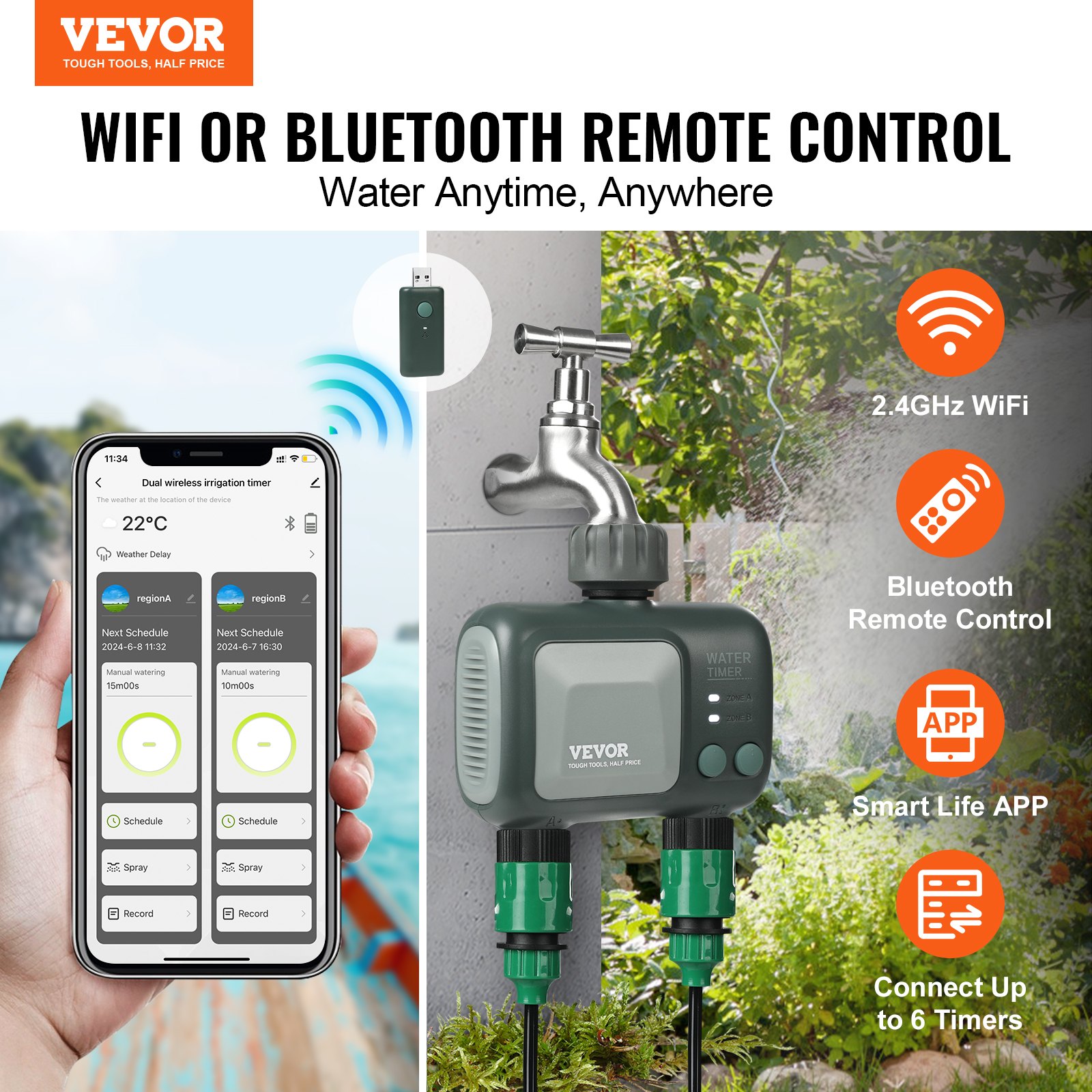

Photos from current listings. Actual item, color, and included accessories may vary.
Smart Hose Timer Buying Guide
A smart hose timer is a battery-powered valve controller that automates drip lines, soaker hoses, and sprinklers via app schedules, weather skips, and flow monitoring. The core trade-off is valve construction and wireless protocol versus app ecosystem lock-in: brass or reinforced nylon valves with Zigbee, Wi-Fi, or Bluetooth determine durability and range. Buy a timer with a manual override, a standard 3/4-inch GHT connection, and a weatherproof IP54+ rating; skip any unit with an unserviceable solenoid or proprietary non-replaceable battery.
Key takeaways
- Valve material splits tiers: brass or glass-reinforced nylon resists UV and freeze cycling; ABS plastic valves crack at the inlet threads after one hard frost.
- Wireless protocol dictates hub needs: Wi-Fi timers connect directly to the router; Zigbee/Bluetooth models require a bridge or phone proximity for scheduling and firmware updates.
- Battery architecture matters: four AA alkaline cells last a full season on one or two zones; built-in lithium packs degrade and often cannot be user-replaced.
At a glance
- Category
- Watering & Irrigation
- Last updated
- Nov 28, 2026
Current offers
Highlights
- Valve material splits tiers: brass or glass-reinforced nylon resists UV and freeze cycling; ABS plastic valves crack at the inlet threads after one hard frost.
- Wireless protocol dictates hub needs: Wi-Fi timers connect directly to the router; Zigbee/Bluetooth models require a bridge or phone proximity for scheduling and firmware updates.
- Battery architecture matters: four AA alkaline cells last a full season on one or two zones; built-in lithium packs degrade and often cannot be user-replaced.
- Flow and rain sensing separate smart from dumb: integrated flow meters detect burst lines and auto-shutoff; rain sensors or local weather API skips prevent overwatering.
Best use cases
- Best fit: a single hose bib feeding a drip-line vegetable bed — choose a one-zone Wi-Fi timer with a manual override and IP54 rating; skip multi-zone units that waste battery on unused valves.
- Best fit: two or three separate hose runs (lawn sprinkler, soaker hose, patio drip) — pick a multi-zone timer with independent schedules and a flow meter to catch a blown emitter.
- Best fit: a community garden or rental with no Wi-Fi at the bib — select a Bluetooth timer with onboard memory and a physical rain-delay button; skip cloud-only models that fail without a phone nearby.
- Wrong fit: winter freezing climates without removal — any timer left connected below 32°F risks valve cracking; choose a model with a removable valve cartridge and store it indoors, or skip smart timers entirely.
Buying tips
- Match the thread: all standard outdoor hose bibs use 3/4-inch GHT; verify the timer includes both female inlet and male outlet GHT swivels — metric or NPT adapters leak.
- Count zones before buying: one valve handles one hose run; a 4-zone timer costs more but avoids daisy-chaining Y-splitters that drop pressure below 20 PSI.
- Check the wireless spec: Wi-Fi 2.4 GHz only (not 5 GHz) for direct router pairing; Zigbee 3.0 or Bluetooth 5.0 for hub-based or local control; range drops through brick walls by half.
- Require a manual override and rain delay: any timer without a physical button to run a cycle or pause for 24-72 hours forces app use and fails during outages.
Specs
| Valve Material | Brass vs glass-reinforced nylon vs ABS |
|---|---|
| Wireless Protocol | Wi-Fi 2.4 GHz / Bluetooth / Zigbee |
| Zone Count | 1-4 independent hose outlets |
| Battery Type | 4x AA alkaline vs sealed lithium |
Related searches
What to check before buying
- Measure the hose bib height and clearance: timers add 3-5 inches below the faucet; ensure the unit does not hit the ground or a downspout.
- Confirm water pressure: most smart timers rate 10-100 PSI; household static pressure above 80 PSI needs a pressure-reducing valve or the solenoid will chatter.
- Check the Wi-Fi signal at the bib with a phone: 2.4 GHz RSSI stronger than -70 dBm is required for reliable Wi-Fi scheduling; weaker needs a Zigbee hub or Bluetooth local control.
- Verify battery type and count: four AA alkaline cells are field-replaceable and last a season; sealed lithium packs require factory service and are a long-term failure point.
FAQ
Data sources: eBay / Amazon listings and product attribute feeds. Updated Nov 28, 2026.
Some links on this page are affiliate links. If you buy after clicking one, we may earn a commission at no extra cost to you. This does not change which products appear here or their order. Affiliate disclosure.