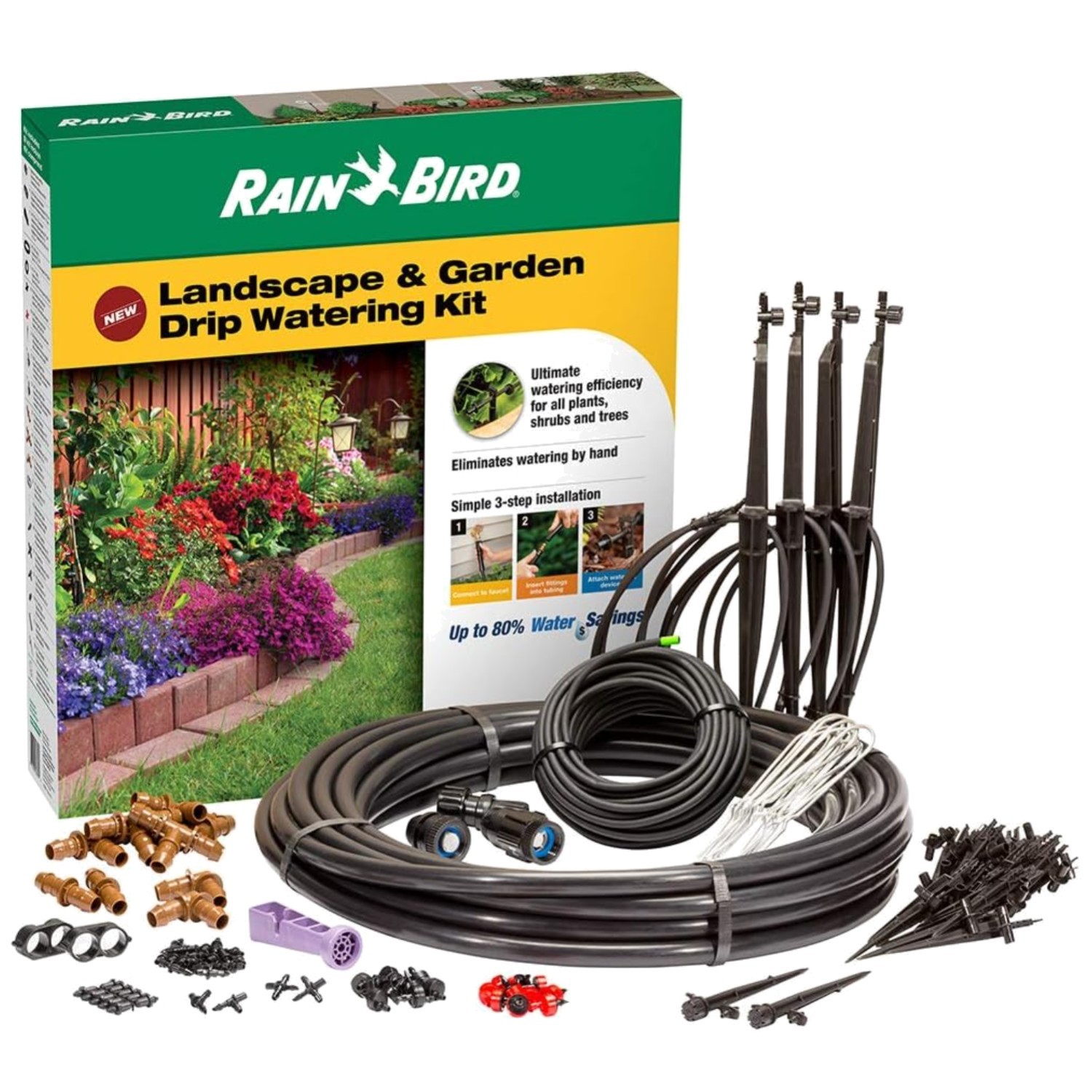

Photos from current listings. Actual item, color, and included accessories may vary.
Rain Bird Drip Irrigation Buying Guide
Rain Bird drip irrigation is a modular low-flow watering system built around 1/2-inch polyethylene distribution tubing, 1/4-inch micro-tubing, and pressure-compensating or turbulent-flow emitters. The core trade-off is between pre-assembled kits with fixed emitter spacing and custom layouts using bulk tubing and individual emitters, which determine whether you can match precise plant water needs or accept uniform coverage. Choose a kit only when your bed dimensions and plant count match its included head count; otherwise buy bulk tubing and emitters to avoid choked flow and dry spots.
Key takeaways
- Rain Bird 1/2-inch distribution tubing is sized for 0.5–1.5 GPM flow; exceeding 30 PSI without a pressure regulator causes emitter blow-off and uneven watering.
- Pressure-compensating (PC) emitters maintain rated flow from 15–50 PSI, while non-PC turbulent-flow emitters vary output with pressure—PC is mandatory on slopes or long runs.
- Kits typically include 1/4-inch micro-tubing and barbed emitters at 0.5, 1, or 2 GPH; emitter spacing of 12–18 inches suits closely planted beds, 24 inches for shrubs.
At a glance
- Category
- Watering & Irrigation
- Last updated
- Nov 28, 2026
Current offers
Highlights
- Rain Bird 1/2-inch distribution tubing is sized for 0.5–1.5 GPM flow; exceeding 30 PSI without a pressure regulator causes emitter blow-off and uneven watering.
- Pressure-compensating (PC) emitters maintain rated flow from 15–50 PSI, while non-PC turbulent-flow emitters vary output with pressure—PC is mandatory on slopes or long runs.
- Kits typically include 1/4-inch micro-tubing and barbed emitters at 0.5, 1, or 2 GPH; emitter spacing of 12–18 inches suits closely planted beds, 24 inches for shrubs.
- Rain Bird hose faucet connection uses a 3/4-inch FHT adapter with a 200-mesh filter; skipping the filter clogs 1/4-inch lines within one season.
Best use cases
- Best fit: a 4 ft × 8 ft raised bed with 20–30 annuals or vegetables—pick a 108-piece kit with 1/2-inch main line and 1/4-inch micro-tubing; skip bulk emitters if plant count matches included heads.
- Wrong fit: a 50-foot row of established shrubs on a slope—skip any kit lacking pressure-compensating emitters and a 25 PSI regulator; specify PC emitters at 24-inch spacing and 1/2-inch tubing with a 200-mesh filter.
- Best fit: a patio container garden with 10–15 pots—use a kit with 1/4-inch micro-tubing and 0.5 GPH drippers; skip 1/2-inch main line beyond a 10-foot run to avoid over-pressurizing small pots.
- Wrong fit: lawn or turf coverage—drip irrigation wets only emitter points; skip Rain Bird drip for turf and use pop-up spray heads or rotors instead.
Buying tips
- Count emitters: one 1 GPH emitter per 1–2 square feet of bed; for a 32-square-foot bed, buy 16–32 emitters—kits with 108 pieces suit 50–100 square feet only.
- Match tubing length to flow: 1/2-inch tubing carries up to 200 feet at 1 GPM; beyond 200 feet, split into two zones or upsize to 3/4-inch main line.
- Specify pressure-compensating emitters if your faucet exceeds 30 PSI or your run has elevation change over 3 feet; non-PC emitters are acceptable only on flat, short runs under 30 feet.
- Use a 200-mesh filter and a 25 PSI pressure regulator at the faucet; Rain Bird kits often omit the regulator—buy it separately to protect emitters and extend system life.
Specs
| Emitter Type | Pressure-compensating vs turbulent-flow |
|---|---|
| Tubing Size | 1/2-in main / 1/4-in micro |
| Flow Rate | 0.5–2 GPH per emitter |
| Filtration | 200-mesh filter required |
Related searches
What to check before buying
- Measure your planting bed length and width, then calculate square footage—kits are sized by included emitter count, not bed area, so verify the kit covers your plant count.
- Test your outdoor faucet pressure with a gauge; if above 30 PSI, add a 25 PSI regulator before connecting any drip kit.
- Confirm your faucet is a standard 3/4-inch hose thread (FHT); Rain Bird kits use FHT adapters, and indoor or metric faucets require an adapter.
- Check your water source for sediment—well water or unfiltered municipal supply needs a 200-mesh filter to prevent 1/4-inch emitter clogging.
FAQ
Data sources: eBay / Amazon listings and product attribute feeds. Updated Nov 28, 2026.
Some links on this page are affiliate links. If you buy after clicking one, we may earn a commission at no extra cost to you. This does not change which products appear here or their order. Affiliate disclosure.