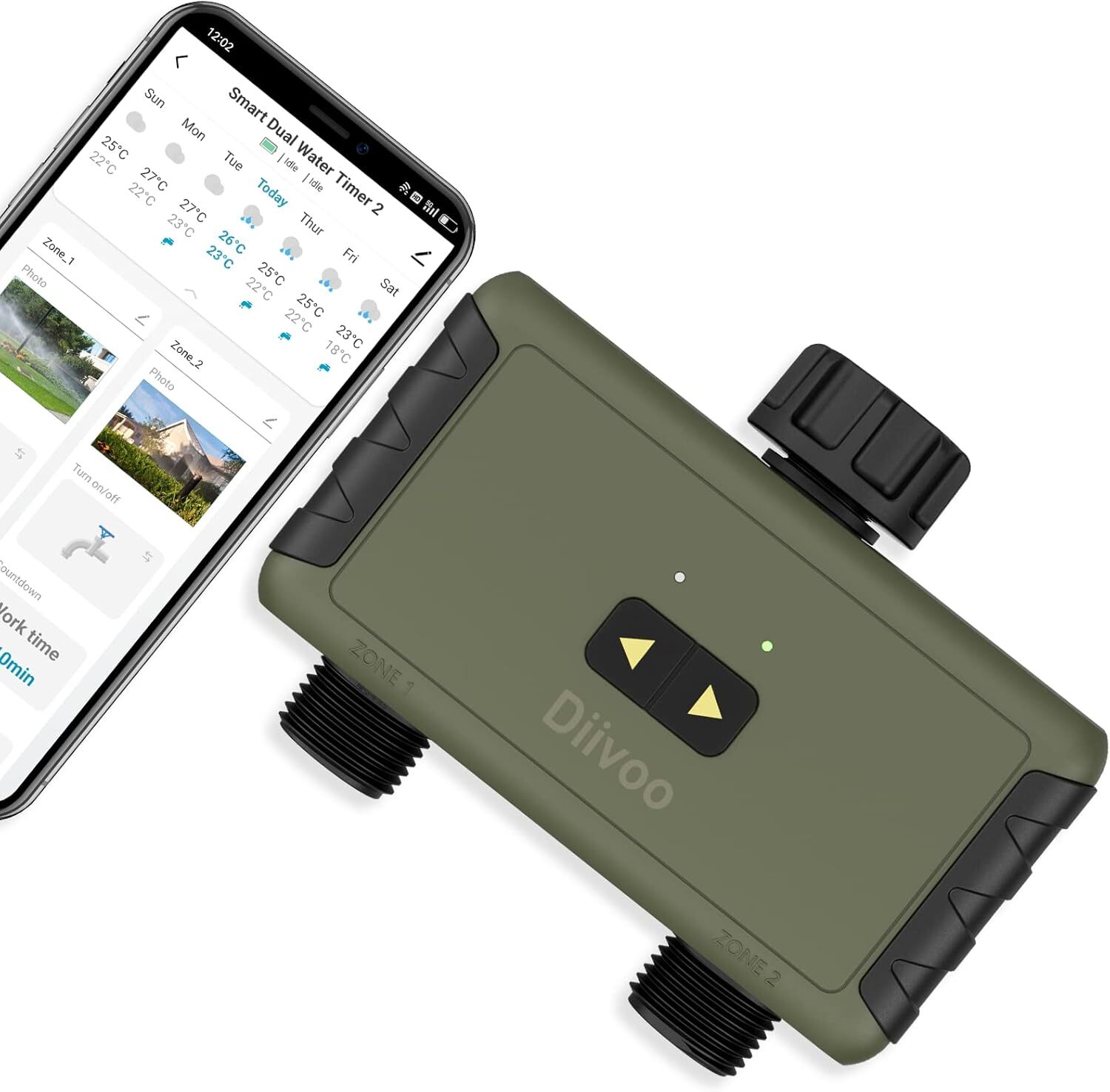

Photos from current listings. Actual item, color, and included accessories may vary.
Outdoor Sprinkler Timer Buying Guide
An outdoor sprinkler timer is a weather-rated valve controller that automates hose or drip-zone watering, and the core trade-off is valve architecture versus programmability: durable brass or reinforced-plastic solenoid valves with a real rain sensor port outlast cheap single-valve timers with fixed schedules. The decision rule is simple—buy a timer with a replaceable solenoid valve, a manual bypass, and at least two independent zones if you water more than one bed; skip any sealed one-piece unit with no sensor input.
Key takeaways
- Valve architecture separates tiers: brass-bodied solenoid valves with replaceable diaphragms last many seasons, while sealed ABS/plastic units crack at the inlet thread and cannot be serviced.
- Zone count defines real capability: 1-zone timers run a single hose bib; 2-4 zone timers use independent solenoid valves so beds with different sun exposure get separate run times.
- Rain-delay and sensor support matters: a wired rain-sensor port or adjustable 24-72 hour rain delay prevents overwatering, while fixed-schedule timers without sensor input keep watering through storms.
At a glance
- Category
- Watering & Irrigation
- Last updated
- Nov 28, 2026
Current offers
Highlights
- Valve architecture separates tiers: brass-bodied solenoid valves with replaceable diaphragms last many seasons, while sealed ABS/plastic units crack at the inlet thread and cannot be serviced.
- Zone count defines real capability: 1-zone timers run a single hose bib; 2-4 zone timers use independent solenoid valves so beds with different sun exposure get separate run times.
- Rain-delay and sensor support matters: a wired rain-sensor port or adjustable 24-72 hour rain delay prevents overwatering, while fixed-schedule timers without sensor input keep watering through storms.
- Power and valve type must match: battery-operated DC latching solenoids suit hose-end timers, while AC-powered timers with 24V solenoids are for permanent in-ground manifold installations.
Best use cases
- Best fit: a 2-zone battery hose timer with rain delay for a patio, raised beds, and a small lawn strip—pick it when spigots are few and trenching is impractical.
- Best fit: an AC-powered multi-zone controller wired to 24V in-ground valves for full-yard drip and pop-up zones—choose this when you have a valve manifold and need season-long programming.
- Wrong fit: a sealed single-outlet plastic timer on a high-pressure line or with a metal quick-connect—skip it; the inlet thread is the first failure point.
- Wrong fit: a rain-sensor-capable timer with no sensor installed, used in a rainy climate—skip the sensor port and buy a unit with an integrated rain-delay dial instead.
Buying tips
- Match thread standard: outdoor hose timers use 3/4-inch NH (garden hose) threads; in-ground controllers use 1-inch NPT manifold threads—adapters leak, so buy the native standard.
- Size zone count to actual beds: one valve per hydrozone (sun/shade, drip/lawn); two zones minimum for a mixed garden, four if you run separate drip and sprinkler circuits.
- Confirm power tier: battery timers run 1-2 seasons per set of alkaline cells, AC timers need a nearby GFCI outlet, and solar hybrids need direct sun on the panel—pick the power source your site supports.
Specs
| Zone Count | 1-4 independent valve zones |
|---|---|
| Valve Type | DC latching (hose) / 24V AC (in-ground) |
| Thread Standard | 3/4 in NH hose / 1 in NPT manifold |
| Weather Rating | IP54+ UV-stabilized ABS enclosure |
Related searches
What to check before buying
- Measure spigot-to-bed distance and hose run: battery hose timers push adequate flow to about 50 feet of 5/8-inch hose; longer runs need a higher-flow valve or a mid-line booster.
- Verify water pressure: most hose timers are rated 10-120 PSI; above 120 PSI install a pressure reducer or the valve seat will fail prematurely.
- Check climate rating: outdoor units need UV-stabilized ABS and an IP54-or-better enclosure; freezing climates require draining and storing the timer for winter.
- Confirm companion parts: a rain sensor (wired or wireless per the timer's port), a backflow preventer at the spigot, and thread seal tape for all connections.
FAQ
Data sources: eBay / Amazon listings and product attribute feeds. Updated Nov 28, 2026.
Some links on this page are affiliate links. If you buy after clicking one, we may earn a commission at no extra cost to you. This does not change which products appear here or their order. Affiliate disclosure.