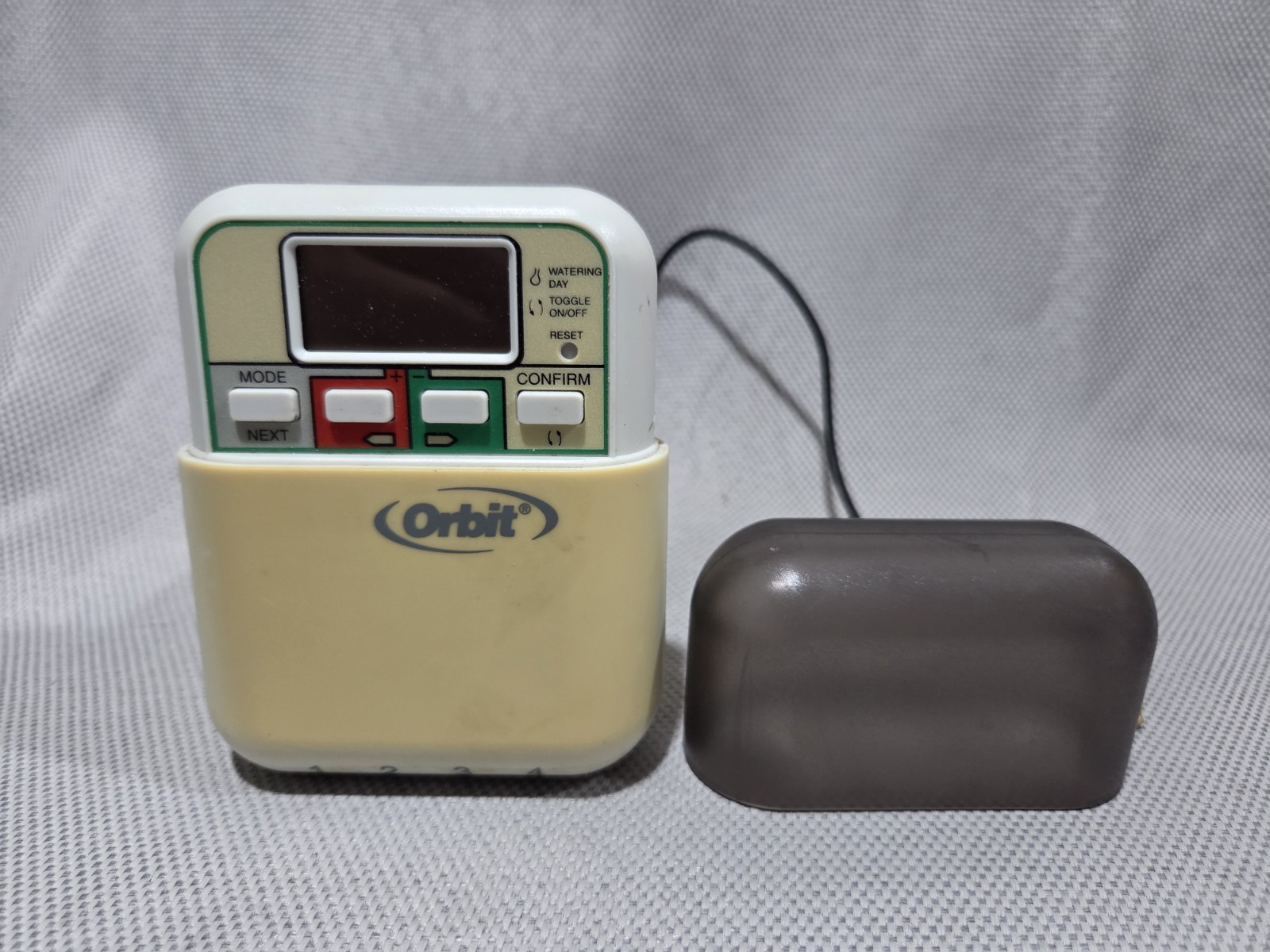

Photos from current listings. Actual item, color, and included accessories may vary.
Orbit Irrigation Timer Buying Guide
Orbit irrigation timers are hose-faucet and inline valve controllers that automate watering schedules using battery-powered digital or mechanical clockworks. The core trade-off is valve architecture and sealing quality: a solenoid-driven digital timer with a reinforced diaphragm lasts seasons, while cheap single-diaphragm mechanical units seize or leak within a year. The decision rule is simple: buy a digital timer with a replaceable solenoid or a mechanical timer with a brass-threaded inlet if you want multi-season durability; skip any unit with a permanently molded valve body.
Key takeaways
- Orbit's digital hose timers (e.g., 62032-series) use a latching solenoid and AA battery power, while mechanical models use a spring-wound clockwork with no electronics to fail.
- Hose-thread standards matter: Orbit faucet timers use 3/4-inch NH (garden hose) threads, not 1/2-inch NPT pipe threads used by inline sprinkler valves.
- Battery life scales with valve duty cycle: a latching solenoid draws power only at open/close, while non-latching solenoids drain AA cells in weeks under frequent cycles.
At a glance
- Category
- Watering & Irrigation
- Last updated
- Nov 28, 2026
Current offers
Highlights
- Orbit's digital hose timers (e.g., 62032-series) use a latching solenoid and AA battery power, while mechanical models use a spring-wound clockwork with no electronics to fail.
- Hose-thread standards matter: Orbit faucet timers use 3/4-inch NH (garden hose) threads, not 1/2-inch NPT pipe threads used by inline sprinkler valves.
- Battery life scales with valve duty cycle: a latching solenoid draws power only at open/close, while non-latching solenoids drain AA cells in weeks under frequent cycles.
Best use cases
- Best fit: a single hose bib feeding drip lines or soaker hoses on a balcony or small bed—choose a 1-zone digital hose timer with a removable solenoid cartridge and rain-delay button.
- Best fit: raised beds or greenhouse benches on a schedule—pick a multi-zone digital timer only if each zone has its own valve; otherwise a single-zone unit plus a manual manifold is cheaper and more reliable.
- Wrong fit: in-ground sprinkler systems with 24V AC valves—hose timers output no valve power; you need an inline 9V-or-24V sprinkler controller, not an Orbit faucet timer.
- Wrong fit: freezing climates without a backflow preventer or drain-down—any hose timer left connected through hard frost cracks its valve body; remove it or use a timer rated for indoor mounting.
Buying tips
- Match thread type first: measure your faucet spout—3/4-inch NH garden thread is standard for hose timers; 1/2-inch NPT requires an adapter and often leaks without thread tape.
- Choose latching-solenoid digital timers over non-latching for battery life; latching models hold valve position with a pulse, extending AA battery life to a full season or more.
- Prefer timers with a replaceable solenoid cartridge and a visible diaphragm; a torn diaphragm is the number-one failure, and repairability separates a multi-year unit from a one-season disposable.
- For multi-zone watering, count actual valves, not outlets: a timer with two hose outlets but one internal valve waters only one zone at a time—check valve count, not port count.
Specs
| Valve Type | Latching solenoid vs mechanical clock |
|---|---|
| Thread Standard | 3/4-in NH hose thread |
| Zones | 1-zone vs multi-zone (valve count) |
| Power Source | 2-4x AA alkaline / no-power mechanical |
Related searches
What to check before buying
- Measure faucet thread outer diameter: about 1 inch (25 mm) indicates 3/4-inch NH hose thread; about 0.8 inch (20 mm) indicates 1/2-inch NPT and needs an adapter.
- Confirm water pressure at the bib is between 15 and 100 PSI; most Orbit hose timers are rated to about 100 PSI and fail or leak above it—install a pressure regulator if your static pressure exceeds that.
- Check freeze exposure: hose timers are not frost-proof; plan to remove the unit or drain it before the first hard freeze in cold-climate zones.
- Verify battery type and count before buying—most digital Orbit timers take two or four AA alkaline cells, and rechargeable NiMH cells run at lower voltage and can cause valve chatter.
FAQ
Data sources: eBay / Amazon listings and product attribute feeds. Updated Nov 28, 2026.
Some links on this page are affiliate links. If you buy after clicking one, we may earn a commission at no extra cost to you. This does not change which products appear here or their order. Affiliate disclosure.