
Photos from current listings. Actual item, color, and included accessories may vary.
Lawn Sprinkler Buying Guide
A lawn sprinkler is a watering device that distributes water across turf, ranging from simple hose-end oscillating heads to in-ground pop-up zones and hose-end impact or rotary units. The core trade-off is coverage uniformity and durability versus portability and cost: stationary plastic sleds and tube sprayers are cheap but deliver uneven coverage and degrade under UV, while brass or zinc impact heads and gear-drive rotors hold pattern accuracy for years. Buy a pressure-matched, metal-bodied head with a defined coverage radius if you need even large-area watering; skip thin plastic sleds with fixed spray tubes if uniformity or multi-season durability matters.
Median $23.99
Key takeaways
- Hose-end impact and rotary heads with brass or zinc bodies resist UV and freeze damage that cracks thin plastic sleds and tube sprayers within a season or two.
- Coverage math: a head with a 30–40 ft radius covers roughly 2,800–5,000 sq ft per position, so large lawns need multiple set positions or overlapping zones, not one oversized unit.
- Gear-drive rotors deliver a single even stream with matched precipitation, while impact heads throw farther and tolerate dirty water but require adjustment of arm and diffuser for pattern.
At a glance
- Category
- Watering & Irrigation
- Last updated
- Nov 28, 2026
Current offers
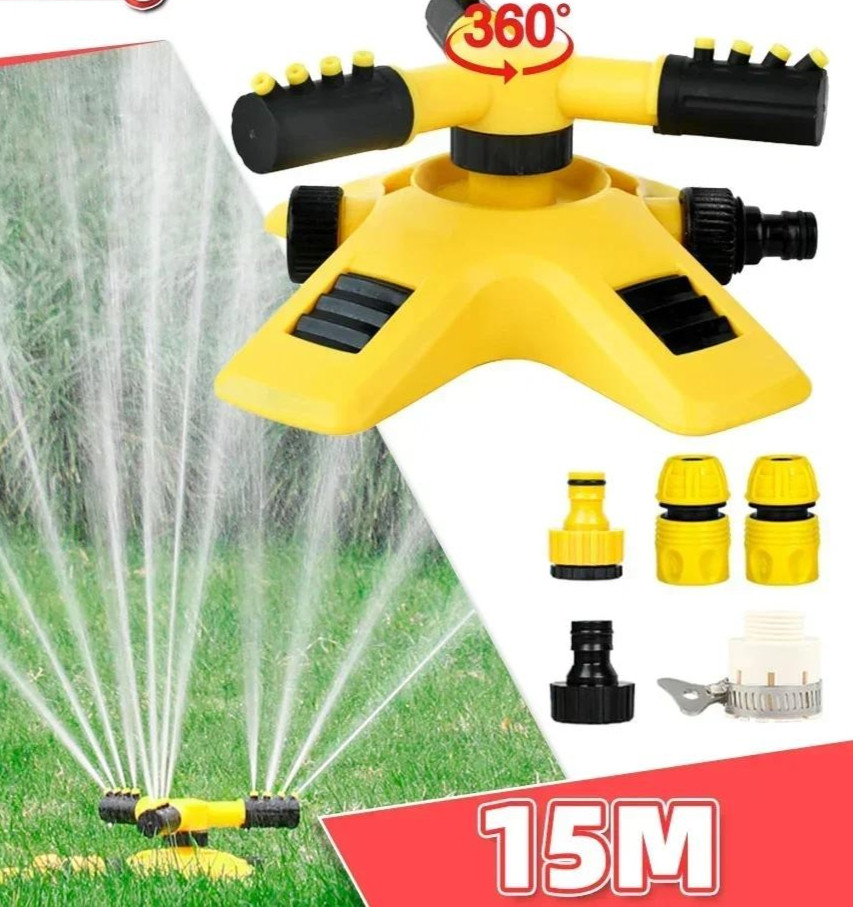 360° Auto Rotating Lawn Sprinkler Wide-area Garden Watering & Irrigation Tool$15.64Last checked Nov 23, 2026View on eBay
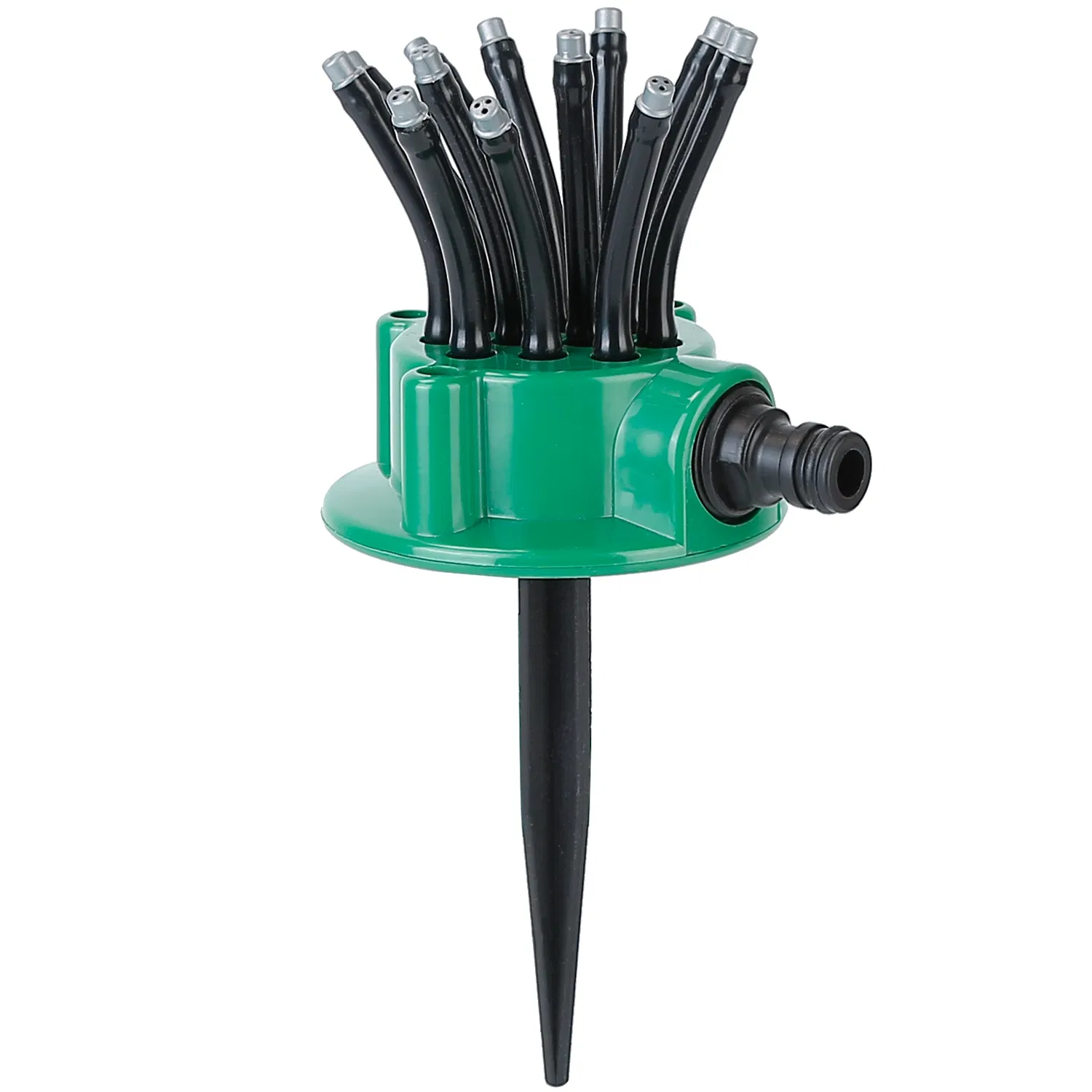 360° Flexible Lawn Sprinkler Automatic 12 Tubes Garden Water Irrigation Sprayers$23.99View on Mallflare
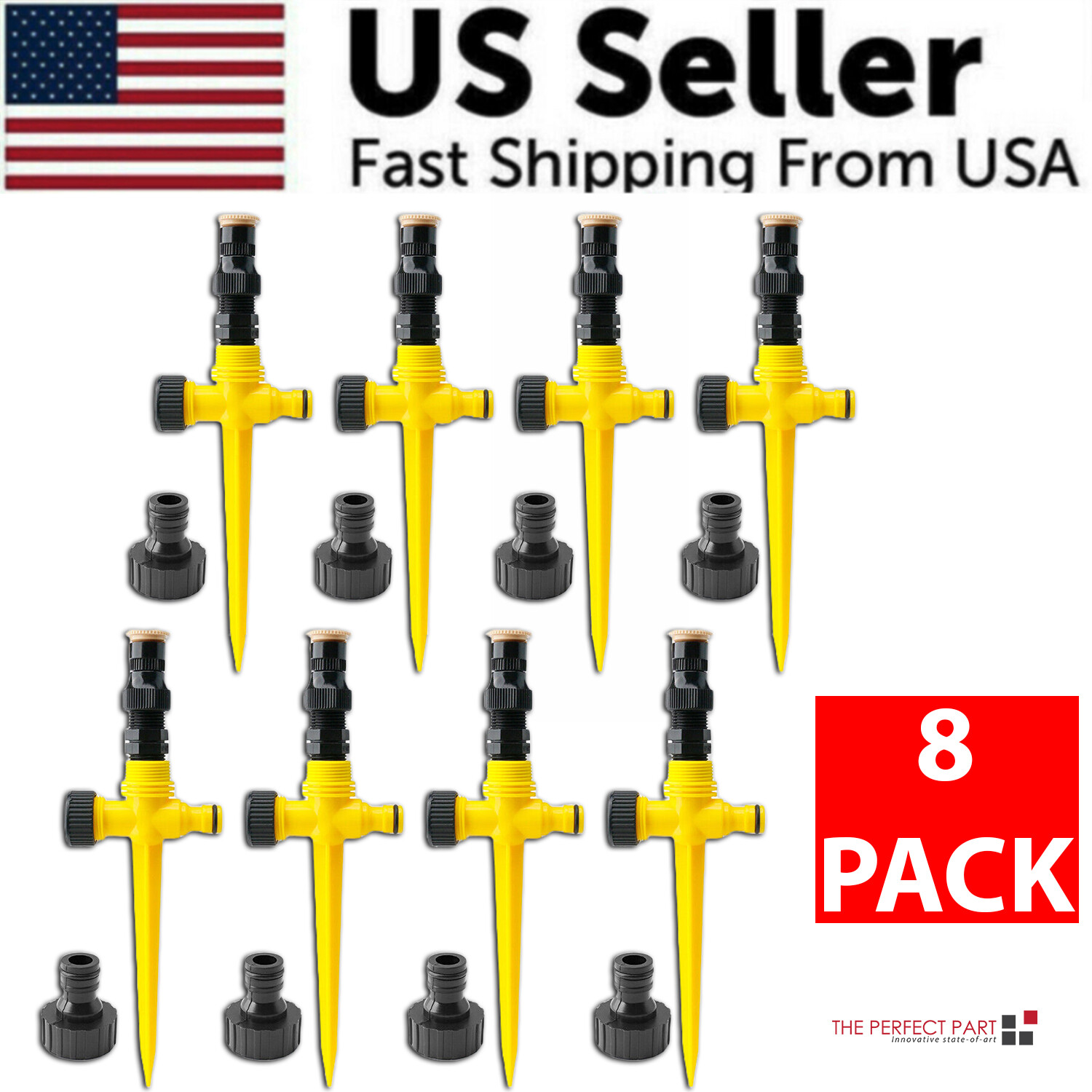 360° Rotation Auto Irrigation System Garden Lawn Sprinkler Patio Save Water USA$21.89View on eBay
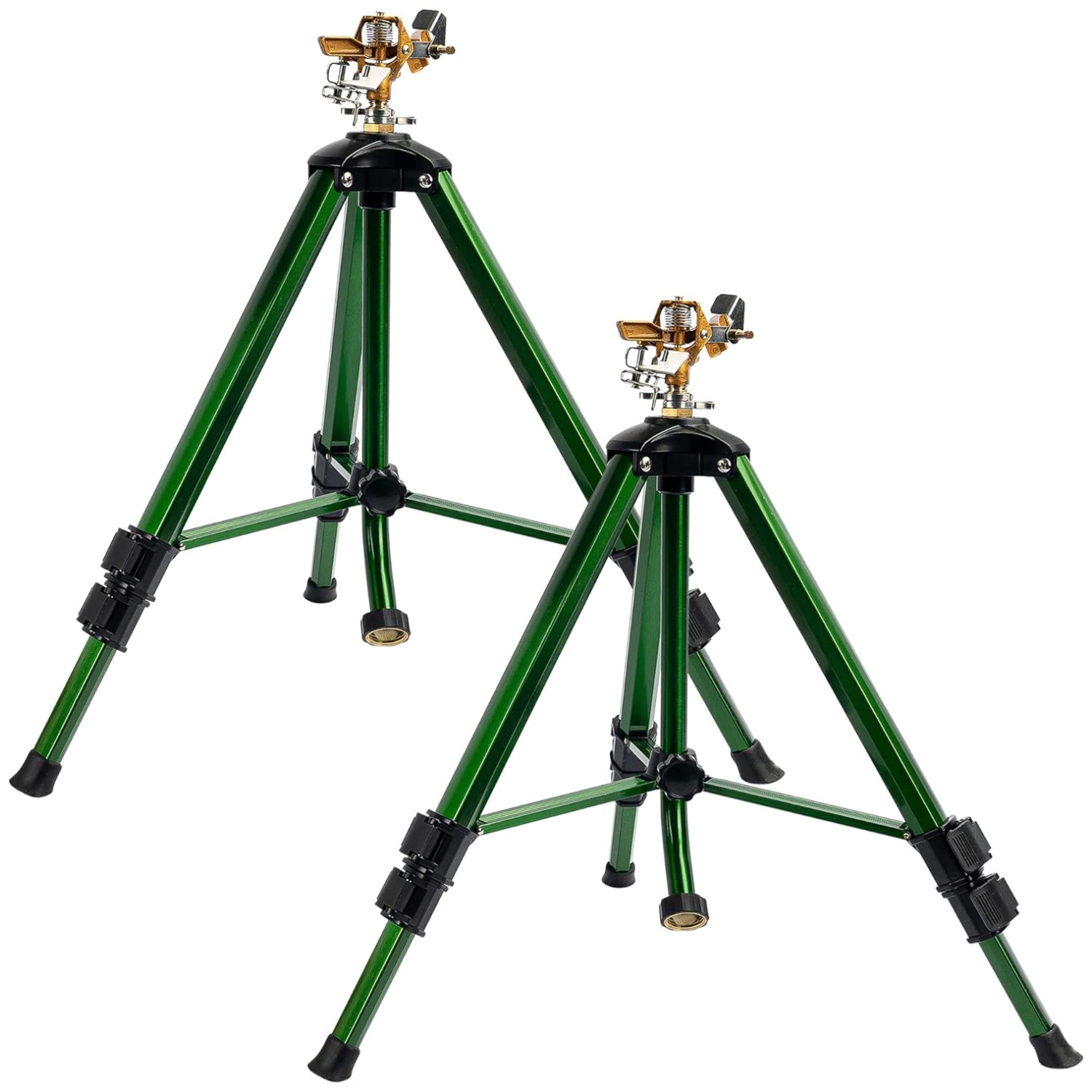 Heavy Duty Lawn Sprinklers, 2 Pack with Brass Heads$99.99Last checked Nov 24, 2026View on eBay
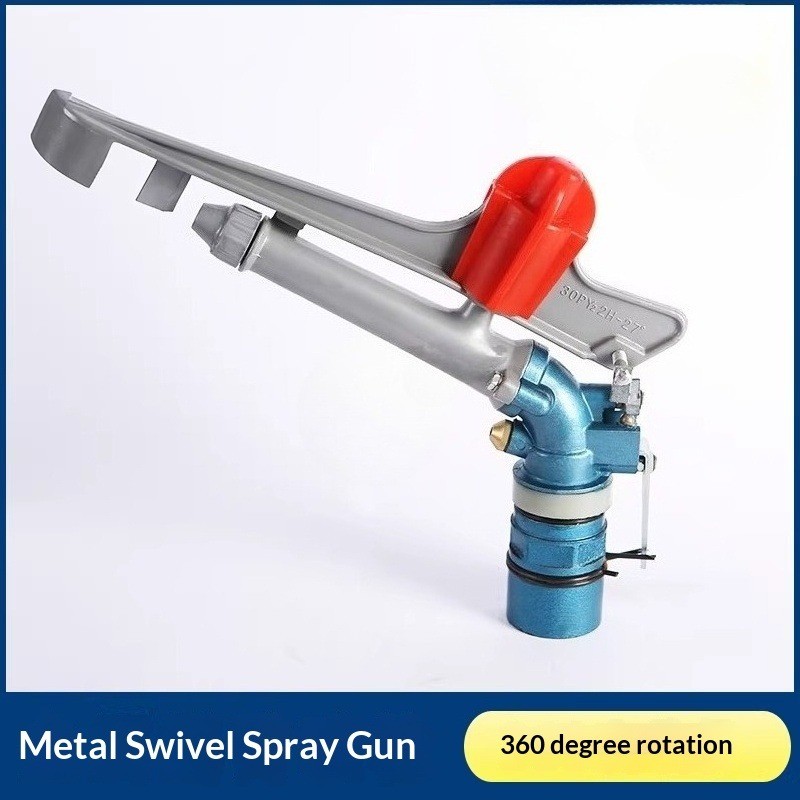 1"Alloy 360Adjustable Impact Sprinkler Gun Water Irrigation Lawn Spray Gun$137.99Last checked Nov 26, 2026View on eBay
Highlights
- Hose-end impact and rotary heads with brass or zinc bodies resist UV and freeze damage that cracks thin plastic sleds and tube sprayers within a season or two.
- Coverage math: a head with a 30–40 ft radius covers roughly 2,800–5,000 sq ft per position, so large lawns need multiple set positions or overlapping zones, not one oversized unit.
- Gear-drive rotors deliver a single even stream with matched precipitation, while impact heads throw farther and tolerate dirty water but require adjustment of arm and diffuser for pattern.
- In-ground pop-up rotors need 20–30 psi at the head and correct nozzle sizing; hose-end units run off standard 40–60 psi household spigots without a pump.
Best use cases
- Best for large open lawns: a hose-end impact or gear-drive rotor with 30–40 ft radius, moved across overlapping positions, or a multi-zone in-ground pop-up system sized to your flow rate.
- Best for small beds, slopes, and odd shapes: an adjustable oscillating or rotary hose-end head on a spike, or a soaker/drip line, because fixed 360° tube sprayers overspray paths and waste water.
- Wrong fit: a single fixed-pattern 360° tube sprinkler for a rectangular lawn — it circles and leaves corners dry; skip it unless you only need a small circular spray zone.
- Wrong fit: an in-ground pop-up system on low-pressure well water without a booster pump — heads will not pop up or throw the rated radius, so use hose-end impact heads instead.
Buying tips
- Match head type to pressure: impact heads work from about 20 psi up, gear rotors want 25–30 psi at the head, and hose-end units assume 40–60 psi household pressure.
- Size coverage by radius: a 30 ft radius covers about 2,800 sq ft; a 40 ft radius covers about 5,000 sq ft, so a 10,000 sq ft lawn needs at least two overlapping positions per zone.
- Choose metal over plastic where the unit stays outdoors: brass and zinc alloy heads and spikes survive UV and winter temperature swings that embrittle ABS and polypropylene sleds.
- For in-ground systems, confirm nozzle GPM against your supply: a standard 1/2 in. or 3/4 in. hose bib delivers roughly 8–12 GPM, which limits how many heads can run per zone.
Specs
| Sprinkler Type | Impact / rotary / oscillating / pop-up |
|---|---|
| Body Material | Brass, zinc alloy vs ABS plastic |
| Coverage Radius | 15–40 ft per head |
| Pressure Range | 20–60 psi at head/spigot |
Related searches
What to check before buying
- Measure your lawn area and shape; calculate required radius and number of overlapping set positions before choosing a fixed, oscillating, or rotor head.
- Check water pressure at the spigot — under about 25 psi, choose impact heads or add a booster pump in place of gear rotors and pop-ups.
- For in-ground pop-ups, verify pipe size, valve count, and controller zones, and confirm the head throw clears the mower height and planting beds.
- Confirm hose and fitting standards: standard 3/4 in. GHT spigot threads and 1/2 in. or 3/4 in. NPT in-ground fittings; buy matching quick-connects and a timer if you want scheduled watering.
FAQ
Data sources: eBay / Amazon listings and product attribute feeds. Updated Nov 28, 2026.
Some links on this page are affiliate links. If you buy after clicking one, we may earn a commission at no extra cost to you. This does not change which products appear here or their order. Affiliate disclosure.