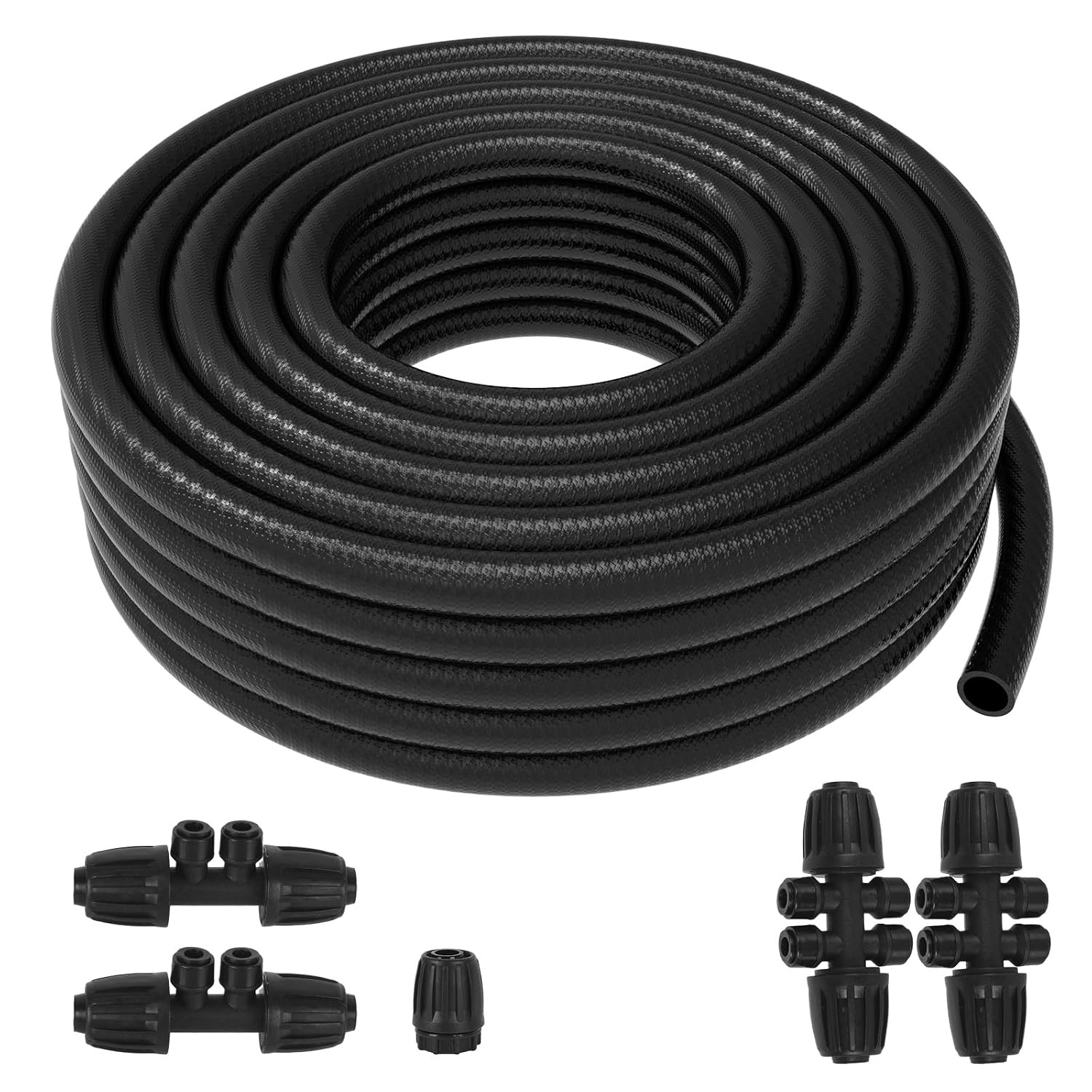

Photos from current listings. Actual item, color, and included accessories may vary.
Landscape Drip Irrigation Buying Guide
Landscape drip irrigation succeeds or fails on pressure regulation, filtration, and matching tubing diameter to your zone length—not on kit marketing. A 50 ft 1/2-inch kit covers a small bed or patio row, but most yards need multiple zones, a pressure reducer, and a filter to prevent clogging. Buy by emitter flow rate and tubing class first, then add fittings and timers that match your water source.
Key takeaways
- 1/2-inch mainline tubing carries roughly 2-4 GPM per zone; 1/4-inch micro tubing is only for short feeder runs to individual plants.
- Pressure-compensating (PC) emitters maintain rated flow (0.5, 1, or 2 GPH) across 10-50 PSI, while non-PC drippers vary with pressure and elevation.
- A 25-30 PSI pressure reducer and a 120-200 mesh filter are mandatory for municipal or well water feeding drip lines.
At a glance
- Category
- Watering & Irrigation
- Last updated
- Nov 28, 2026
Current offers
Highlights
- 1/2-inch mainline tubing carries roughly 2-4 GPM per zone; 1/4-inch micro tubing is only for short feeder runs to individual plants.
- Pressure-compensating (PC) emitters maintain rated flow (0.5, 1, or 2 GPH) across 10-50 PSI, while non-PC drippers vary with pressure and elevation.
- A 25-30 PSI pressure reducer and a 120-200 mesh filter are mandatory for municipal or well water feeding drip lines.
- Polyethylene tubing is rated by PSI and UV resistance; 1/2-inch 0.6-0.7 wall thickness handles burying and foot traffic better than thin 0.4 wall.
Best use cases
- Best fit: a 50 ft 1/2-inch kit for a single raised bed, patio container row, or narrow foundation planting—pair it with a hose bib timer and pressure reducer.
- Wrong fit: trying to water a 1,000 sq ft lawn or long hedge row from one 50 ft kit; split into zones with 1/2-inch submains and PC emitters instead.
- Choose 1/4-inch micro tubing with stake drippers for annual flower beds and vegetable rows where you replant and move lines each season.
- Skip drip entirely for sloped, sandy soil unless you use PC emitters and shorter run lengths; otherwise water channels and uneven coverage follow.
Buying tips
- Check emitter flow rate against plant type: 0.5 GPH for shrubs and trees, 1 GPH for vegetables, 2 GPH for dense flower beds.
- Prioritize pressure-compensating emitters when your zone spans more than 30 ft of elevation change or long runs over 100 ft.
- Avoid thin-wall 1/2-inch tubing under 0.5 mm wall thickness for buried or high-traffic lines; it kinks and splits at barbed fittings.
- Size each zone to the tubing: 1/2-inch mainline supports roughly 200-400 ft of emitter line depending on flow, so split larger yards into multiple zones.
Specs
| Tubing Diameter | 1/2 in mainline; 1/4 in micro |
|---|---|
| Emitter Type | PC vs non-PC; 0.5-2 GPH |
| Pressure Range | 10-50 PSI; reducer 25-30 PSI |
| Filtration | 120-200 mesh; 3/4 in hose thread |
Related searches
What to check before buying
- Measure the bed or row length and total plant count to calculate emitter quantity and tubing runs before buying a kit.
- Confirm your outdoor faucet thread (3/4-inch hose thread in the US) and whether you need a backflow preventer or vacuum breaker.
- Check water pressure with a gauge; above 30 PSI requires a reducer, and below 15 PSI rules out most PC emitters.
- Verify filter mesh size matches your water source—120 mesh for municipal, 200 mesh for well or pond water with fine sediment.
FAQ
Data sources: eBay / Amazon listings and product attribute feeds. Updated Nov 28, 2026.
Some links on this page are affiliate links. If you buy after clicking one, we may earn a commission at no extra cost to you. This does not change which products appear here or their order. Affiliate disclosure.