
Photos from current listings. Actual item, color, and included accessories may vary.
Irrigation Timer Buying Guide
An irrigation timer is a faucet- or hose-mounted control valve that automates watering schedules, ranging from simple mechanical dials to programmable electronic and app-connected controllers. The core trade-off is valve architecture: mechanical timers use a clockwork dial and rubber seals with no power source, while electronic solenoid timers add programmability but depend on batteries and rated seals. Buy mechanical if you water a single zone and want zero power dependency; buy an electronic timer only if you need multiple start times, durations, or drip-line control.
Median $26.50
Key takeaways
- Mechanical hose timers run 24-hour clockwork dials with no batteries but only one watering cycle per day and drift as the dial spring wears.
- Electronic faucet timers use a latching solenoid valve with 2–4 AA batteries, typically lasting a full season (3–6 months) of daily cycles.
- Hose-thread standard is 3/4 in GHT (garden hose thread) on both inlet and outlet; drip kits need a pressure reducer and 200-mesh filter to avoid emitter clogging.
At a glance
- Category
- Watering & Irrigation
- Last updated
- Nov 28, 2026
Current offers
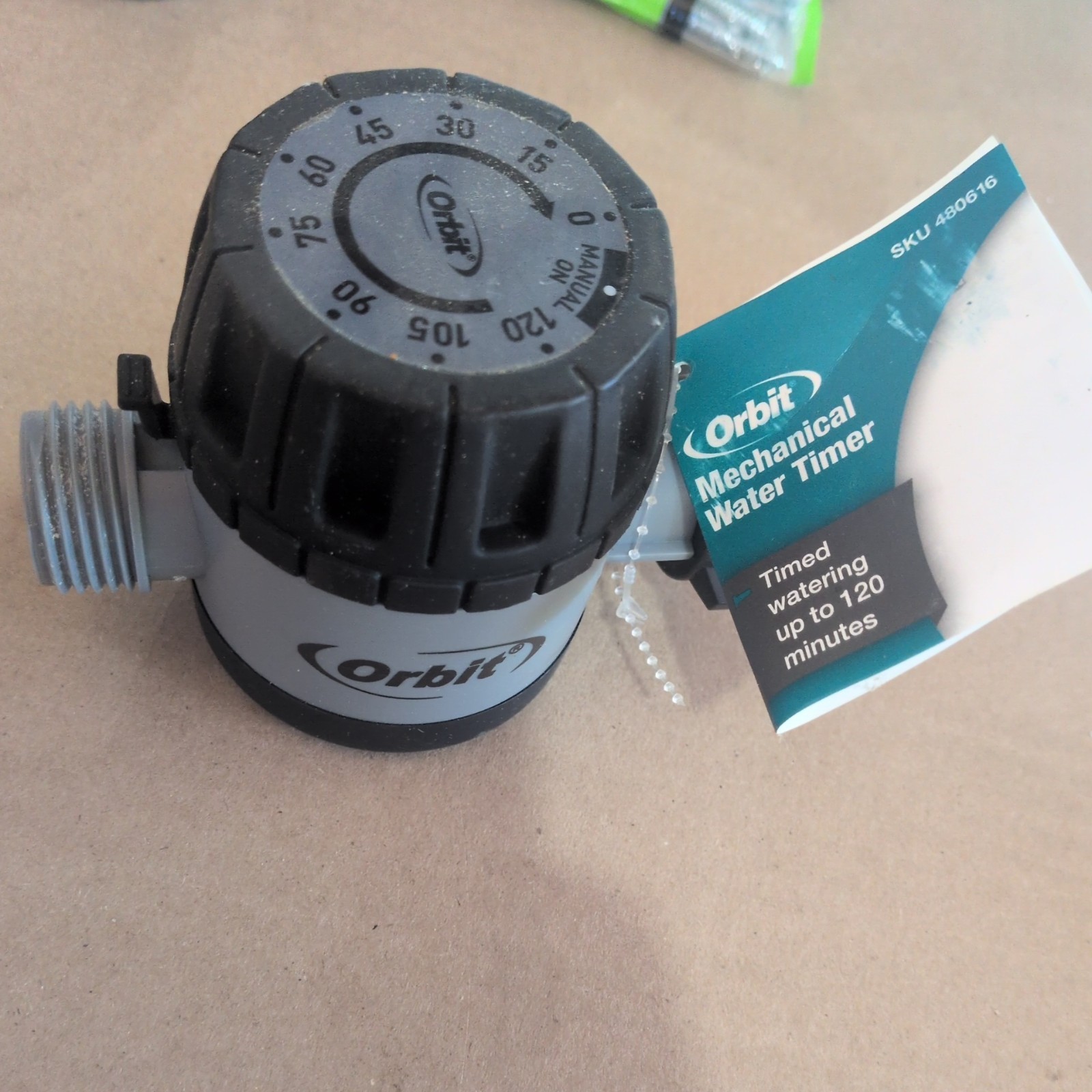 Mechanical Hose Watering Timer Sprinkler and Irrigation Timer$15.00View on eBay
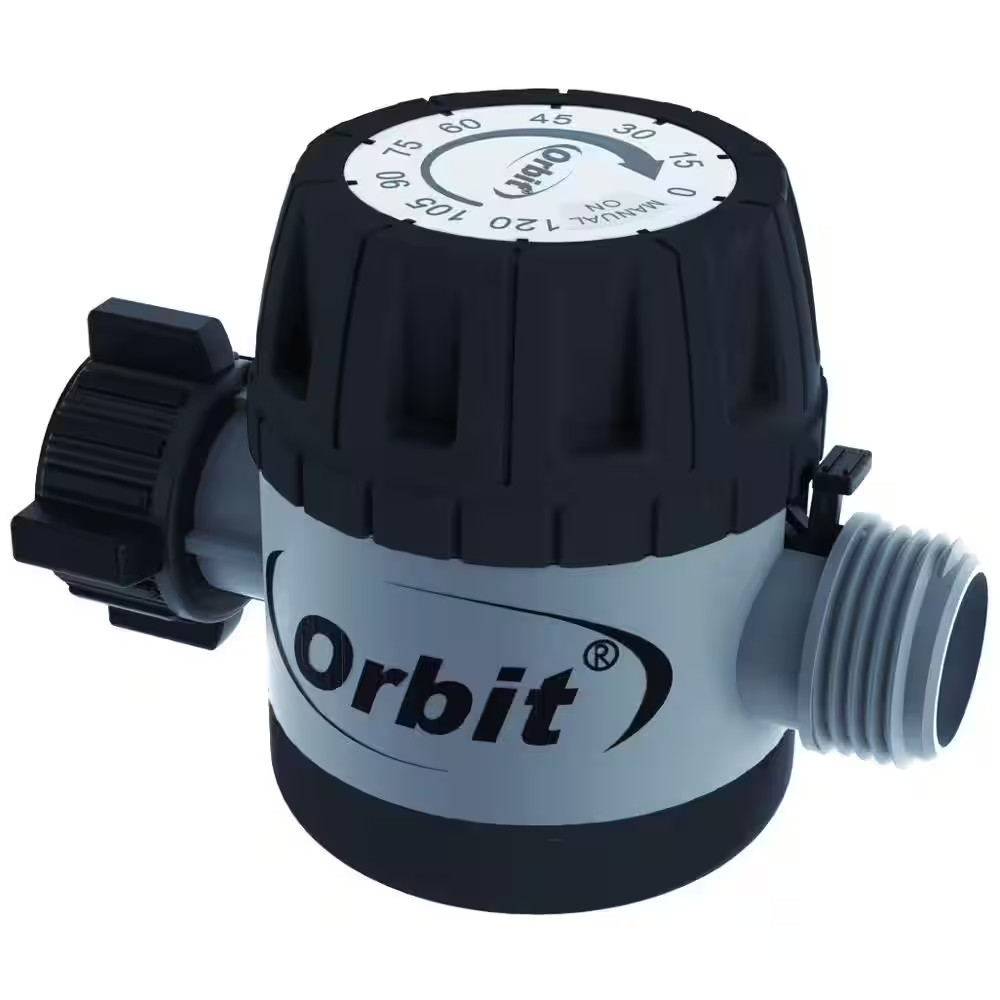 Mechanical Hose Watering Timer Sprinkler and Irrigation Timer$15.27View on eBay
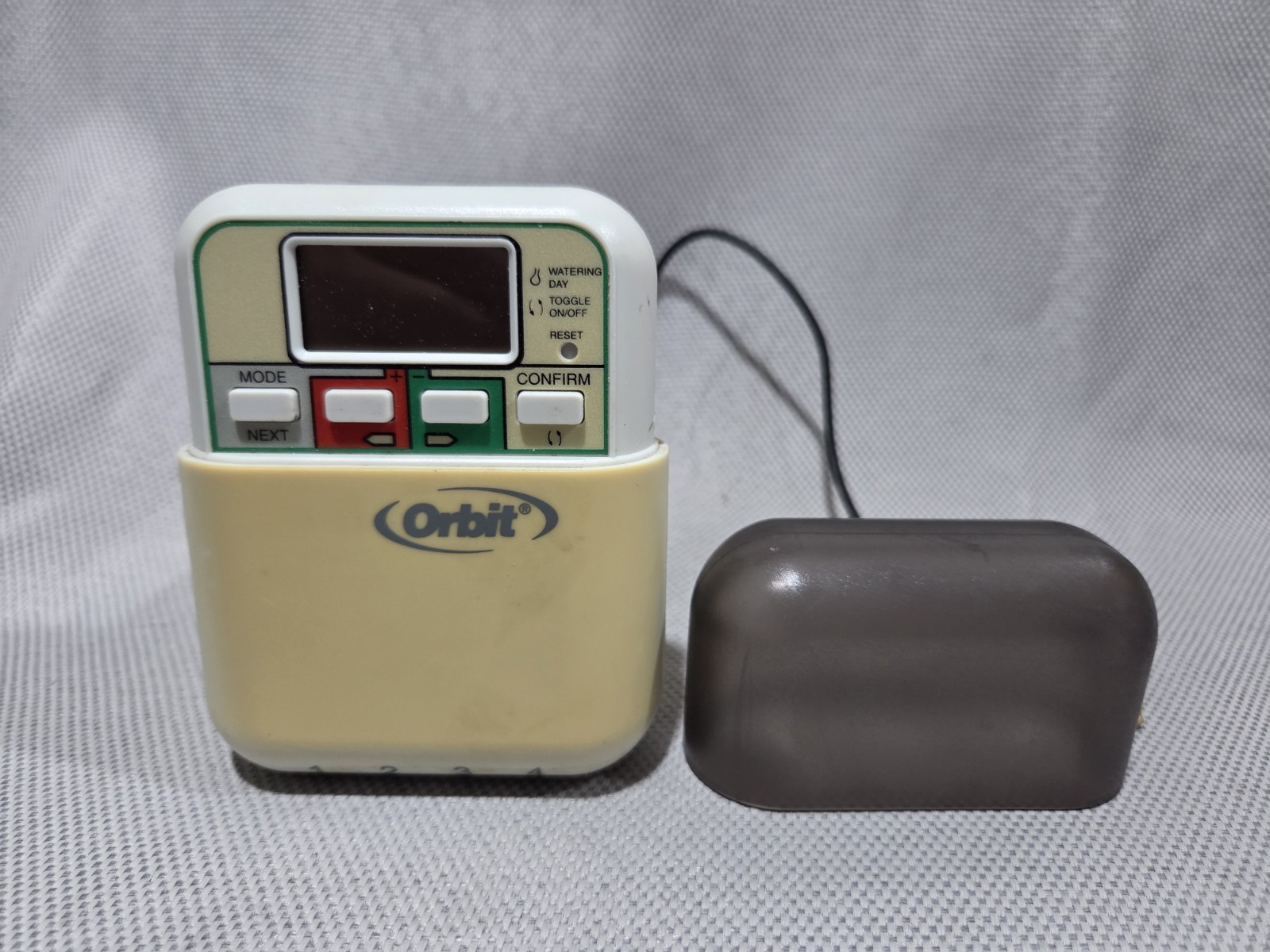 Orbit Irrigation Products Model #62032 Digital Water Timer Tested And Working$26.50View on eBay
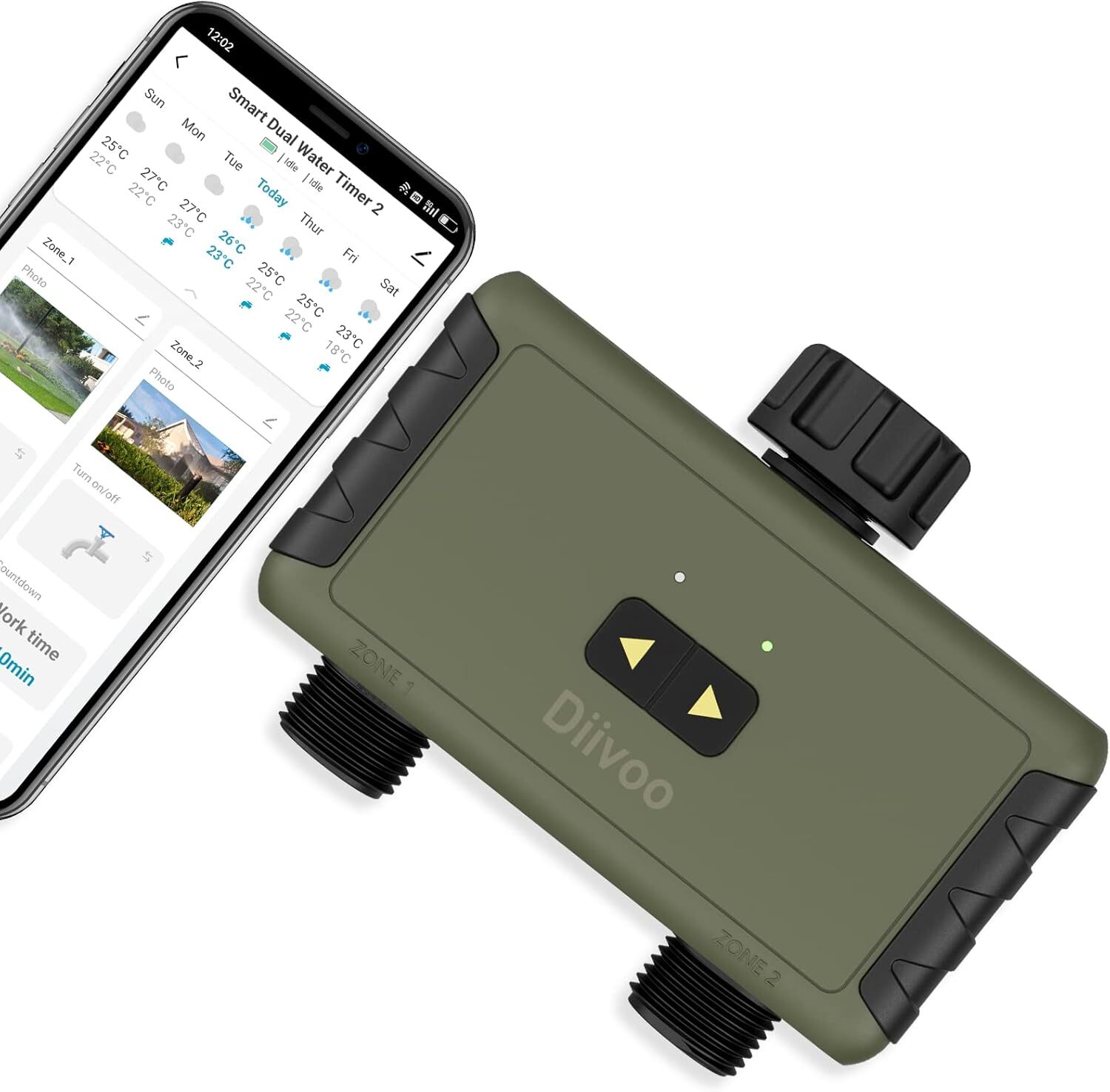 Sprinkler Timer 2 Zone Water Timer Outdoor Irrigation with Rain Delay for Garden$34.99View on eBay
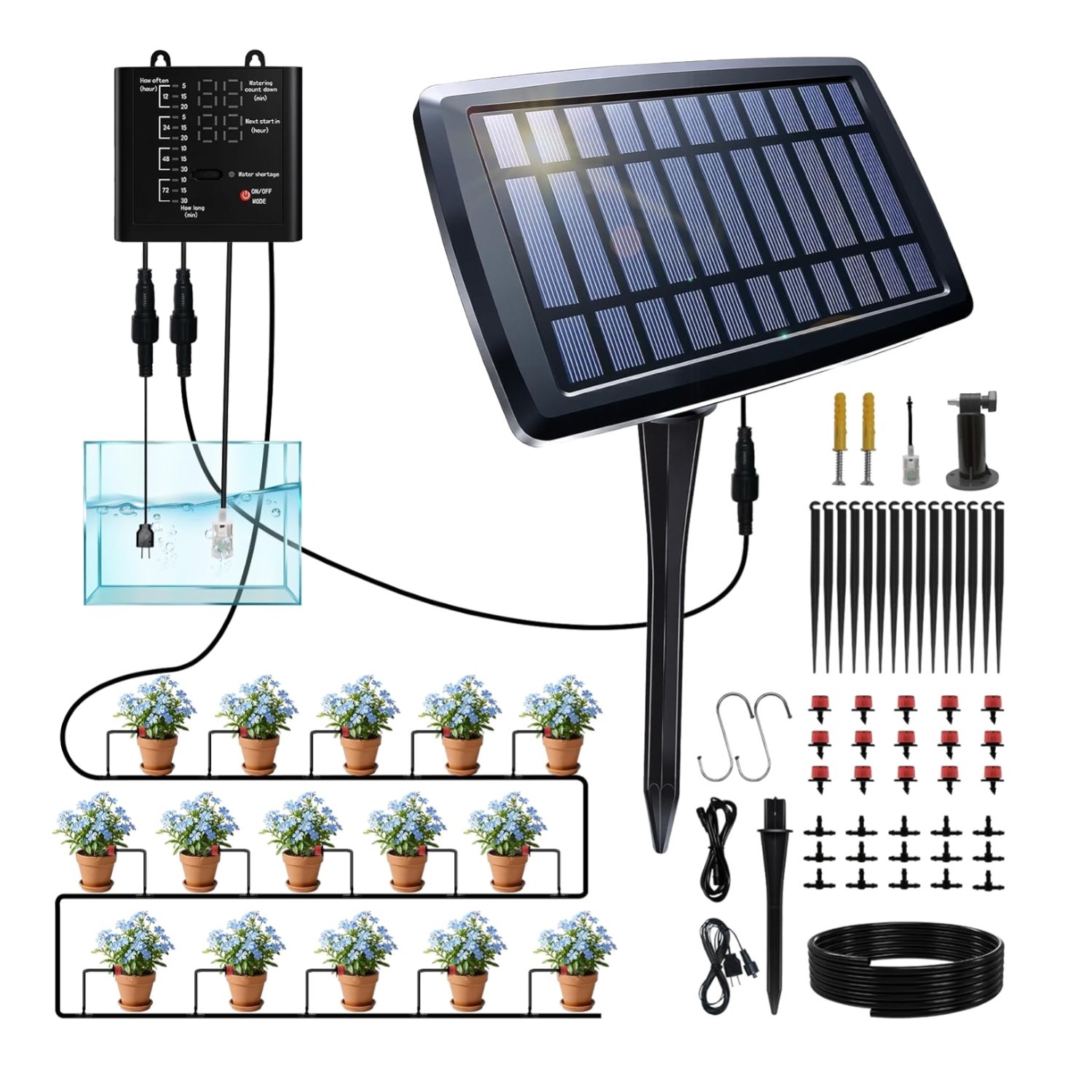 Solar Drip Irrigation Kit 50FT Automatic Watering System Timer for 15 Pots$54.68Last checked Nov 22, 2026View on eBay
Highlights
- Mechanical hose timers run 24-hour clockwork dials with no batteries but only one watering cycle per day and drift as the dial spring wears.
- Electronic faucet timers use a latching solenoid valve with 2–4 AA batteries, typically lasting a full season (3–6 months) of daily cycles.
- Hose-thread standard is 3/4 in GHT (garden hose thread) on both inlet and outlet; drip kits need a pressure reducer and 200-mesh filter to avoid emitter clogging.
- Solar drip kits pair a small panel (2–5 W) with a 1500–2200 mAh lithium cell and a low-voltage pump, which is enough for 6–16 drip arrows but not for a full sprinkler zone.
Best use cases
- Best fit: single hose bib and one lawn or bed zone — pick a mechanical dial timer or a basic 1-zone electronic faucet timer; skip multi-zone controllers.
- Best fit: vacation watering for indoor plants — pick a rechargeable battery drip system with 8–16 adjustable drip arrows and an LCD schedule; skip hose-thread timers, which need a pressurized outdoor tap.
- Best fit: balcony or remote plot with no power — pick a solar drip kit with a 1500–2200 mAh cell and 6 modes; skip it if you need to run standard impact sprinklers, which exceed its pump head.
- Wrong fit: in-ground sprinkler zones with valves — hose-thread timers cannot drive 24 VAC solenoid valves; you need a multi-station sprinkler controller wired to the valve box.
Buying tips
- Match thread: confirm the timer inlet/outlet is 3/4 in GHT for hose bibs; drip kits additionally need a 25–30 psi pressure regulator and filter before the emitters.
- Count zones first: one hose bib equals one zone. Only step up to a multi-station controller if you have separate valve zones wired with 24 VAC solenoids.
- For drip, size emitters to flow: 0.5–2 GPH per arrow at 15–25 psi; a 16-arrow kit draws roughly 8–32 GPH, well within a household tap but not a low-pressure gravity tank.
- Prefer ABS or UV-stabilized plastic bodies for outdoor year-round use; mechanical dials survive freezing better than electronic solenoid bodies if drained.
Specs
| Timer Type | Mechanical dial vs electronic solenoid |
|---|---|
| Hose Connection | 3/4 in GHT (garden hose thread) |
| Power Source | None (mechanical) / 2–4 AA / solar 2–5 W |
| Program Capacity | 1 cycle/day mechanical; 3–6 electronic |
Related searches
What to check before buying
- Measure your hose bib thread and confirm 3/4 in GHT compatibility; some European taps use 1/2 in or 3/4 in BSP and need an adapter.
- Check water pressure at the tap: drip systems want 15–30 psi, so a regulator is required if household pressure runs 50–80 psi.
- For solar drip kits, confirm the panel receives 4–6 hours of direct sun and the run length stays within the pump head (usually under 10 ft lift).
- For indoor vacation kits, count plants and confirm the kit includes enough arrows and tubing; 12–16 arrows covers a typical windowsill or shelf collection.
FAQ
Data sources: eBay / Amazon listings and product attribute feeds. Updated Nov 28, 2026.
Some links on this page are affiliate links. If you buy after clicking one, we may earn a commission at no extra cost to you. This does not change which products appear here or their order. Affiliate disclosure.