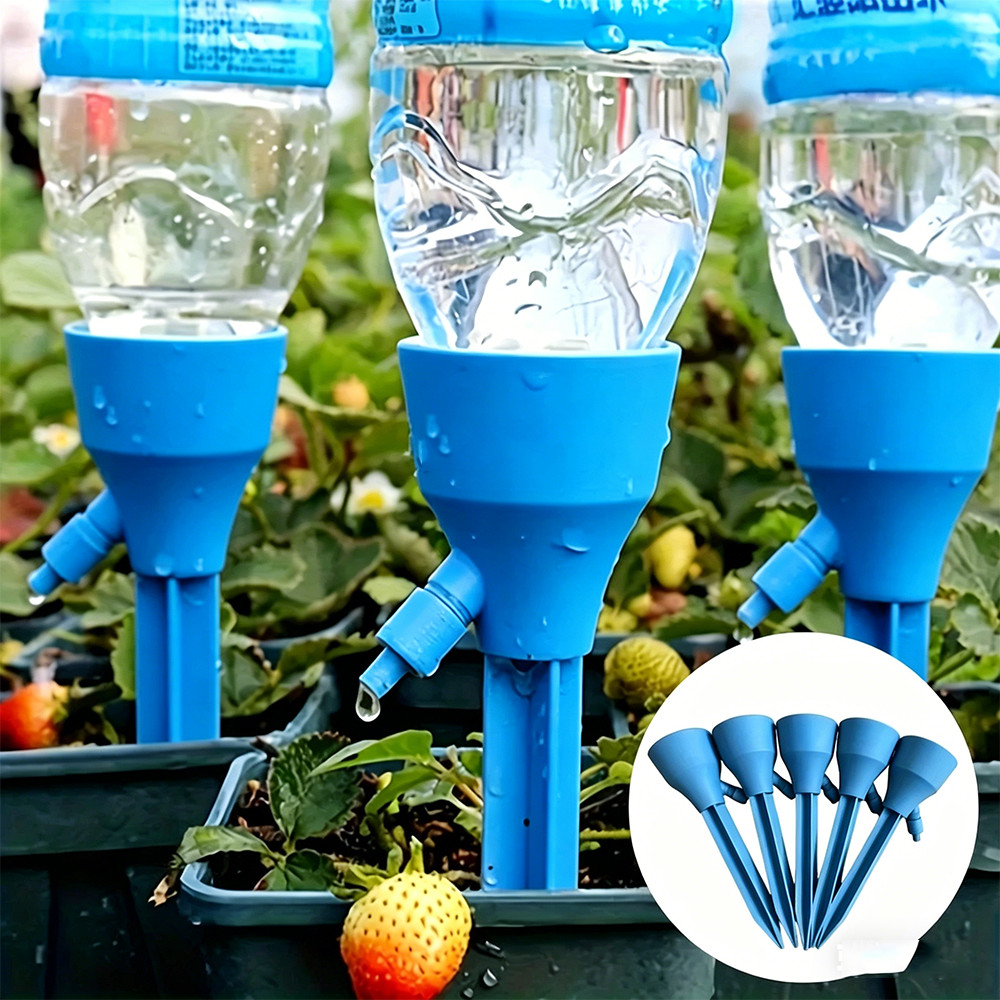

Photos from current listings. Actual item, color, and included accessories may vary.
Irrigation Potted Plant Buying Guide
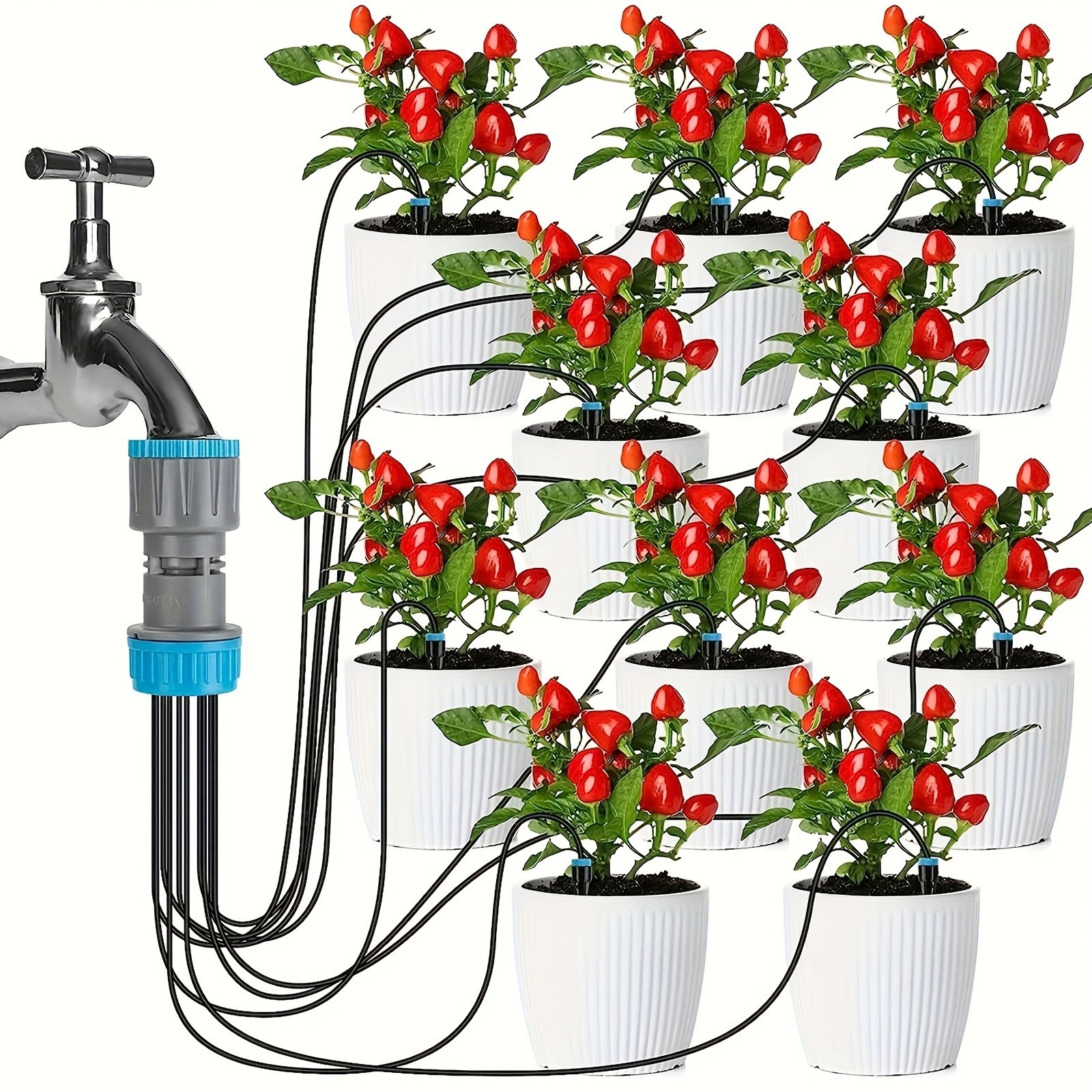
Irrigation for potted plants splits into two distinct architectures: passive ceramic or plastic spikes that wick water from a reservoir, and low-pressure drip kits with tubing, emitters, and a timer. Buyers most often get the wrong one by ignoring pot count, container spacing, and whether they need vacation-grade drip or continuous sub-irrigation.
System Type:Passive spike vs timer drip kitEmitter Flow:0.5–2 GPH per potLine Pressure:10–15 PSI (drip) / <2 PSI (gravity)Tubing Size:1/4-in micro / 1/2-in supply
Typical price range$9.99 – $12.49
Median $11.24
Key takeaways
- Passive spikes rely on capillary action and gravity; flow rate depends on reservoir height relative to pot, so a raised bottle or bucket feeds faster than a floor-level jug.
- Drip kits use 1/4-inch micro-tubing with pressure-compensating or turbulent-flow emitters rated in gallons per hour (GPH), typically 0.5–2 GPH per pot.
- Timer-driven systems need a minimum line pressure, often 10–15 PSI, from a faucet or small pump; gravity-fed reservoirs produce under 2 PSI and require dripper-style emitters.
At a glance
- Category
- Watering & Irrigation
- Last updated
- Nov 28, 2026
Current offers
Highlights
- Passive spikes rely on capillary action and gravity; flow rate depends on reservoir height relative to pot, so a raised bottle or bucket feeds faster than a floor-level jug.
- Drip kits use 1/4-inch micro-tubing with pressure-compensating or turbulent-flow emitters rated in gallons per hour (GPH), typically 0.5–2 GPH per pot.
- Timer-driven systems need a minimum line pressure, often 10–15 PSI, from a faucet or small pump; gravity-fed reservoirs produce under 2 PSI and require dripper-style emitters.
- Ceramic spike porosity and plastic spike orifice diameter set the flow band; plastic adjustable spikes clog with mineral-heavy water, while ceramic wicks are more forgiving but harder to clean.
Best use cases
- Choose passive spikes for 1–6 indoor pots and week-long trips; skip them for outdoor containers in full sun where evaporation outpaces wicking.
- Choose a timer drip kit for 8+ pots on a balcony or patio with a faucet; skip it if pots are scattered across rooms with no shared water source.
- Choose gravity-fed drip with a elevated bucket for a shed or greenhouse without plumbing; skip pressure-compensating emitters because low pressure starves long runs.
- Choose adjustable plastic spikes for varied pot sizes on a single reservoir; skip fixed-flow ceramic spikes if you need to tune output per plant type.
Buying tips
- Count pots and total run length first; 1/4-inch tubing kits typically support 10–20 emitters before pressure drop becomes visible at the far end.
- Inspect emitter type: pressure-compensating emitters hold uniform flow across 10–15 PSI, while non-compensating drippers slow sharply on long runs.
- Prioritize a timer with a manual bypass and rain-delay for outdoor pots; indoor vacation setups only need a simple on/off schedule.
- Avoid mixing ceramic and plastic spikes on one reservoir; their different draw rates starve the faster-feeding pot within days.
Specs
| System Type | Passive spike vs timer drip kit |
|---|---|
| Emitter Flow | 0.5–2 GPH per pot |
| Line Pressure | 10–15 PSI (drip) / <2 PSI (gravity) |
| Tubing Size | 1/4-in micro / 1/2-in supply |
Related searches
What to check before buying
- Measure pot rim diameter and soil clearance; spikes need 4–6 inches of soil depth to seat without hitting the root ball.
- Confirm reservoir placement height and capacity; a 1-gallon jug at 12 inches above the pot feeds reliably for roughly a week for small pots.
- Check faucet thread and outdoor spigot compatibility; most kits use standard 3/4-inch hose thread with an adapter for 1/2-inch supply tubing.
- Verify pot spacing and tubing route length against kit emitter count; add a pressure regulator if supply pressure exceeds 30 PSI.
FAQ
Data sources: eBay / Amazon listings and product attribute feeds. Updated Nov 28, 2026.
Some links on this page are affiliate links. If you buy after clicking one, we may earn a commission at no extra cost to you. This does not change which products appear here or their order. Affiliate disclosure.