
Photos from current listings. Actual item, color, and included accessories may vary.
Irrigation Emitter Buying Guide
Drip emitters determine whether a garden gets even, deep watering or frustrating dry spots and runoff. Buyers often focus on emitter count and miss barb sizing, flow-rate matching, and pressure-compensation needs — the three factors that actually dictate performance. Kit sizing and emitter style must follow your bed layout and water source, not the other way around.
Median $9.29
Key takeaways
- Barbed 1/4-inch emitters fit standard 1/4-inch micro tubing, while threaded emitters suit 1/2-inch mainline poly pipe; mixing the two without adapters causes leaks.
- Adjustable emitters span roughly 0–15 GPH, letting you dial flow per plant, but they drift over seasons and need periodic re-tuning unlike fixed-rate drip emitters.
- Pressure-compensating emitters hold a steady flow across long runs and elevation changes, while non-compensated emitters lose rate on extended lines.
At a glance
- Category
- Watering & Irrigation
- Last updated
- Nov 28, 2026
Current offers
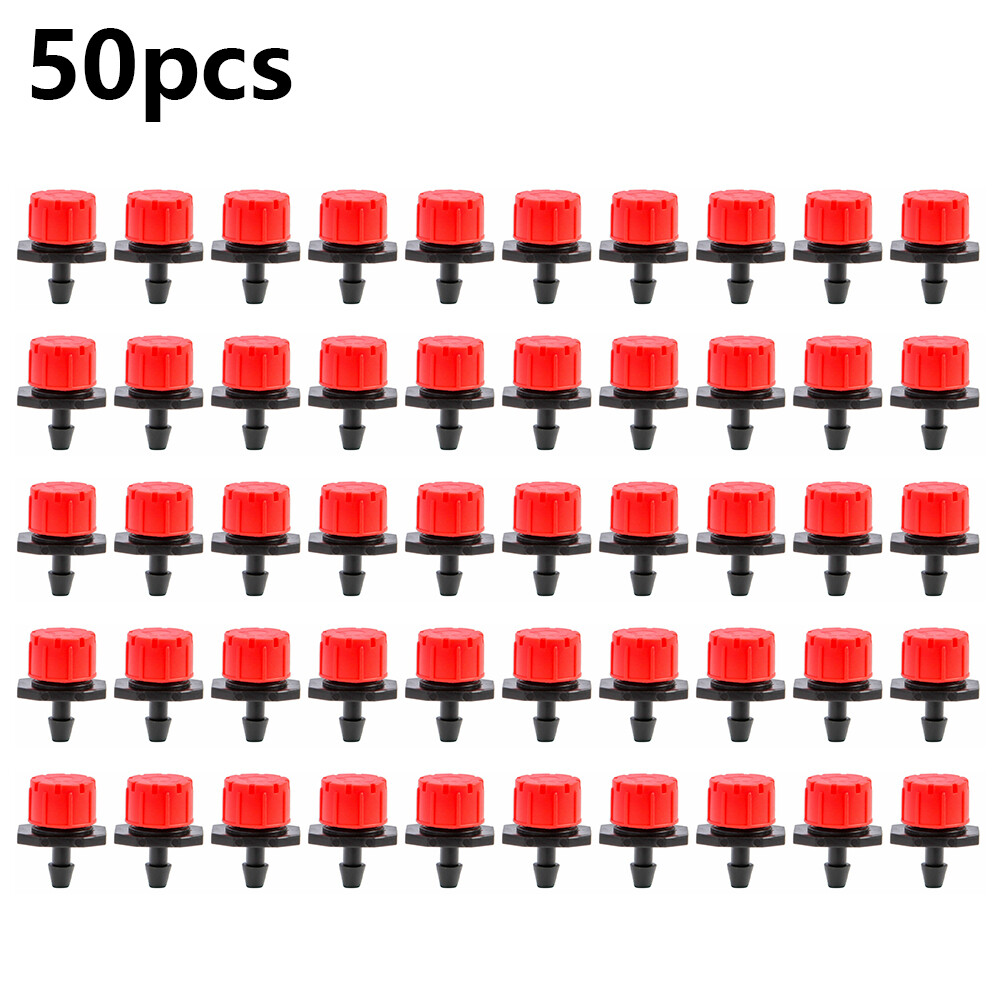 Adjustable Emitter Dripper Micro Drip Irrigation Sprinkler Watering System Lots$7.51View on eBay
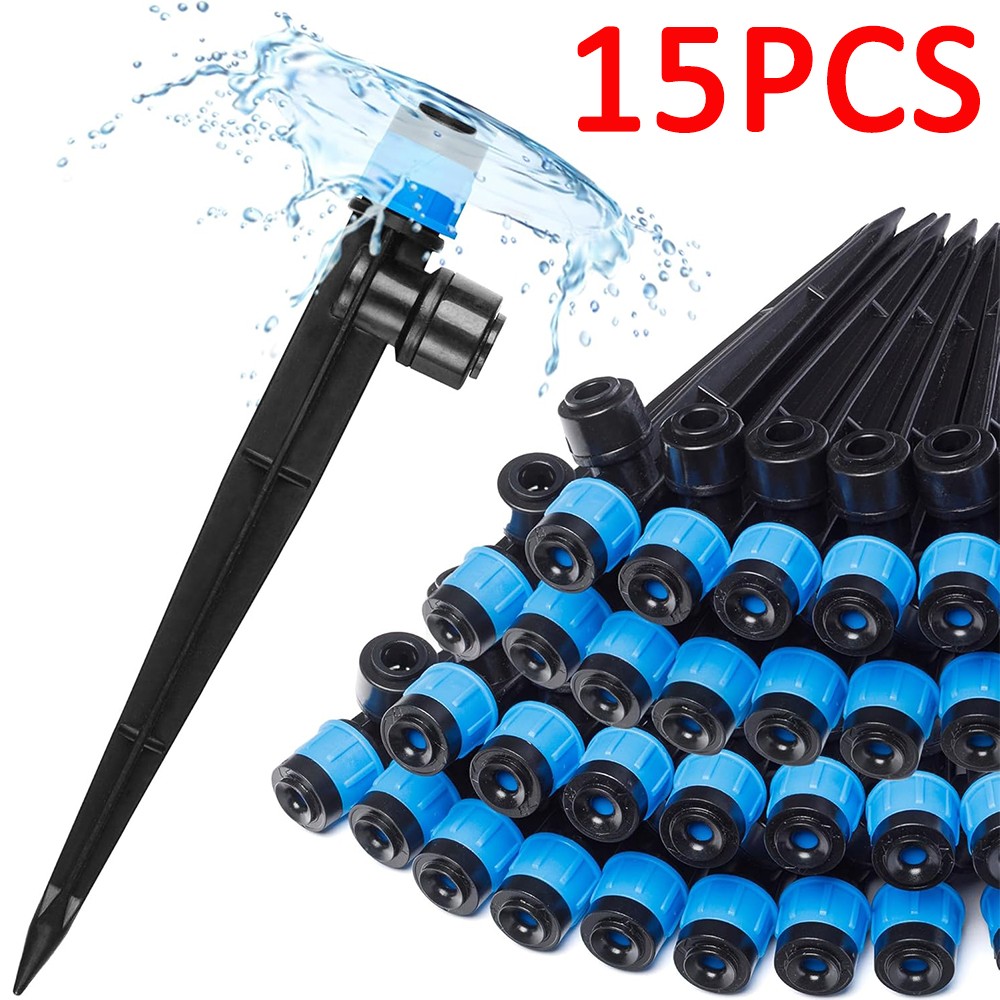 30Pcs Drip Irrigation Emitter 1/4" Garden Drip Watering System 360° Adjustable$9.29Last checked Nov 19, 2026View on eBay
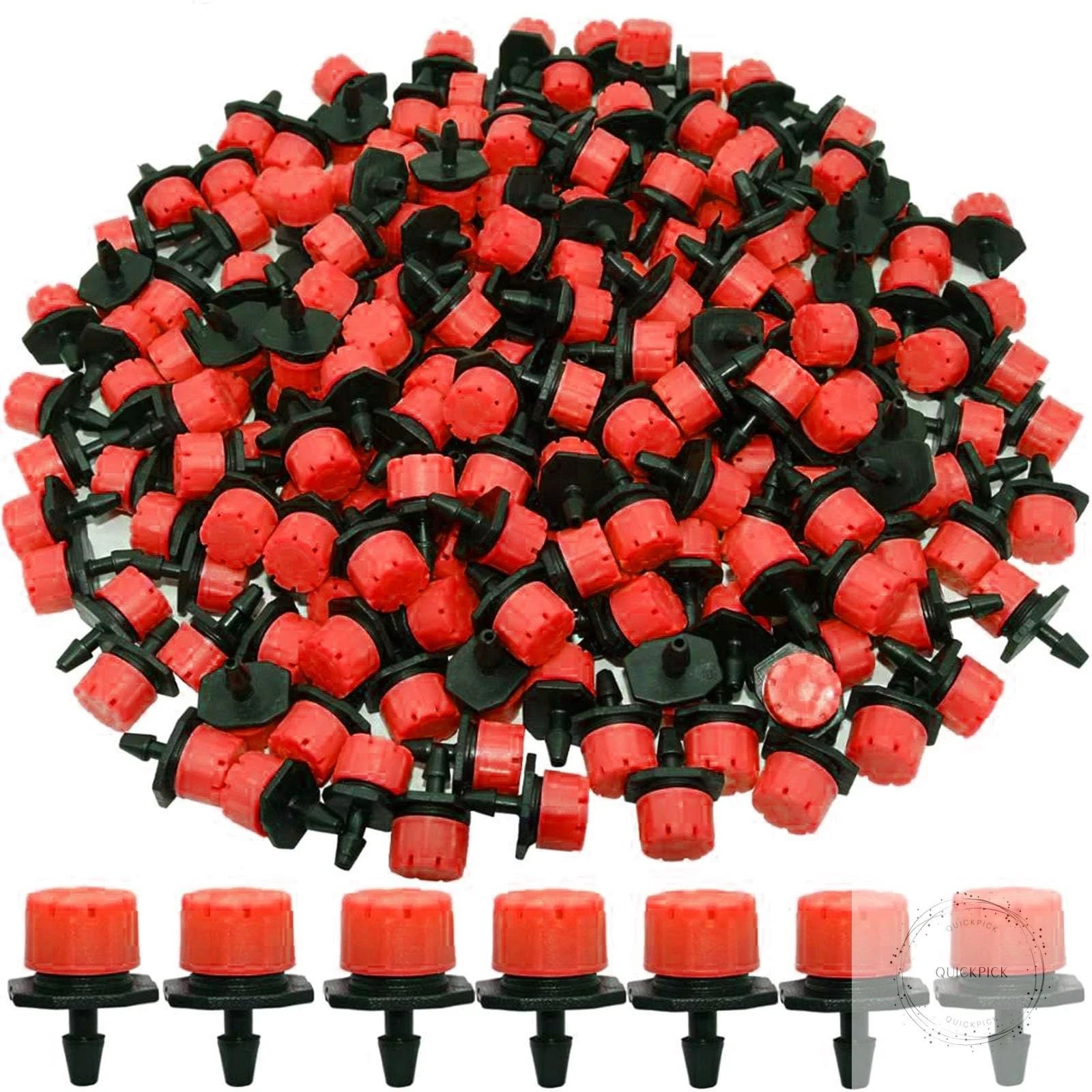 200Pcs Adjustable Drip Irrigation Emitters 1/4Inch Adjustable Micro Drip Irrigat$18.98Last checked Nov 19, 2026View on eBay
Highlights
- Barbed 1/4-inch emitters fit standard 1/4-inch micro tubing, while threaded emitters suit 1/2-inch mainline poly pipe; mixing the two without adapters causes leaks.
- Adjustable emitters span roughly 0–15 GPH, letting you dial flow per plant, but they drift over seasons and need periodic re-tuning unlike fixed-rate drip emitters.
- Pressure-compensating emitters hold a steady flow across long runs and elevation changes, while non-compensated emitters lose rate on extended lines.
- Staked fan-spray and micro-spray emitters cover 360° or fan patterns for groundcover and densely planted beds, while point-source drippers target individual plant root zones.
Best use cases
- Choose staked adjustable emitters for mixed vegetable and flower beds with varied plant sizes — you can re-dial each plant without swapping hardware.
- Pick pressure-compensating drippers for long runs over 30 feet or sloped terrain where uncompensated emitters starve the far end of the line.
- Skip 1/4-inch barbed emitters if you run a 1/2-inch mainline system — you need threaded or 1/4-inch conversion adapters or the barbs won't seal.
- Use fan-spray or 360° micro-spray emitters for groundcover and seedling trays, but avoid them on individual shrubs where overspray wastes water.
Buying tips
- Confirm the emitter barb size matches your tubing: 1/4-inch barbs for micro tube, threaded bodies for 1/2-inch poly mainline — mismatches are the top cause of leaks.
- Prioritize pressure-compensating models on runs longer than 30 feet or with more than 10 feet of elevation change; uncompensated emitters will under-water the far end.
- Avoid adjustable emitters on permanent installations — fixed-rate drippers hold calibration better season to season and resist clogging from mineral deposits.
- Inspect emitter bodies for UV-stabilized plastic and built-in filters; cheap unfiltered emitters clog with sediment and require constant flushing.
Specs
| Connection Type | 1/4" barb vs 1/2" threaded |
|---|---|
| Flow Control | Adjustable 0–15 GPH vs fixed-rate |
| Compensation | Pressure-compensating vs standard |
| Emitter Pattern | Point drip / fan spray / 360° micro |
Related searches
What to check before buying
- Measure your mainline and micro tubing diameters before ordering — 1/4-inch barbs will not seal in 1/2-inch poly without adapters.
- Check your water pressure at the spigot: most drip systems want 15–30 PSI; higher pressure needs a regulator or emitters blow off.
- Count plants and row lengths to size emitter quantity and tubing runs — kits with 16 emitters suit small raised beds, not full garden plots.
- Verify you have a filter and pressure regulator at the source; unfiltered sediment is the leading cause of emitter clogging.
FAQ
Data sources: eBay / Amazon listings and product attribute feeds. Updated Nov 28, 2026.
Some links on this page are affiliate links. If you buy after clicking one, we may earn a commission at no extra cost to you. This does not change which products appear here or their order. Affiliate disclosure.