
Photos from current listings. Actual item, color, and included accessories may vary.
Hose Timer Buying Guide
A hose timer is an inline shutoff valve between your spigot and hose or drip line, and the core trade-off is mechanical simplicity versus programmable electronic control that needs a battery and frost protection. Choose mechanical for freeze-tolerant, no-power scheduling of one watering duration; choose electronic for multi-start, odd-day, and rain-delay schedules that justify removal before winter.
Median $15.27
Key takeaways
- Electronic hose timers run on 2 or 4 AA batteries and use solenoid valves rated 10-15 psi minimum; below that supply pressure, zones water unevenly or fail to seal.
- Mechanical timers are water-pressure driven clocks with no battery, typically capped at 2 hours per cycle and one cycle per setting, so they cannot do multi-start or odd-day schedules.
- Standard hose threads are 3/4-inch GHT (garden hose thread) with 11.5 threads per inch; most timers are GHT-in/GHT-out, and drip systems need a pressure regulator plus 200-mesh filter downstream.
At a glance
- Category
- Watering & Irrigation
- Last updated
- Nov 28, 2026
Current offers
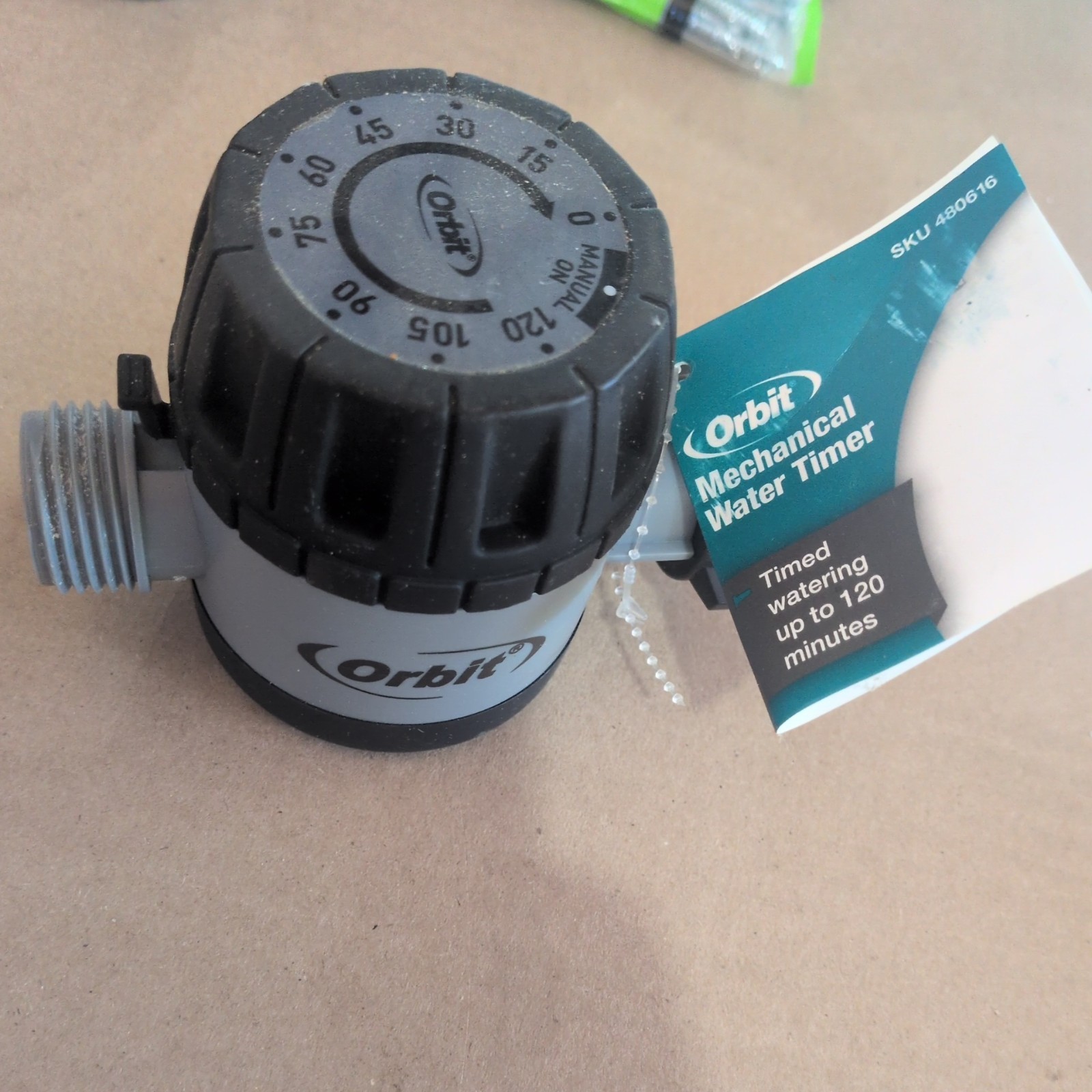 Mechanical Hose Watering Timer Sprinkler and Irrigation Timer$15.00View on eBay
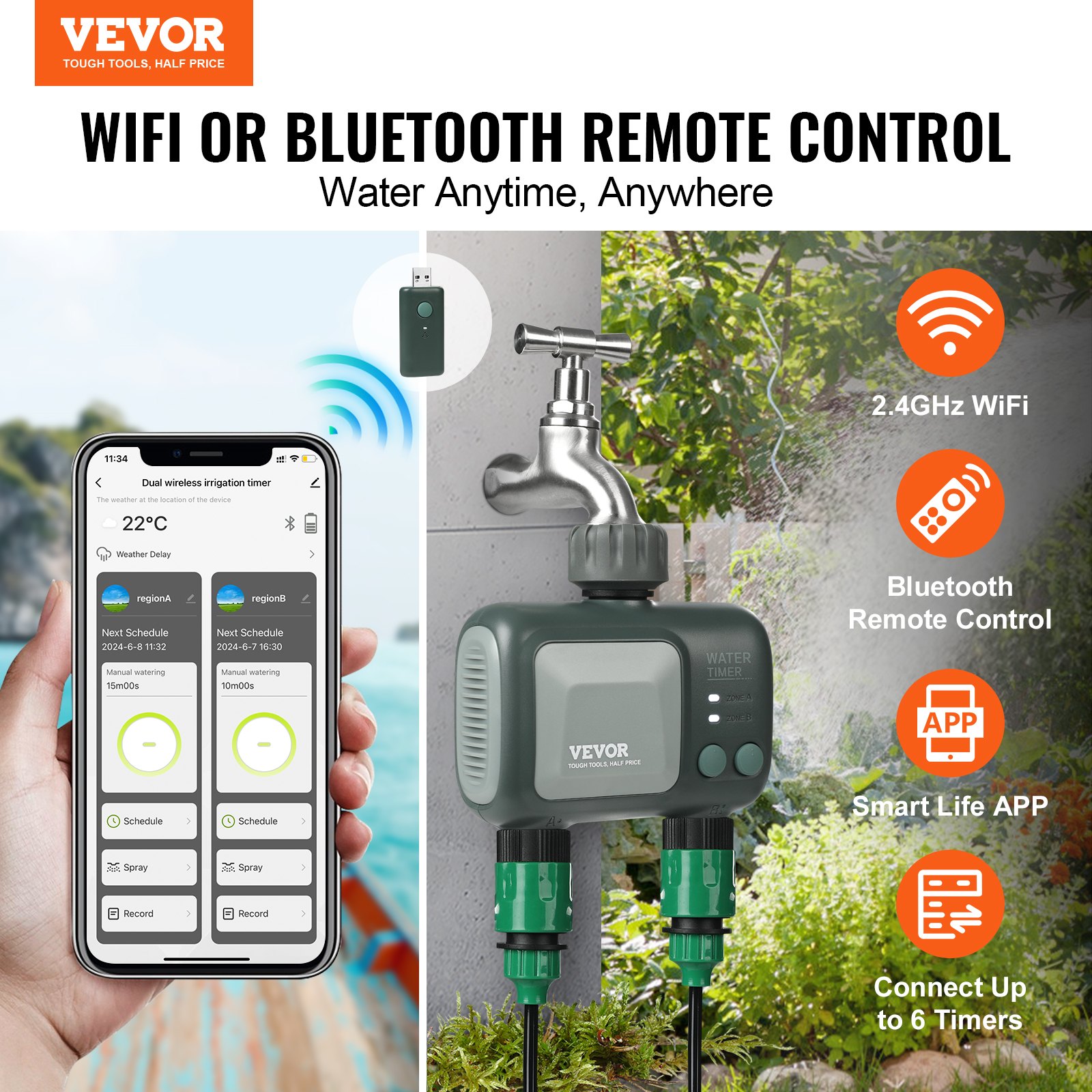 WiFi Sprinkler Timer, 2 Outlets, Smart Hose Faucet Water With Brass Inlet, APP Control Via 2.4Ghz Or Bluetooth, Voice Alexa And Google Assistant, IPX6 For Yard Watering$65.99View on Mallflare
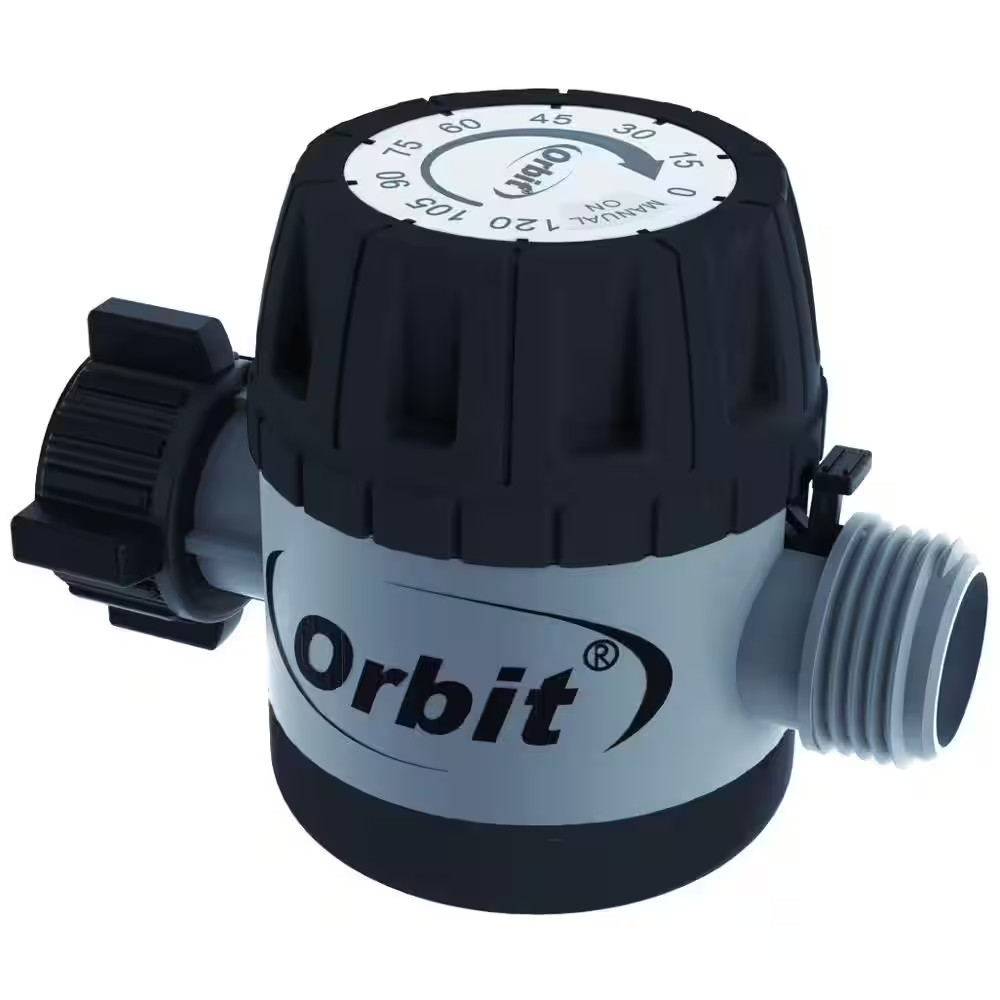 Mechanical Hose Watering Timer Sprinkler and Irrigation Timer$15.27View on eBay
Highlights
- Electronic hose timers run on 2 or 4 AA batteries and use solenoid valves rated 10-15 psi minimum; below that supply pressure, zones water unevenly or fail to seal.
- Mechanical timers are water-pressure driven clocks with no battery, typically capped at 2 hours per cycle and one cycle per setting, so they cannot do multi-start or odd-day schedules.
- Standard hose threads are 3/4-inch GHT (garden hose thread) with 11.5 threads per inch; most timers are GHT-in/GHT-out, and drip systems need a pressure regulator plus 200-mesh filter downstream.
- Electronic timer valve bodies are usually ABS with a rubber diaphragm; any timer left outdoors through freezing nights risks diaphragm and solenoid cracking, so the durable rule is remove and drain before the first frost.
Best use cases
- Best fit electronic: daily or every-other-day lawn and garden watering with multiple start times, rain delay, and a seasonal schedule — pick a 4-AA model with manual override and a screen cover.
- Best fit mechanical: a single hose-end sprinkler or soaker hose on a spigot you only need to run for 30-120 minutes at a time — skip batteries, apps, and multi-program complexity entirely.
- Best fit drip: a complete drip kit needs a timer, 25-30 psi pressure regulator, 200-mesh filter, and 1/2-inch tubing — do not attach drip line straight to a full-pressure spigot through a timer alone.
- Wrong fit: leaving any hose timer connected through winter in freezing climates; also wrong is using a low-flow drip timer on a gravity rain barrel or weak well pump that cannot hold 10-15 psi.
Buying tips
- Match thread standard first: 3/4-inch GHT for garden hoses; some European and utility spigots use BSP or 1-inch NPT and need an adapter, otherwise the timer leaks at the collar.
- For drip, add a pressure regulator sized to 25-30 psi and a 200-mesh filter; timers alone do not regulate pressure and emitters clog or blow off above 40 psi.
- Pick the battery tier for your season: 2 AA models suit light schedules; 4 AA models last more cycles and hold program memory during battery swaps.
- If the spigot is indoors or in a basement, an electronic timer with a remote valve or a hose-thread adapter is needed — do not bury a standard GHT timer or leave it on an indoor sill.
Specs
| Timer Type | Mechanical water-driven vs electronic solenoid |
|---|---|
| Thread Standard | 3/4-in GHT (11.5 TPI) in/out |
| Min Pressure | 10-15 psi electronic / 20-25 psi drip |
| Battery (Electronic) | 2-4 AA, seasonal program memory |
Related searches
What to check before buying
- Measure spigot thread outside diameter: 1-1/16 inch (about 27 mm) confirms 3/4-inch GHT; anything else needs an adapter before the timer screws on.
- Confirm minimum supply pressure: 10-15 psi for electronic valves, 20-25 psi for typical drip kits with a regulator — a gravity barrel needs a pump, not a timer.
- Check spacing from spigot to first plant: a timer adds 2-4 inches of stack height, so ensure the hose or drip adapter still clears the ground and wall.
- For drip kits, count required emitters and total flow: 160 ft of 1/2-inch tubing with 1 GPH emitters at 20-30 per zone stays under common timer flow ratings.
FAQ
Data sources: eBay / Amazon listings and product attribute feeds. Updated Nov 28, 2026.
Some links on this page are affiliate links. If you buy after clicking one, we may earn a commission at no extra cost to you. This does not change which products appear here or their order. Affiliate disclosure.