
Photos from current listings. Actual item, color, and included accessories may vary.
Hose Sprinkler Timer Buying Guide
A hose sprinkler timer is an inline valve that automates watering by opening and closing a garden hose line on a schedule. The core trade-off is mechanical simplicity versus electronic scheduling flexibility: mechanical timers need no power but offer only crude interval control, while electronic timers add programming, rain delays, and multiple start times at the cost of batteries and complexity. Choose mechanical only for short, simple duty cycles; choose electronic for any real garden watering plan.
Median $15.27
Key takeaways
- Mechanical timers use a wind-up clockwork or pressure-differential mechanism with a single adjustable dial, typically offering 15–120 minute run times and no repeat programming across days.
- Electronic hose timers run on 2 AA batteries and support multiple start times per day, 1–7 day intervals, and rain-delay settings, with solenoid valves rated around 0.5–1.0 MPa working pressure.
- Valve body material separates durable units from compromises: glass-filled nylon or ABS with a reinforced thread is standard; cheap acetal threads strip after a season of hose coupling.
At a glance
- Category
- Watering & Irrigation
- Last updated
- Nov 28, 2026
Current offers
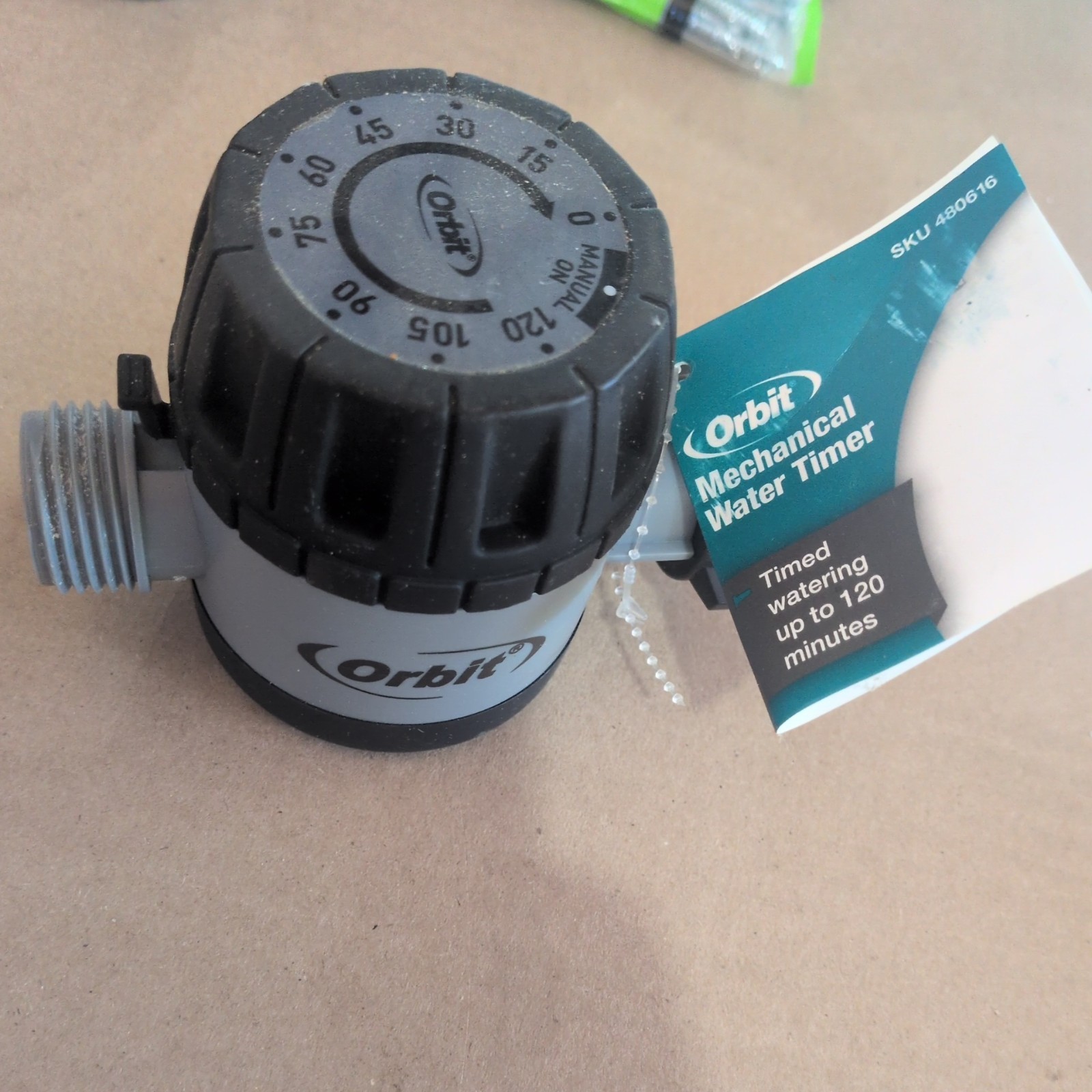 Mechanical Hose Watering Timer Sprinkler and Irrigation Timer$15.00View on eBay
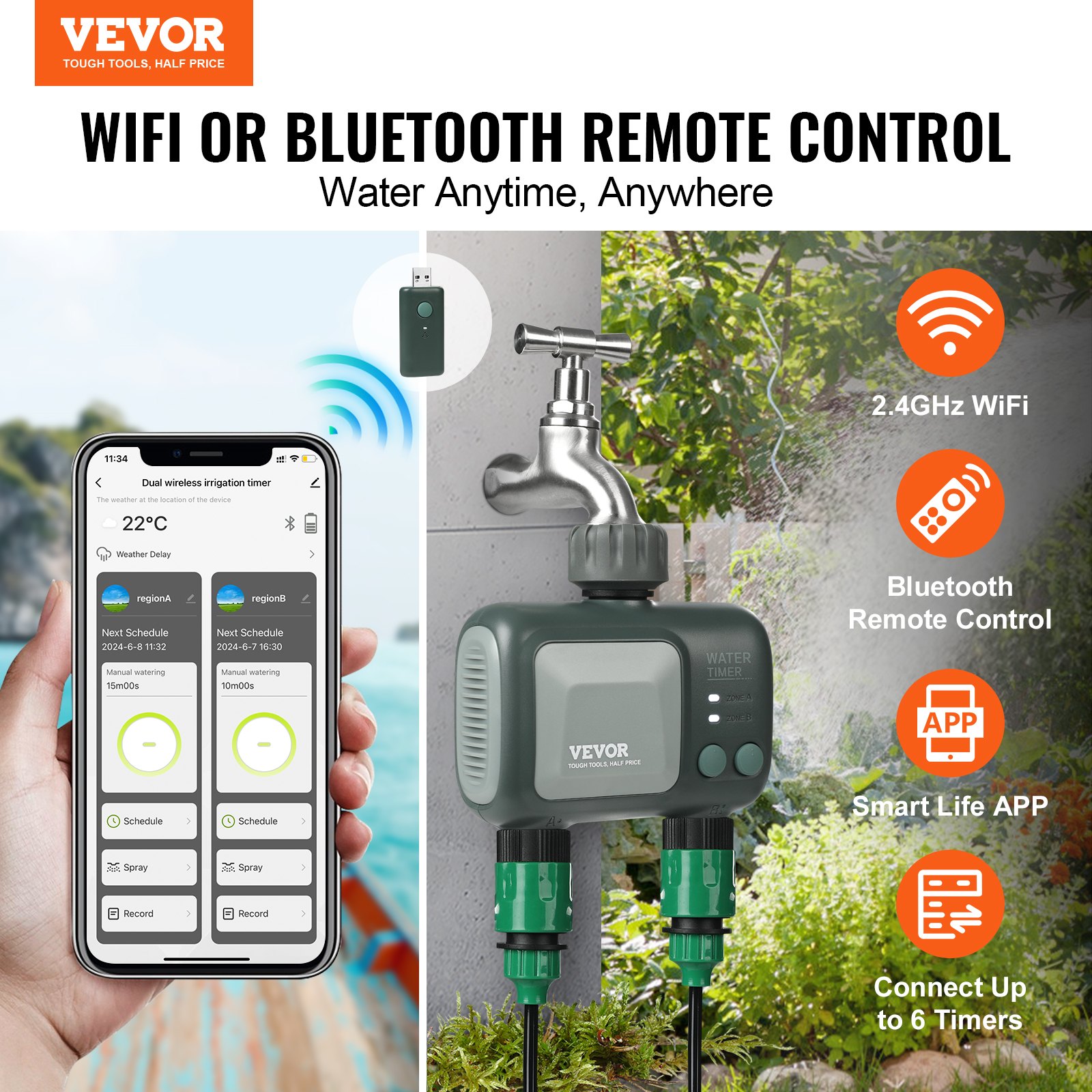 WiFi Sprinkler Timer, 2 Outlets, Smart Hose Faucet Water With Brass Inlet, APP Control Via 2.4Ghz Or Bluetooth, Voice Alexa And Google Assistant, IPX6 For Yard Watering$65.99View on Mallflare
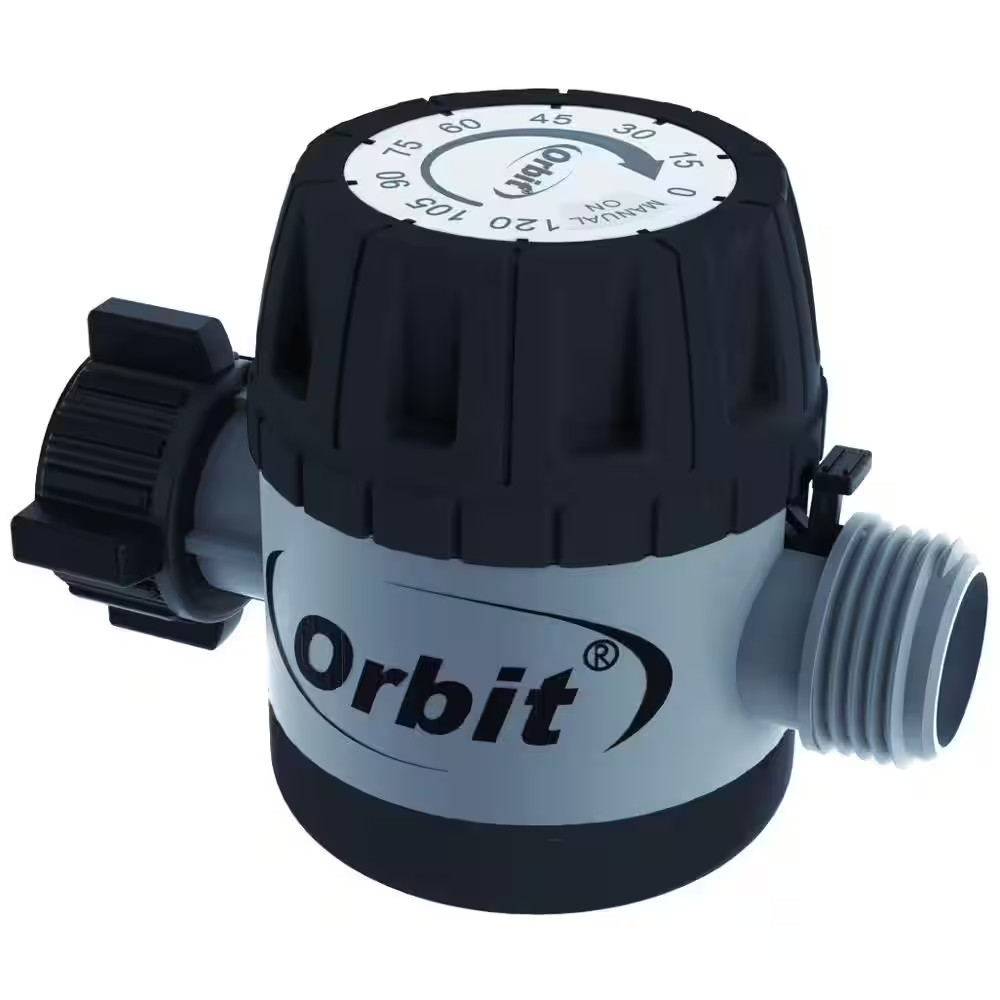 Mechanical Hose Watering Timer Sprinkler and Irrigation Timer$15.27View on eBay
Highlights
- Mechanical timers use a wind-up clockwork or pressure-differential mechanism with a single adjustable dial, typically offering 15–120 minute run times and no repeat programming across days.
- Electronic hose timers run on 2 AA batteries and support multiple start times per day, 1–7 day intervals, and rain-delay settings, with solenoid valves rated around 0.5–1.0 MPa working pressure.
- Valve body material separates durable units from compromises: glass-filled nylon or ABS with a reinforced thread is standard; cheap acetal threads strip after a season of hose coupling.
- A standard US garden hose thread is 3/4 inch GHT; all hose timers connect directly to an outdoor spigot, but backflow prevention (anti-siphon) is required by code in many municipalities.
Best use cases
- Best fit for mechanical: a single hose-end sprinkler on a small lawn or flower bed where you want 20–60 minutes of watering once or twice daily and will not be home to shut it off.
- Best fit for electronic: drip irrigation zones, raised beds, or container plants that need specific days of the week, multiple short cycles, or a rain delay during wet weather.
- Wrong fit to skip: mechanical timers for drip systems or soaker hoses, because low-flow pressure differentials often fail to trigger the valve reliably and run times cannot be tuned precisely.
Buying tips
- Match timer flow rate to your hose and emitter count: a 3/4-inch GHT timer passes roughly 10–15 GPM at typical residential pressure, enough for one impact sprinkler but not multiple zones.
- Count your required start times per day before choosing a tier; mechanical units give one cycle, basic electronic gives 1–4, and programmable multi-zone units give per-zone scheduling.
- Check working pressure range against your spigot: most hose timers are rated 10–125 PSI, and drip systems need a pressure reducer downstream if static pressure exceeds 30 PSI.
- Confirm the timer has an anti-siphon or backflow-prevention valve if your municipality requires it, or plan to add an external vacuum breaker at the spigot.
Specs
| Timer Type | Mechanical clockwork vs electronic solenoid |
|---|---|
| Connection Thread | 3/4 in GHT (standard US garden hose) |
| Programmability | 1 cycle/day mechanical; 1–4+ electronic |
| Working Pressure | 10–125 PSI typical; drip needs regulator |
Related searches
What to check before buying
- Measure spigot height and clearance: timers add 3–5 inches of length and 2–4 inches of height, so a low spigot near the ground may need a 90-degree adapter.
- Verify your hose thread is 3/4-inch GHT (standard US) versus 1/2-inch or 5/8-inch hose; the timer inlet is always GHT, but outlet adapters vary.
- Check outdoor temperature range: mechanical units are generally rated 35–120°F, and electronic LCD displays can fail below freezing, so drain and store timers in winter.
- For drip systems, confirm the timer valve is compatible with low-flow operation (under 1 GPM) and add a 25–30 PSI pressure regulator if your line pressure is higher.
FAQ
Data sources: eBay / Amazon listings and product attribute feeds. Updated Nov 28, 2026.
Some links on this page are affiliate links. If you buy after clicking one, we may earn a commission at no extra cost to you. This does not change which products appear here or their order. Affiliate disclosure.