
Photos from current listings. Actual item, color, and included accessories may vary.
Heavy Duty Hose Holder Buying Guide
A heavy-duty hose holder is a load-bearing storage system—wall rack, freestanding stake stand, or wheeled cart—that must resist UV, frost, and the full water weight of a charged hose. The core trade-off is between fixed high-tensile capacity and portable mobility: wall mounts and stake stands carry more per anchor point, while carts trade some rigidity for 400 ft of rolling capacity. Choose based on hose length, anchor substrate, and whether the reel must move to the spigot—skip any holder rated under 100 ft or built from thin stamped steel.
Median $44.49
Key takeaways
- Wall-mounted reel capacity is rated in feet of 5/8-inch hose; heavy-duty steel reels typically hold 150–200 ft, while carts with 10-inch pneumatic wheels reach 300–400 ft.
- Freestanding stake stands rely on 4 ground spikes for stability—optimal in soft soil, but they tip under side load and are not frost-heave safe.
- Load rating is governed by anchor substrate: masonry with sleeve anchors supports 50+ lb charged hose, while drywall or vinyl siding requires stud or post mounting.
At a glance
- Category
- Watering & Irrigation
- Last updated
- Nov 28, 2026
Current offers
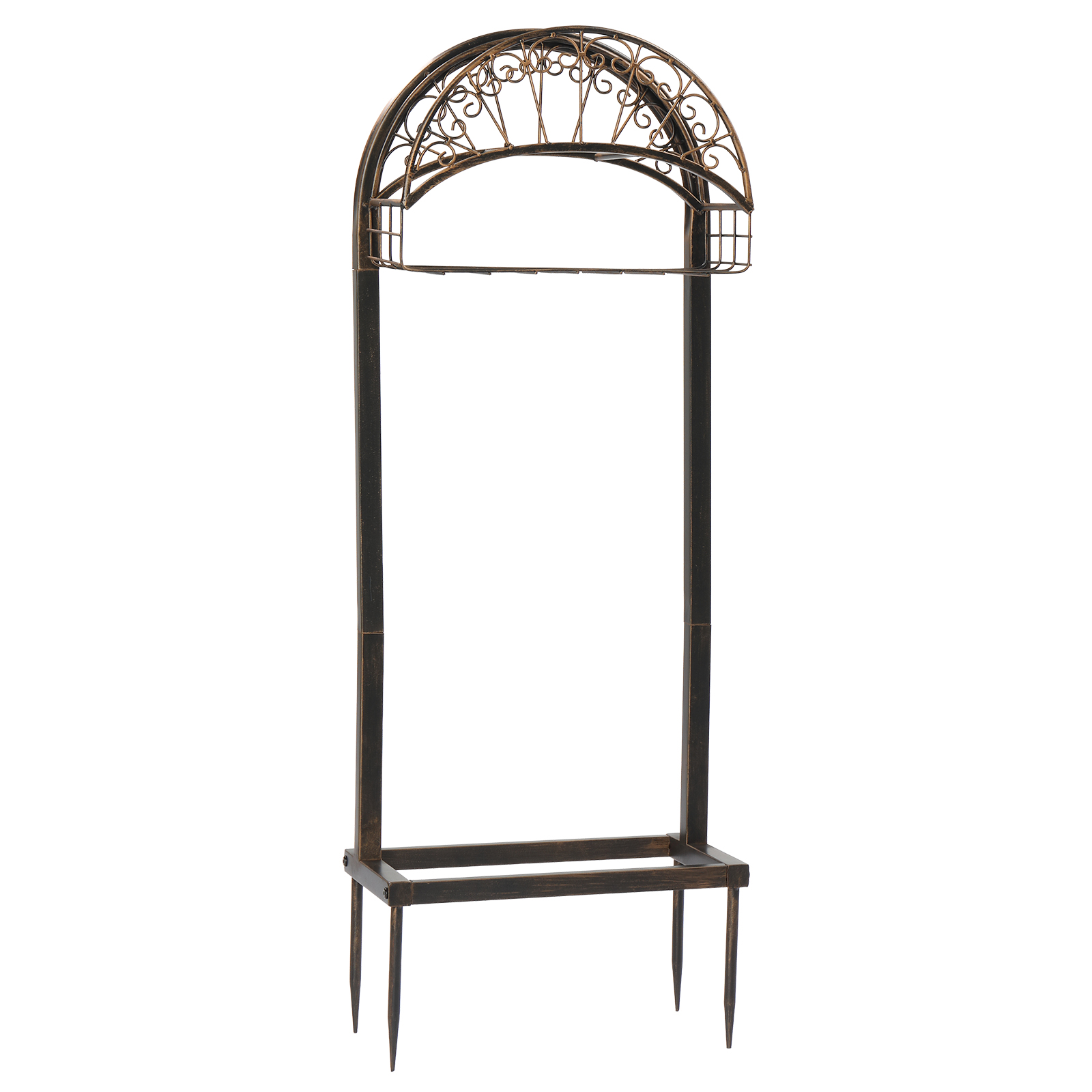 Garden Hose Holder, Water Stand with Storage Basket, Heavy Duty Freestanding Hanger Rack 4 Spikes for Outside Yard Lawn Farm, Bronze$39.99View on Mallflare
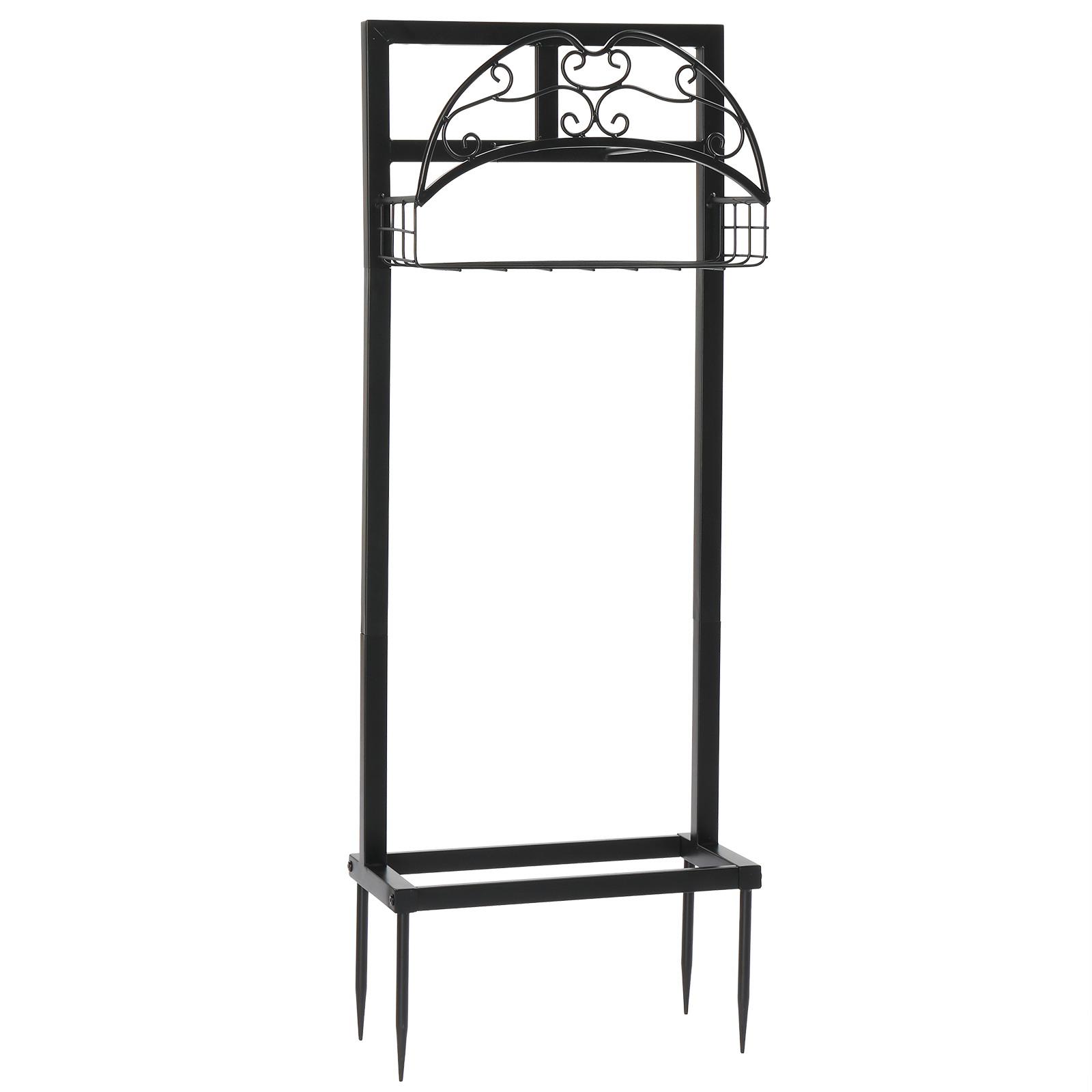 Garden Hose Holder, Water Stand with Storage Basket, Heavy Duty Freestanding Hanger Rack 4 Spikes for Outside Yard Lawn Farm, Black$48.99View on Mallflare
Highlights
- Wall-mounted reel capacity is rated in feet of 5/8-inch hose; heavy-duty steel reels typically hold 150–200 ft, while carts with 10-inch pneumatic wheels reach 300–400 ft.
- Freestanding stake stands rely on 4 ground spikes for stability—optimal in soft soil, but they tip under side load and are not frost-heave safe.
- Load rating is governed by anchor substrate: masonry with sleeve anchors supports 50+ lb charged hose, while drywall or vinyl siding requires stud or post mounting.
- Powder-coated steel outlasts painted or galvanized finishes against UV and rust; brass fittings resist cross-threading and mineral buildup better than plastic quick-connects.
Best use cases
- Long 150–200 ft hose runs along a house wall: pick a wall-mounted steel reel with brass connector—skip freestanding stakes that tip under full-hose weight.
- Large yard with 300–400 ft of hose and multiple spigots: pick a 4-wheel cart with 10-inch pneumatic tires and storage basket—skip fixed wall racks that cannot follow the work zone.
- Temporary garden bed or rental property: pick a 4-spike freestanding stand for tool-free setup—skip masonry anchors that require drilling and permanent mounting.
- Budget garage hook for coiling a short 50 ft hose off the ground: pick heavy-duty wall hooks rated for wet load—skip decorative thin-gauge racks that bend at the weld.
Buying tips
- Size the reel to hose length at 5/8-inch diameter: a 100 ft hose holds roughly 8–9 lb of water when charged, so wall anchors must support 30+ lb total with hardware.
- Wall-mount only into studs, masonry, or a reinforced post; a 200 ft reel loaded with hose exceeds 60 lb and will pull out of drywall or vinyl siding.
- Choose powder-coated steel over painted metal for outdoor UV and frost exposure; verify brass or nickel-plated fittings at the hose connection to prevent leaks.
- For carts, tire type decides terrain performance: 10-inch pneumatic rubber wheels roll over turf and gravel, while small solid plastic wheels bog down and crack in cold.
Specs
| Mount Type | Wall-mount / freestanding stake / wheeled cart |
|---|---|
| Hose Capacity | 150–200 ft wall; 300–400 ft cart (5/8-in) |
| Build Material | Powder-coated steel; brass fittings |
| Wheel/Tire Type | 10-in pneumatic rubber (carts) |
Related searches
What to check before buying
- Measure hose length and diameter (5/8-inch vs 1/2-inch) before choosing reel capacity—1/2-inch hose fits more feet per reel but kinks more easily.
- Confirm the mounting substrate: wood stud, brick, or concrete determine whether sleeve anchors, lag bolts, or a freestanding base is required.
- Check spigot distance and cart path width—a 400 ft cart needs a clear route and a storage footprint wider than its wheelbase.
- Verify climate compatibility: freestanding stakes lift in frost heave, and carts left outdoors need UV-stable tires and drainage holes in the basket.
FAQ
Data sources: eBay / Amazon listings and product attribute feeds. Updated Nov 28, 2026.
Some links on this page are affiliate links. If you buy after clicking one, we may earn a commission at no extra cost to you. This does not change which products appear here or their order. Affiliate disclosure.