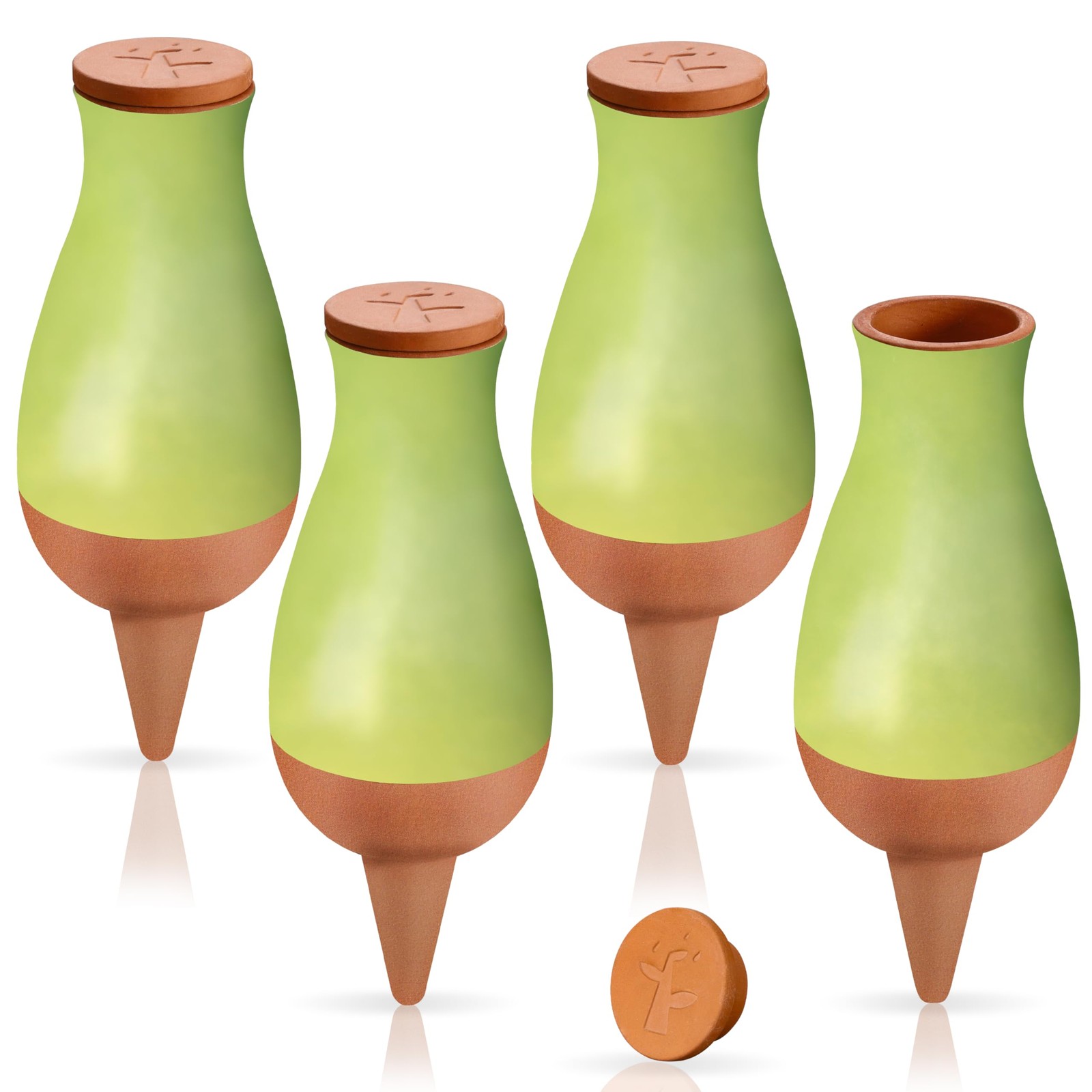

Photos from current listings. Actual item, color, and included accessories may vary.
Drip Stake Buying Guide
Drip stakes are the final delivery point in any drip system, and the wrong emitter style or spike length will either drown a root zone or leave it dry. Focus on flow rate, connection standard, and stake length for your container depth rather than decorative materials like ceramic. For indoor self-watering globes, capacity and wick or ceramic porosity are the only meaningful specs.
Key takeaways
- Emitter flow rates typically run 0.5, 1, 2, or 4 GPH; 0.5–1 GPH suits small pots, 2–4 GPH suits raised beds and shrubs.
- Barbed 1/4-inch stakes connect to standard 1/4-inch micro tubing; threaded 1/2-inch stakes thread into rigid PVC or poly risers.
- Stake length of 4–6 inches anchors in containers and annual beds; 8–12 inches is needed for deep-rooted perennials and windy sites.
At a glance
- Category
- Watering & Irrigation
- Last updated
- Nov 28, 2026
Current offers
Highlights
- Emitter flow rates typically run 0.5, 1, 2, or 4 GPH; 0.5–1 GPH suits small pots, 2–4 GPH suits raised beds and shrubs.
- Barbed 1/4-inch stakes connect to standard 1/4-inch micro tubing; threaded 1/2-inch stakes thread into rigid PVC or poly risers.
- Stake length of 4–6 inches anchors in containers and annual beds; 8–12 inches is needed for deep-rooted perennials and windy sites.
- Self-watering globes and ceramic spikes hold 6–12 oz and release passively by porosity or wick; they are not pressure-compensated drip emitters.
Best use cases
- Choose 0.5–1 GPH barbed stakes on 1/4-inch tubing for patio pots and herb planters where overwatering is the main risk.
- Use 2–4 GPH threaded or barbed stakes with 8–12 inch spikes for in-ground vegetable beds and shrubs on a timed zone.
- Pick ceramic or globe self-watering spikes only for short vacations or low-light houseplants; skip them for outdoor beds on a pressured drip zone.
- Avoid long 12-inch stakes in shallow 4–6 inch nursery pots, where they push past the root ball and deliver water to drainage.
Buying tips
- Check the emitter flow rate against container volume: 0.5–1 GPH per stake for pots under 3 gallons, 2 GPH and up for larger beds.
- Prioritize pressure-compensated or inline check-valve stakes on sloped terrain so lower emitters do not overwater.
- Size stake length to container depth: a stake should reach the lower root zone but not extend past the pot's drainage layer.
- Compare connection type first: barbed 1/4-inch for micro tubing, threaded 1/2-inch for rigid risers, and stake-style spikes for passive watering.
Specs
| Emitter Flow Rate | 0.5 / 1 / 2 / 4 GPH |
|---|---|
| Connection Standard | 1/4-in barbed / 1/2-in threaded |
| Stake Length | 4-6 in (pots) / 8-12 in (beds) |
| Watering Type | Active drip vs passive globe/ceramic |
Related searches
What to check before buying
- Measure your container depth and root zone depth before choosing 4–6 inch versus 8–12 inch stake lengths.
- Confirm your tubing size and fitting type: 1/4-inch barbed, 1/2-inch threaded, or integrated spike with no tubing connection.
- Check system pressure and whether you need pressure-compensating emitters for slope or long runs.
- For self-watering globes, match reservoir capacity to days away and plant water use, and ensure the spike fits the pot rim.
FAQ
Data sources: eBay / Amazon listings and product attribute feeds. Updated Nov 28, 2026.
Some links on this page are affiliate links. If you buy after clicking one, we may earn a commission at no extra cost to you. This does not change which products appear here or their order. Affiliate disclosure.