
Photos from current listings. Actual item, color, and included accessories may vary.
Drip Pipe Buying Guide
Drip pipe is the backbone of any low-flow irrigation system, but the term covers everything from thin polyethylene distribution tubing to pressure-compensating emitter line and rigid PVC mainline. Buying the wrong architecture for your water pressure, run length, or crop spacing leads to uneven watering, blown fittings, or emitters that clog within a season. Get the pipe type, diameter, and pressure class right first—then match emitters and fittings to that standard.
Median $36.23
Key takeaways
- Polyethylene drip line comes in two emitter architectures: pressure-compensating (PC) for long runs and elevation changes, and non-compensating (turbulent/tortuous) for short, level plots.
- Distribution tubing carries water without built-in emitters—typically 1/2 in or 3/4 in PE—and requires separate punch-in drippers or micro-spray jets.
- Pressure class matters: 4.4 psi to 15 psi working ranges are common for PC emitters; standard PE tubing is rated for 25–60 psi depending on wall thickness.
At a glance
- Category
- Watering & Irrigation
- Last updated
- Nov 28, 2026
Current offers
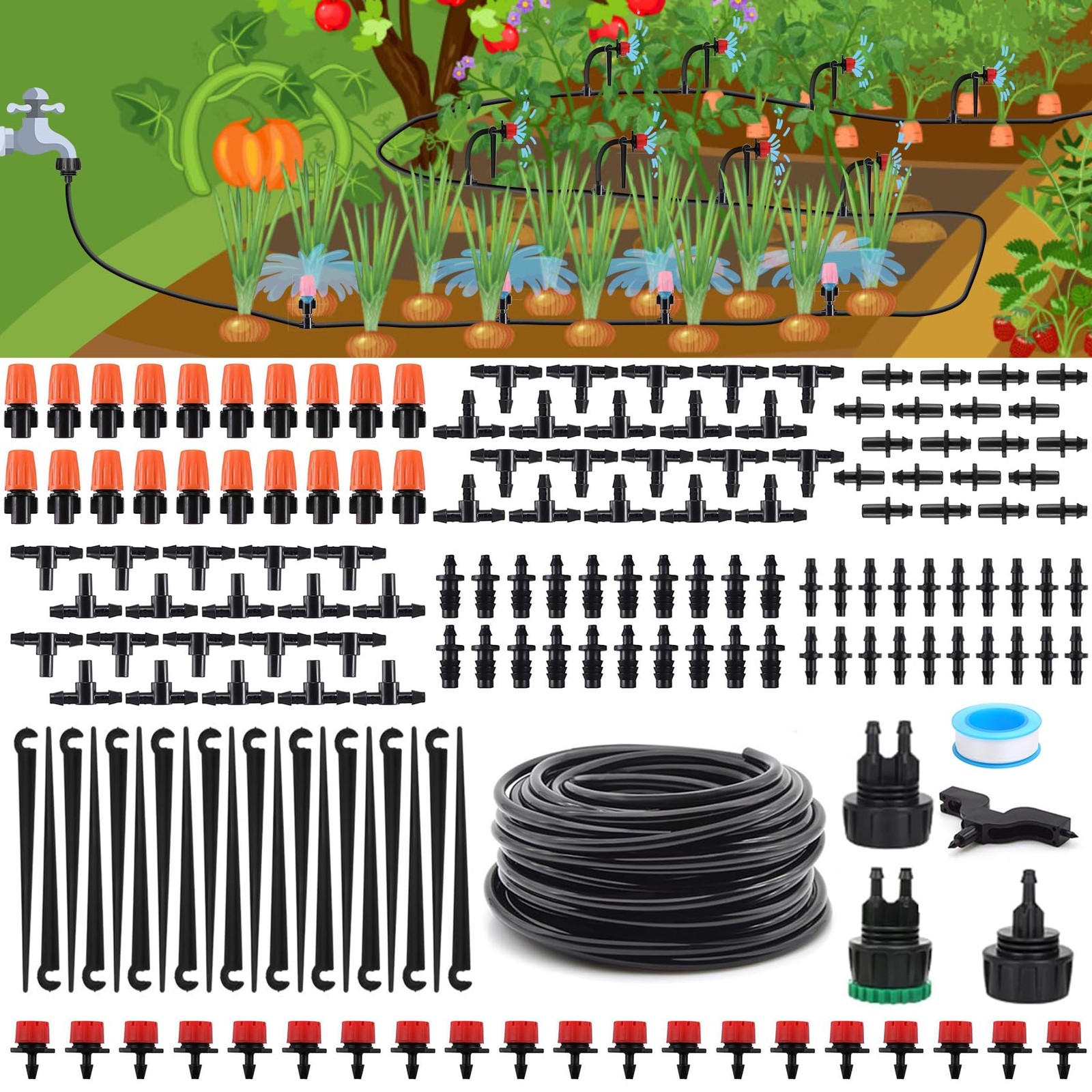 Flantor Garden Irrigation System 1/4Blank Distribution Tubing Watering Drip Kit$27.08Last checked Nov 23, 2026View on eBay
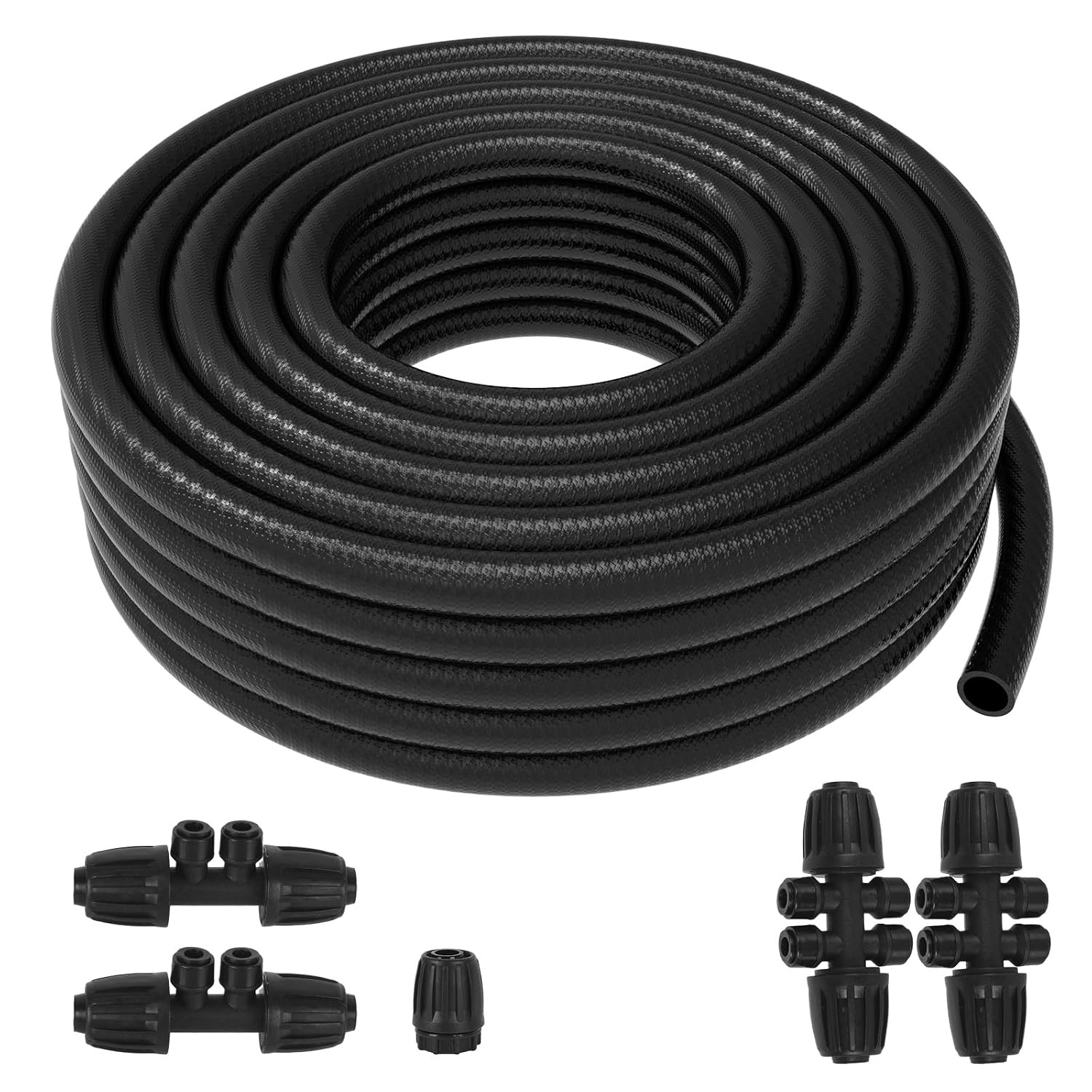 50 FT 1/2 Inch Drip Irrigation Tubing Kit:Premium Garden and Landscape Watering$36.23View on eBay
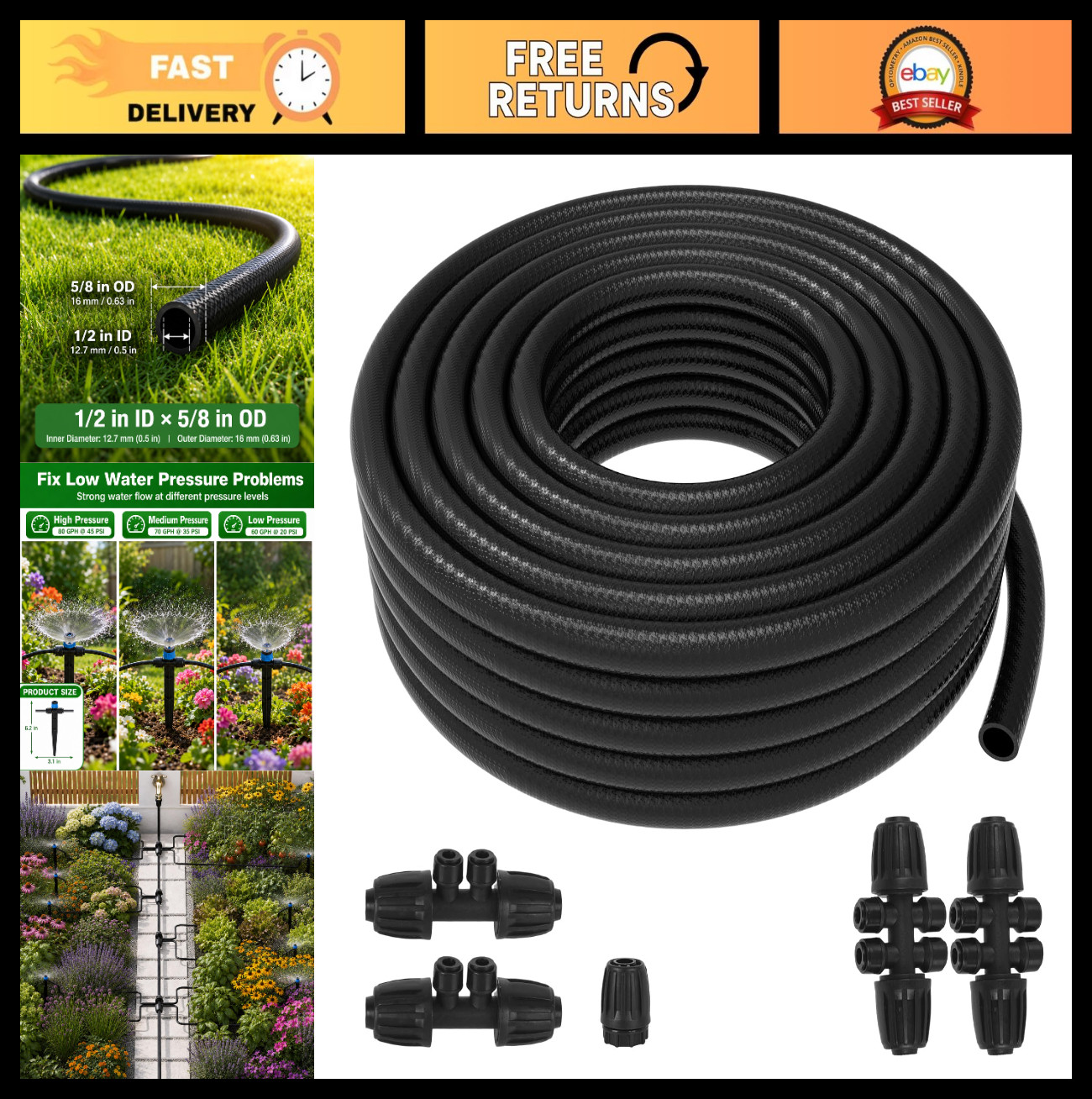 50 FT 1/2" Drip Irrigation Tubing Kit - Garden Watering System with Connectors &$39.59View on eBay
Highlights
- Polyethylene drip line comes in two emitter architectures: pressure-compensating (PC) for long runs and elevation changes, and non-compensating (turbulent/tortuous) for short, level plots.
- Distribution tubing carries water without built-in emitters—typically 1/2 in or 3/4 in PE—and requires separate punch-in drippers or micro-spray jets.
- Pressure class matters: 4.4 psi to 15 psi working ranges are common for PC emitters; standard PE tubing is rated for 25–60 psi depending on wall thickness.
- Emitter spacing (6, 9, 12, 18, 24 in) and flow rate (0.5, 1.0, 2.0 GPH) determine wetting pattern and must match soil type and plant row spacing.
Best use cases
- Choose pressure-compensating drip line with 0.5 or 1.0 GPH emitters for runs over 100 ft, hilly terrain, or multi-zone systems where uniform output matters.
- Pick non-compensating turbulent-flow drip line for raised beds under 50 ft with level ground and a single watering zone—it costs less and works fine at low pressure.
- Use blank 1/2 in or 3/4 in distribution tubing for custom layouts with punch-in drippers, micro-sprayers, or spaghetti tubing to individual pots.
- Skip thin-wall drip tape for permanent perennial beds—it is a single-season product; choose rigid PE drip line or PVC mainline for multi-year installations.
Buying tips
- Check your water source pressure first: PC drip line needs a minimum inlet pressure (often 10–15 psi) to regulate properly; gravity-fed rain barrels may require non-compensating line.
- Prioritize wall thickness for durability: 15 mil or 20 mil PE tubing resists UV degradation and rodent damage better than 8–10 mil drip tape in permanent landscapes.
- Avoid mixing emitter flow rates on one zone without calculating total flow—each emitter adds to the zone's GPM demand and must stay within your valve and filter capacity.
- Inspect fitting compatibility before ordering: 1/2 in barbed fittings vary by outside diameter (0.620 in vs 0.700 in), so match pipe spec to the fitting brand's standard.
Specs
| Emitter Type | Pressure-compensating vs non-compensating |
|---|---|
| Tubing Diameter | 1/2 in, 3/4 in, 1 in PE |
| Wall Thickness | 8–20 mil (drip tape vs rigid PE) |
| Emitter Spacing | 6–24 in on-center |
Related searches
What to check before buying
- Measure your longest run and elevation change—PC line is required if the run exceeds 100 ft or the plot slopes more than a few feet.
- Confirm your water source delivers at least the minimum pressure your chosen emitter type requires; gravity systems need low-pressure or non-compensating emitters.
- Verify filter availability: drip pipe emitters clog on sediment, so a 120–200 mesh filter is mandatory upstream of any drip line.
- Check that your zone valve or timer can supply the total GPM of all emitters on the line—add up emitter count times flow rate before buying.
FAQ
Data sources: eBay / Amazon listings and product attribute feeds. Updated Nov 28, 2026.
Some links on this page are affiliate links. If you buy after clicking one, we may earn a commission at no extra cost to you. This does not change which products appear here or their order. Affiliate disclosure.