
Photos from current listings. Actual item, color, and included accessories may vary.
Drip Emitter Buying Guide
Drip emitters are the metering devices that deliver precise water volumes to individual plants through 1/4-inch micro-tubing or 1/2-inch mainline. The core trade-off is between adjustable turbulent-path emitters (flexible flow, clog-prone at low pressure) and fixed-pressure-compensating emitters (uniform output across long runs, higher cost). Buy pressure-compensating or high-quality barbed emitters for permanent systems; choose adjustable stake emitters only for small, monitored container gardens.
Median $9.29
Key takeaways
- Flow rate standards: fixed emitters are rated 0.5, 1, 2, or 4 GPH; pressure-compensating models hold ±5% output from 10–45 PSI, while non-compensating adjustable types vary with line pressure.
- Barbed 1/4-inch emitters fit 0.160–0.170 inch ID micro-tubing; 1/2-inch mainline uses 0.600–0.620 inch ID poly tubing with corresponding barbed tees or punch tools.
- Adjustable emitters use a needle valve or rotating cap; their narrow orifices clog faster in hard water (over 150 ppm calcium) and need a 200-mesh filter, whereas turbulent-path fixed emitters tolerate 120-mesh.
At a glance
- Category
- Watering & Irrigation
- Last updated
- Nov 28, 2026
Current offers
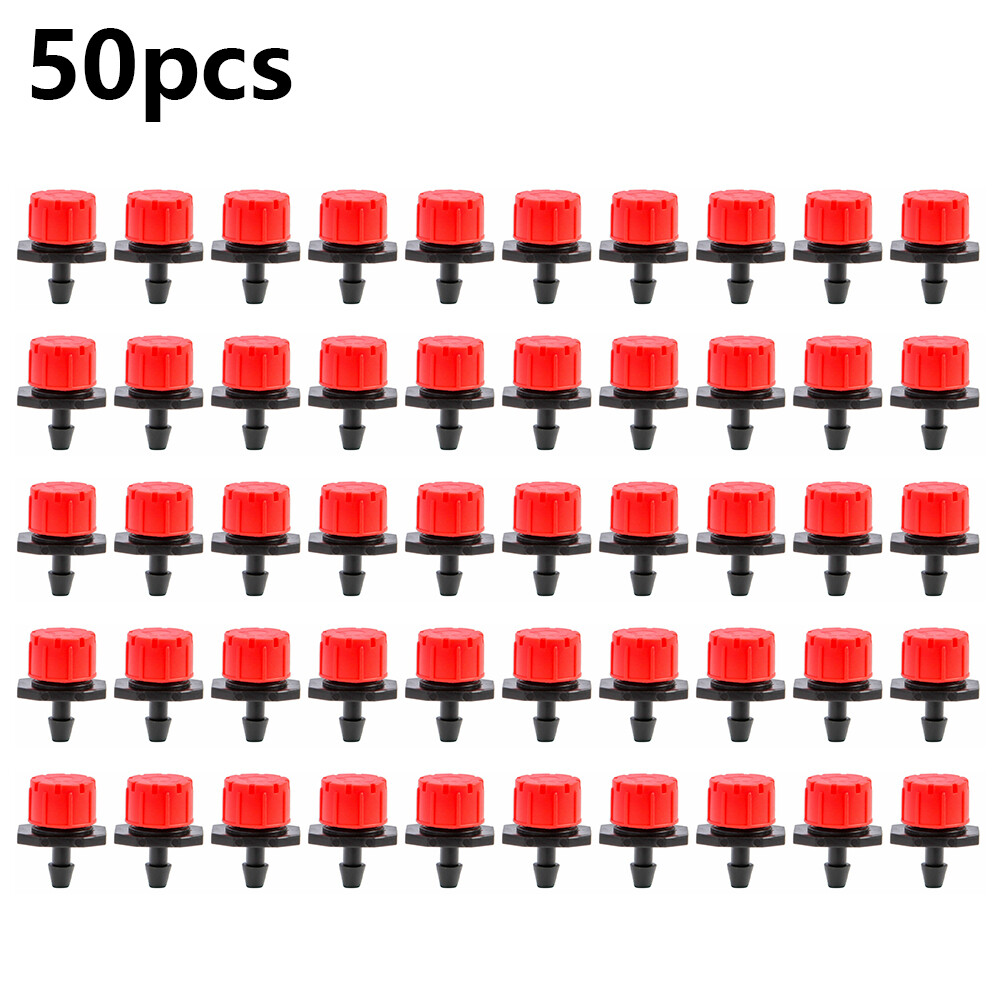 Adjustable Emitter Dripper Micro Drip Irrigation Sprinkler Watering System Lots$7.51View on eBay
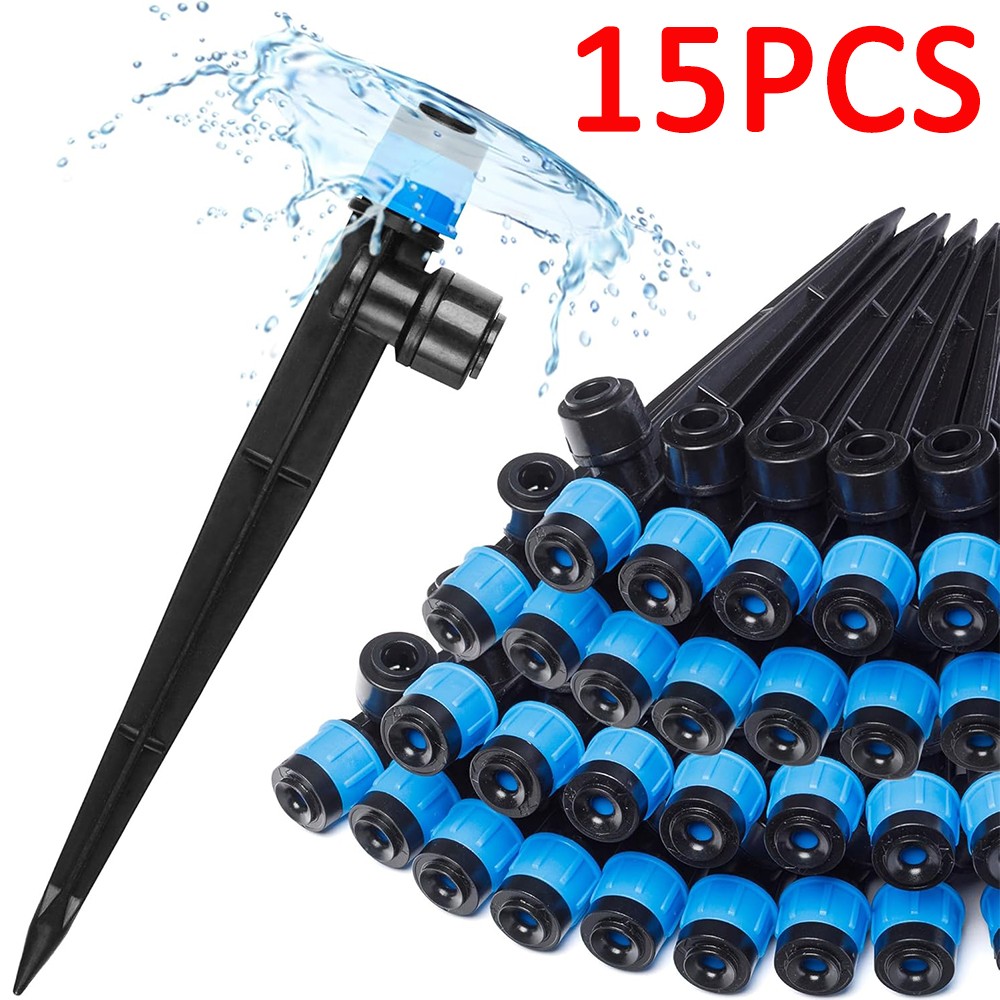 30Pcs Drip Irrigation Emitter 1/4" Garden Drip Watering System 360° Adjustable$9.29Last checked Nov 19, 2026View on eBay
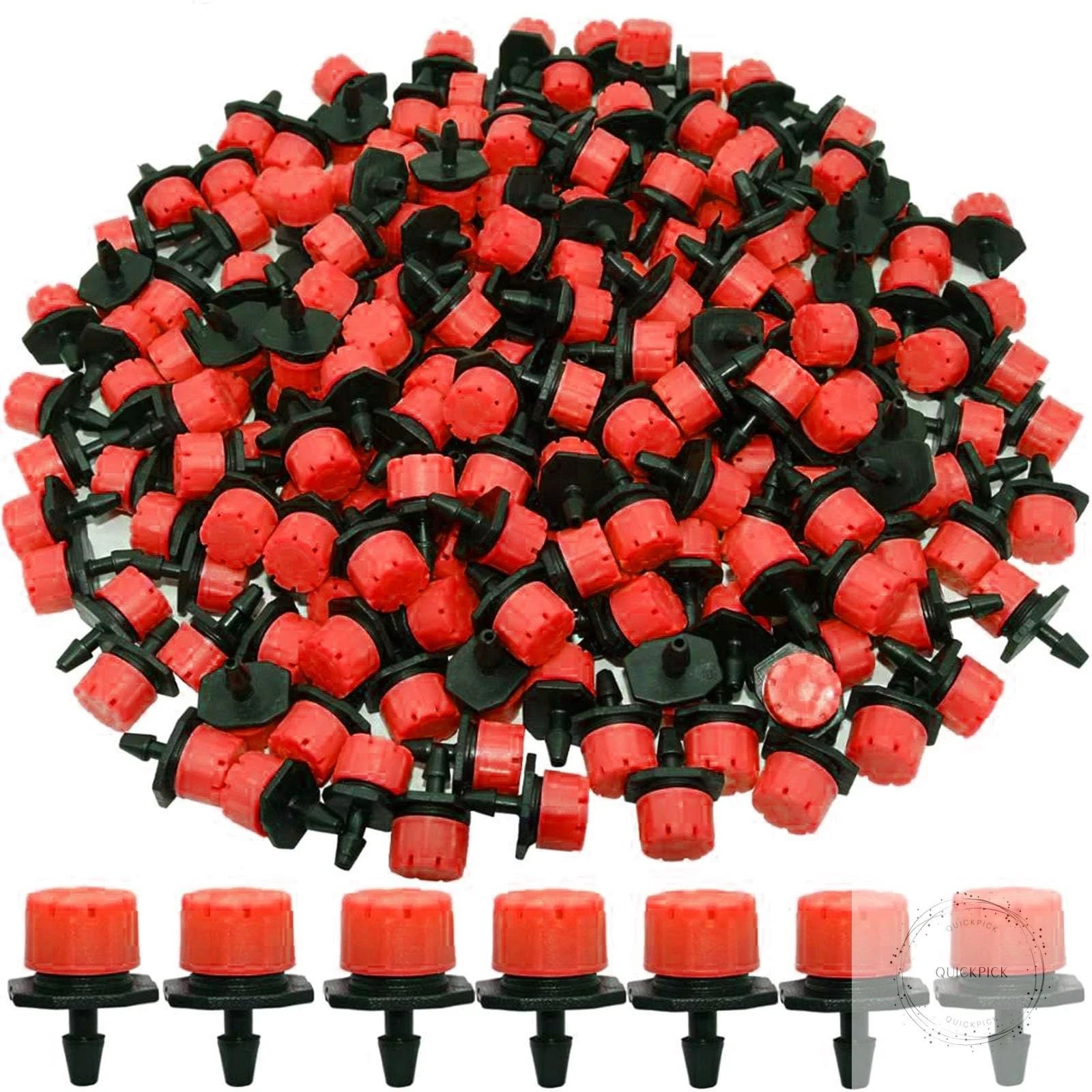 200Pcs Adjustable Drip Irrigation Emitters 1/4Inch Adjustable Micro Drip Irrigat$18.98Last checked Nov 19, 2026View on eBay
Highlights
- Flow rate standards: fixed emitters are rated 0.5, 1, 2, or 4 GPH; pressure-compensating models hold ±5% output from 10–45 PSI, while non-compensating adjustable types vary with line pressure.
- Barbed 1/4-inch emitters fit 0.160–0.170 inch ID micro-tubing; 1/2-inch mainline uses 0.600–0.620 inch ID poly tubing with corresponding barbed tees or punch tools.
- Adjustable emitters use a needle valve or rotating cap; their narrow orifices clog faster in hard water (over 150 ppm calcium) and need a 200-mesh filter, whereas turbulent-path fixed emitters tolerate 120-mesh.
- Stake emitters (fan-spray or 360-degree micro-spray) distribute water over a radius of 6–12 inches, while drip emitters deliver a point source; stake types suit densely planted beds, drip types suit individual shrubs and containers.
Best use cases
- Pick pressure-compensating 0.5–1 GPH emitters for long mainline runs over 30 feet or sloped beds where uniform output matters; skip adjustable emitters because pressure differences will starve the far end.
- Choose adjustable 360-degree or fan-spray stake emitters for raised beds and seasonal vegetable gardens where you tune flow per plant; skip them on permanent landscapes with hard water unless you install a 200-mesh filter.
- Use 1/4-inch barbed fixed emitters for container pots and patio planters fed from a 1/2-inch mainline; skip micro-spray stakes for pots because overspray wastes water and promotes foliar disease.
- For automatic timers (e.g., VIVOSUN A10 kits with 16 emitters), pair with pressure-compensating emitters rated for the timer's 15–30 PSI output; skip high-flow 4 GPH emitters on battery timers because they drain valves and reduce zone capacity.
Buying tips
- Match emitter flow to soil: 0.5 GPH for clay/loam and containers, 1 GPH for sandy loam, 2 GPH for sandy soil; total emitter draw must not exceed 70% of the timer valve's rated flow.
- Count emitters per zone: with a 1/2-inch mainline at 25 PSI, keep total flow under 220 GPH per zone; that is about 220 one-GPH emitters or 110 two-GPH emitters before pressure drops.
- Select barbed fittings sized to your tubing ID, not OD: 1/4-inch emitters require 0.160–0.170 inch ID tubing, and 1/2-inch mainline requires 0.600–0.620 inch ID; mismatched barbs leak or blow off.
- Choose pressure-compensating emitters for runs over 30 feet or elevation changes over 3 feet; choose non-compensating adjustable emitters only for short runs where you can inspect flow weekly.
Specs
| Flow Rating | 0.5 / 1 / 2 / 4 GPH |
|---|---|
| Compensation | Pressure-compensating vs adjustable |
| Tubing Fit | 1/4 in barb (0.160–0.170 in ID) |
| Filtration Need | 200-mesh (adj) / 120-mesh (fixed) |
Related searches
What to check before buying
- Measure your mainline and micro-tubing inner diameters with calipers; confirm 0.160–0.170 inch ID for 1/4-inch emitters and 0.600–0.620 inch ID for 1/2-inch mainline before ordering barbed fittings.
- Test water hardness and sediment: above 150 ppm hardness or visible sediment requires a 200-mesh filter and favors turbulent-path emitters over needle-valve adjustable types.
- Confirm your timer or faucet supplies 15–30 PSI; pressure-compensating emitters need at least 10 PSI to regulate, and drip systems generally cap at 45 PSI with a regulator.
- Plan emitter count per plant: one 1 GPH emitter per 1–2 square feet of canopy for vegetables, two 2 GPH emitters per shrub, and one 0.5 GPH emitter per 6-inch pot.
FAQ
Data sources: eBay / Amazon listings and product attribute feeds. Updated Nov 28, 2026.
Some links on this page are affiliate links. If you buy after clicking one, we may earn a commission at no extra cost to you. This does not change which products appear here or their order. Affiliate disclosure.