
Photos from current listings. Actual item, color, and included accessories may vary.
Automatic Plant Watering System Indoor Buying Guide
An indoor automatic plant watering system is a small pump-and-timer rig that delivers measured water to potted plants over days or weeks, replacing hand watering during vacations or for high-maintenance collections. The core trade-off is between passive ceramic/rope wicks (zero power, no control) and powered diaphragm-pump kits (programmable schedules, but dependent on battery or USB power and emitter count). Buy powered kits with a real programmable timer and per-plant emitters if you need scheduling; choose passive wicks only for a handful of small, similarly thirsty pots.
Median $29.99
Key takeaways
- Powered kits use a low-voltage diaphragm pump (typically 3-12V DC, USB or rechargeable 18650 cell) pushing water through 4/7mm ID tubing to adjustable drip emitters.
- Programmable timers set frequency (every 1-30 days) and run time (seconds to minutes); LCD models allow per-cycle tuning, while dial or single-button timers offer only fixed intervals.
- Passive systems rely on ceramic cones or cotton/rope wicks moving water by capillary action—no electricity, but flow rate varies with soil moisture and cannot be scheduled.
At a glance
- Category
- Watering & Irrigation
- Last updated
- Nov 28, 2026
Current offers
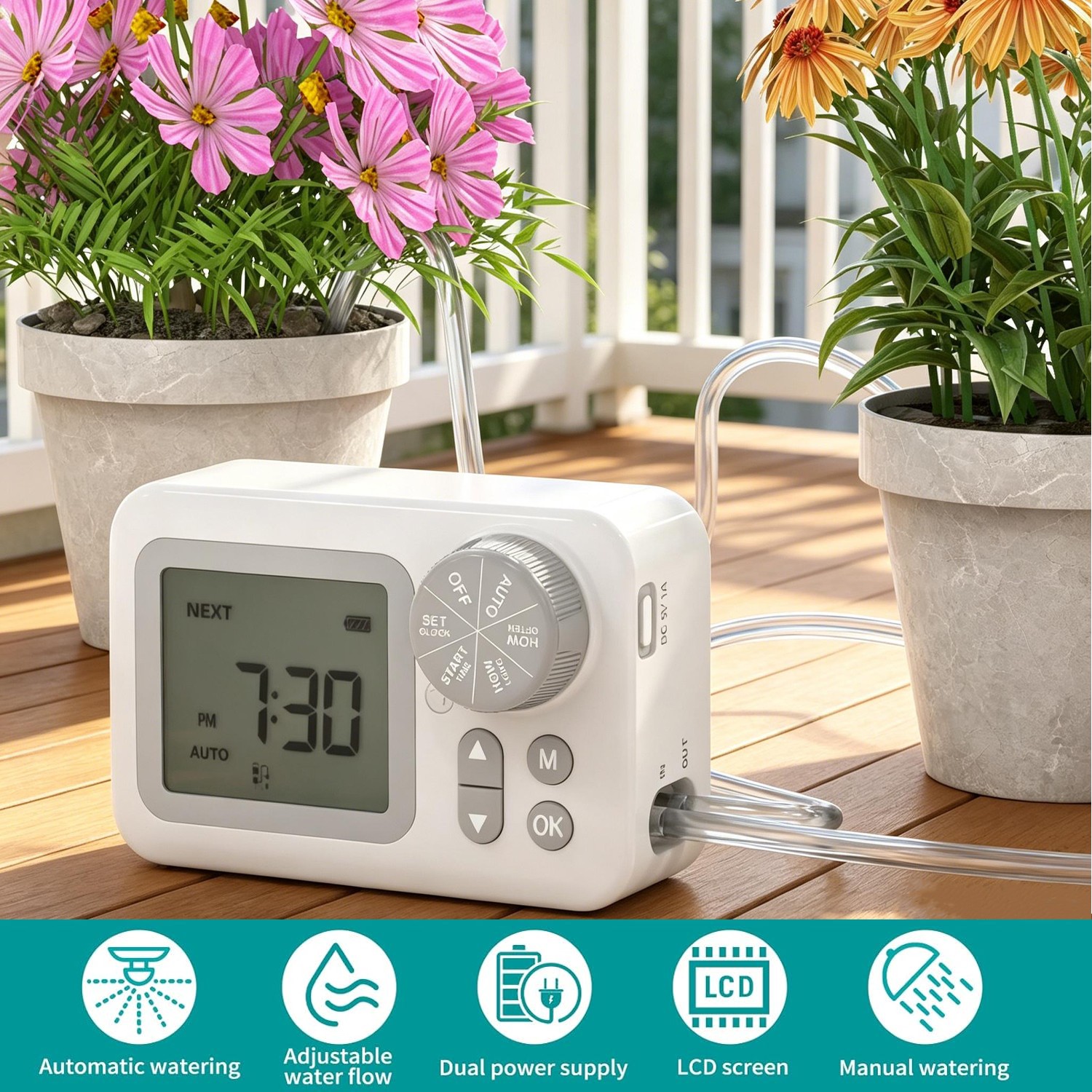 Automatic Garden Drip Irrigation Kit, Indoor Plant Watering System for Plants,h$17.99View on eBay
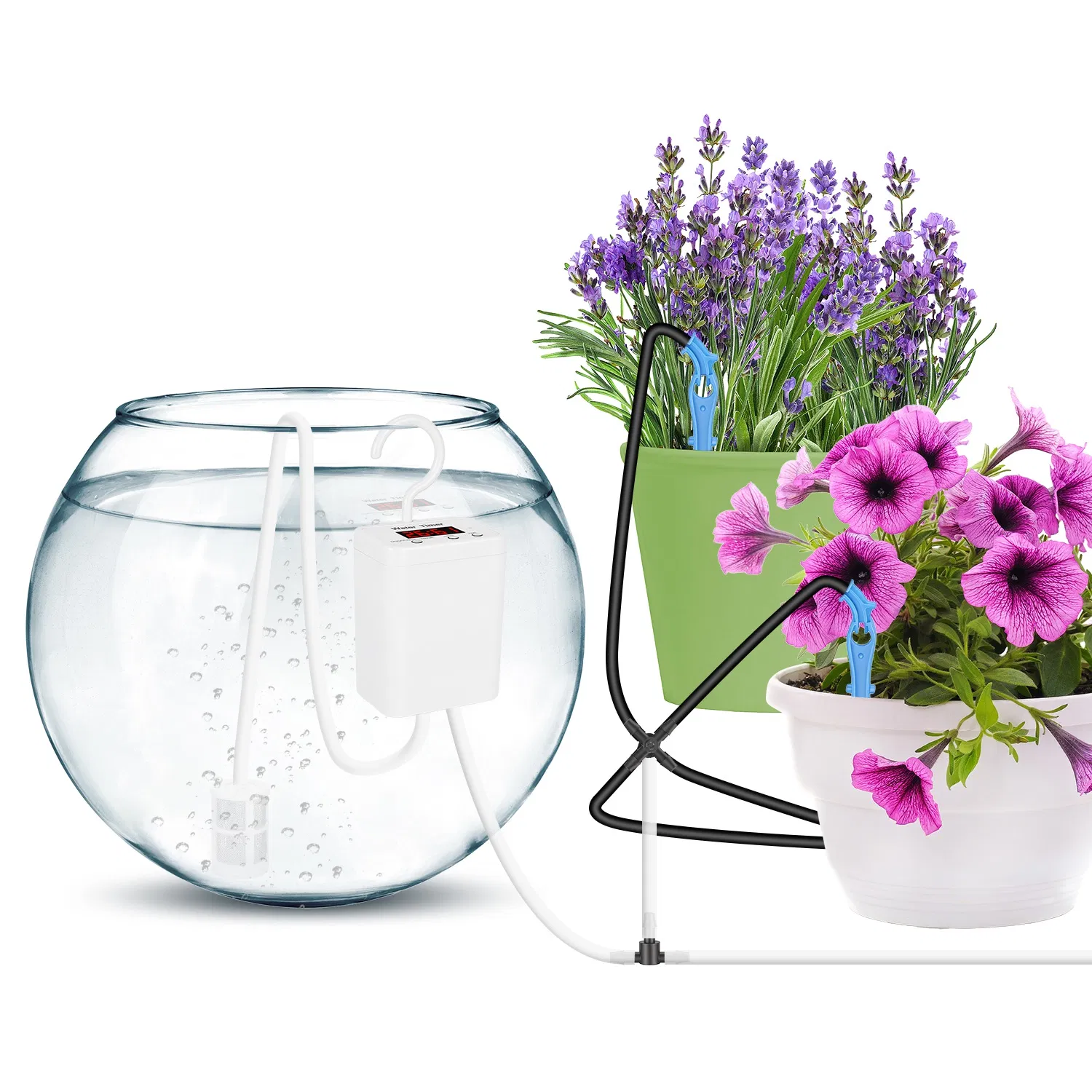 Automatic Plant Watering Device Indoor Drip Irrigation System with LCD Display Rechargeable Adjustable Timer for Up to 16 Arrows Vacation Self for Houseplant$35.99View on Mallflare
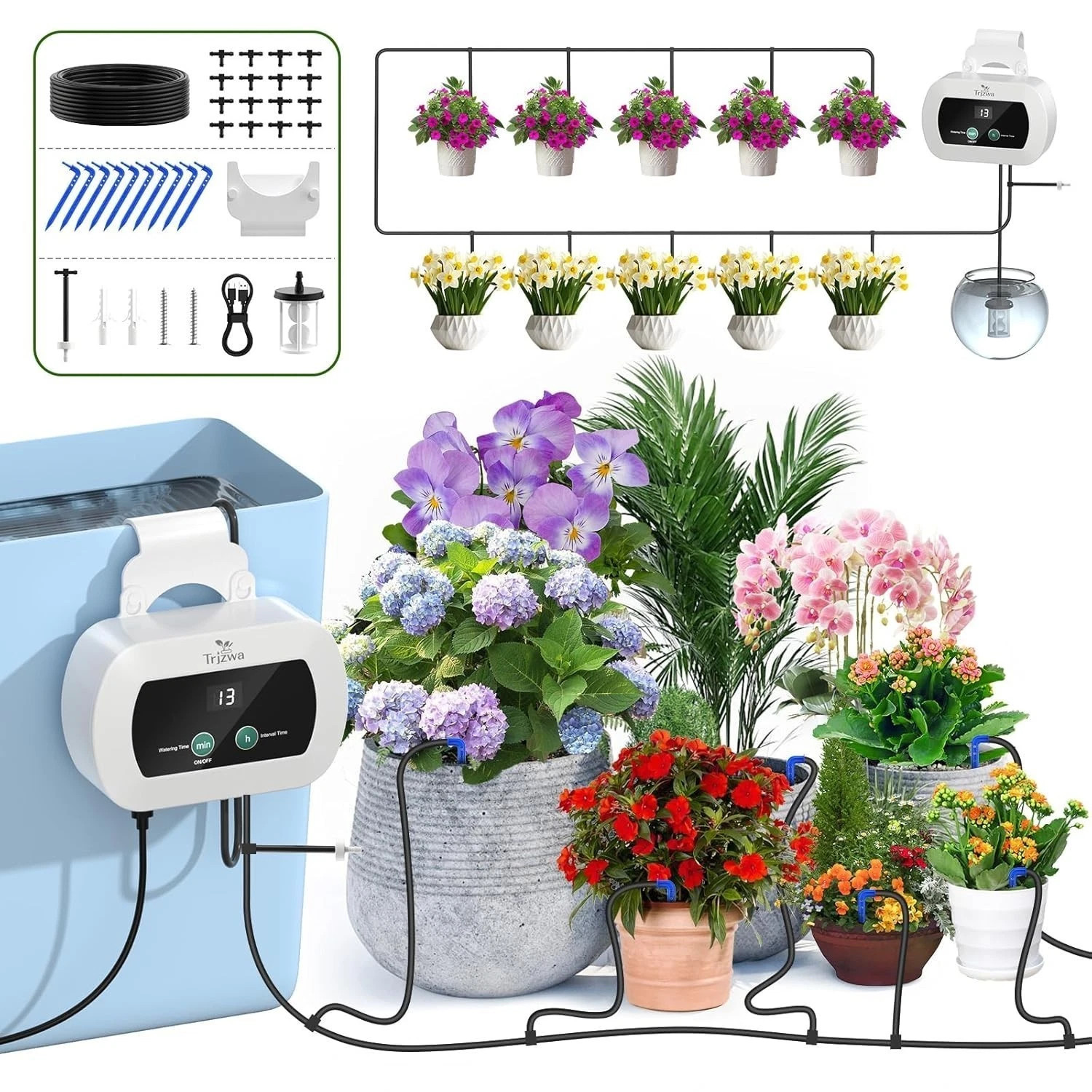 Watering System Automatic with Self Plant Watering Devices,Indoor Watering Set$23.99Last checked Nov 19, 2026View on eBay
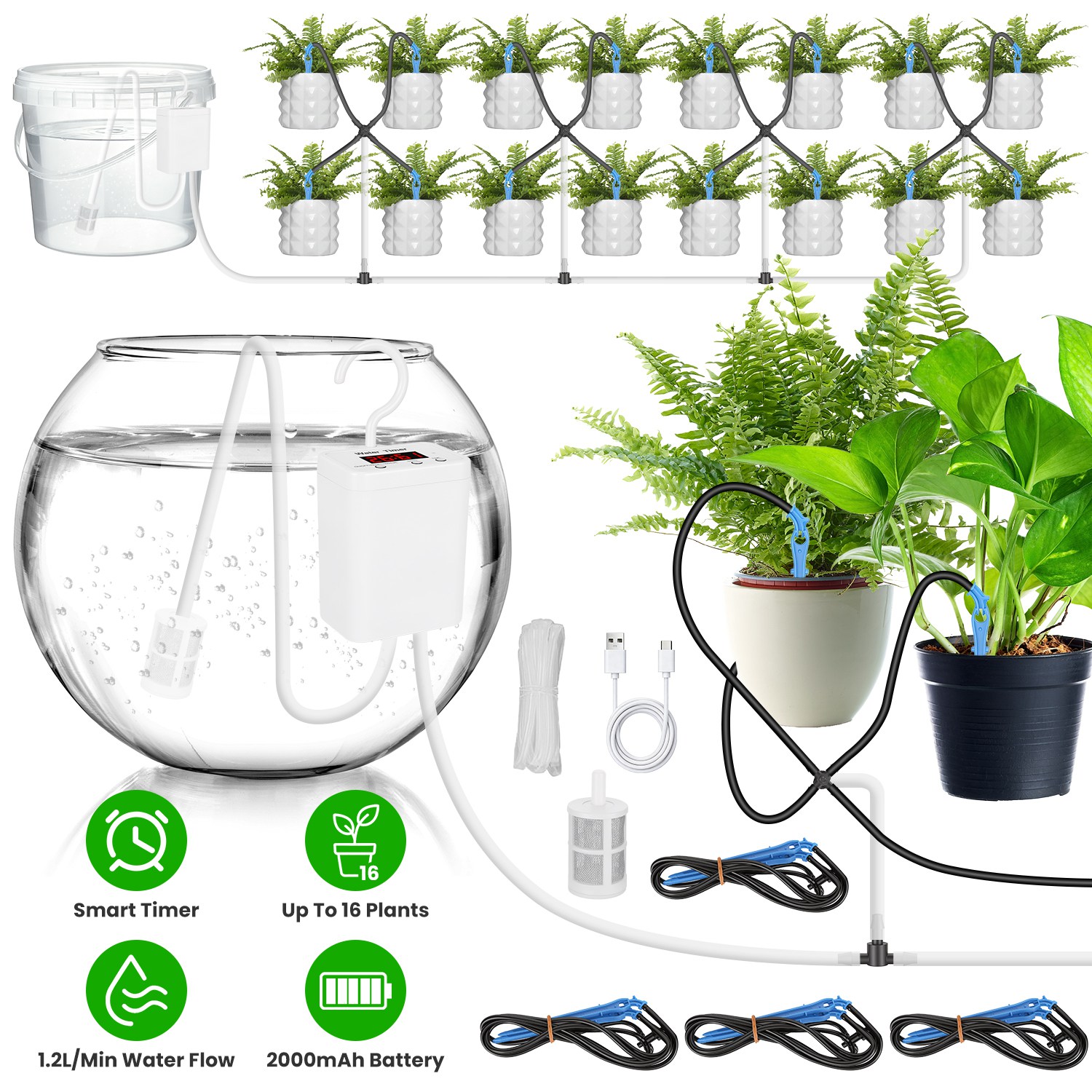 1Pc Automatic Plant Watering Device Indoor Drip Irrigation System With LCD Display Rechargeable Adjustable Timer For Up To 16 Arrows Vacation Self For House$37.99View on Mallflare
Highlights
- Powered kits use a low-voltage diaphragm pump (typically 3-12V DC, USB or rechargeable 18650 cell) pushing water through 4/7mm ID tubing to adjustable drip emitters.
- Programmable timers set frequency (every 1-30 days) and run time (seconds to minutes); LCD models allow per-cycle tuning, while dial or single-button timers offer only fixed intervals.
- Passive systems rely on ceramic cones or cotton/rope wicks moving water by capillary action—no electricity, but flow rate varies with soil moisture and cannot be scheduled.
- Emitter count defines capacity: 12- and 16-arrow kits handle that many pots only if pump head pressure and tubing run length stay short (under ~5m per branch).
Best use cases
- Best fit: vacation watering for 6-16 indoor pots—pick a rechargeable LCD timer kit with 12-16 adjustable emitters and 4/7mm tubing; skip single-cone passive stakes for anything longer than a week.
- Best fit: a few small, evenly thirsty houseplants on a shelf—passive ceramic stakes or rope wicks work with zero power and no programming; skip them for mixed plant types needing different volumes.
- Best fit: high-humidity terrarium or seedling trays—use a low-flow misting or drip manifold on a short cycle; skip high-output garden drip kits, which oversaturate small containers.
- Wrong fit: outdoor beds, large floor planters, or rain-exposed balconies—indoor kits are not weather-rated and pump head is too low; use a hose-end or faucet-tap timer instead.
Buying tips
- Match emitter count to pot count plus 20% spare: a 12-arrow kit covers about 10 pots once you allow for splitters and a spare line.
- Choose adjustable drip emitters (0-60 ml/min typical) over fixed drippers so you can tune flow per plant instead of equalizing all pots.
- Confirm tubing standard: 4/7mm (inner/outer) is the common indoor kit size; 3/5mm micro tubing needs matching barbed connectors and is easier to kink.
- Prefer USB-C rechargeable or USB-powered pumps with a low-water indicator; alkaline AA timers cost more over a season and give no runtime feedback.
Specs
| System Type | Pump + timer vs passive wick/cone |
|---|---|
| Power Source | USB-C rechargeable / USB / none |
| Emitter Count | 4-16 adjustable drip arrows |
| Tubing Standard | 4/7mm ID/OD micro tubing |
Related searches
What to check before buying
- Count pots and measure the longest tubing run from reservoir to farthest plant; keep each branch under about 5m and total head under the pump's rated lift.
- Verify reservoir size against trip length: a 2-5L tank typically lasts 1-3 weeks for 10 small pots on a weekly cycle—size up for longer absences.
- Confirm power source and plug standard: USB-C rechargeable or USB adapter for indoor use; do not rely on solar or outdoor-rated transformers indoors.
- Check pot and soil fit: drip stakes need firm soil and a pot rim wide enough to clip the 4/7mm line without tipping; ceramic cones need deep, moist soil contact.
FAQ
Data sources: eBay / Amazon listings and product attribute feeds. Updated Nov 28, 2026.
Some links on this page are affiliate links. If you buy after clicking one, we may earn a commission at no extra cost to you. This does not change which products appear here or their order. Affiliate disclosure.