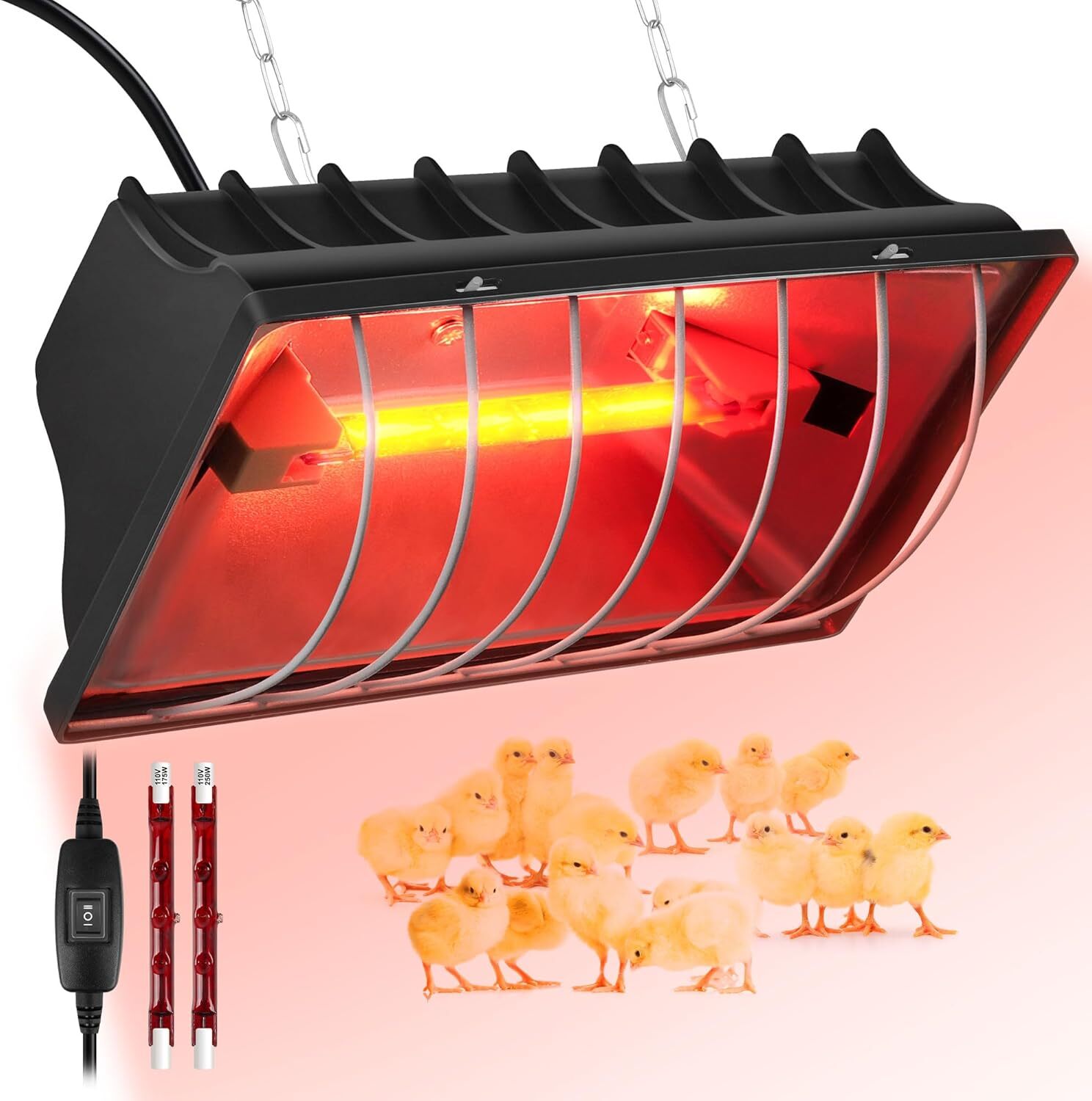

Photos from current listings. Actual item, color, and included accessories may vary.
Heat Lamp Buying Guide
A heat lamp for chicks is a radiant brooder heat source that warms animals without heating the whole coop, and the core trade-off is between cheap incandescent bulbs that burn out fast versus ceramic or carbon elements with real thermostats. Buyers should choose a lamp with a ceramic socket, a safety cage, and an independent thermostat; anything with a plastic socket or unguarded bulb is a fire risk, not a brooder.
Median $28.72
Key takeaways
- Socket material decides durability: porcelain or ceramic handles 250W bulbs without melting, while plastic sockets deform and fail at brooder temperatures.
- Bulb type sets heat style: red incandescent gives visible light and reduces pecking, ceramic emits only infrared heat and lasts 5,000+ hours, carbon fiber warms instantly.
- Wattage tiers map to flock size: 250W covers roughly 25-50 chicks in a draft-free brooder, 150W handles 10-20, and 100W suits small batches or quail.
At a glance
- Category
- Chicken Brooders & Heat
- Last updated
- Nov 24, 2026
Current offers
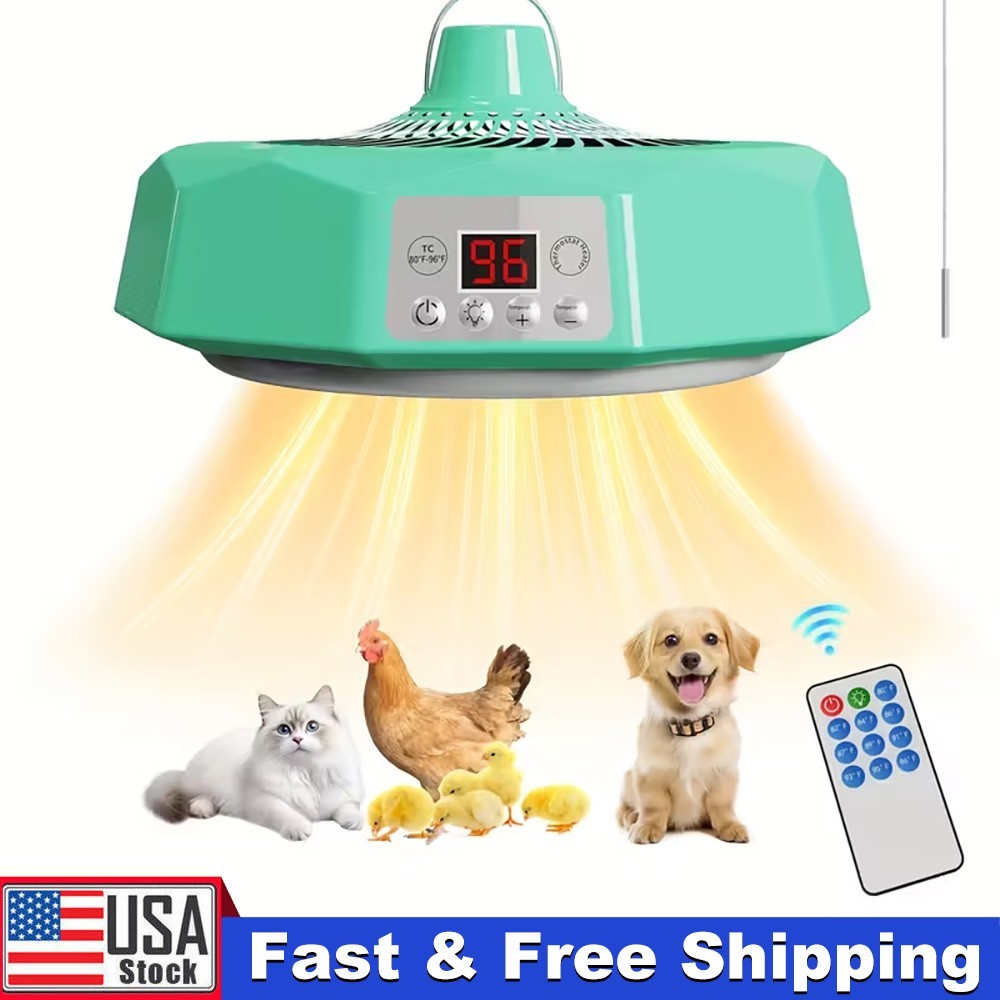
Highlights
- Socket material decides durability: porcelain or ceramic handles 250W bulbs without melting, while plastic sockets deform and fail at brooder temperatures.
- Bulb type sets heat style: red incandescent gives visible light and reduces pecking, ceramic emits only infrared heat and lasts 5,000+ hours, carbon fiber warms instantly.
- Wattage tiers map to flock size: 250W covers roughly 25-50 chicks in a draft-free brooder, 150W handles 10-20, and 100W suits small batches or quail.
- A built-in thermostat or dimmer beats fixed output: adjustable models hold 95°F at chick level and step down 5°F per week without moving the lamp.
Best use cases
- Best fit: a 250W ceramic-socket lamp with clamp and hanging chain for a garage brooder box raising 25+ chicks; skip plastic-socket lamps entirely.
- Best fit: a 150W red incandescent lamp on a dimmer for a small 10-chick tote in a spare room; choose red over white to cut pecking and stress.
- Wrong fit: any heat lamp used in a wet or unventilated coop without a cage and GFCI outlet; moisture plus a hot bulb is the leading cause of brooder fires.
- Wrong fit: a remote-control timing lamp as the sole heat source; timers cycle off and can chill chicks, so pair them with a thermostat or leave heat constant.
Buying tips
- Match wattage to brooder area: plan 250W for 15-20 sq ft, 150W for 8-12 sq ft, and hang the lamp 18-20 inches above chick backs, raising it 3-4 inches weekly.
- Insist on a ceramic or porcelain socket rated for 250W and a metal safety cage; plastic sockets and uncaged bulbs are the top failure points in brooders.
- Choose a lamp with a mechanical or digital thermostat over a plain on/off switch, so heat holds 95°F in week one and drops 5°F each week.
- For outdoor or damp coops, pick a sealed ceramic heat emitter with an IP-rated fixture and run it through a GFCI-protected outlet.
Specs
| Socket Type | Ceramic/porcelain vs plastic |
|---|---|
| Wattage Tier | 100W / 150W / 250W |
| Bulb Style | Red incandescent / ceramic / carbon |
| Heat Control | Fixed / dimmer / thermostat |
Related searches
What to check before buying
- Measure your brooder footprint and ceiling height; a 250W lamp needs at least 18 inches of clearance and a 15-20 sq ft area to avoid overheating.
- Confirm the fixture hangs from a chain or clamp rated for the lamp weight, and that the cord reaches a GFCI outlet outside the wet zone.
- Check bulb compatibility: ceramic sockets take incandescent, ceramic, and carbon bulbs, but plastic sockets are limited to low-wattage bulbs only.
- Verify the brooder has cross-ventilation and a cool zone at least 3 feet away, so chicks can self-regulate away from the lamp.
FAQ
Data sources: eBay / Amazon listings and product attribute feeds. Updated Nov 24, 2026.
Some links on this page are affiliate links. If you buy after clicking one, we may earn a commission at no extra cost to you. This does not change which products appear here or their order. Affiliate disclosure.