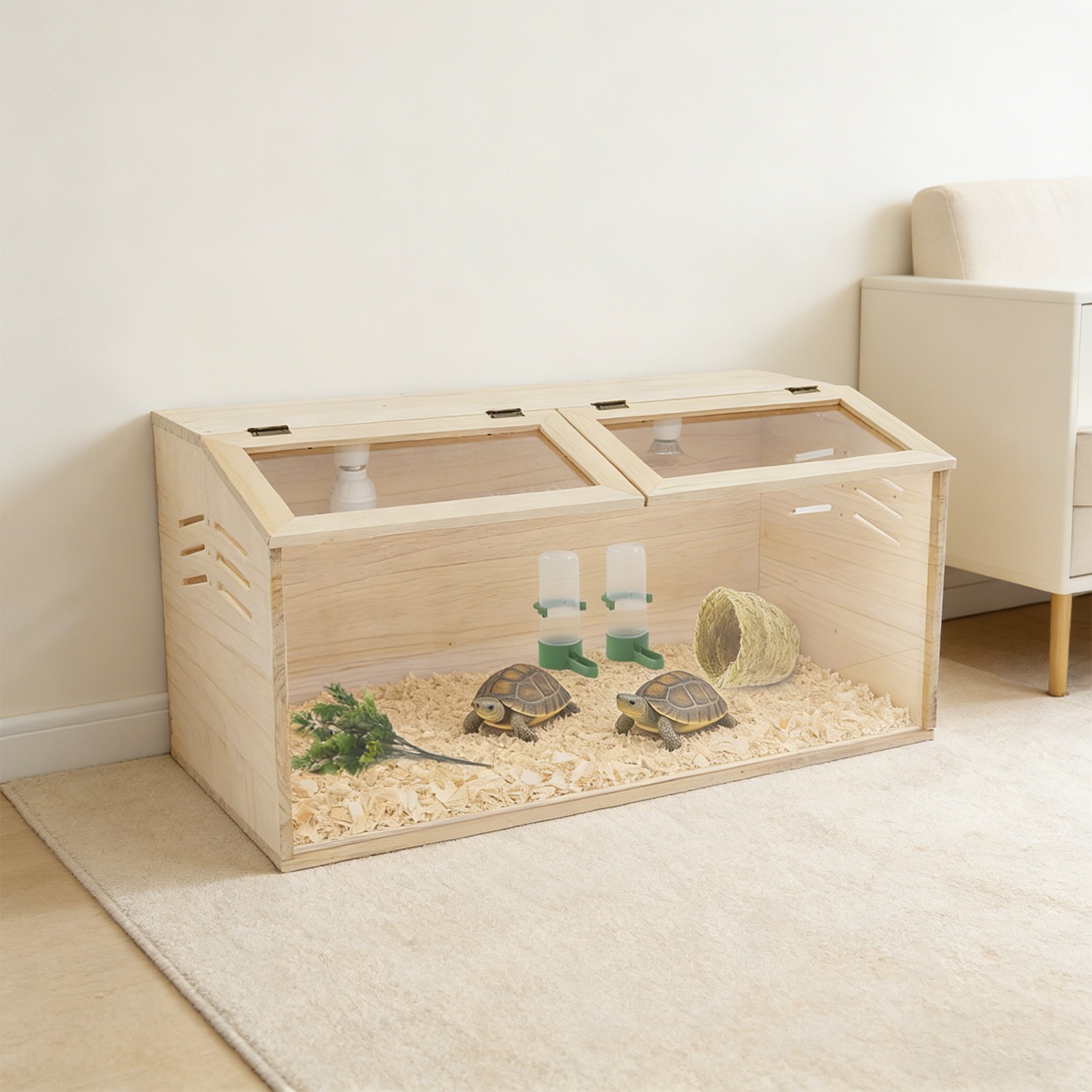

Photos from current listings. Actual item, color, and included accessories may vary.
Chicken Brooding Box Buying Guide
A chicken brooding box is the controlled micro-environment where chicks live from day-old to roughly 6 weeks, and its primary trade-off is between precise, draft-free heat control and easy cleaning/ventilation. Durable brooders use adjustable radiant heat, secure latching, and moisture-resistant floors; compromises rely on fixed-wattage bulbs, thin wire mesh, and open tops that leak heat and drafts.
Key takeaways
- Brooder dimensions drive bird density: 31.5 x 15.75 x 15.75 in (~3.4 sq ft) suits about 10-12 chicks to 3 weeks, then must be expanded or the flock overcrowds.
- Adjustable heat output (rheostat or thermostat) beats fixed wattage because chicks need 95°F at week 1, dropping ~5°F weekly to 70°F by week 6.
- Radiant heat plates provide safe, draft-free warmth without the fire and glare risk of exposed incandescent bulbs or heat lamps.
At a glance
- Category
- Chicken Brooders & Heat
- Last updated
- Nov 24, 2026
Current offers
Highlights
- Brooder dimensions drive bird density: 31.5 x 15.75 x 15.75 in (~3.4 sq ft) suits about 10-12 chicks to 3 weeks, then must be expanded or the flock overcrowds.
- Adjustable heat output (rheostat or thermostat) beats fixed wattage because chicks need 95°F at week 1, dropping ~5°F weekly to 70°F by week 6.
- Radiant heat plates provide safe, draft-free warmth without the fire and glare risk of exposed incandescent bulbs or heat lamps.
- Sealed, moisture-resistant flooring with 1/2-inch wire mesh ventilation prevents damp litter, the leading cause of coccidiosis and respiratory illness.
Best use cases
- Best fit: indoor garage or utility room brooding for 5-15 chicks — pick a latching, draft-free box with an adjustable heat plate and removable litter tray.
- Best fit: small-animal or duckling brooding — choose a model with smooth interior walls and a low-entry lip that contains bedding and keeps neonates from drafts.
- Wrong fit: brooding more than ~12 chicks past week 3 in a single 31.5-inch box — skip compact boxes and move to a larger pen or build a 2x4 ft brooder instead.
- Wrong fit: unheated outbuilding in freezing weather — skip plastic/open-top brooders and choose an insulated hutch with a thermostatically controlled heat source.
Buying tips
- Size by floor area: allow 0.5 sq ft per chick to 3 weeks and 1 sq ft per bird to 6 weeks — a 3.4 sq ft box handles about 10 chicks at peak.
- Choose adjustable heat: a dimmer/rheostat or thermostat lets you step 95°F down to 70°F over six weeks; fixed lamps force risky height adjustments.
- Prefer 1/2-inch hardware cloth over chicken wire for vents and floors — it resists predators and chick escape while allowing airflow.
- Match material to cleaning: HDPE or powder-coated metal floors wipe clean and resist ammonia; untreated wood absorbs moisture and harbors mites.
Specs
| Heat Source | Heat plate / lamp / ceramic emitter |
|---|---|
| Floor Area | 0.5-1 sq ft per chick by age |
| Ventilation Mesh | 1/2-inch hardware cloth |
| Floor Material | HDPE / powder-coated metal / wood |
Related searches
What to check before buying
- Measure your brooding room and door width — a 31.5 x 15.75 in box needs clearance plus 12 in around it for airflow and heat escape.
- Confirm the heat source: model must accept a ceramic heat emitter, heat plate, or lamp with a ceramic socket rated for the wattage.
- Check floor and litter containment: a raised lip or tray keeps pine shavings in and drafts out, especially on concrete floors.
- Verify plug/voltage standard (120V US vs 230V EU) and that the cord length reaches your outlet without an extension across wet floors.
FAQ
Data sources: eBay / Amazon listings and product attribute feeds. Updated Nov 24, 2026.
Some links on this page are affiliate links. If you buy after clicking one, we may earn a commission at no extra cost to you. This does not change which products appear here or their order. Affiliate disclosure.