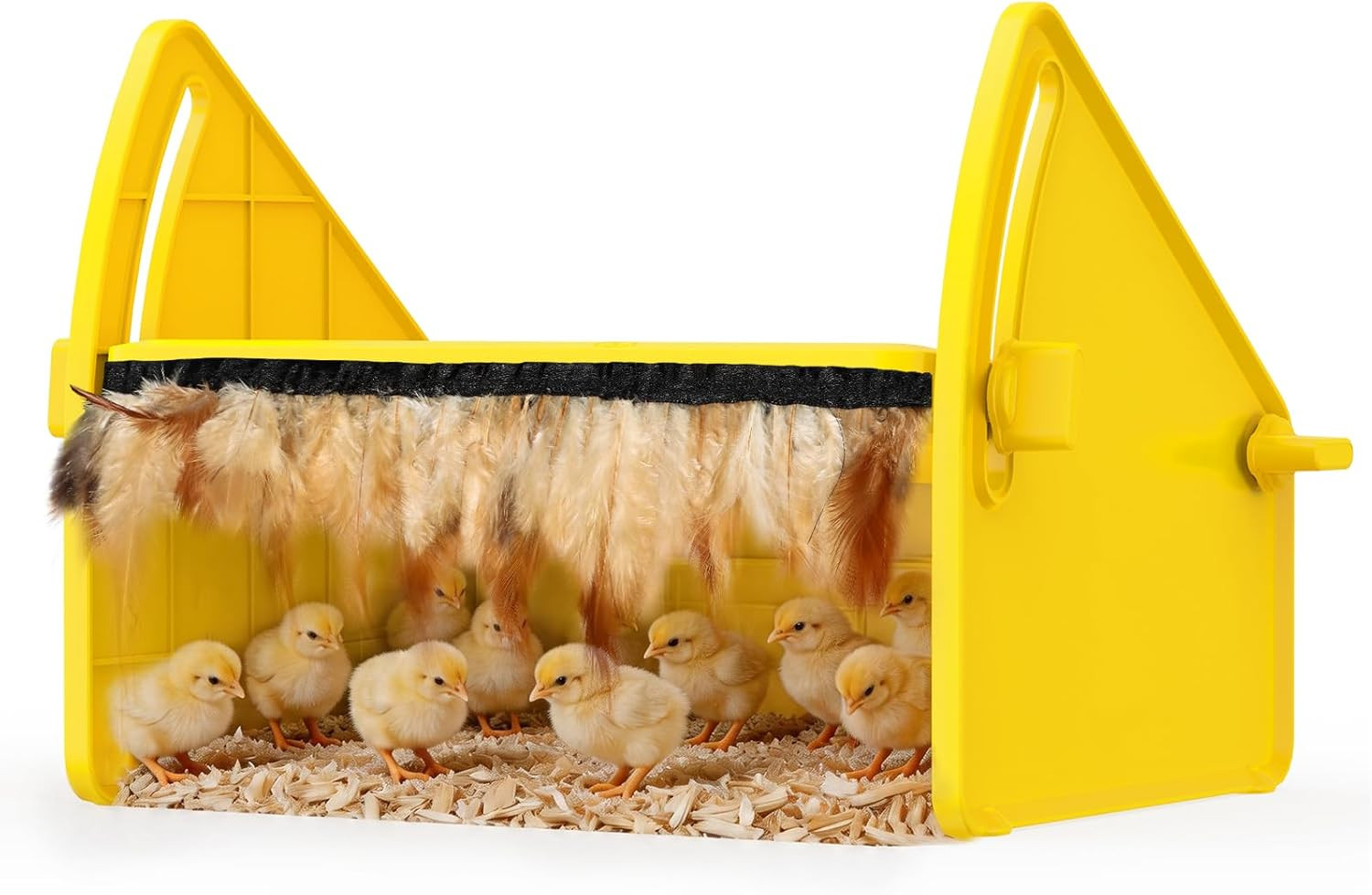

Photos from current listings. Actual item, color, and included accessories may vary.
Brooder Plate Buying Guide
A brooder plate is a radiant, contact-style chick warmer that mimics a mother hen’s underside heat, unlike overhead heat lamps that warm the air and pose fire risk. The core trade-off is between cheap open-element plates with fixed wattage and thermostatically controlled, adjustable-height plates with safety certifications and even heat distribution. Choose a plate rated for your chick count with at least 3 height settings and a thermostat; skip unlisted wattage or uncertified units that cannot maintain stable brooding temperatures.
Median $59.92
Key takeaways
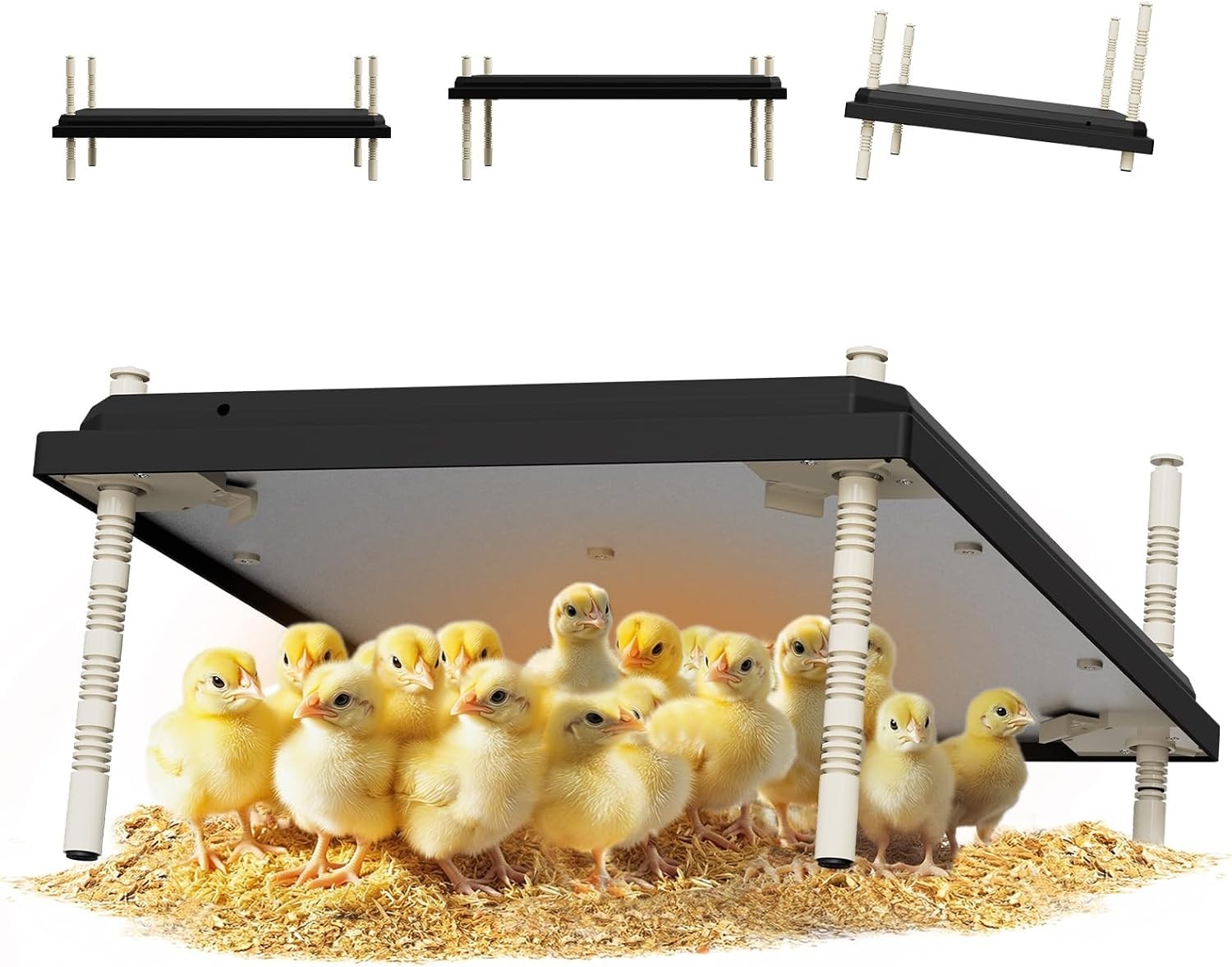
- Radiant plate heat warms chicks by contact, letting them sleep underneath at 95–100°F while the surrounding brooder stays cooler for feather growth.
- Adjustable leg height (3+ levels) controls temperature without a dimmer: lower for day-old chicks, raise weekly as they grow and feather out.
- Wattage scales with bird capacity: ~80W suits 20–30 chicks, ~200W supports 40–50, and thermostatic control prevents overheating in small rooms.
At a glance
- Category
- Chicken Brooders & Heat
- Last updated
- Nov 24, 2026
Current offers
Highlights
- Radiant plate heat warms chicks by contact, letting them sleep underneath at 95–100°F while the surrounding brooder stays cooler for feather growth.
- Adjustable leg height (3+ levels) controls temperature without a dimmer: lower for day-old chicks, raise weekly as they grow and feather out.
- Wattage scales with bird capacity: ~80W suits 20–30 chicks, ~200W supports 40–50, and thermostatic control prevents overheating in small rooms.
- ABS plastic housing is standard, but UL/ETL certification and a covered heating element separate safe units from bare-wire budget plates.
Best use cases
- Best for indoor brooding of 5–50 chicks in a garage or utility room: pick a thermostatically controlled plate with adjustable height and a 200W rating for larger batches.
- Best for ducklings and quail: choose a plate with low minimum height (under 2 inches) and a wider footprint, since waterfowl need more floor contact area than chicks.
- Wrong fit for outdoor, unheated coops in freezing weather: a plate cannot warm ambient air; use a certified heat lamp or brooder heater for sub-40°F environments.
- Skip combo kits that bundle a small plate with a box if you already have a brooder; buy the plate alone with a separate thermometer to verify the temperature zone.
Buying tips
- Size the plate by chick count at 6–8 square inches per chick underneath; a 12x12-inch plate fits about 25 day-old chicks, not 50.
- Choose a plate with a thermostat or at least 3 height detents; fixed-height 80W plates overheat small batches in insulated rooms.
- Look for UL or ETL listing on the power cord and a grounded plug; unlisted imports with exposed wire terminals are a fire risk in bedding.
- Match wattage to room temperature: 80W for 60–70°F rooms, 200W for unheated garages down to 40°F; never rely on a plate below 40°F.
Specs
| Heat Method | Radiant contact plate vs heat lamp |
|---|---|
| Wattage Range | 80W–200W, 120V AC |
| Height Adjustment | 3+ levels, 1.5–8 in |
| Safety Certification | UL/ETL listed, grounded plug |
Related searches
What to check before buying
- Measure your brooder floor: allow 0.5 sq ft per chick of total space, with the plate covering about 25–35% of that area.
- Confirm the plate’s legs fit your bedding depth: shavings should be 1–2 inches deep, and the plate’s lowest setting should sit 1.5–2 inches above them.
- Check your outlet: most plates draw 80–200W on 120V AC; a standard 15A circuit is fine, but avoid daisy-chaining power strips.
- Have a separate thermometer or infrared gun to read the temperature directly under the plate; do not trust the dial alone.
FAQ
Data sources: eBay / Amazon listings and product attribute feeds. Updated Nov 24, 2026.
Some links on this page are affiliate links. If you buy after clicking one, we may earn a commission at no extra cost to you. This does not change which products appear here or their order. Affiliate disclosure.