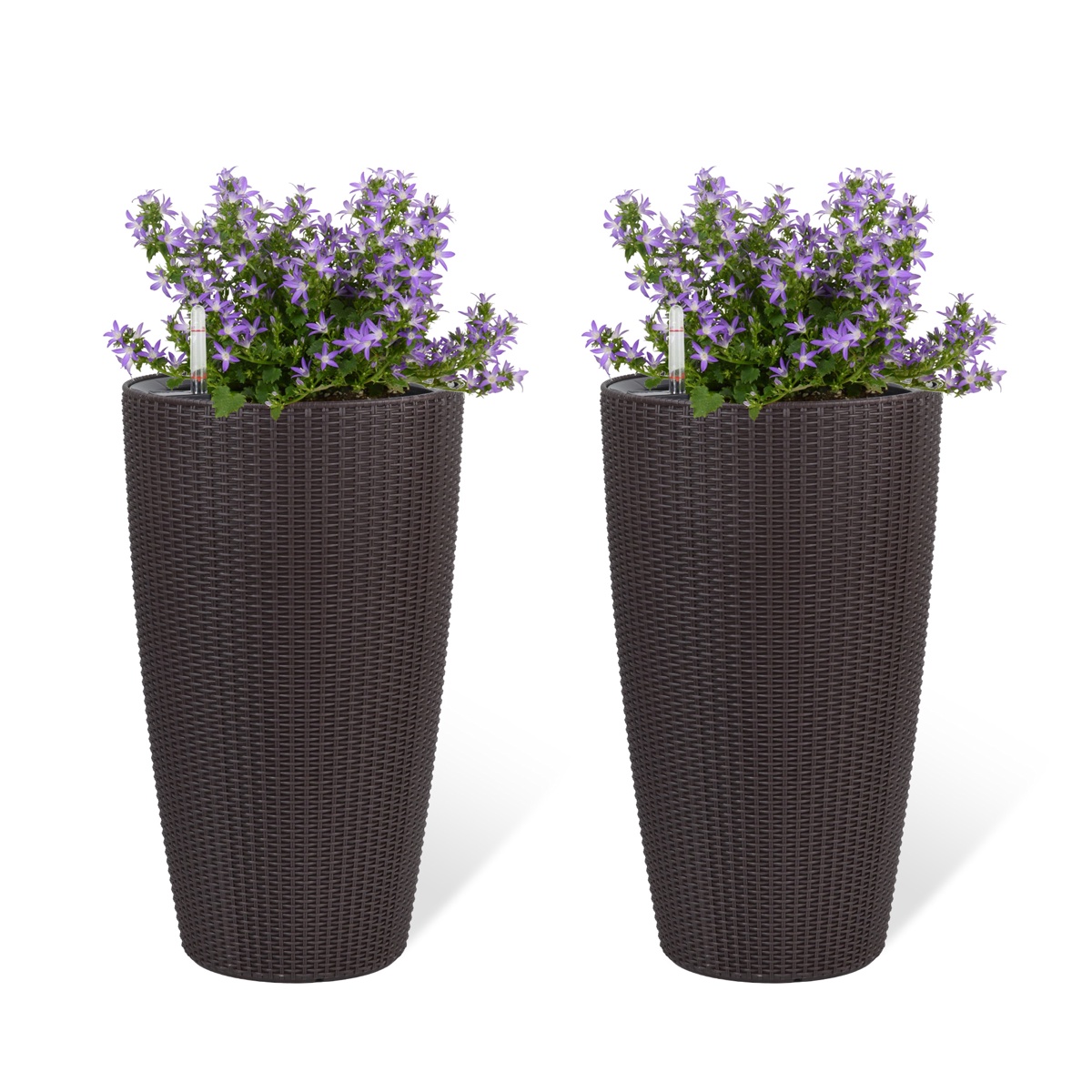

Photos from current listings. Actual item, color, and included accessories may vary.
Tall Indoor Planter Buying Guide
Tall indoor planters are floor-standing vessels (typically 20–28 inches high) that elevate foliage to eye level, and the decisive trade-off is between lightweight resin/faux-rattan shells with separate inner buckets and heavier ceramic, fiberstone, or wood builds with true drainage. Buy resin or plastic tiers only when you need lightweight, movable, self-watering setups; choose ceramic, fiberstone, or sealed wood when weight, stability, and breathable root zones matter more than portability.
Key takeaways
- Resin and faux-rattan planters weigh roughly 3–8 lb empty, making 24–28 in tapered sets easy to reposition but top-heavy once filled with soil and a large root ball.
- Ceramic and fiberstone planters run 15–40 lb empty; fiberstone (fiberglass-reinforced concrete) gives ceramic looks at about half the weight and resists frost cracking.
- Self-watering tall planters use a sealed inner bucket plus a water-level monitor; wicking wicks draw moisture upward, so the outer shell never needs drainage holes.
At a glance
- Category
- Raised Garden Beds & Planters
- Last updated
- Nov 28, 2026
Current offers
Highlights
- Resin and faux-rattan planters weigh roughly 3–8 lb empty, making 24–28 in tapered sets easy to reposition but top-heavy once filled with soil and a large root ball.
- Ceramic and fiberstone planters run 15–40 lb empty; fiberstone (fiberglass-reinforced concrete) gives ceramic looks at about half the weight and resists frost cracking.
- Self-watering tall planters use a sealed inner bucket plus a water-level monitor; wicking wicks draw moisture upward, so the outer shell never needs drainage holes.
- True drainage planters need a saucer or sealed tray indoors; a 24 in tapered pot typically holds 3–6 gallons of media, while 28 in models hold 6–10 gallons.
Best use cases
- Best fit: a bright corner with a large fiddle-leaf fig or monstera — pick a 24–28 in fiberstone or ceramic planter with a drainage hole and a sealed saucer; skip lightweight resin if the plant will grow tall and top-heavy.
- Best fit: entryway or porch that sees occasional rain — choose faux-rattan or resin sets with pre-drilled drainage and UV-stabilized finish; skip unsealed ceramic outdoors in freeze-thaw climates.
- Best fit: low-maintenance or forgetful watering — pick a self-watering tall planter with inner bucket and water-level indicator; skip it for succulents, cacti, or orchids that need fast-drying media.
- Wrong fit: narrow hallways under 18 in wide — a 14–16 in diameter base plus a 24 in height crowds foot traffic; choose a 12 in-wide column planter or wall-mounted option instead.
Buying tips
- Match pot volume to root ball: a 24 in tapered planter holds about 3–6 gal, enough for a 3–4 ft indoor tree; a 28 in model holds 6–10 gal for 5–6 ft specimens.
- Indoors, require a drainage hole plus a sealed saucer or a self-watering inner bucket — pots without drainage cause root rot within weeks in standard potting mix.
- Choose UV-stabilized resin or fiberstone for any sun-exposed spot; untreated plastic yellows and cracks after one to two seasons of direct UV.
- Check the base diameter against your floor protection: a 14–16 in base needs a felt pad or coaster; tapered pots with a narrow foot concentrate weight and can dent hardwood.
Specs
| Planter Height | 20–28 in floor-standing |
|---|---|
| Shell Material | Resin / fiberstone / ceramic / wood |
| Drainage Type | Pre-drilled hole vs self-watering bucket |
| Pot Volume | 3–10 gal by height tier |
Related searches
What to check before buying
- Measure ceiling clearance and doorway width: a 28 in planter plus a 5 ft tree needs about 7.5 ft of vertical space and a 16 in-wide path to move in.
- Confirm the pot's footprint fits your floor protection plan — base diameters of 12–16 in need a felt pad or drip tray on hardwood and tile.
- For outdoor or porch use, verify frost resistance (fiberstone, polyethylene, or glazed ceramic) and confirm the drainage hole aligns with a saucer.
- Check plug and voltage only for self-watering models with pumps; most wicking self-watering planters are passive and need no power.
FAQ
Data sources: eBay / Amazon listings and product attribute feeds. Updated Nov 28, 2026.
Some links on this page are affiliate links. If you buy after clicking one, we may earn a commission at no extra cost to you. This does not change which products appear here or their order. Affiliate disclosure.