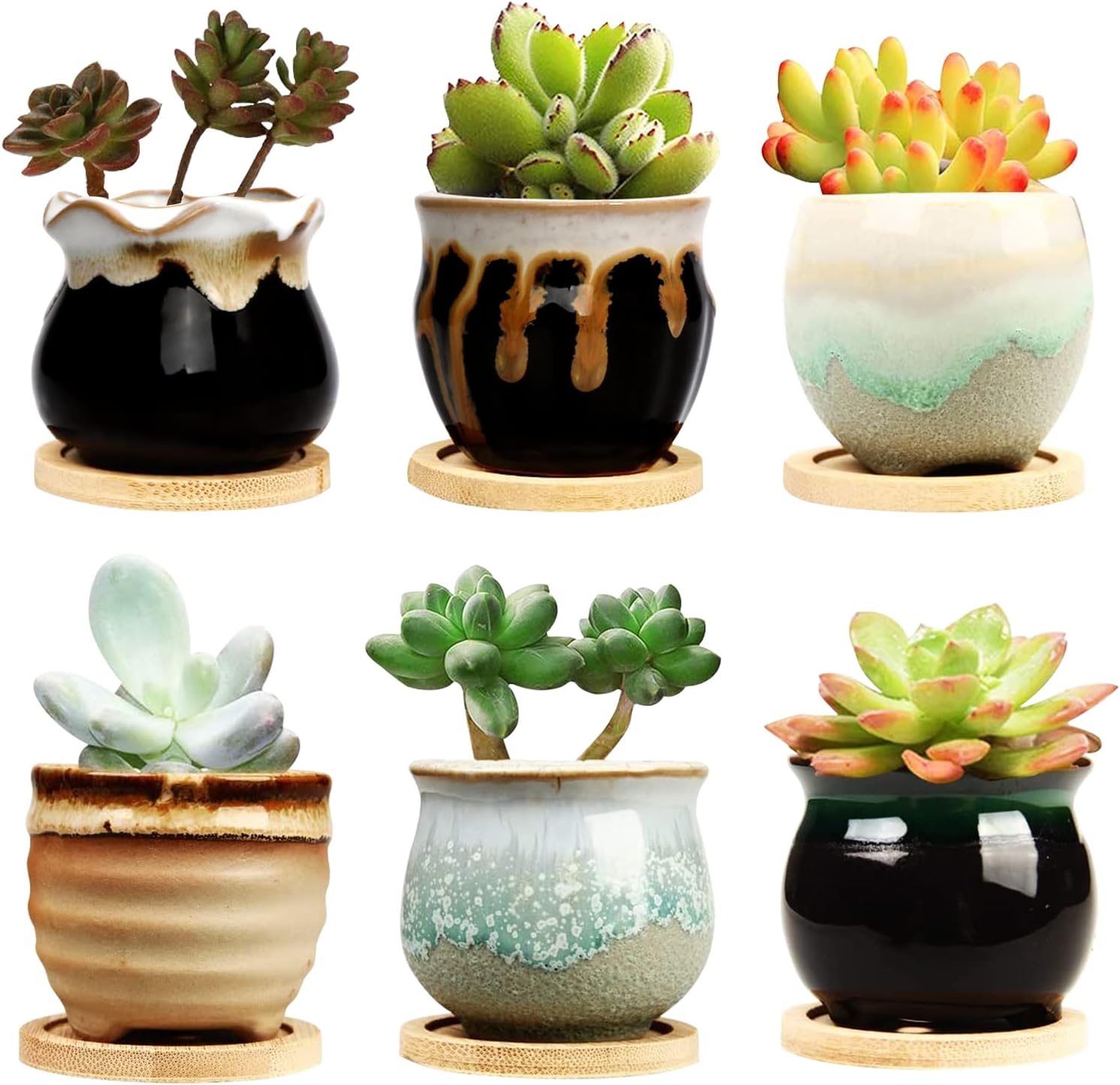

Photos from current listings. Actual item, color, and included accessories may vary.
Succulent Pot Buying Guide
Succulent pots are shallow, free-draining containers sized to a plant's compact root system, where the critical trade-off is drainage and breathability versus water retention and weight. Choose unglazed ceramic or fabric for airflow, glazed ceramic or plastic for moisture control, and always match pot diameter to the rosette plus 1–2 inches.
Drainage Hole:≥0.4 in (10 mm) requiredPot Material:Terracotta / Glazed Ceramic / PlasticPot Diameter:2–6 in for individual plantsWatering Style:Free-draining vs Self-watering
Typical price range$70.99
Key takeaways
- Drainage hole diameter of at least 0.4 in (10 mm) is non-negotiable; pots without holes cause root rot in 1–2 weeks under normal indoor watering.
- Unglazed terracotta and fabric pots wick moisture and dry 30–50% faster than glazed ceramic or non-porous plastic of the same volume.
- Self-watering reservoirs hold 0.3–1.0 fl oz per 3-inch pot and suit thirstier succulents like sedum, but risk rot for desert cacti.
At a glance
- Category
- Raised Garden Beds & Planters
- Last updated
- Nov 28, 2026
Current offers
Highlights
- Drainage hole diameter of at least 0.4 in (10 mm) is non-negotiable; pots without holes cause root rot in 1–2 weeks under normal indoor watering.
- Unglazed terracotta and fabric pots wick moisture and dry 30–50% faster than glazed ceramic or non-porous plastic of the same volume.
- Self-watering reservoirs hold 0.3–1.0 fl oz per 3-inch pot and suit thirstier succulents like sedum, but risk rot for desert cacti.
- Mini pots under 3 inches dry out in 2–4 days; 4–6 inch pots hold moisture 5–10 days, dictating watering frequency and soil mix.
Best use cases
- Best fit: 2–3 inch unglazed terracotta for single rosettes and cacti on desks and windowsills, where fast drying prevents overwatering.
- Best fit: 4–6 inch glazed ceramic or plastic with drainage for echeveria and haworthia that need steadier moisture and less frequent watering.
- Wrong fit: self-watering reservoirs for lithops and desert cacti, which demand complete dry cycles between waterings.
- Wrong fit: deep 12-inch raised beds or 95-inch galvanized planters for individual succulents; use these only for mass succulent landscaping with gritty, fast-draining soil.
Buying tips
- Pot diameter should exceed the rosette by 1–2 inches; going 3+ inches larger leaves wet soil around roots and invites rot.
- Demand a drainage hole of 0.4 in (10 mm) or larger; drill or skip pots without one, since succulents cannot tolerate standing water.
- Match material to climate: terracotta for humid rooms and frequent waterers, glazed ceramic or plastic for dry climates and forgetful waterers.
- For outdoor displays, choose frost-rated ceramic or galvanized metal; thin plastic and glazed earthenware crack in freeze-thaw cycles.
Specs
| Drainage Hole | ≥0.4 in (10 mm) required |
|---|---|
| Pot Material | Terracotta / Glazed Ceramic / Plastic |
| Pot Diameter | 2–6 in for individual plants |
| Watering Style | Free-draining vs Self-watering |
Related searches
What to check before buying
- Measure the plant's rosette and root ball; select a pot 1–2 inches wider and no deeper than the root zone plus 1 inch.
- Confirm a drainage hole of at least 0.4 in (10 mm); pair with a saucer or feet to keep the pot out of standing water.
- Check shelf or windowsill weight capacity: a 6-inch ceramic pot with soil weighs roughly 3–5 lb, while plastic is under 1 lb.
- For outdoor use, verify frost resistance to your USDA zone and use gritty soil with 50–70% mineral content.
FAQ
Data sources: eBay / Amazon listings and product attribute feeds. Updated Nov 28, 2026.
Some links on this page are affiliate links. If you buy after clicking one, we may earn a commission at no extra cost to you. This does not change which products appear here or their order. Affiliate disclosure.