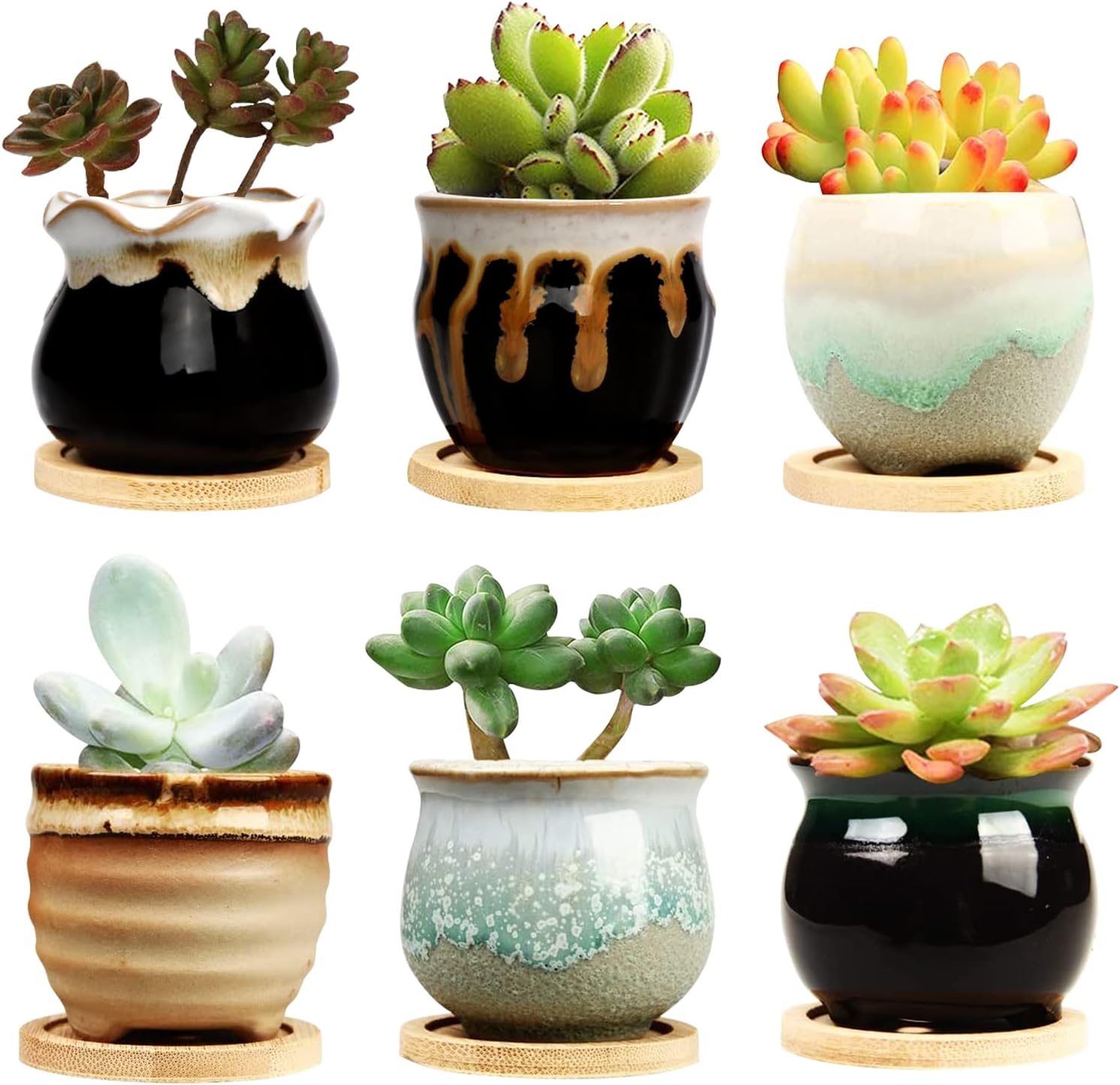

Photos from current listings. Actual item, color, and included accessories may vary.
Small Plant Pot Buying Guide
Small plant pots (roughly 2–6 inches / 5–15 cm) are compact containers for succulents, herbs, seedlings, and desk plants, where the main trade-off is drainage and material porosity versus decorative sealed glazing. The decisive rule: buy pots with a true drainage hole and a matching saucer, and skip sealed decorative vessels unless you use a nested plastic nursery pot as a liner.
Key takeaways
- Terracotta and unglazed ceramic are porous and wick excess moisture through the wall, which suits succulents and cacti that rot in sealed plastic.
- Glazed ceramic and sealed concrete hold water in the substrate; they need a bottom drainage hole plus a saucer or a drop-in nursery pot liner.
- Mini pots around 2–3 inches (5–7.5 cm) dry out in 1–3 days and fit 2-inch nursery starts; 4–6 inch pots suit established herbs and houseplants.
At a glance
- Category
- Raised Garden Beds & Planters
- Last updated
- Nov 28, 2026
Current offers
Highlights
- Terracotta and unglazed ceramic are porous and wick excess moisture through the wall, which suits succulents and cacti that rot in sealed plastic.
- Glazed ceramic and sealed concrete hold water in the substrate; they need a bottom drainage hole plus a saucer or a drop-in nursery pot liner.
- Mini pots around 2–3 inches (5–7.5 cm) dry out in 1–3 days and fit 2-inch nursery starts; 4–6 inch pots suit established herbs and houseplants.
- Plastic nursery pots are lightweight and cheap but non-porous; UV-stabilized polypropylene resists outdoor sun cracking better than thin styrene.
Best use cases
- Best fit: 2–3 inch unglazed terracotta with drainage hole and saucer for succulents, cacti, and desk decor — fast-drying and rot-resistant. Skip sealed glazed pots without drainage for these.
- Best fit: 4–6 inch glazed ceramic with drainage hole for pothos, snake plants, and herbs on shelves — choose a saucer to protect wood surfaces. Skip porous terracotta if you water infrequently and want slower drying.
- Best fit: plastic nursery pots as hidden liners inside decorative cachepots for gift arrangements and windowsill displays. Skip cachepots with no inner liner unless you drill a drainage hole.
- Wrong fit: large-floor-planter expectations — small pots under 6 inches cannot support tomato, pepper, or shrub root systems; step up to 10–14 inch containers for those.
Buying tips
- Size the pot to the root ball, not the plant top: pick a pot 1–2 inches (2.5–5 cm) wider than the current root spread; oversized small pots stay wet and cause rot.
- Match pot diameter to saucer diameter within 0.5 inch (1.2 cm); mismatched saucers overflow and stain shelves.
- Demand a drainage hole of at least 0.25–0.4 inch (6–10 mm); tiny pinholes clog with soil and perlite fines.
- For outdoor use, choose UV-stabilized plastic or frost-rated ceramic; thin glazed pots can craze and crack through freeze-thaw cycles.
Specs
| Pot Diameter | 2–6 in (5–15 cm) typical |
|---|---|
| Material | Terracotta / glazed ceramic / plastic |
| Drainage | Hole required; 0.25–0.4 in (6–10 mm) |
| Saucer Fit | Match within 0.5 in (1.2 cm) |
Related searches
What to check before buying
- Measure your shelf, windowsill, or desk footprint and the saucer diameter — mini pots still need 1–2 inches of clearance around the rim.
- Confirm the pot includes or matches a saucer if it sits on wood, laminate, or fabric that water can damage.
- Check that the drainage hole aligns with your tray or liner; a hole over an open shelf drips directly.
- For outdoor placement, verify frost resistance and UV rating; for indoor placement, confirm the pot fits inside any cachepot or hanger you already own.
FAQ
Data sources: eBay / Amazon listings and product attribute feeds. Updated Nov 28, 2026.
Some links on this page are affiliate links. If you buy after clicking one, we may earn a commission at no extra cost to you. This does not change which products appear here or their order. Affiliate disclosure.