
Photos from current listings. Actual item, color, and included accessories may vary.
Plastic Plant Pot Buying Guide
Plastic plant pots span throwaway nursery trays to fade-resistant outdoor urns, with the decisive trade-off being resin quality and UV stabilization versus price. Cheap polypropylene (PP) degrades to brittle shards within two to three seasons of sun exposure, while UV-stabilized high-density polyethylene (HDPE) or heavy-gauge PP retains impact strength for a decade. The clear rule: buy pots labeled UV-stabilized HDPE or heavy-wall PP with molded drainage for outdoor use, and reserve thin transparent PP or soft fabric for indoor or nursery duty.
Median $61.99
Key takeaways
- HDPE with UV stabilizers resists embrittlement and color fade; unstabilized PP turns chalky and cracks after 2-3 summers of direct sun.
- Self-watering designs use a nested pot plus reservoir with a wick or overflow hole; reservoir capacity of 0.5-1.5 qt suits herbs and orchids without waterlogging.
- Self-watering elevated planter boxes use a PP box, fabric wicking liner, and water-level indicator; leg height of 20-30 in brings working height to 30-36 in for back relief.
At a glance
- Category
- Raised Garden Beds & Planters
- Last updated
- Nov 27, 2026
Current offers
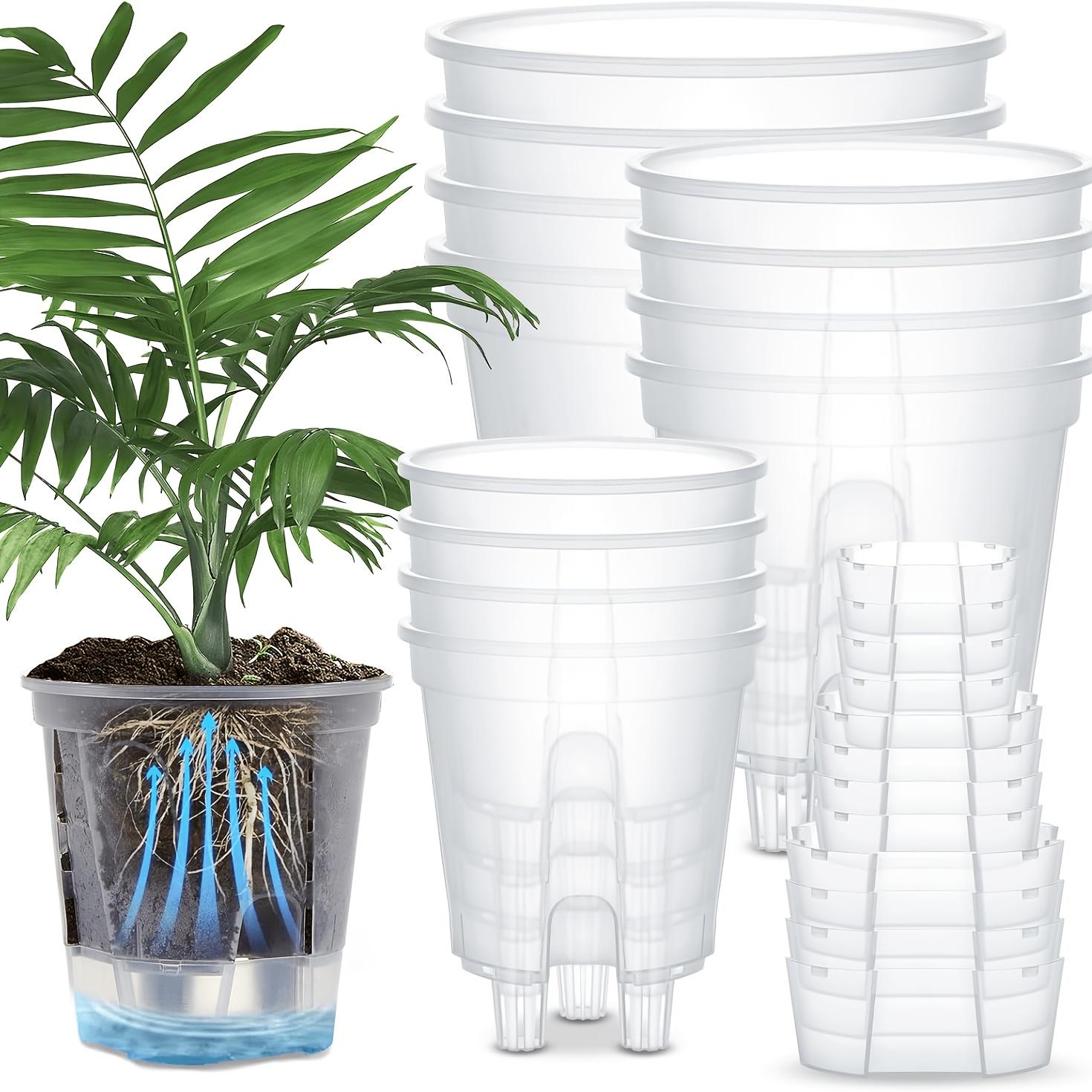 12 Pack Clear Self Watering Plant Pots, Transparent Root Viewing Planters With Water Storage Reservoir, Indoor Plastic Nursery For Orchid, Succulent$37.99View on Mallflare
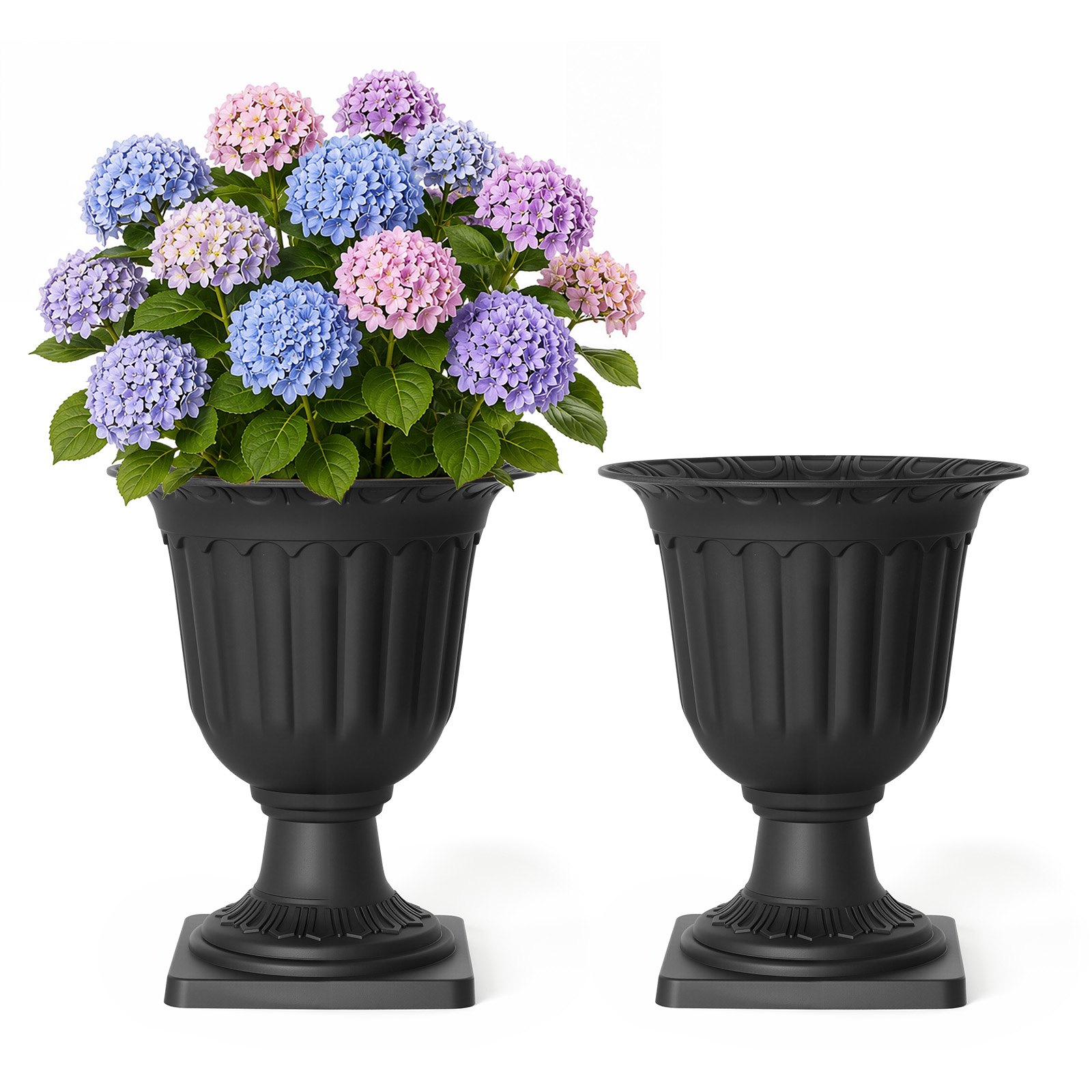 Plastic Urn Planters 15.75"x18.9" 2 PCS Black Classic Urn Flower Pot, for Wedding, Party, Event, Home, Stage, Garden, Balcony, and Patio Decoration, Front Porch Indoor & Outdoor Vase$46.99View on Mallflare
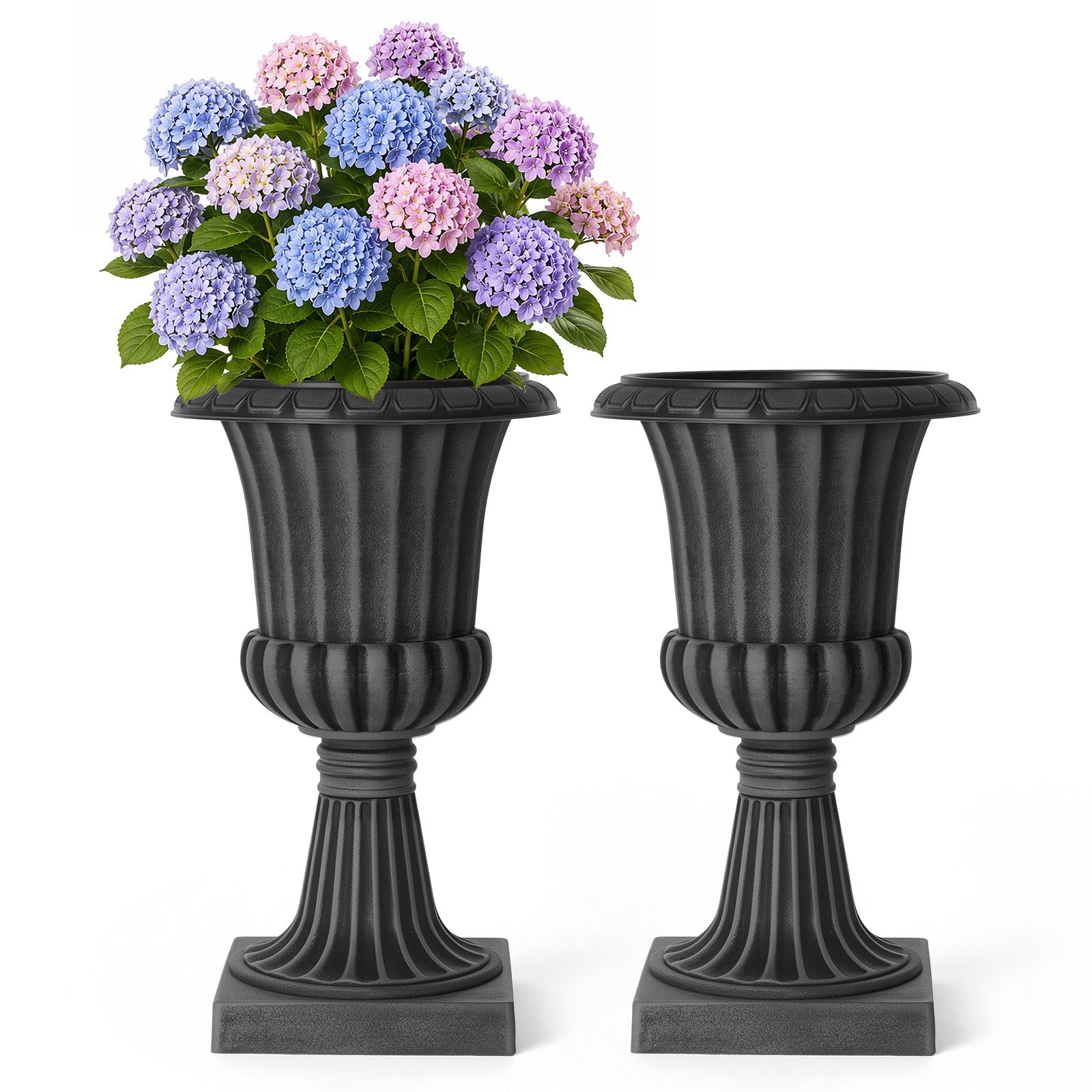 Plastic Urn Planters 13.78"x22.83" 2 PCS Gray Classic Urn Flower Pot, for Wedding, Party, Event, Home, Stage, Garden, Balcony, and Patio Decoration, Front Porch Indoor & Outdoor Vase$51.99View on Mallflare
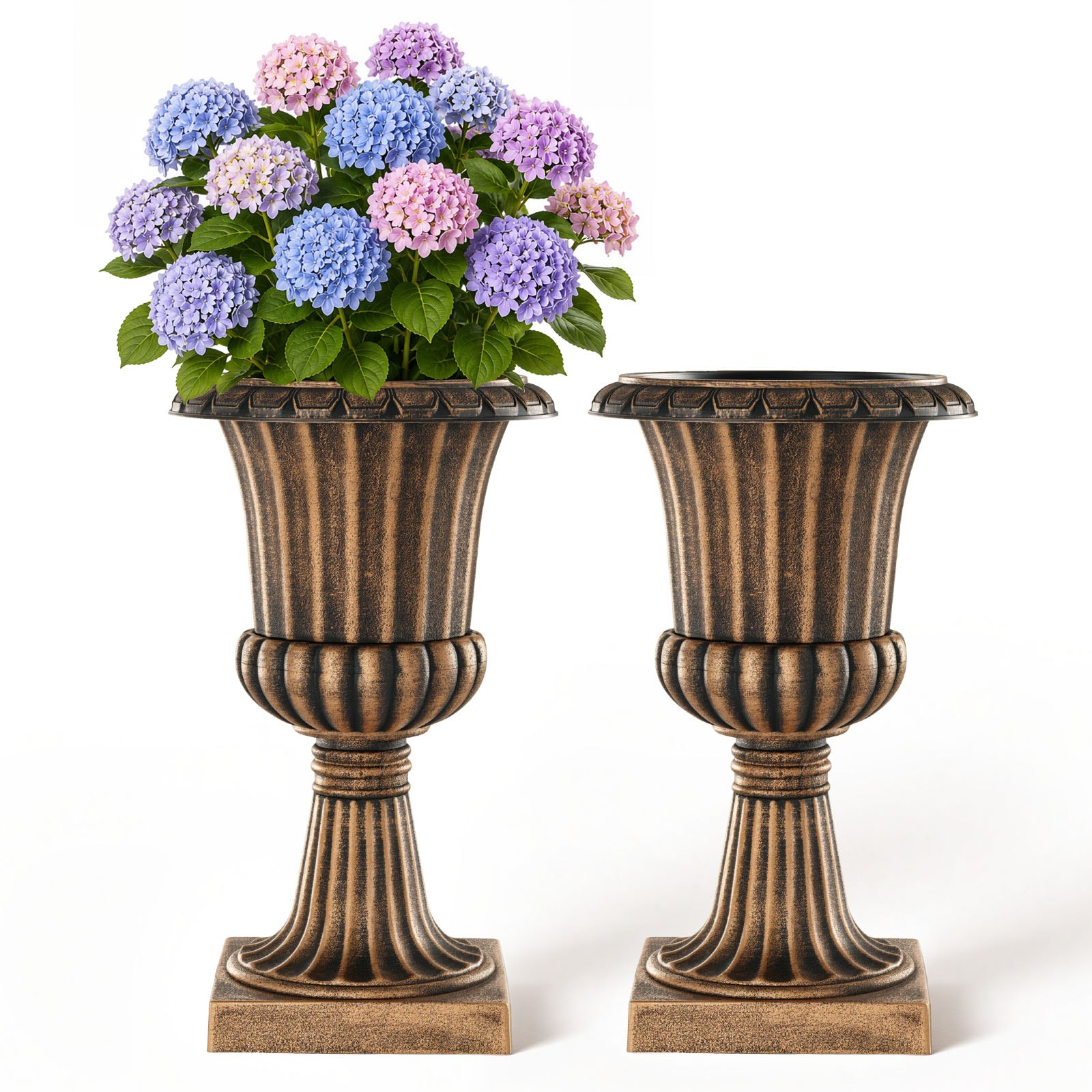 Plastic Urn Planters 13.78"x22.83" 2 PCS Brass Classic Urn Flower Pot, for Wedding, Party, Event, Home, Stage, Garden, Balcony, and Patio Decoration, Front Porch Indoor & Outdoor Vase$61.99View on Mallflare
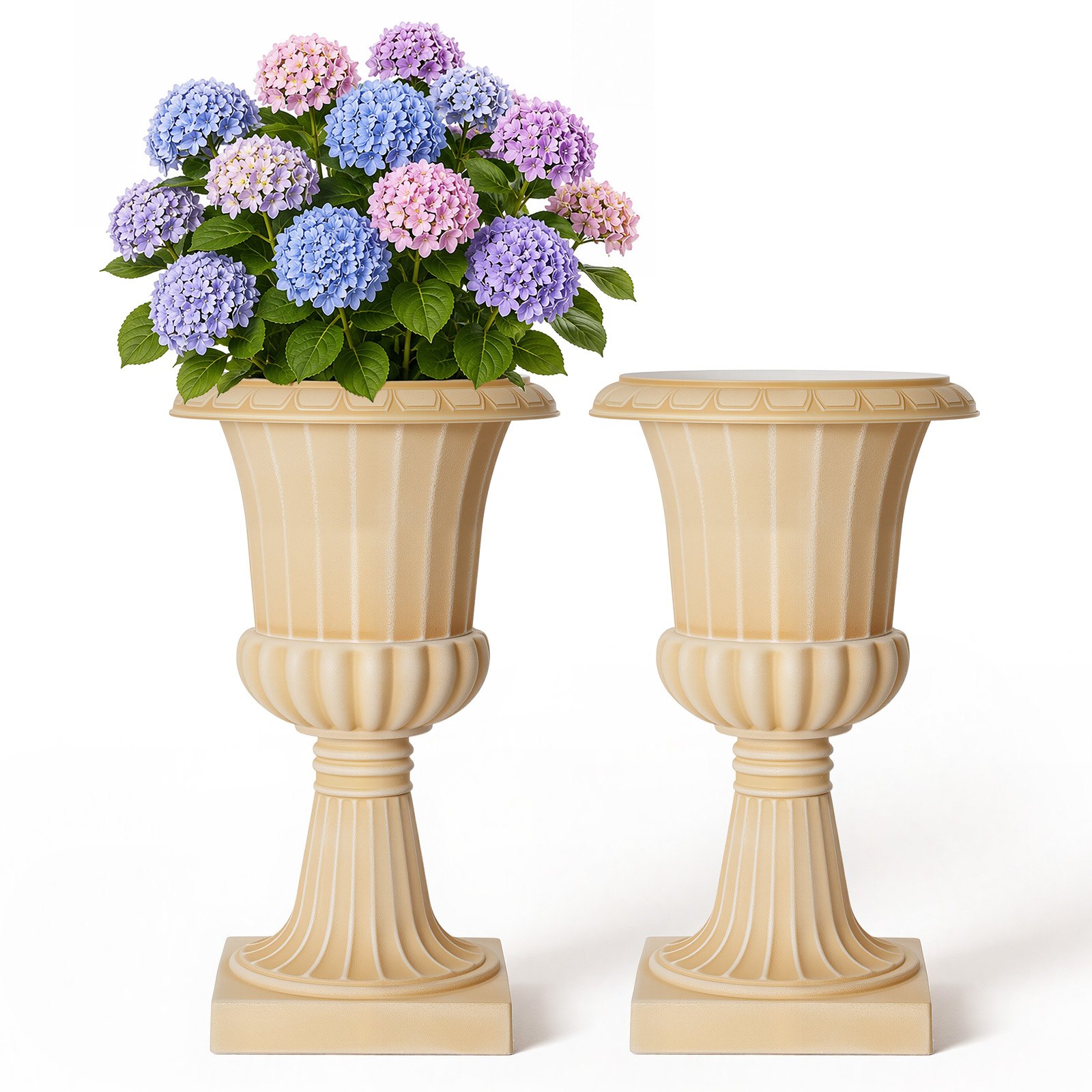 Plastic Urn Planters 13.78"x22.83" 2 PCS Beige Classic Urn Flower Pot, for Wedding, Party, Event, Home, Stage, Garden, Balcony, and Patio Decoration, Front Porch Indoor & Outdoor Vase$62.99View on Mallflare
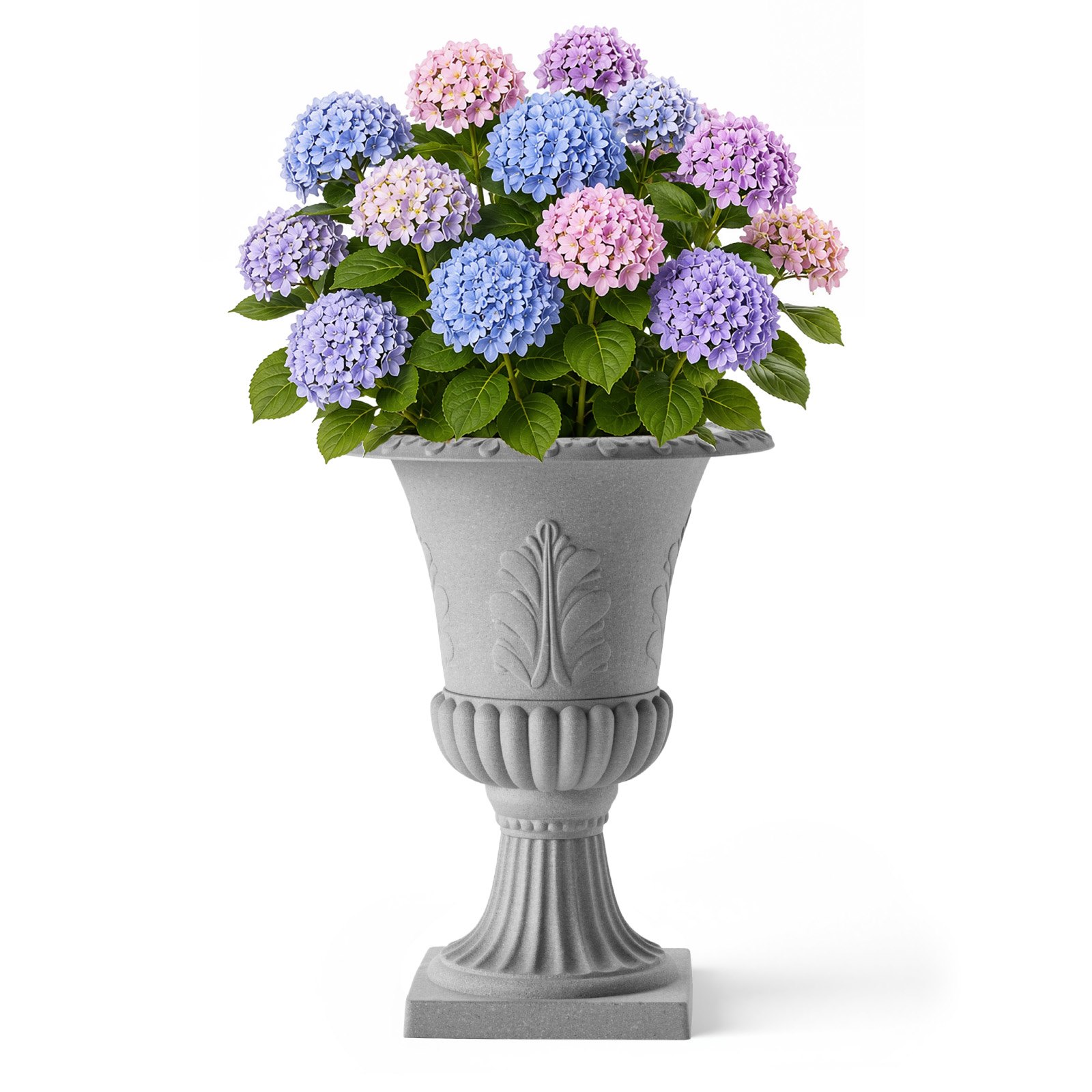 Plastic Urn Planter 15.75"x21.26" 1 Pack Gray Classic Urn Flower Pot, for Wedding, Party, Event, Home, Stage, Garden, Balcony, and Patio Decoration, Front Porch Indoor & Outdoor Vase$67.99View on Mallflare
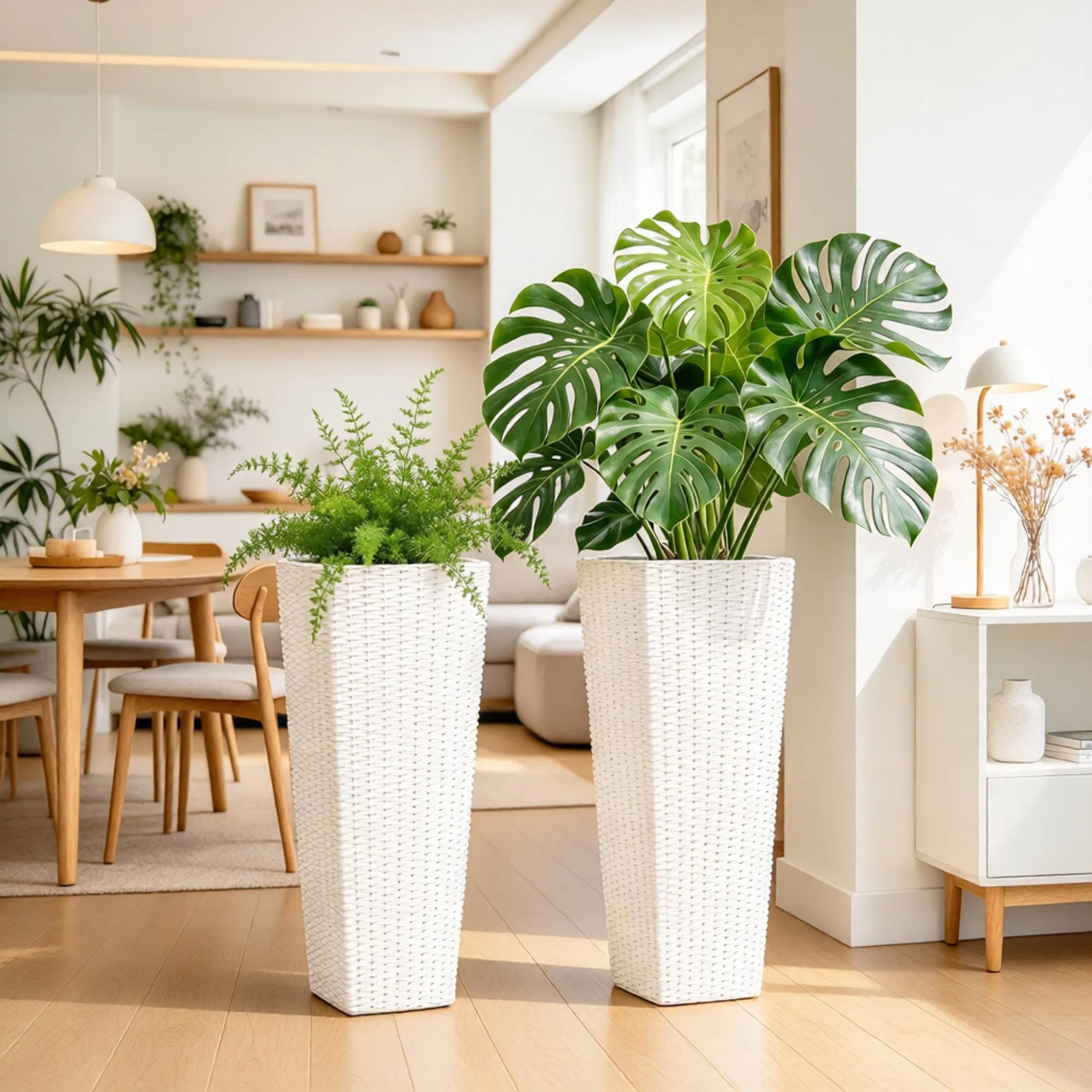 Set of 2 Tall Planters 32 Inch, Plastic Flower Pots for Outdoor Plants with Drainage Holes, White$144.99View on Mallflare
Highlights
- HDPE with UV stabilizers resists embrittlement and color fade; unstabilized PP turns chalky and cracks after 2-3 summers of direct sun.
- Self-watering designs use a nested pot plus reservoir with a wick or overflow hole; reservoir capacity of 0.5-1.5 qt suits herbs and orchids without waterlogging.
- Self-watering elevated planter boxes use a PP box, fabric wicking liner, and water-level indicator; leg height of 20-30 in brings working height to 30-36 in for back relief.
- Transparent pots are for root observation and propagation only—algae grows in clear plastic exposed to light, so they belong indoors or in opaque cachepots.
Best use cases
- Best fit: self-watering PP elevated planter boxes (45x24x65 in class) for patio vegetable and herb growing where bending is limited; skip for heavy root crops needing more than 10-12 in of media depth.
- Best fit: UV-stabilized HDPE or heavy PP urn planters 14-19 in diameter with pre-drilled drainage for year-round porch and entryway display; skip lightweight decorative urns under 2 lb for windy, exposed sites.
- Best fit: clear self-watering pots in 12-packs for orchid, succulent, and cutting propagation on a bright indoor shelf; skip them for outdoor use, where UV and algae ruin both roots and appearance.
- Best fit: faux-wood tall square planters (28 in class) in matte HDPE for privacy screening on balconies and patios; skip thin-wall decorative square pots under 0.1 in thickness for structural root trees.
Buying tips
- Match pot volume to plant: 1-2 gal for herbs and succulents, 5-10 gal for tomatoes and peppers, 15-25 gal for small trees and shrubs; doubling diameter roughly quadruples volume.
- Choose UV-stabilized HDPE or PP resin rated for outdoor exposure; avoid pots described only as 'plastic' with no resin or UV claim for sunny sites.
- For outdoor pots, require at least one molded drainage hole (0.5-1 in) or a self-watering overflow; sealed decorative pots need a drilled hole or a nested nursery pot.
- Check the rim and base wall thickness at 0.1 in (2.5 mm) or more on pots over 14 in diameter; thin walls flex, crack at the rim, and split when root balls expand.
Specs
| Resin Grade | UV-stabilized HDPE / heavy PP / thin PP |
|---|---|
| Drainage | Molded holes / self-watering reservoir |
| Outdoor Lifespan | 10+ yr HDPE vs 2-3 yr thin PP |
| Pot Size Range | 1-25 gal / 6-24 in top diameter |
Related searches
What to check before buying
- Measure the available footprint and vertical clearance: urns run 14-19 in wide and 20-28 in tall, and elevated boxes reach 65 in with a greenhouse cover.
- Confirm the pot fits its saucer, cachepot, or stair landing; a full 15-gal pot weighs 90-130 lb with wet media, so place it before filling.
- For outdoor use, verify UV-stabilized resin and drainage; for indoor use, plan a drip tray and avoid clear pots on direct-sun windowsills.
- Check companion parts: fabric wicking liner and water-level indicator for self-watering boxes, and 1-2 in of coarse drainage or a wicking mat for urns.
FAQ
Data sources: eBay / Amazon listings and product attribute feeds. Updated Nov 27, 2026.
Some links on this page are affiliate links. If you buy after clicking one, we may earn a commission at no extra cost to you. This does not change which products appear here or their order. Affiliate disclosure.