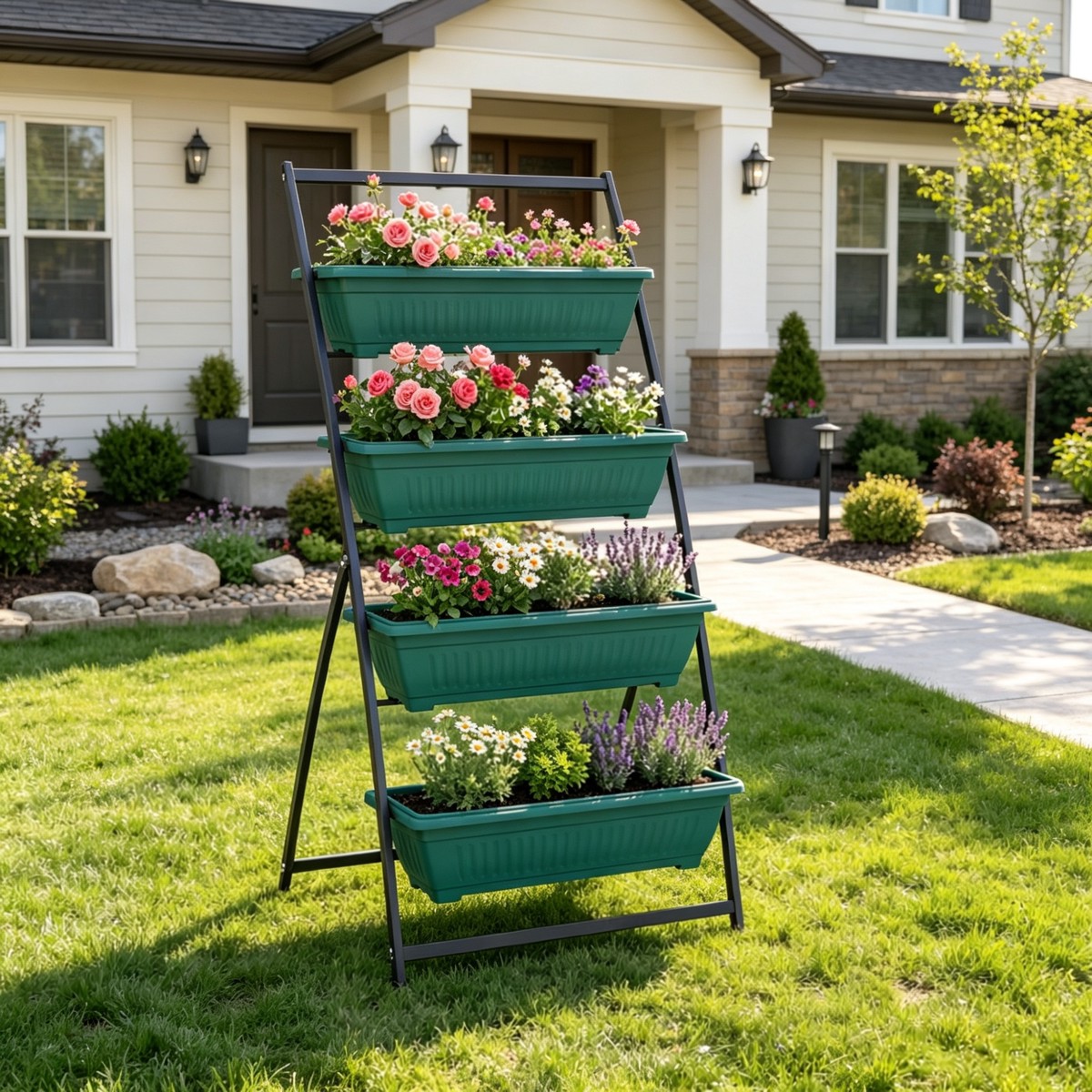

Photos from current listings. Actual item, color, and included accessories may vary.
Planter With Stand Buying Guide
A planter with stand is a freestanding growing system that elevates the soil bed or container to working height, improving ergonomics, drainage, and pest/animal resistance. The core trade-off is between structural rigidity (wood/metal frame vs. fabric grow bags) and long-term weather durability, with cheap fabric-on-wire stands collapsing under saturated soil weight. Buy wood or powder-coated metal for multi-season outdoor use; choose fabric only for lightweight seasonal herbs on a patio.
Key takeaways
- Wooden stands use fir or pine slats; look for 0.6–0.8 in (15–20 mm) thick boards and screwed corner braces—thin 0.4 in slats warp and bow under wet soil within one season.
- Powder-coated steel stands resist rust far better than painted tubes; check for galvanized or zinc-primed legs at ground contact, the first failure point on budget metal planters.
- Fabric planter bags on stands typically hold 5–15 gallons (19–57 L); they drain fast and air-prune roots but UV-degrade in 2–3 seasons unless made of 600D+ Oxford with UV stabilization.
At a glance
- Category
- Raised Garden Beds & Planters
- Last updated
- Nov 28, 2026
Current offers
Highlights
- Wooden stands use fir or pine slats; look for 0.6–0.8 in (15–20 mm) thick boards and screwed corner braces—thin 0.4 in slats warp and bow under wet soil within one season.
- Powder-coated steel stands resist rust far better than painted tubes; check for galvanized or zinc-primed legs at ground contact, the first failure point on budget metal planters.
- Fabric planter bags on stands typically hold 5–15 gallons (19–57 L); they drain fast and air-prune roots but UV-degrade in 2–3 seasons unless made of 600D+ Oxford with UV stabilization.
- Elevated beds with 8–12 in (20–30 cm) soil depth suit lettuce, herbs, and strawberries; fruiting crops like tomatoes need 12–18 in (30–45 cm) depth and a trellis or hanging roof for vine support.
Best use cases
- Best fit: a wooden elevated bed with open shelf and 8 slots for a patio or deck—grow herbs and salad greens at waist height, store tools below, and avoid bending.
- Best fit: a 4-tier vertical metal or wood stand for small-space balconies—maximize growing area per square foot with 4 separate boxes for rotation and drip drainage.
- Wrong fit: a fabric grow-bag stand left in full sun and rain year-round—UV breakdown and saturated fabric sag make it a 1–2 season purchase, not a permanent bed.
- Skip trellis models if your site is windy and exposed; a tall trellis-plus-roof unit catches wind like a sail and needs anchoring or a sheltered wall.
Buying tips
- Match stand height to your comfort: bed rim at 30–36 in (75–90 cm) above ground eliminates bending for most adults; 18–24 in suits seated or balcony use.
- Calculate soil load: a 2 ft × 4 ft × 12 in bed holds about 8 cu ft (~0.23 m³) of mix, roughly 400–500 lb (180–230 kg) saturated—confirm the stand's rated load or leg bracing before filling.
- Choose wood species and finish deliberately: cedar or heat-treated pine outlasts untreated fir; a water-based exterior stain or liner extends life by several seasons.
- For metal stands, insist on powder coating plus drainage holes in each box; without drainage, waterlogged soil corrodes seams and drowns roots.
Specs
| Frame Material | Wood / powder-coated steel / fabric |
|---|---|
| Stand Height | 18–36 in rim height |
| Soil Capacity | 5–15 gal per box; 8–18 in depth |
| Drainage | Holes per box + drip trays |
Related searches
What to check before buying
- Measure your patio or balcony footprint and confirm the stand's assembled width/depth leaves walking clearance and won't block a door or railing.
- Check the surface: wood stands on concrete need feet or a membrane to prevent rot; metal legs on decking need rubber pads to avoid scratches and galvanic staining.
- Confirm drainage path—each tier or box must have holes and, on stacked models, a drip tray or offset so upper boxes don't flood lower ones.
- Verify wind exposure and anchoring: tall trellis or 4-tier units should be placed against a wall or secured with stakes/weights in gusty locations.
FAQ
Data sources: eBay / Amazon listings and product attribute feeds. Updated Nov 28, 2026.
Some links on this page are affiliate links. If you buy after clicking one, we may earn a commission at no extra cost to you. This does not change which products appear here or their order. Affiliate disclosure.