
Photos from current listings. Actual item, color, and included accessories may vary.
Outdoor Garden Pot Buying Guide
Outdoor garden pots are free-standing containers for patios, porches, and balconies, ranging from decorative urn planters to large self-watering towers. The core trade-off is material UV/weather resistance versus weight and insulation: plastic is light and affordable but degrades in sun, while metal, resin, and composite hold up longer but cost more and can overheat roots. Choose pots with drainage holes and frost-safe construction for year-round outdoor use; skip thin decorative plastic and sealed containers for permanent planting.
Median $112.99
Key takeaways
- Plastic urn planters are typically injection-molded polypropylene or polystyrene; UV-stabilized grades resist yellowing and cracking, while thin non-stabilized plastic becomes brittle within 2-3 seasons.
- Self-watering planters use an inner bucket and reservoir with a water level monitor; the wicking action suits thirsty annuals and vegetables but can waterlog succulents and Mediterranean herbs.
- Stackable vertical tower planters multiply growing area per square foot but each tier holds limited soil volume; deep-rooted crops need larger individual pots instead.
At a glance
- Category
- Raised Garden Beds & Planters
- Last updated
- Nov 27, 2026
Current offers
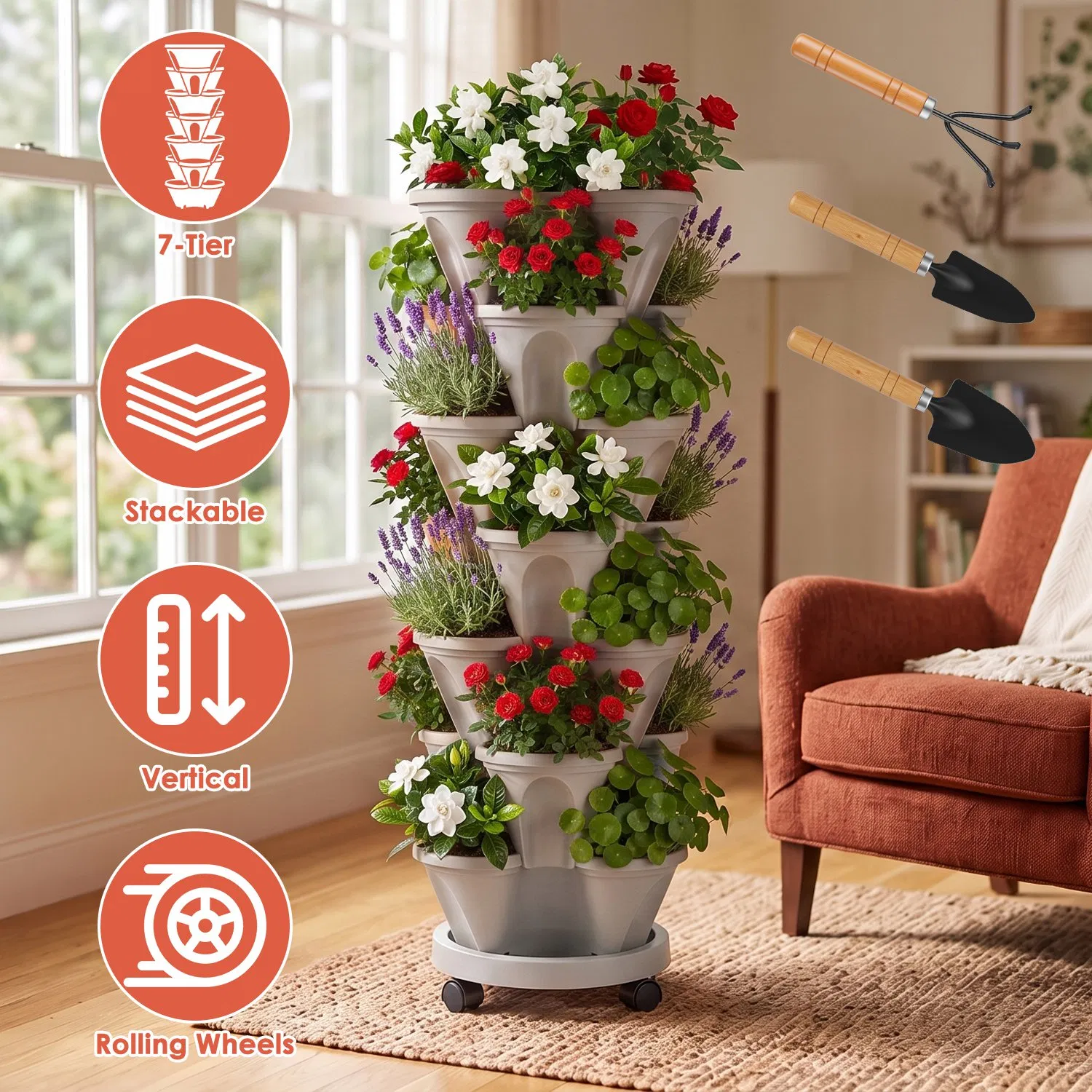 7-Tier Vertical Stackable Planter Tower with Casters, Space-Saving Stack-Up Garden Pots Complete Tool Kit for Balcony, Deck, Indoor & Outdoor Gardening$73.99View on Mallflare
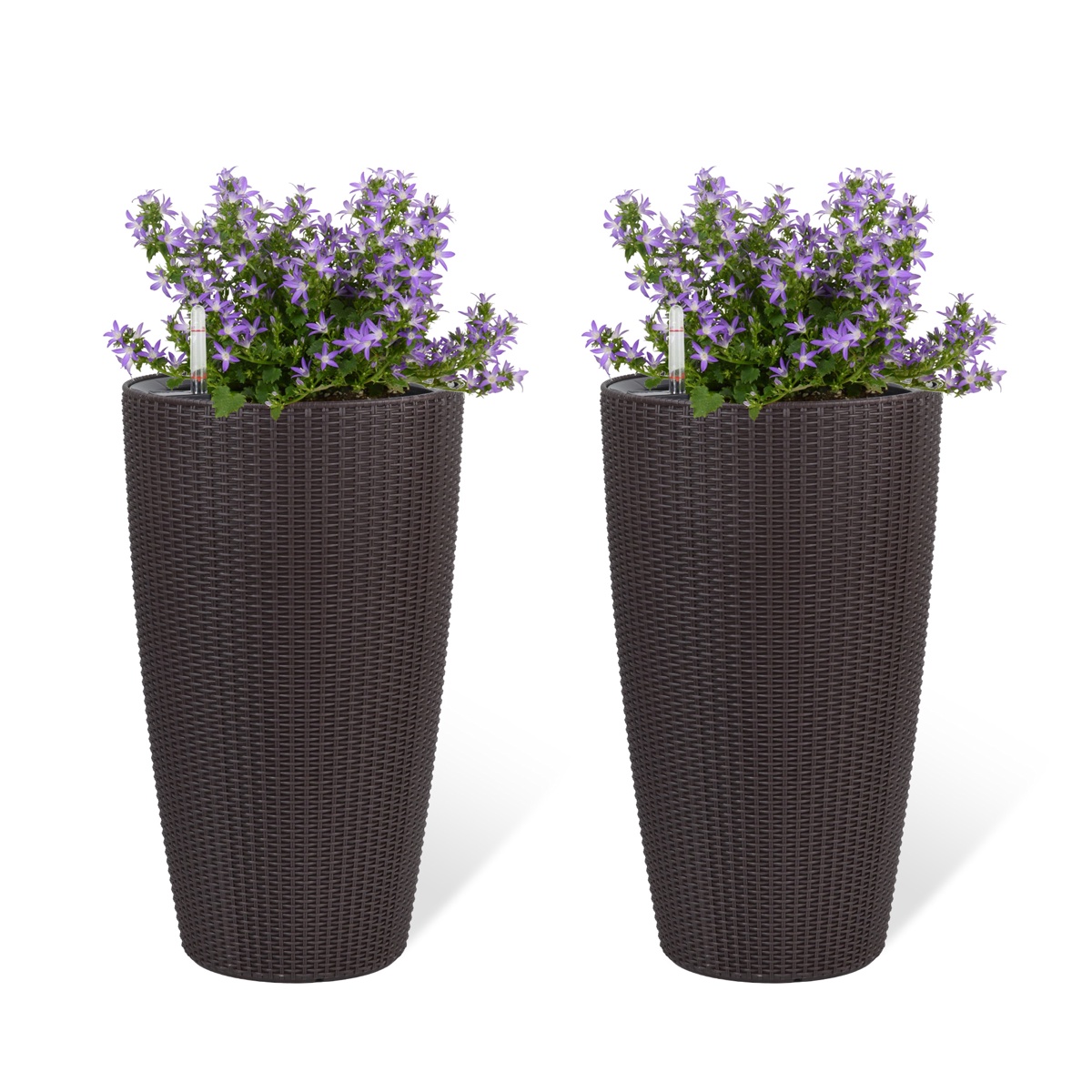 Set Of 2 Faux Rattan Tall Planters Outdoor Indoor Large With Water Level Monitor Inner Bucket, Automatic Watering, Flower Plant Pots For Garden, Patio, Porch, Brown, 22 Inch$112.99View on Mallflare
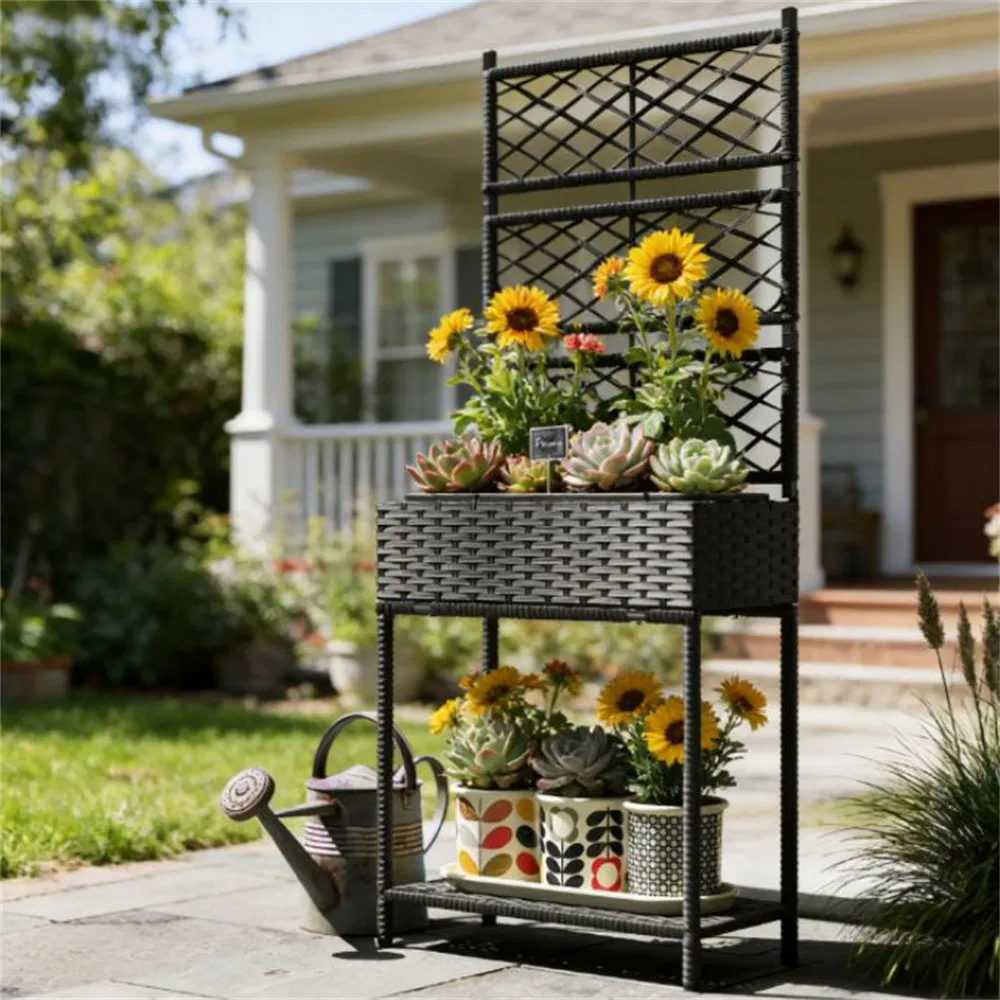 Outdoor flower pot, plant rack, garden box, planting box, bed, black$140.99View on Mallflare
Highlights
- Plastic urn planters are typically injection-molded polypropylene or polystyrene; UV-stabilized grades resist yellowing and cracking, while thin non-stabilized plastic becomes brittle within 2-3 seasons.
- Self-watering planters use an inner bucket and reservoir with a water level monitor; the wicking action suits thirsty annuals and vegetables but can waterlog succulents and Mediterranean herbs.
- Stackable vertical tower planters multiply growing area per square foot but each tier holds limited soil volume; deep-rooted crops need larger individual pots instead.
- Tall urns and pedestal planters raise the display height but become top-heavy in wind; wider base diameter and heavier fill (soil/gravel) are required for stability.
Best use cases
- Best fit: decorative entryway or porch display — pick a pair of classic urn planters in UV-stabilized plastic or resin with pre-drilled drainage; skip thin, unpainted plastic urns for full-sun exposure.
- Best fit: low-maintenance patio color with infrequent watering — choose a self-watering planter with inner bucket and water level monitor; skip self-watering for succulents, cacti, and lavender.
- Best fit: small balcony or tight patio vegetable growing — use a stackable vertical tower with casters to maximize vertical space; skip towers for tomatoes, peppers, or any deep-rooted crop needing more than 10 inches of soil depth.
- Wrong fit: permanent year-round planting in freezing climates — avoid thin plastic and glazed ceramic that crack; choose frost-rated resin, metal, or composite with drainage and a raised base.
Buying tips
- Match pot volume to plant: herbs and lettuce need 1-2 gallons, peppers and determinate tomatoes 5 gallons, indeterminate tomatoes and shrubs 10-15 gallons; a 22-inch-tall urn holds roughly 8-12 gallons depending on taper.
- Check drainage: outdoor pots need at least one 1/2-inch drain hole; sealed decorative planters require a nursery pot with drainage inside and a gravel spacer layer.
- For full-sun sites, pick UV-stabilized plastic (labeled UV-resistant), glazed ceramic, or metal; avoid dark-colored thin plastic that overheats roots above 90°F ambient.
- For windy balconies, calculate stability: pot base diameter should be at least one-third of total pot height, and fill the bottom third with gravel or use a heavier resin composite.
Specs
| Material Grade | UV-stabilized plastic / resin / metal |
|---|---|
| Drainage | Pre-drilled holes / sealed + inner pot |
| Watering System | Manual / self-watering reservoir |
| Frost Resistance | Frost-safe resin/metal vs crack-prone plastic |
Related searches
What to check before buying
- Measure the available footprint and doorway clearance: a 22-inch-tall, 14-inch-wide urn needs a level surface and 16-inch clearance to move through doors.
- Confirm the pot has drainage holes or plan to drill them; sealed urns need a nested nursery pot and a gravel drainage layer to prevent root rot.
- Check frost hardiness for your climate zone: plastic and ceramic can crack below freezing; resin, metal, and composite are safer for overwintering outdoors.
- Verify weight when filled: a 12-gallon pot with moist soil weighs over 100 pounds; use casters or place on a dolly before filling for balcony and deck use.
FAQ
Data sources: eBay / Amazon listings and product attribute feeds. Updated Nov 27, 2026.
Some links on this page are affiliate links. If you buy after clicking one, we may earn a commission at no extra cost to you. This does not change which products appear here or their order. Affiliate disclosure.