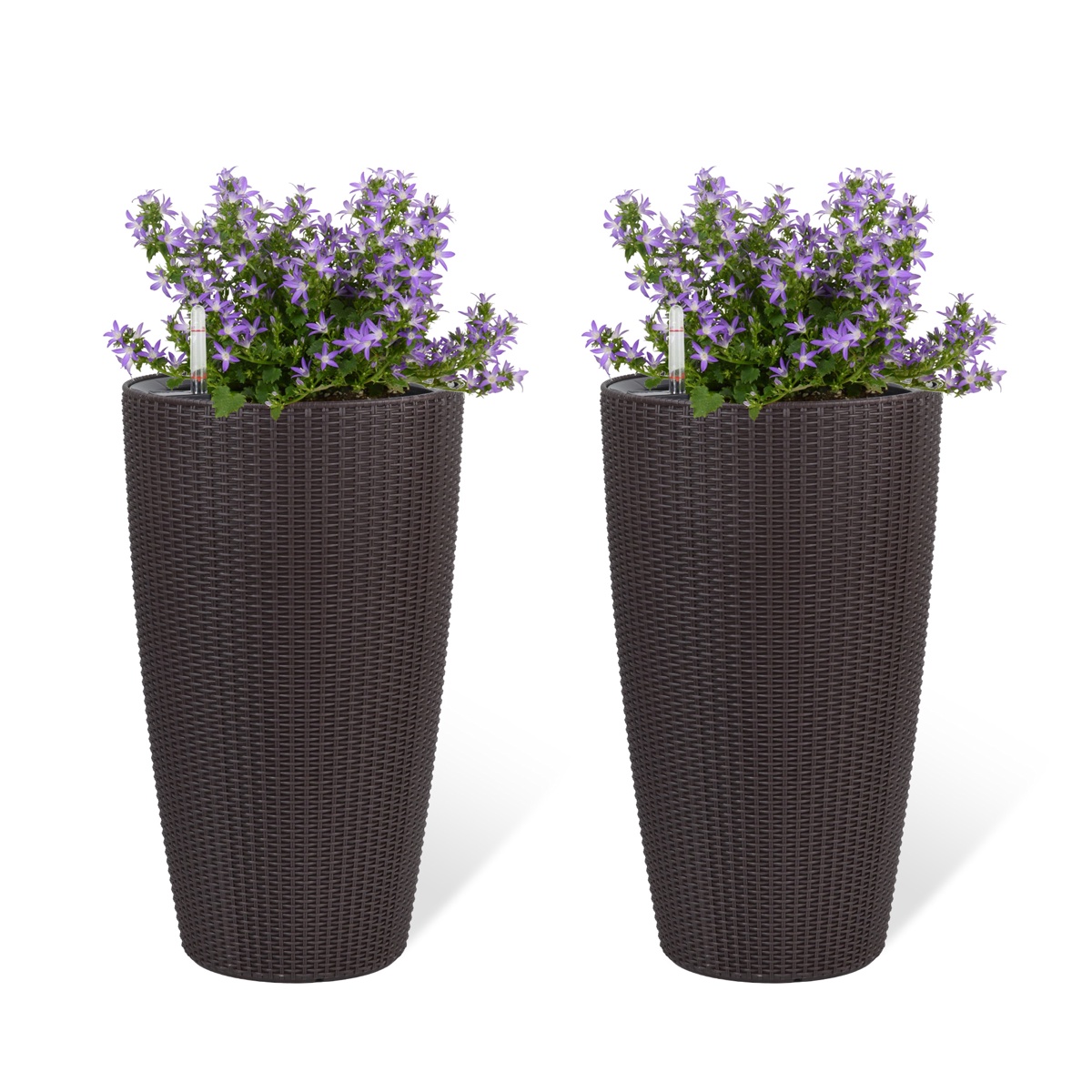

Photos from current listings. Actual item, color, and included accessories may vary.
Large Indoor Planter Buying Guide
Large indoor planters are floor-standing or hanging vessels sized for mature foliage, where the real trade-off is drainage and soil volume versus mess control and weight. Self-watering reservoirs and integrated inner buckets solve both, but only if wicking and overflow design are sound. Choose a reservoir planter with a visible level indicator and removable inner pot for anything over 10 inches; skip sealed decorative pots for moisture-sensitive species.
Key takeaways
- Self-watering models use a bottom reservoir plus wick or capillary mat; sub-irrigation cuts root rot risk versus top watering into sealed soil.
- Inner-bucket designs let you lift the root ball for repotting and flush salts, which fixed-reservoir planters cannot do without tipping.
- Reservoir capacity scales with pot diameter: a 13–14 inch planter holds roughly 1–1.5 gallons, while 20–22 inch floor planters hold 3–5 gallons.
At a glance
- Category
- Raised Garden Beds & Planters
- Last updated
- Nov 28, 2026
Current offers
Highlights
- Self-watering models use a bottom reservoir plus wick or capillary mat; sub-irrigation cuts root rot risk versus top watering into sealed soil.
- Inner-bucket designs let you lift the root ball for repotting and flush salts, which fixed-reservoir planters cannot do without tipping.
- Reservoir capacity scales with pot diameter: a 13–14 inch planter holds roughly 1–1.5 gallons, while 20–22 inch floor planters hold 3–5 gallons.
- Rattan-inspired planters are UV-stabilized resin or PE weave over a metal frame; un stabilized weave embrittles and cracks within two seasons outdoors.
Best use cases
- Best fit: 13–14 inch self-watering hanging or tabletop planters for pothos, philodendron, and ferns where weekly watering is inconvenient.
- Best fit: 20–22 inch tall floor planters with inner buckets for fiddle-leaf fig, monstera, and palms in bright rooms with 10–14 day watering gaps.
- Wrong fit: sealed ceramic or glazed pots without drainage for succulents, citrus, or any plant needing dry-down between waterings.
- Wrong fit: lightweight hollow resin shells over 24 inches tall for heavy top-canopy trees; the center of gravity tips without a weighted base.
Buying tips
- Match pot diameter to root ball: choose a planter 2–4 inches wider than the nursery pot, never more, or soil stays wet too long.
- For a 22 inch planter, expect 3–5 gallons of reservoir and 1.5–2 cubic feet of potting mix; confirm the fill line before buying.
- Pick UV-stabilized polyethylene or powder-coated metal for balconies; untreated rattan weave fails under direct sun and freeze-thaw.
- Verify the inner bucket has side drainage slots and a wick that reaches the reservoir bottom; a level float alone does not water the root zone.
Specs
| Watering Type | Self-watering reservoir vs drainage holes |
|---|---|
| Reservoir Capacity | 1–1.5 gal (13–14 in); 3–5 gal (20–22 in) |
| Planter Height | Tabletop 13–14 in; Floor 20–22 in |
| Weave Material | UV-stabilized PE resin vs natural rattan |
Related searches
What to check before buying
- Measure floor footprint and doorway clearance: a 22 inch planter with saucer needs 24–26 inches of width and 30+ inches of vertical clearance.
- Confirm the reservoir holds water without a pump or power; all self-watering models here are passive and need no outlet.
- Check the planter's dry weight versus your floor or balcony rating; a filled 22 inch planter can exceed 100 pounds.
- Verify the drip tray or overflow plug is included, since reservoir planters release excess water at the fill line.
FAQ
Data sources: eBay / Amazon listings and product attribute feeds. Updated Nov 28, 2026.
Some links on this page are affiliate links. If you buy after clicking one, we may earn a commission at no extra cost to you. This does not change which products appear here or their order. Affiliate disclosure.