
Photos from current listings. Actual item, color, and included accessories may vary.
Indoor Raised Garden Bed Buying Guide
Indoor raised garden beds are freestanding planter systems built for balconies, patios, and sunrooms where floor protection and drainage control matter. The core trade-off is between solid wood (fir/pine) for rigidity and fabric (non-woven/PE) for breathability and root pruning. Choose solid wood with a liner and casters for heavy vegetables and relocation; choose fabric only for lightweight herbs and shallow-root greens.
Median $135.99
Key takeaways
- Solid wood beds in fir or pine typically use 0.4–0.6 in (10–15 mm) thick boards; thinner boards warp and split under wet soil loads above 30 gallons.
- Fabric beds use 300–600 GSM non-woven polypropylene; below 300 GSM the walls bulge and seams fail after one season of wet-dry cycling.
- Wheeled elevated beds carry 150–250 lb total capacity on 1.5–2 in casters; locking casters are required on smooth indoor tile to prevent rolling.
At a glance
- Category
- Raised Garden Beds & Planters
- Last updated
- Nov 27, 2026
Current offers
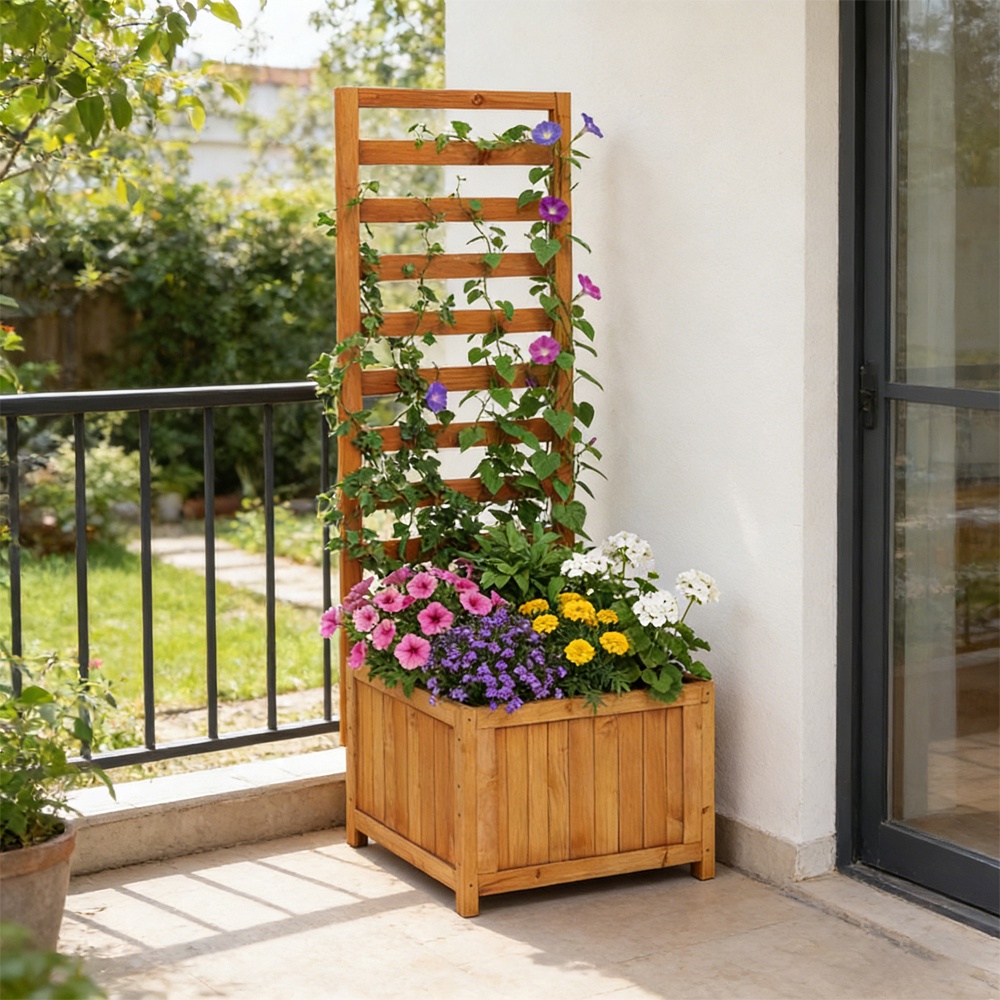 48 Inch Wood Raised Garden Bed With Trellis Drainage Holes Fir For Indoor And Outdoor Settings, Such As Porch, Patio Or Balcony$80.99View on Mallflare
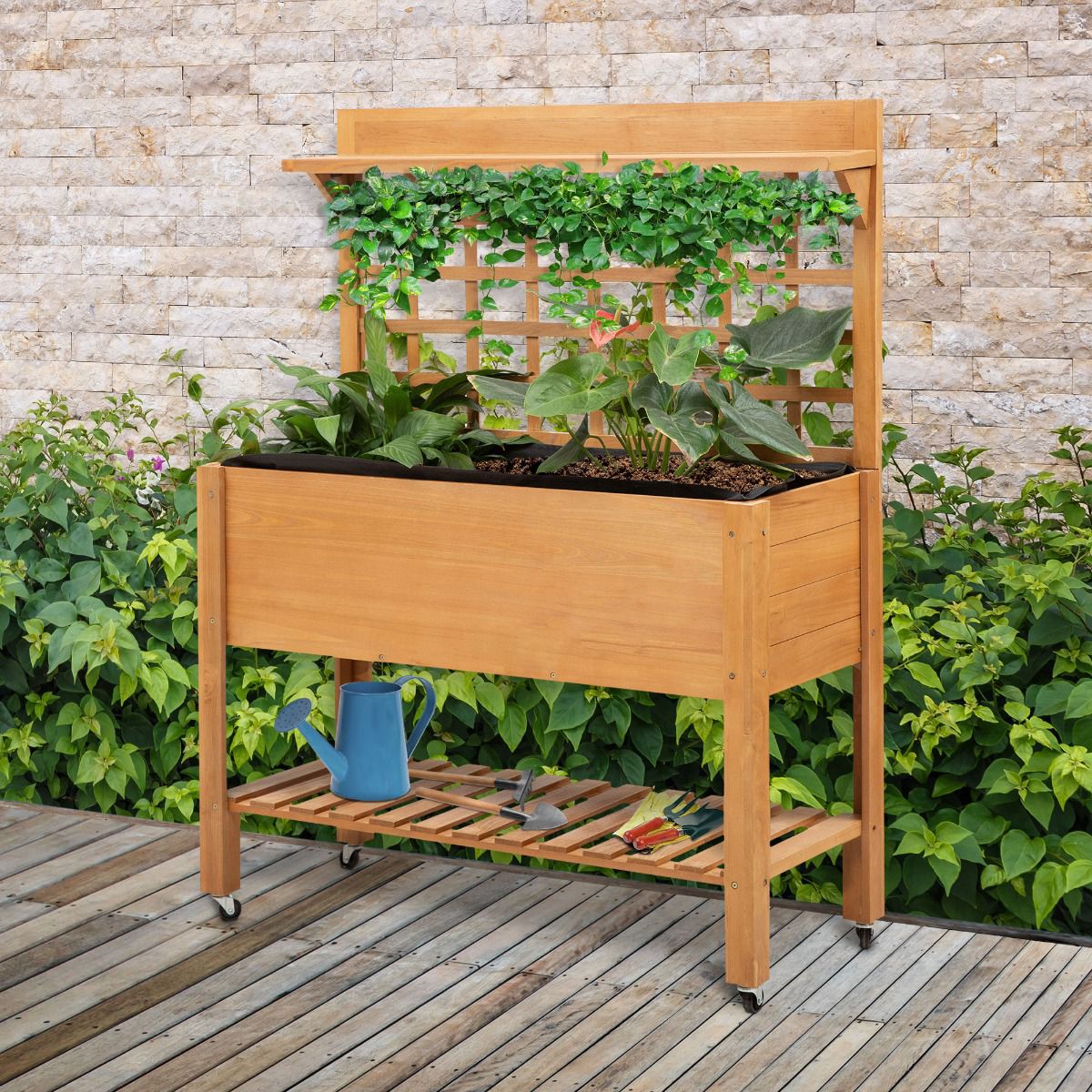 41"x18"x53" Elevated Garden Raised Bed with Shelf and Wheels Solid Wood Planter Flower Herb Boxes for Vegetables Outdoor/Indoor - Brown$80.99View on Mallflare
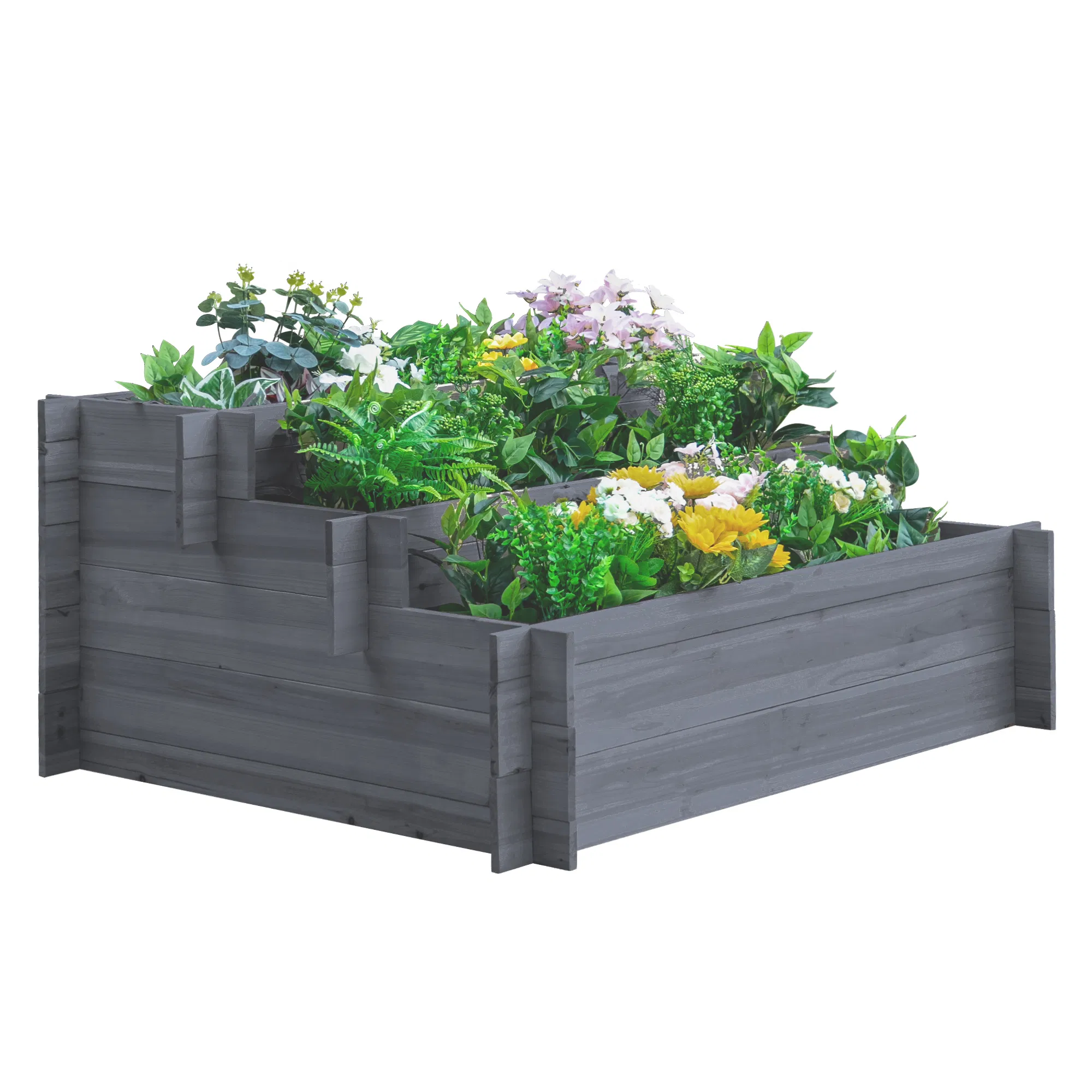 3-Tier Wood Raised Garden Bed, Elevated Planting Box, Outdoor Vegetable Flower Container, Herb Indoor Kit, Gray$135.99View on Mallflare
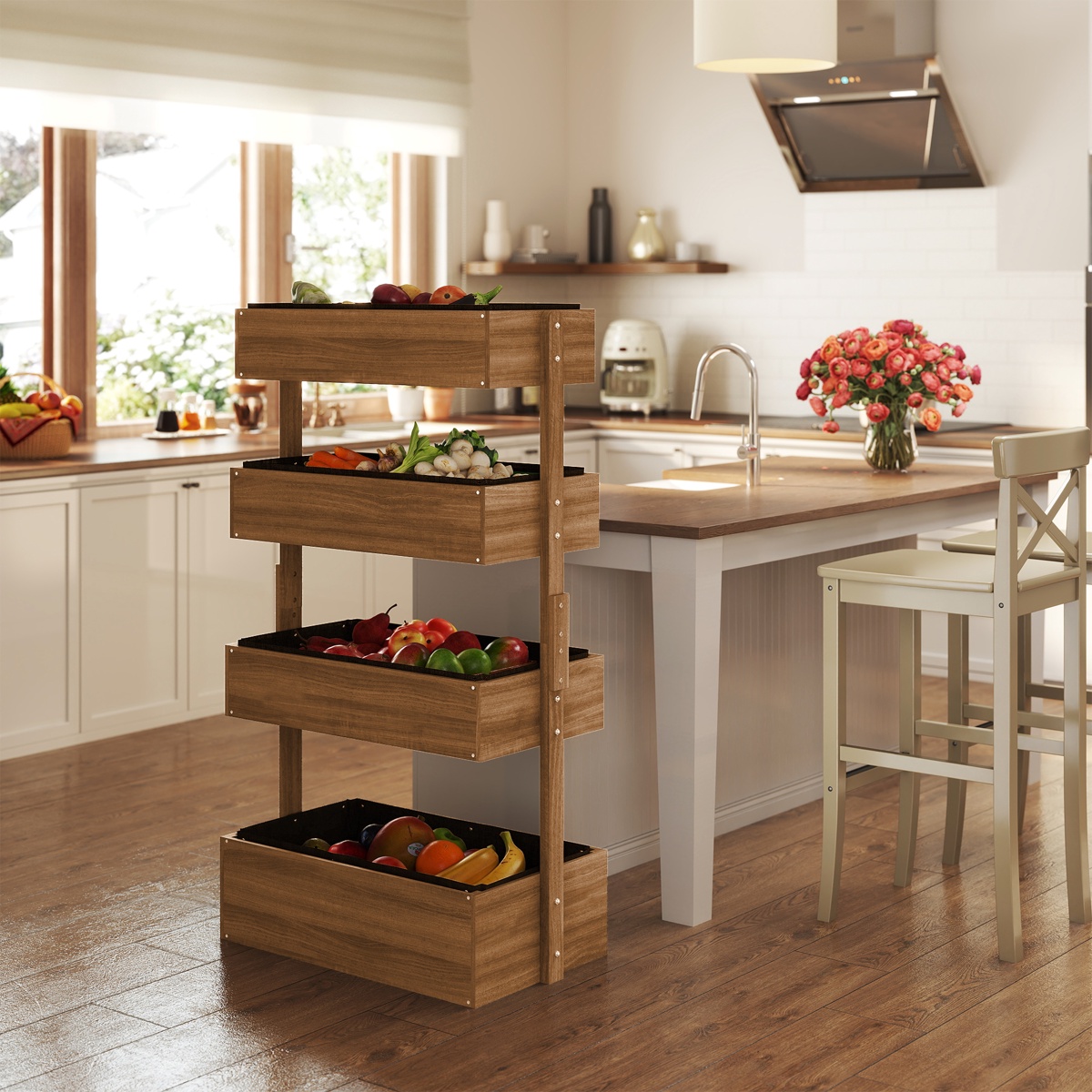 4 Tier Raised Garden Bed, Wooden Planter Box, Self-Draining With Bed Liner For Indoor Outdoor Flowers$157.99View on Mallflare
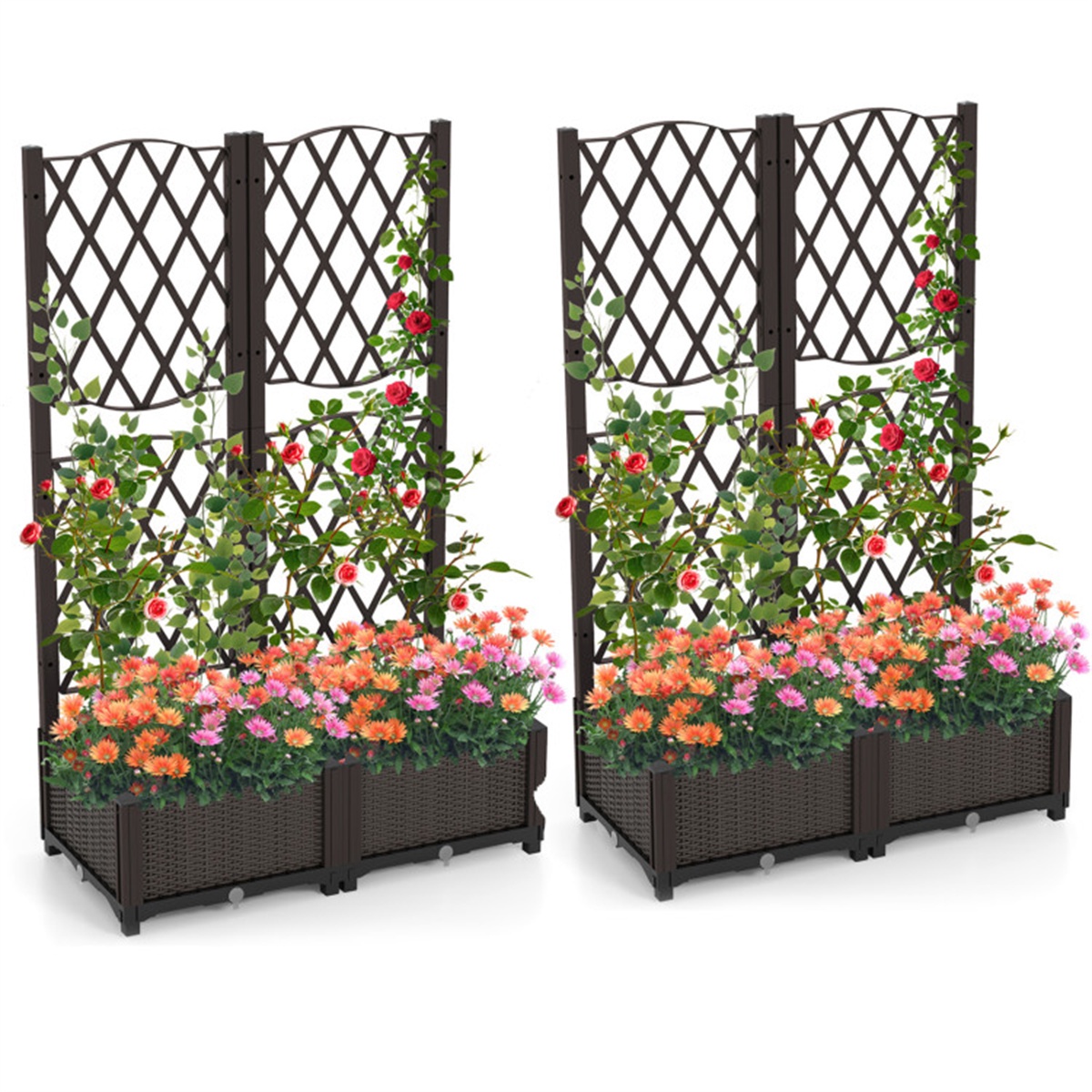 Set of 2 Rustic Style Trellis Planter, Raised Garden Bed Indoor Outdoor Planting Box for Vegetables Flowers$190.99View on Mallflare
Highlights
- Solid wood beds in fir or pine typically use 0.4–0.6 in (10–15 mm) thick boards; thinner boards warp and split under wet soil loads above 30 gallons.
- Fabric beds use 300–600 GSM non-woven polypropylene; below 300 GSM the walls bulge and seams fail after one season of wet-dry cycling.
- Wheeled elevated beds carry 150–250 lb total capacity on 1.5–2 in casters; locking casters are required on smooth indoor tile to prevent rolling.
- Self-draining tiered beds rely on pre-drilled holes or fabric liners; wood beds without liner contact staining wood floors and need a 2–3 mil HDPE liner.
Best use cases
- Best fit: a 41x18x53 in wheeled elevated wood bed with shelf for apartment balconies — rolls to sun, stores tools below, keeps soil off the floor.
- Best fit: a 48 in wood bed with trellis for patios growing tomatoes or cucumbers vertically; skip if ceiling clearance is under 72 in.
- Wrong fit: fabric raised beds on carpeted indoor floors — condensation wicks through and stains; use a wood bed with liner and drip tray instead.
- Wrong fit: 4-tier wood beds for heavy root vegetables — tier load limits favor herbs, lettuce, and strawberries, not carrots or potatoes.
Buying tips
- Match bed volume to crop: 30–50 gallons (4–6 cu ft) per bed supports tomatoes and peppers; herbs need 10–15 gallons. Multiply L×W×H in inches and divide by 231 for gallons.
- For wood beds, specify fir or cedar over pine; cedar and fir resist rot 10–15 years outdoors versus 3–5 years for untreated pine.
- On wheels, confirm caster diameter ≥2 in and at least two locking casters; small 1.5 in casters jam on rugs and grout lines.
- For indoor use, pair every wood bed with a fitted HDPE liner and a drip tray; fabric beds need a saucer or waterproof mat underneath.
Specs
| Material | Solid fir/pine wood vs non-woven fabric |
|---|---|
| Bed Volume | 10–50 gal (herbs to tomatoes) |
| Drainage | Pre-drilled holes + liner vs fabric weep |
| Mobility | Locking casters vs stationary feet |
Related searches
What to check before buying
- Measure floor footprint plus 6 in clearance on all sides for airflow and door swings; a 48 in bed needs a 60 in wide alcove.
- Verify ceiling height: trellis beds add 40–55 in above the planter; total height over 72 in blocks balcony doors and windows.
- Check floor type: locking casters on tile or hardwood; on carpet, use wide flat glides or place on a waterproof mat.
- Confirm indoor light: most vegetables need 6+ hours of direct sun or a 150–300 W full-spectrum grow light within 12–18 in of the canopy.
FAQ
Data sources: eBay / Amazon listings and product attribute feeds. Updated Nov 27, 2026.
Some links on this page are affiliate links. If you buy after clicking one, we may earn a commission at no extra cost to you. This does not change which products appear here or their order. Affiliate disclosure.