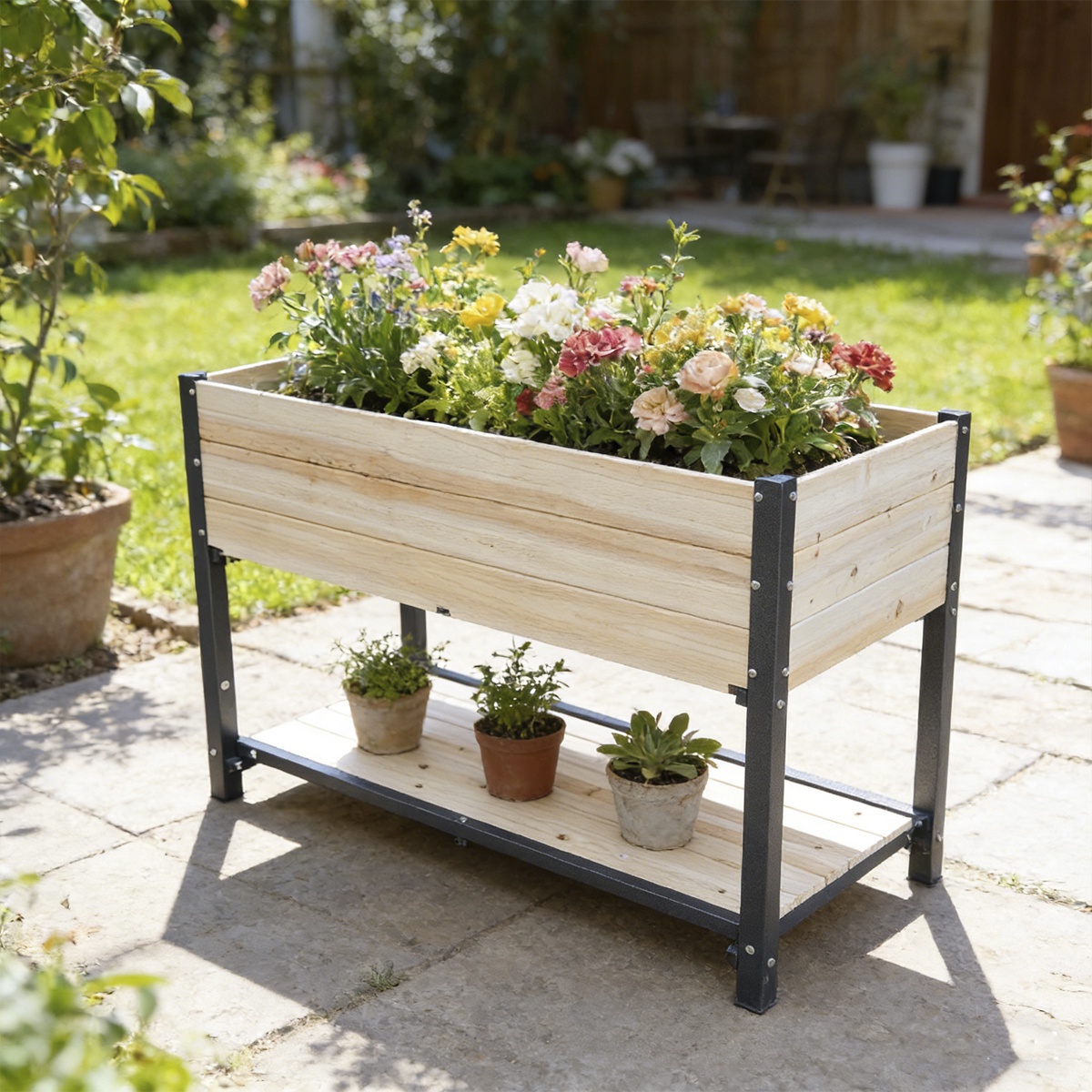

Photos from current listings. Actual item, color, and included accessories may vary.
DIY Wood Planter Box Buying Guide
A DIY wood planter box is any raised bed or freestanding planter built from lumber and assembled on-site, where the core trade-off is wood species/grade versus rot resistance and structural bracing. Choose kiln-dried rot-resistant heartwood or naturally durable cedar/cypress with corrosion-resistant fasteners for a decade-plus lifespan; skip untreated pine and thin decorative panels for food gardening.
Key takeaways
- Wood species determines rot life: cedar/cypress heartwood 15-20 years, locust 20+, pressure-treated pine 10-15, untreated pine 3-5.
- Board thickness of 2 in (nominal) resists soil bowing far better than 1 in; beds over 4 ft long need center bracing or doubled rims.
- Food-safe finishes matter: raw cedar is safe, while pressure-treated lumber should be lined or sealed if growing edibles.
At a glance
- Category
- Raised Garden Beds & Planters
- Last updated
- Nov 28, 2026
Current offers
Highlights
- Wood species determines rot life: cedar/cypress heartwood 15-20 years, locust 20+, pressure-treated pine 10-15, untreated pine 3-5.
- Board thickness of 2 in (nominal) resists soil bowing far better than 1 in; beds over 4 ft long need center bracing or doubled rims.
- Food-safe finishes matter: raw cedar is safe, while pressure-treated lumber should be lined or sealed if growing edibles.
- Corrosion-resistant fasteners (stainless or hot-dip galvanized) outlast electro-galvanized screws in damp soil contact by years.
Best use cases
- Best fit: build a 4x8 ft x 12 in cedar bed with 2x10 or 2x12 boards and corner posts for a durable vegetable plot — skip 1x6 decorative kits.
- Best fit: elevated waist-height planter (24-30 in tall) with 4x4 legs and cross-bracing for accessible gardening — avoid legs under 2x2 for heavy soil loads.
- Wrong fit for food crops: reclaimed pallet wood or unknown-source pressure-treated lumber unless lined with food-grade HDPE — choose untreated cedar instead.
- Wrong fit: very long single-span beds (over 8 ft) without a center divider or mid-post — soil pressure will bow boards within a season.
Buying tips
- Match board thickness to bed height: use 2x material for beds over 12 in tall; 1x boards are only suitable for shallow herb boxes under 8 in deep.
- Size beds to 4 ft wide maximum so you can reach the center from both sides without stepping into the soil.
- For food gardening, specify untreated cedar, cypress, or heat-treated (HT) lumber; avoid CCA-treated wood entirely and line older PT beds.
- Use stainless steel or hot-dip galvanized structural screws (not drywall screws) with pre-drilled pilot holes to prevent cedar splitting.
Specs
| Wood Species | Cedar / Cypress / PT Pine / Untreated Pine |
|---|---|
| Board Thickness | 2 in nominal (1.5 actual) vs 1 in |
| Bed Depth | 6-24 in (12 in typical, 18+ for roots) |
| Fastener Grade | Stainless / Hot-dip galv / Electro-galv |
Related searches
What to check before buying
- Measure your site: confirm level ground or plan to set corner posts in gravel footings; sloped sites need stepped or staked construction.
- Confirm bed width fits your reach — max 4 ft for two-sided access, 2-3 ft if accessible from one side only.
- Check fastener and hardware corrosion rating for ground/soil contact (stainless or hot-dip galvanized).
- Decide on liner: food-grade HDPE or landscape fabric for drainage and soil retention, especially with treated lumber.
FAQ
Data sources: eBay / Amazon listings and product attribute feeds. Updated Nov 28, 2026.
Some links on this page are affiliate links. If you buy after clicking one, we may earn a commission at no extra cost to you. This does not change which products appear here or their order. Affiliate disclosure.