
Photos from current listings. Actual item, color, and included accessories may vary.
DIY Elevated Garden Bed Buying Guide
A DIY elevated garden bed is a waist-height growing box built from rot-resistant lumber or metal, raised on legs so you garden without bending to ground level. The core trade-off is between structural rigidity (leg bracing, joist spacing, fastener grade) and soil weight—wet soil can exceed 100 lb per cubic foot, so the frame and legs must be engineered, not improvised. The decision rule: pick a design with diagonal leg bracing, at least 2x6 or 2x8 framing, and a calculated soil volume under the leg load rating—skip any kit or plan that relies on thin 1x lumber or unsupported corner posts.
Median $187.99
Key takeaways
- Structural integrity hinges on leg bracing: diagonal cross-braces or a full lower shelf rail prevent racking, while unbraced 4x4 legs on a 2-ft-tall bed will wobble and eventually split at fasteners.
- Lumber grade determines lifespan: ground-contact rated (UC4A/UC4B) pressure-treated pine lasts 15-20 years, cedar and cypress 10-15 years, and untreated pine under 5 years when soil stays moist.
- Soil weight math is non-negotiable: a 4x8 ft bed at 12 in deep holds 32 cu ft, roughly 2,400 lb wet; legs and joists must be sized for that load, typically 2x6 joists at 16 in on center with 4x4 posts.
At a glance
- Category
- Raised Garden Beds & Planters
- Last updated
- Nov 28, 2026
Current offers
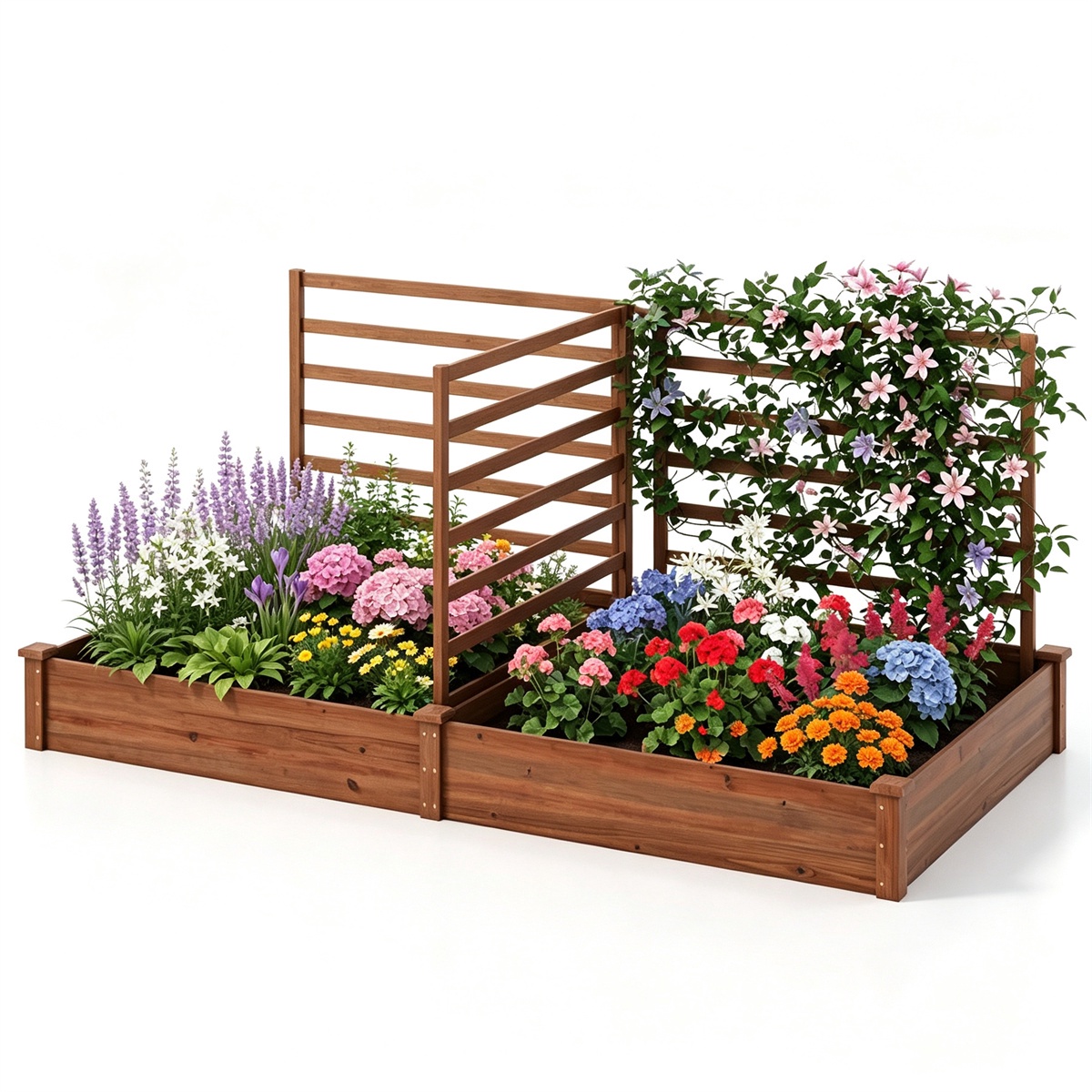 Brown Fir Wood Raised Garden Bed with 3 Climbing Trellises, 2 Large Open-Base Planting Boxes Modular Planter Box, DIY Paintable Elevated Bed for Patio Backyard Vegetable Flower Growing$187.99View on Mallflare
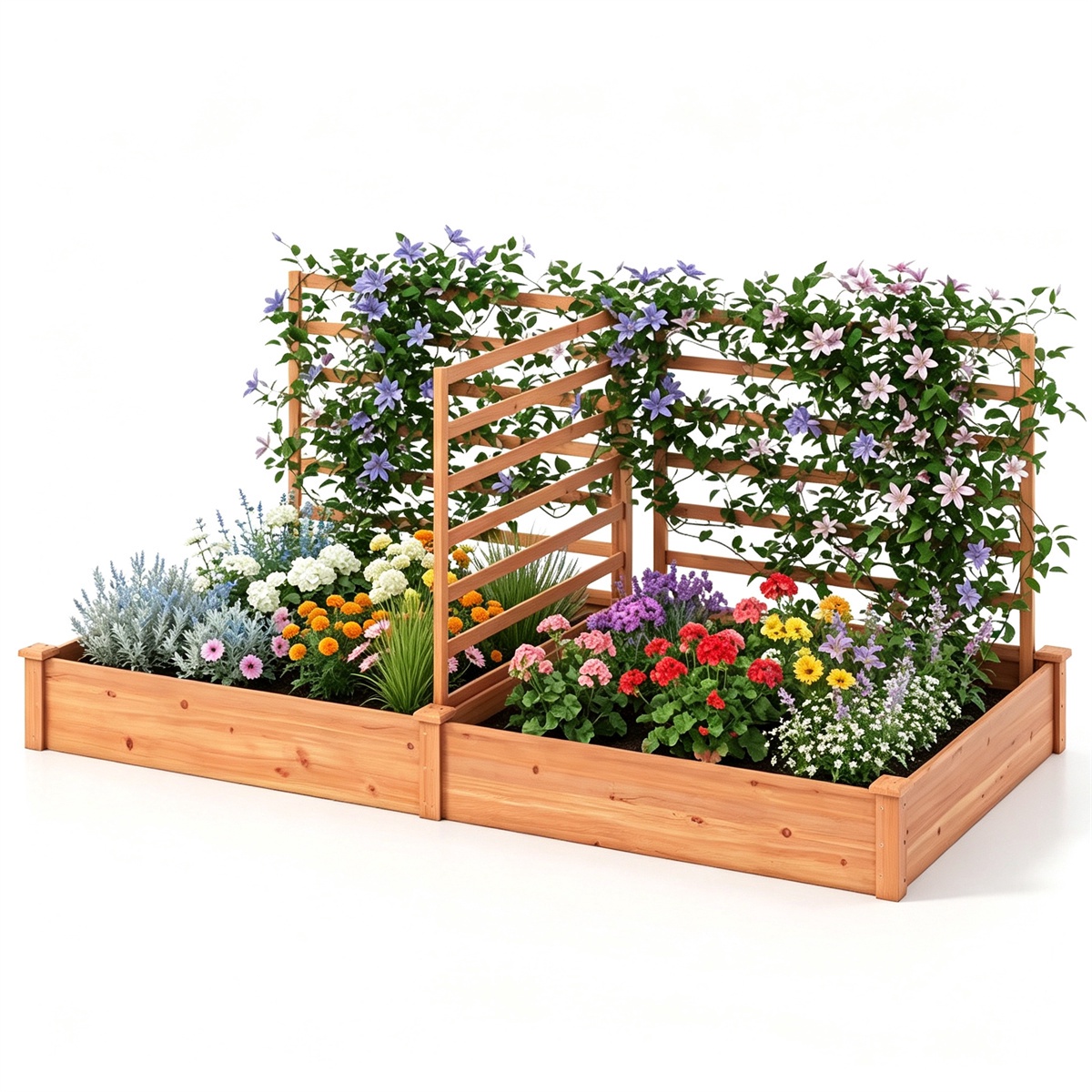 Oak Fir Wood Raised Garden Bed with 3 Climbing Trellises, 2 Large Open-Base Planting Boxes Modular Planter Box, DIY Paintable Elevated Bed for Patio Backyard Vegetable Flower Growing$187.99View on Mallflare
Highlights
- Structural integrity hinges on leg bracing: diagonal cross-braces or a full lower shelf rail prevent racking, while unbraced 4x4 legs on a 2-ft-tall bed will wobble and eventually split at fasteners.
- Lumber grade determines lifespan: ground-contact rated (UC4A/UC4B) pressure-treated pine lasts 15-20 years, cedar and cypress 10-15 years, and untreated pine under 5 years when soil stays moist.
- Soil weight math is non-negotiable: a 4x8 ft bed at 12 in deep holds 32 cu ft, roughly 2,400 lb wet; legs and joists must be sized for that load, typically 2x6 joists at 16 in on center with 4x4 posts.
- Liner and drainage details separate lasting builds from rot-prone ones: food-grade HDPE or EPDM liner protects wood from constant moisture, and a 1/2-in drainage gap or gravel base prevents waterlogged soil.
Best use cases
- Best fit: a 2x4 ft or 4x4 ft bed at 24-30 in working height for patio or deck gardeners with back or knee limitations—choose 4x4 posts and 2x6 framing with cross-bracing.
- Wrong fit: building a bed wider than 4 ft without a center leg or joist support—soil pressure will bow side panels; keep interior width at 4 ft max for unsupported spans.
- Best fit: cedar or cypress lumber for organic gardeners avoiding pressure-treated chemicals—accept 10-15 year lifespan and use a food-grade liner to extend it.
- Wrong fit: placing an elevated bed on a wood deck without checking load—a 2x4 ft bed at 12 in deep weighs about 600 lb wet plus frame; distribute legs over joists, never between them.
Buying tips
- Size lumber by span: use 2x6 or 2x8 for side panels over 4 ft long, and 4x4 posts at every corner and every 4 ft of length; 1x lumber is only acceptable for decorative trim, not soil retention.
- Choose fasteners rated for treated lumber: hot-dip galvanized or stainless steel screws (GRK or Simpson strong-tie equivalents) prevent corrosion; standard drywall screws will fail in 1-2 seasons.
- Calculate soil volume before buying materials: length x width x depth in feet gives cubic feet; a 4x8x1 ft bed needs 32 cu ft of soil mix, which dictates the number of bags or bulk delivery.
- Plan for drainage and liner: drill 1/2-in holes every 12 in along the bottom or leave 1/4-in gaps between floorboards; line the interior with food-grade HDPE or EPDM to separate soil from wood.
Specs
| Lumber Grade | UC4A/UC4B treated pine, cedar, cypress |
|---|---|
| Frame Size | 2x6 or 2x8 panels; 4x4 posts |
| Max Soil Span | 4 ft unsupported width |
| Soil Volume | L x W x D (ft) = cubic feet |
Related searches
What to check before buying
- Measure your space and reach: ensure at least 24 in of clear access on all sides for tending; bed height should put the soil surface at 24-30 in for standing work.
- Verify the base surface: on soil, set legs on concrete pavers or gravel to prevent sinking; on a deck, confirm joist locations and that the loaded bed weight (soil plus frame) falls within the deck's live-load rating.
- Check lumber availability and treatment: confirm your local yard stocks ground-contact rated 4x4 posts and 2x6 boards; cedar and cypress may need a specialty supplier.
- Confirm hardware and liner quantities: count corner brackets, joist hangers, and screws needed for your design; a 4x8 bed typically requires 8 corner brackets and 24 joist hangers for 16-in on-center joists.
FAQ
Data sources: eBay / Amazon listings and product attribute feeds. Updated Nov 28, 2026.
Some links on this page are affiliate links. If you buy after clicking one, we may earn a commission at no extra cost to you. This does not change which products appear here or their order. Affiliate disclosure.