
Photos from current listings. Actual item, color, and included accessories may vary.
Solar Post Light Buying Guide
Solar post lights are freestanding or pier-mounted LED fixtures that harvest daylight via a top-mounted panel and illuminate walkways, driveways, and yard perimeters after dark without trenching for line voltage. The decisive trade-off is integrated solar-plus-battery engineering versus decorative hollow shells: durable units pair monocrystalline panels, LiFePO4 cells, and IP65+ housings, while compromises hide small amorphous panels and 600–1200 mAh cells behind plastic. Buy on lumens-per-panel-area and battery chemistry, not on post height or head count.
Median $161.99
Key takeaways
- Monocrystalline panels convert 18–22% versus 6–10% for amorphous film, so panel area and cell type set real night runtime more than the number of lamp heads.
- LiFePO4 batteries deliver 2,000–5,000 cycles and tolerate heat and deep discharge; sealed lead-acid or 600–1200 mAh 18650 packs fade within one to two seasons.
- IP65 seals against dust and jet spray while IP44 only resists splashes — exposed lawn and driveway posts need IP65 minimum, coastal sites benefit from marine-grade aluminum or stainless fasteners over plastic.
At a glance
- Category
- Outdoor Lighting & Decor
- Last updated
- Nov 27, 2026
Current offers
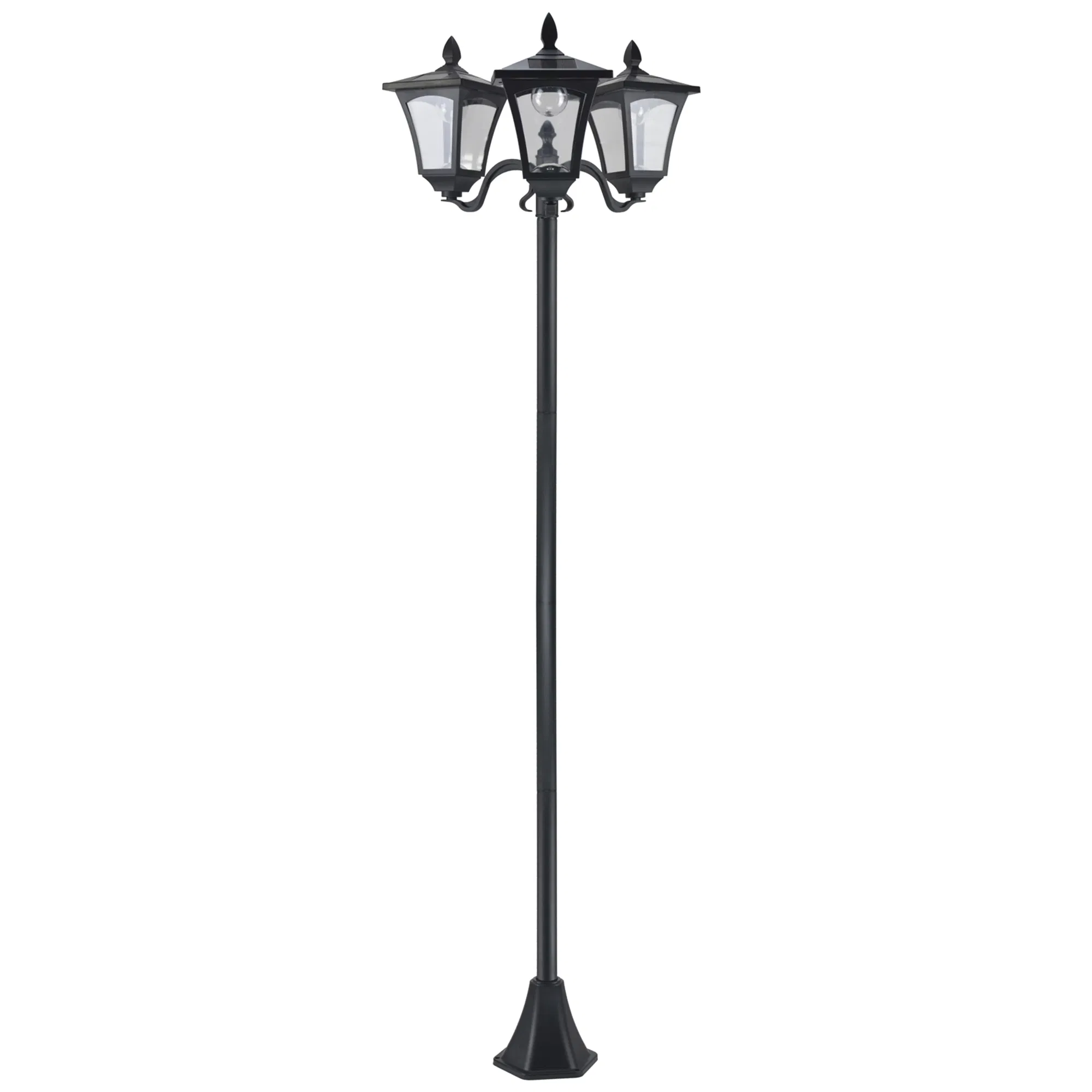 Outdoor Lamp Post Lights, Triple Head Solar Powered Street Vintage for Backyard, Garden Pathway, Driveway, 72 Inches$160.99View on Mallflare
 Solar Lamp Post Light$161.99View on Mallflare
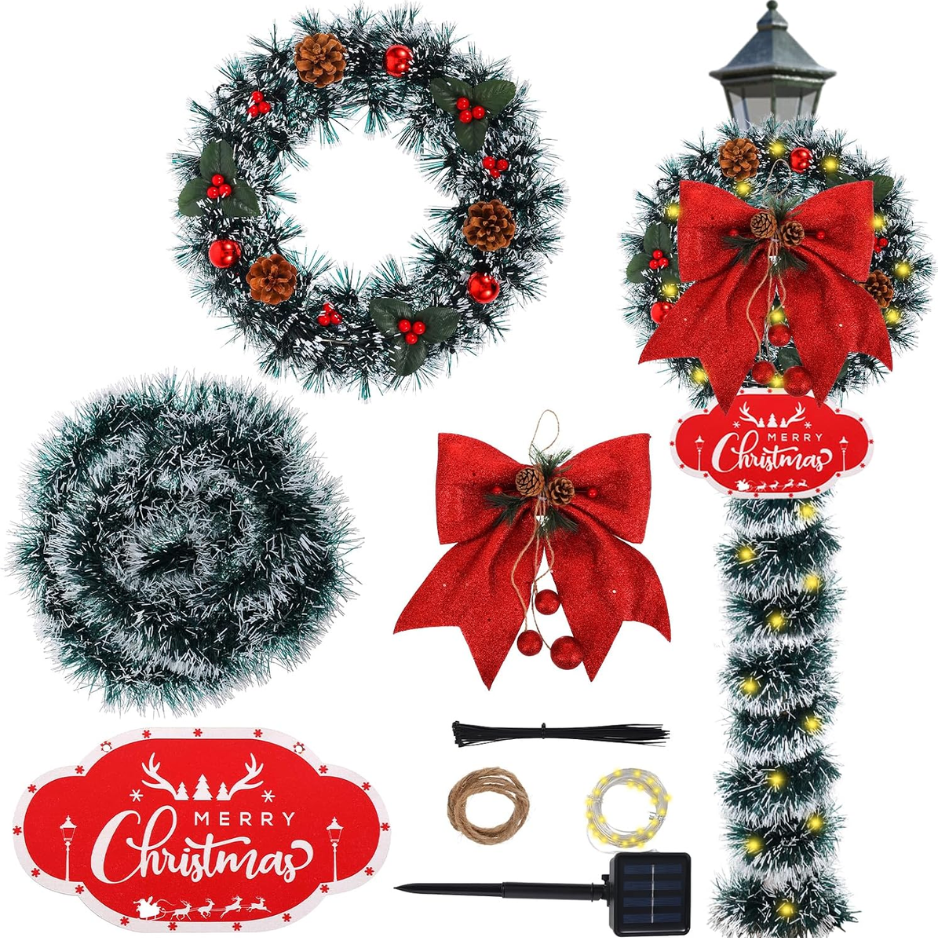 7 Pcs Christmas Lamp Post Decoration Set With Xmas Wreath, Large Red Bow And 100 LEDs Solar Strip Light Outdoor Holiday Decor For Garden, Patios &Yards$165.99View on Mallflare
Highlights
- Monocrystalline panels convert 18–22% versus 6–10% for amorphous film, so panel area and cell type set real night runtime more than the number of lamp heads.
- LiFePO4 batteries deliver 2,000–5,000 cycles and tolerate heat and deep discharge; sealed lead-acid or 600–1200 mAh 18650 packs fade within one to two seasons.
- IP65 seals against dust and jet spray while IP44 only resists splashes — exposed lawn and driveway posts need IP65 minimum, coastal sites benefit from marine-grade aluminum or stainless fasteners over plastic.
- Head count does not add power: triple-head and single-head versions drawing from the same panel share one battery, so lumen output per head drops as heads are added unless the panel wattage scales up.
Best use cases
- Best fit: mark a driveway or walkway edge with a single 40–100 lumen integrated post head on a 60–84 inch pole — pick a monocrystalline panel rated 3 W or higher with a LiFePO4 cell for reliable dusk-to-dawn output.
- Best fit: porch, pier, or deck post mounting using a 3x3 or 4x4 base adapter and a fixture under 15 lbs; choose IP65 aluminum construction where the post is fully exposed to rain and wind.
- Wrong fit: using a hollow decorative lamp-post shell with a tiny included panel for security lighting — it cannot sustain 100+ lumens through a long winter night; instead run a low-voltage wired post or a separate remote solar panel.
- Wrong fit: buying a triple-head vintage post purely for spread — heads share one battery and panel, so choose higher panel wattage or step to a dual-panel model rather than adding heads.
Buying tips
- Size the panel: require at least 3–5 W monocrystalline for 40–100 lumens dusk-to-dawn, and 8–10 W for 150–300 lumens; amorphous panels need two to three times the area for the same output.
- Match battery capacity to rated lumens: a 2,000 mAh LiFePO4 cell supports roughly 100 lumens for 8–10 hours, while 1,200 mAh or lead-acid packs realistically deliver only 30–60 lumens all night.
- Confirm pole and base compatibility: standard lamp posts use a 3-inch fitter or 3x3/4x4 post base; check the fixture weight rating (most plastic bases are fine under 10–15 lbs, aluminum bases are needed for heavier heads).
- Choose the right generation of control: look for automatic dusk-to-dawn photocell plus 2–3 brightness modes (e.g., 30% dim then motion boost); basic units with only an on/off switch drain the battery on cloudy stretches.
Specs
| Panel Type | Monocrystalline 18–22% vs Amorphous 6–10% |
|---|---|
| Battery Chemistry | LiFePO4 2,000+ cycles vs Lead-acid 300 |
| Weather Rating | IP65+ exposed / IP44 sheltered |
| Mounting Base | 3-in fitter / 3x3 / 4x4 adapter |
Related searches
What to check before buying
- Measure the mounting surface: a 3-inch post fitter, 3x3 or 4x4 wooden post, or pier base — buy the matching adapter rather than drilling a plastic base.
- Confirm solar exposure: the panel needs 4–6 hours of direct sun; in shaded or north-facing spots choose a model with a detachable panel on a cable or skip solar and use low-voltage wired.
- Check the environment: IP65 or higher for exposed rain, marine-grade or aluminum housing for coastal salt air, and a wind rating suitable for the post height (72–84 inch posts catch more wind).
- Verify battery access and type: a replaceable LiFePO4 cell in a sealed compartment extends service life to 5+ years; sealed non-replaceable packs turn the whole fixture into disposable goods.
FAQ
Data sources: eBay / Amazon listings and product attribute feeds. Updated Nov 27, 2026.
Some links on this page are affiliate links. If you buy after clicking one, we may earn a commission at no extra cost to you. This does not change which products appear here or their order. Affiliate disclosure.