
Photos from current listings. Actual item, color, and included accessories may vary.
Hanging Outdoor Lantern Solar Buying Guide
Hanging outdoor solar lanterns combine a photovoltaic panel, rechargeable cell, and LED into a decorative fixture that mounts on hooks, branches, or pergolas without wiring. The core trade-off is between decorative shell quality (metal vs. plastic, paint grade, glass vs. polycarbonate) and the solar/light engine (panel wattage, battery chemistry, LED output and runtime). Buyers should prioritize a sealed IP-rated housing with a replaceable AA LiFePO4 or NiMH cell and a monocrystalline panel; decorative-only lanterns with integrated coin cells and no IP rating are the compromise tier.
Median $23.14
Key takeaways
- Monocrystalline solar panels convert 18–22% efficiency vs. 10–15% for amorphous; panel wattage of 0.5–2 W is typical for hanging lanterns, directly setting charge speed and winter runtime.
- Battery chemistry matters: LiFePO4 cells tolerate 2,000+ cycles and -20°C to 60°C, while standard Li-ion or NiMH fade faster in heat and cold; replaceable AA/AAA cells extend service life beyond sealed integrated packs.
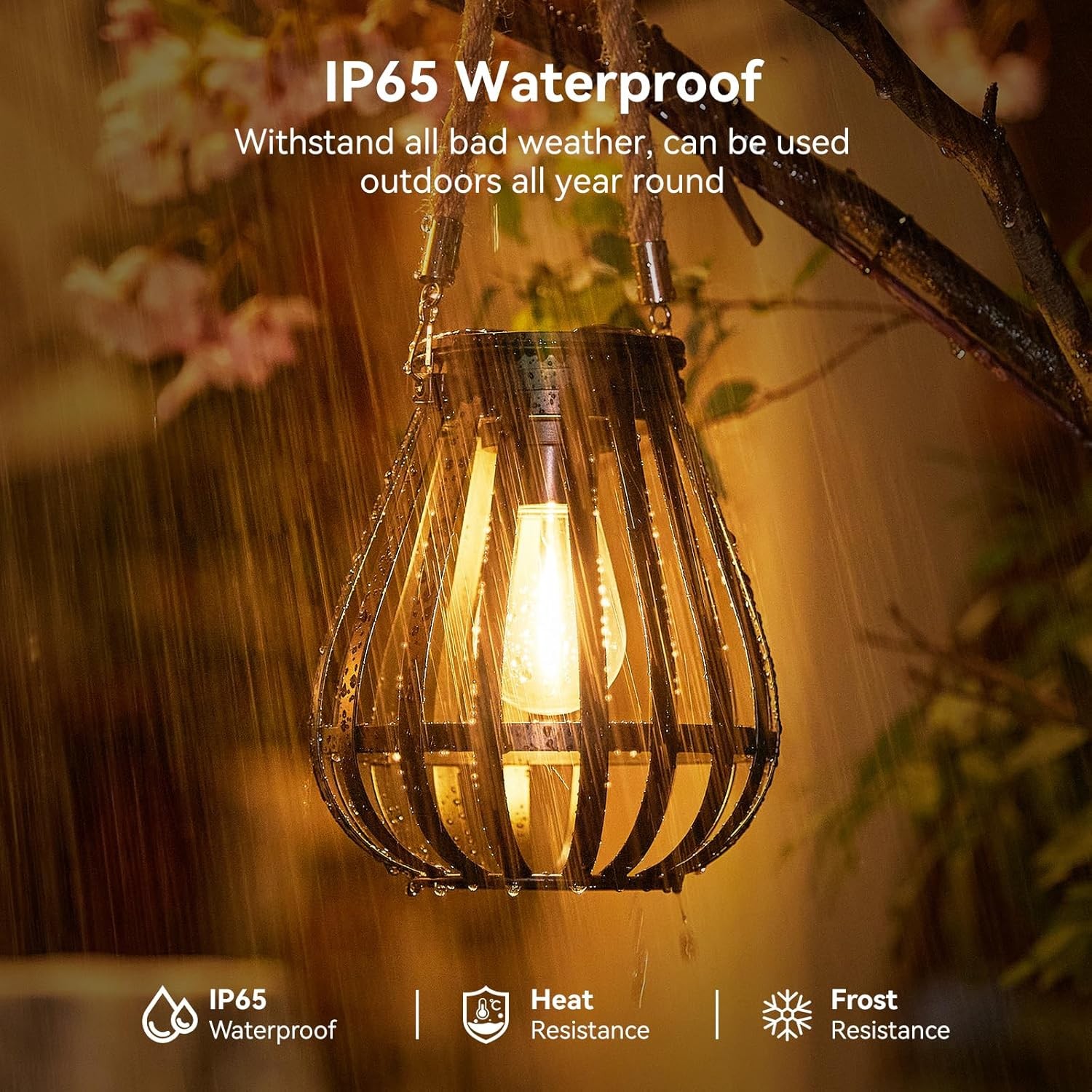
- IP65 or higher is required for year-round outdoor hanging; IP44 is splash-resistant only and will fail in exposed rain or sprinkler zones.
At a glance
- Category
- Outdoor Lighting & Decor
- Last updated
- Nov 28, 2026
Current offers
Highlights
- Monocrystalline solar panels convert 18–22% efficiency vs. 10–15% for amorphous; panel wattage of 0.5–2 W is typical for hanging lanterns, directly setting charge speed and winter runtime.
- Battery chemistry matters: LiFePO4 cells tolerate 2,000+ cycles and -20°C to 60°C, while standard Li-ion or NiMH fade faster in heat and cold; replaceable AA/AAA cells extend service life beyond sealed integrated packs.
- IP65 or higher is required for year-round outdoor hanging; IP44 is splash-resistant only and will fail in exposed rain or sprinkler zones.
- Metal shells (powder-coated steel or aluminum) resist UV fading and impact, while plastic shells crack under freeze-thaw; glass globes outperform polycarbonate against scratching but are fragile.
Best use cases
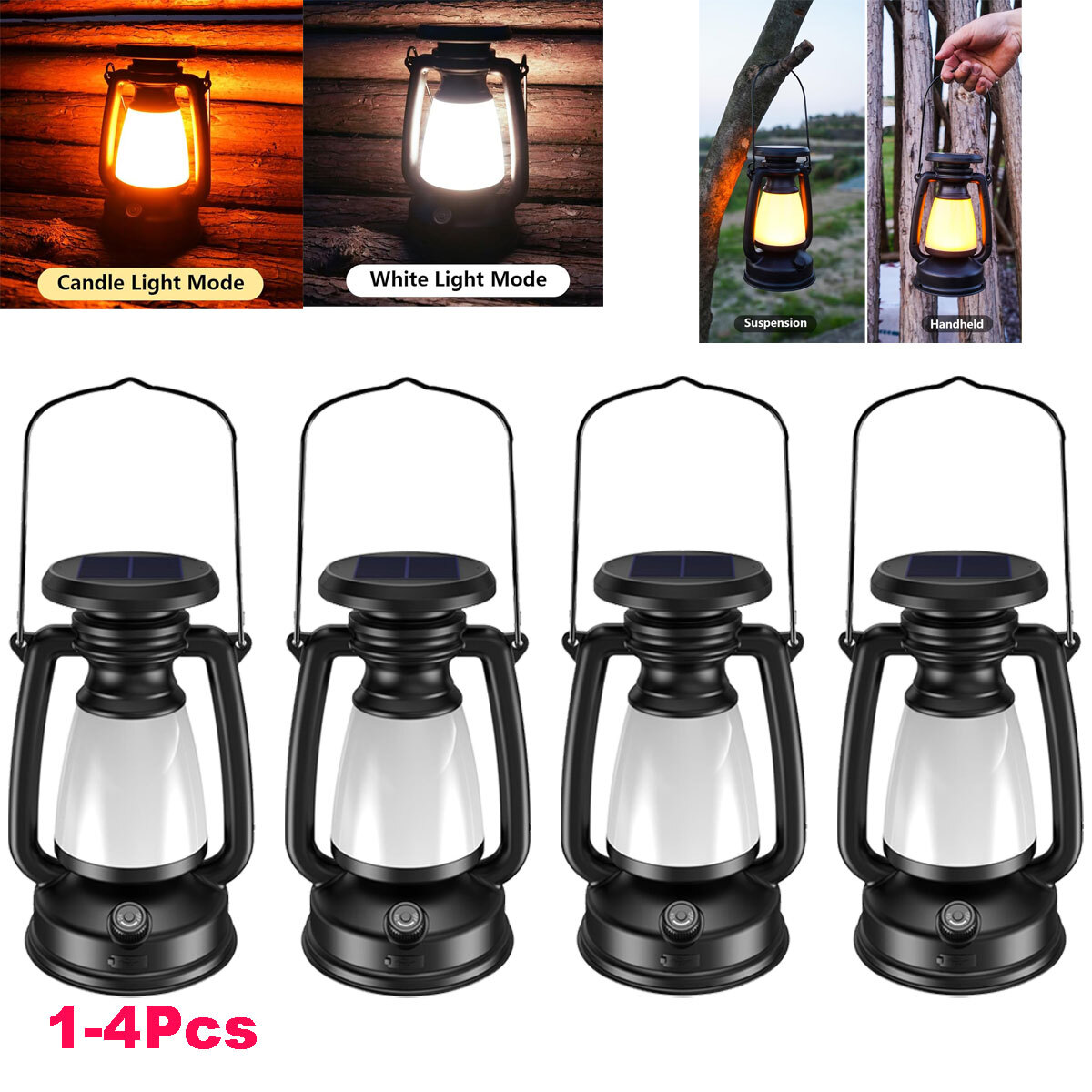
- Best fit: hanging under a covered porch or pergola in partial sun — choose a metal-shell lantern with IP65 and a 1–2 W panel; wrong fit: deep shade under dense evergreen canopy, where even a 2 W panel will not recover daily draw.
- Best fit: fence post or shepherd-hook mounting along a walkway — pick a downward-facing LED with 2700–3000K warm white and a replaceable AA cell for easy annual service; wrong fit: fully exposed coastal salt-spray locations unless the finish is marine-grade aluminum or stainless hardware.
- Best fit: decorative tabletop or tree-branch ambiance in mild climates — a plastic-shell lantern at IP44 is acceptable and lighter to hang; wrong fit: freeze-thaw climates or windy ridge lines where plastic cracks and light housings swing loose.
Buying tips
- Match panel wattage to nightly runtime: a 0.5 W panel yields roughly 4–6 hours of low-output LED in summer sun, while 1.5–2 W supports 8–10 hours; size up if the mounting spot gets under 4 hours of direct sun.
- Prefer replaceable AA or AAA cells (NiMH or LiFePO4) over sealed integrated packs; a standard AA NiMH at 800–1000 mAh gives 6–8 hours on a low-draw LED and is user-serviceable.
- Specify IP65 for exposed hanging and IP44 only under a roof overhang; check that the solar panel is top-mounted or angled, not buried behind a decorative shell.
- For metal lanterns, require powder-coated steel or aluminum with stainless screws; painted mild steel rusts at drill holes and seams within a season in wet climates.
Specs
| Panel Type | Monocrystalline 0.5–2 W typical |
|---|---|
| Battery Chemistry | LiFePO4 / NiMH AA replaceable |
| Ingress Rating | IP65 exposed / IP44 covered |
| Shell Material | Powder-coated metal vs. UV plastic |
Related searches
What to check before buying
- Measure the hook, branch, or pergola beam diameter and confirm the lantern's handle or ring clears it; most hanging lanterns need 3–5 cm of clearance and weigh 0.4–1.2 kg.
- Verify daily direct-sun hours at the exact hanging spot — 4+ hours is the practical minimum for a 1 W panel; less sun requires a larger panel or a lower-output LED.
- Confirm the mounting location's exposure: fully exposed needs IP65+ and metal or UV-stabilized plastic; covered porch can accept IP44 and lighter plastic shells.
- Check ambient temperature range: LiFePO4 handles -20°C to 60°C, NiMH performs poorly below -10°C, and sealed Li-ion packs degrade above 45°C — match chemistry to your climate.
FAQ
Data sources: eBay / Amazon listings and product attribute feeds. Updated Nov 28, 2026.
Some links on this page are affiliate links. If you buy after clicking one, we may earn a commission at no extra cost to you. This does not change which products appear here or their order. Affiliate disclosure.