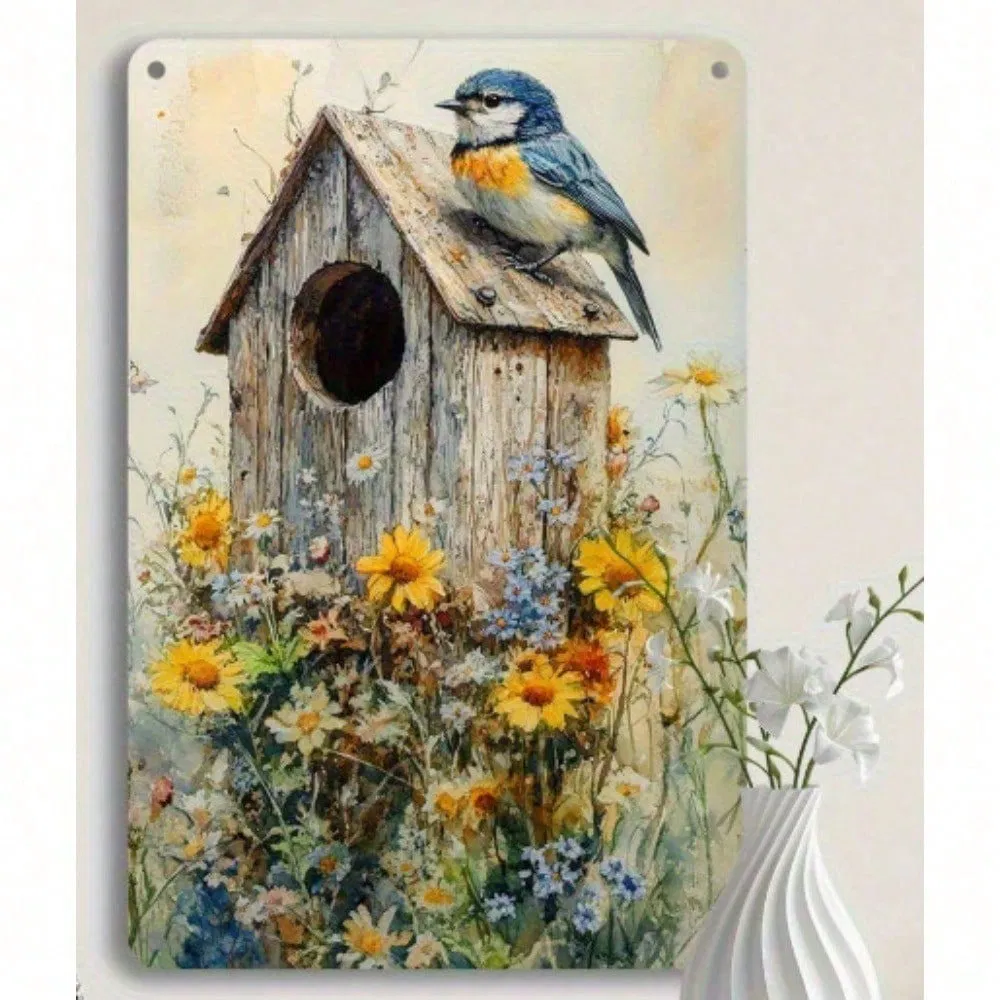

Photos from current listings. Actual item, color, and included accessories may vary.
Bird House Buying Guide
Bird houses are functional nesting boxes or decorative garden ornaments, and the primary trade-off is between weather-resistant construction (wood, metal, or composite) and proper cavity dimensions for actual avian use. Durable options use thick untreated wood or powder-coated metal with predator guards, while compromises are thin plywood or purely ornamental metal shells with no insulation or drainage. The decision rule: buy a functional house if you want nesting birds, and a decorative house only if it is purely visual wall art.
Key takeaways
- Functional nest boxes need 1.5–2.5 cm (5/8–1 in) thick untreated wood for insulation; metal and thin plywood overheat and condensate.
- Entrance hole diameter must match species: 28–32 mm for chickadees/nuthatches, 38 mm for bluebirds, 45 mm for wrens; oversized holes invite predators.
- Decorative metal birdhouses (like the CIFbuy SOZYEE wall art) are welded or stamped steel with waterproof paint, but often lack drainage, ventilation, and clean-out access.
At a glance
- Category
- Outdoor Lighting & Decor
- Last updated
- Nov 28, 2026
Current offers
Highlights
- Functional nest boxes need 1.5–2.5 cm (5/8–1 in) thick untreated wood for insulation; metal and thin plywood overheat and condensate.
- Entrance hole diameter must match species: 28–32 mm for chickadees/nuthatches, 38 mm for bluebirds, 45 mm for wrens; oversized holes invite predators.
- Decorative metal birdhouses (like the CIFbuy SOZYEE wall art) are welded or stamped steel with waterproof paint, but often lack drainage, ventilation, and clean-out access.
- Predator guards (metal portal plates) and 15–20 cm deep cavities with a 15 cm floor above the entrance are the key durability and safety features.
Best use cases
- Best fit for real nesting: untreated cedar or pine box with 28–38 mm hole, hinged clean-out panel, drainage holes, and a metal predator guard on a pole or tree at 1.5–3 m height.
- Best fit for decorative wall art: powder-coated metal or ceramic hanging house with sealed seams and no clean-out—use on porches or fences, not as a nest box.
- Skip: thin plywood or painted particleboard houses with glued joints, and any metal house without ventilation—they fail within one season or cook nestlings.
Buying tips
- Match hole size to target bird: 28–32 mm for small songbirds, 38 mm for bluebirds, 45 mm for wrens; a 50 mm hole attracts starlings and sparrows.
- Choose 1.5–2.5 cm thick untreated wood (cedar, pine, or cypress) over 6 mm plywood; thicker walls insulate and resist warping.
- For metal decorative houses, confirm powder-coated or rust-resistant finish and drainage holes if any nesting is intended.
- Mount 1.5–3 m high on a pole with a baffle, facing east or north to avoid afternoon sun and prevailing rain.
Specs
| Material | Untreated wood vs powder-coated metal |
|---|---|
| Entrance Hole | 28–45 mm species-matched |
| Wall Thickness | 1.5–2.5 cm wood; metal shell 1–2 mm |
| Clean-Out Access | Hinged panel vs sealed decorative |
Related searches
What to check before buying
- Measure your mounting location: pole or tree trunk at 1.5–3 m height, with 3–5 m clear flight path and no overhanging branches within 1 m.
- Confirm clean-out access: hinged side or removable roof for end-of-season cleaning; decorative sealed metal houses have no clean-out and are not for nesting.
- Check climate compatibility: metal houses need shade in hot climates; wood houses need a roof overhang of at least 5 cm for rain runoff.
- Verify predator protection: metal portal guard or 2.5 cm thick wood face around the entrance, plus a baffle on the pole.
FAQ
Data sources: eBay / Amazon listings and product attribute feeds. Updated Nov 28, 2026.
Some links on this page are affiliate links. If you buy after clicking one, we may earn a commission at no extra cost to you. This does not change which products appear here or their order. Affiliate disclosure.