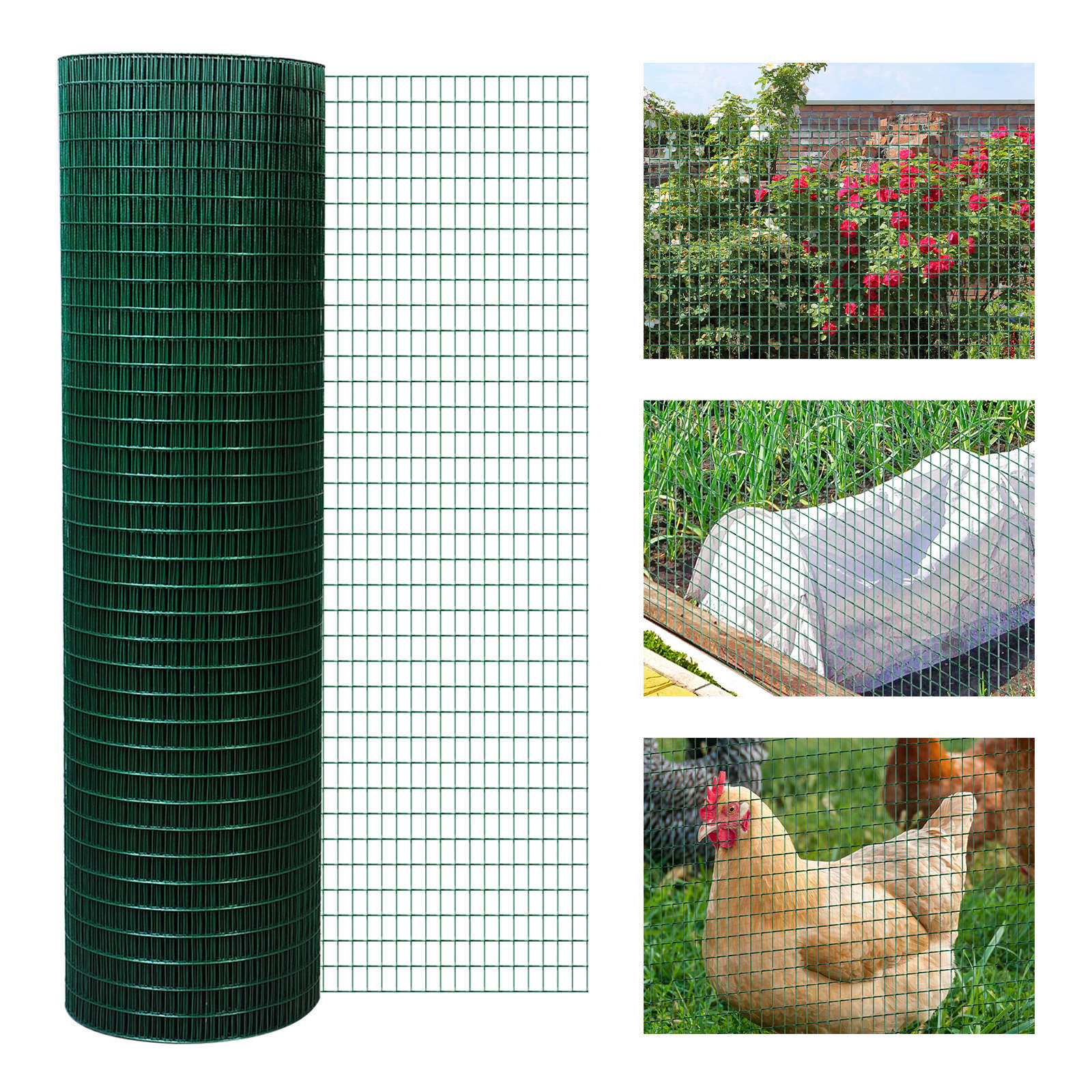

Photos from current listings. Actual item, color, and included accessories may vary.
Rabbit Fence Buying Guide
Rabbit fencing is buried wire mesh plus above-ground barriers sized to stop rabbits from digging under or chewing through. The core trade-off is mesh gauge and aperture versus cost: 19-gauge ½-inch hardware cloth resists rabbit teeth and excludes juveniles, while 23-gauge or 1–2-inch mesh is a temporary compromise. The decision rule: buy hot-dip galvanized after welding, ½-inch aperture, 19-gauge or heavier, and bury at least 6 inches with an outward L-foot.
Key takeaways
- Hot-dip galvanized after welding (HDGAW) zinc coats every weld and wire, outlasting galvanized-before-weld mesh in soil contact by years.
- 19-gauge wire at ½-inch aperture blocks juvenile rabbits and resists chewing; 23-gauge ½-inch deforms under clawing and is for light poultry only.
- 1-inch and 2-inch apertures let juvenile rabbits pass and invite chewing at edges — use only for above-ground deterrence with a ½-inch buried skirt.
At a glance
- Category
- Garden Fencing & Privacy Screens
- Last updated
- Nov 29, 2026
Current offers
Highlights
- Hot-dip galvanized after welding (HDGAW) zinc coats every weld and wire, outlasting galvanized-before-weld mesh in soil contact by years.
- 19-gauge wire at ½-inch aperture blocks juvenile rabbits and resists chewing; 23-gauge ½-inch deforms under clawing and is for light poultry only.
- 1-inch and 2-inch apertures let juvenile rabbits pass and invite chewing at edges — use only for above-ground deterrence with a ½-inch buried skirt.
- PVC-coated steel adds a polymer jacket over galvanized core for edge longevity in wet gardens, but the core gauge still governs chew resistance.
Best use cases
- Vegetable beds and raised gardens: pick ½-inch 19-gauge HDGAW hardware cloth with a 6-inch buried L-foot flared outward — skip 1-inch rolls that juveniles pass through.
- Perimeter boundary against digging: use ½-inch 19-gauge buried 6–12 inches plus 24–36 inches above ground; skip 23-gauge poultry netting, which rabbits chew through.
- Tree guards and individual plant protection: choose ¼-inch or ½-inch 19-gauge cylinders 24 inches tall; skip 2-inch mesh, which rabbits reach through.
- Temporary seasonal exclusion: PVC-coated ½-inch 19-gauge is the lightest acceptable compromise; skip bare 23-gauge mesh for anything longer than one season.
Buying tips
- Gauge math: lower number = thicker wire. 19-gauge (~1.0 mm) resists rabbit incisors; 23-gauge (~0.6 mm) is poultry-grade and deforms under persistent gnawing.
- Aperture rule: ½-inch (13 mm) excludes juvenile rabbits; 1-inch and 2-inch mesh only stops adults and invites chewing at the wire edges.
- Burial rule: extend mesh 6–12 inches below grade and bend a 6-inch outward L-foot to defeat rabbits digging at the fence line.
- Coating rule: specify hot-dip galvanized after welding for soil contact; galvanized-before-weld and electro-galvanized mesh corrode at cut edges and welds.
Specs
| Mesh Aperture | ½-inch excludes juveniles; 1–2-inch adults only |
|---|---|
| Wire Gauge | 19-gauge min; 23-gauge light poultry only |
| Coating | Hot-dip galvanized after weld |
| Burial Depth | 6–12 in with 6-in L-foot |
Related searches
What to check before buying
- Measure the full perimeter and add 10–15% for the buried L-foot and overlap at corners before ordering roll length.
- Confirm your soil type: rocky or clay ground requires a trench-and-bend method; sandy soil needs deeper burial (10–12 inches).
- Verify post spacing and material — ½-inch 19-gauge mesh needs supports every 6–8 feet to stay taut against digging.
- Check local frost depth; bury below the frost line where heaving would lift the L-foot and open a gap.
FAQ
Data sources: eBay / Amazon listings and product attribute feeds. Updated Nov 29, 2026.
Some links on this page are affiliate links. If you buy after clicking one, we may earn a commission at no extra cost to you. This does not change which products appear here or their order. Affiliate disclosure.