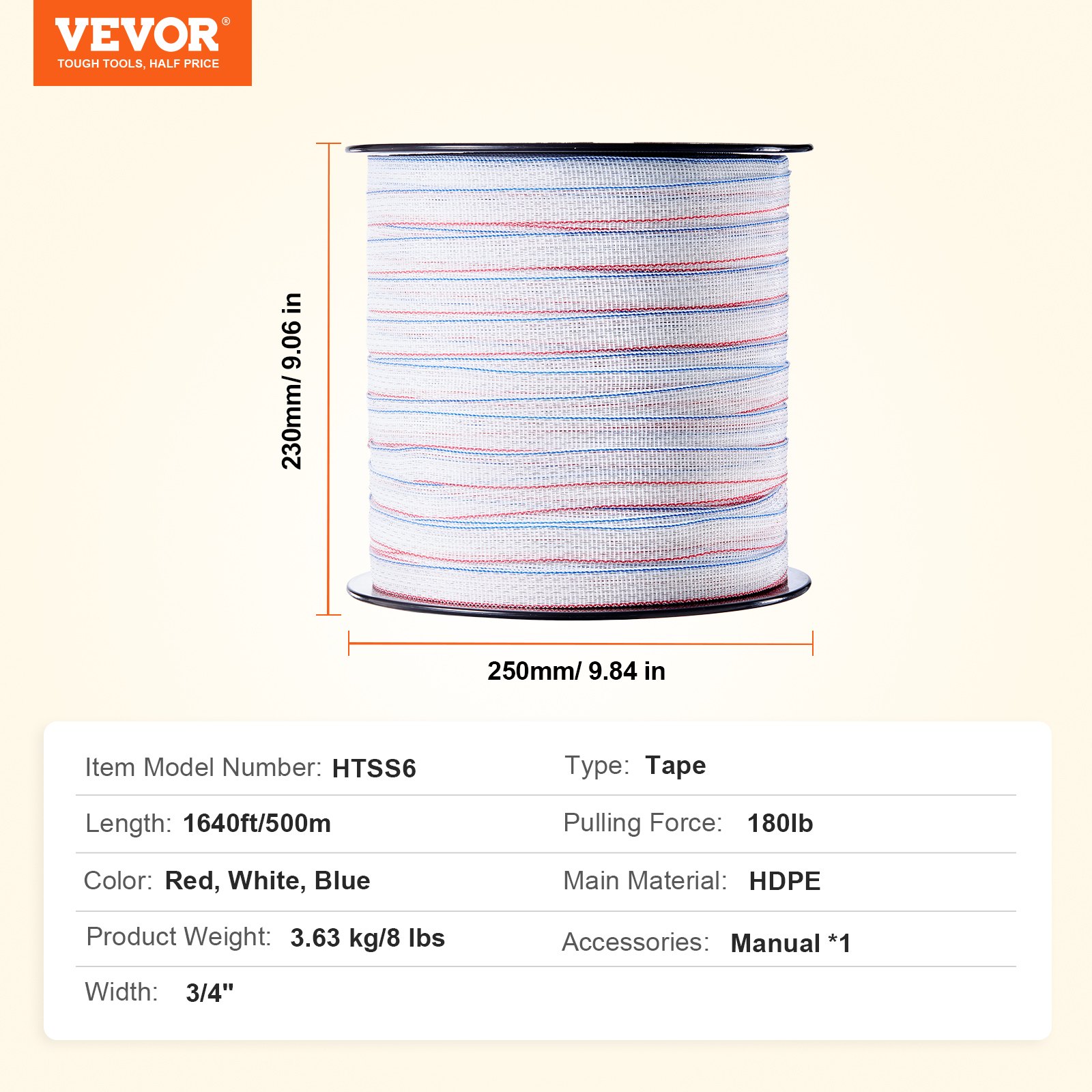

Photos from current listings. Actual item, color, and included accessories may vary.
Portable Electric Horse Fence Buying Guide
A portable electric horse fence is a temporary, reconfigurable containment system—usually polywire, polytape, or polyrope paired with step-in posts and a pulsed energizer—that relies on a psychological barrier rather than physical strength. The core trade-off is conductivity and UV durability versus weight and portability: thin 1/8-inch polywire with few stainless strands is light and cheap but has high resistance over long runs, while thicker ropes with more strands carry voltage farther but cost more and sag. The decision rule: match strand count and conductor metal to your run length, and never buy a fence kit without an energizer rated for the total fence length and a ground rod system.
Key takeaways
- Polywire conductivity is set by stainless strand count and diameter: 6 strands at 1/8-inch is a light-duty tier best for runs under roughly 1,500 ft with a low-impedance energizer.
- Polyrope and polytape with 9–12 strands or woven copper/nickel conductors carry voltage 2–3x farther than 6-strand wire, making them the right choice for permanent paddock divisions or runs over 2,000 ft.
- UV-stabilized polyethylene is the standard jacket; non-stabilized wire embrittles and snaps within 2–3 seasons of direct sun, so UV resistance is a hard spec, not a marketing extra.
At a glance
- Category
- Garden Fencing & Privacy Screens
- Last updated
- Nov 29, 2026
Current offers
Highlights
- Polywire conductivity is set by stainless strand count and diameter: 6 strands at 1/8-inch is a light-duty tier best for runs under roughly 1,500 ft with a low-impedance energizer.
- Polyrope and polytape with 9–12 strands or woven copper/nickel conductors carry voltage 2–3x farther than 6-strand wire, making them the right choice for permanent paddock divisions or runs over 2,000 ft.
- UV-stabilized polyethylene is the standard jacket; non-stabilized wire embrittles and snaps within 2–3 seasons of direct sun, so UV resistance is a hard spec, not a marketing extra.
- Energizer output is rated in joules at the fence: 0.5–1 joule suits short strip-grazing runs, while 2–6 joules is required for multi-strand horse fencing over 3,000 ft or when the fence must deter determined animals.
Best use cases
- Best fit: rotational grazing and temporary paddocks—choose 1/8-inch 6-strand polywire on geared reel with step-in posts and a 1–2 joule energizer; skip polytape, which is heavier and wind-catches.
- Best fit: permanent perimeter or lane division for horses—choose 9–12 strand polyrope or 1.5-inch polytape with a 3–6 joule low-impedance energizer and 6-ft ground rods; skip 6-strand wire, which voltage-drop fails beyond 1,500 ft.
- Wrong fit: containing stallions or frightened horses that charge fences—electric poly is a psychological barrier only; use woven wire or no-climb mesh with a hot wire on top instead of any portable poly wire setup.
- Wrong fit: subdividing a small backyard for goats or dogs—6-strand polywire at full height is overkill and under-tensioned; use a dedicated 4-strand polytape kit with a smaller energizer rated for the shorter run.
Buying tips
- Calculate resistance: 6-strand 1/8-inch polywire loses roughly 1 volt per 100 ft, so keep runs under 1,500 ft per energizer zone; step up to 9+ strands for longer spans.
- Match energizer joules to fence length: 1 joule handles about 1–2 miles of single-strand fence; 3–6 joules is the safe tier for multi-strand horse fencing over 3,000 ft.
- Specify UV-stabilized polyethylene and stainless (not galvanized) conductors; stainless resists rust at wire ends and reel contacts where galvanized fails first.
- Use geared reels with a locking brake—portable horse fence lives or dies on tension; a sagging 1,000-ft run drops voltage below the 2,000-volt minimum horses respect.
Specs
| Conductor Type | Stainless vs tinned copper strands |
|---|---|
| Strand Count | 6–12 strands; 9+ for long runs |
| Wire Diameter | 1/8 in polywire; 1.5 in polytape |
| Energizer Output | 0.5–6 joules at fence; 2kV+ min |
Related searches
What to check before buying
- Measure the total perimeter and longest single run; pick wire tier and energizer joules from that number, not from the spool length alone.
- Confirm post spacing: step-in posts at 12–15 ft on straight runs and 8–10 ft on corners; fiberglass or poly posts need a metal driver or pilot hole in hard ground.
- Check energizer power source: 110V AC for barn-adjacent fences, 12V battery/solar for remote paddocks; battery units need a solar panel rated for winter low-sun hours.
- Plan grounding: three 6-ft galvanized ground rods spaced 10 ft apart, at least 50 ft from utility grounds, or the fence will read voltage but not deliver a shock.
FAQ
Data sources: eBay / Amazon listings and product attribute feeds. Updated Nov 29, 2026.
Some links on this page are affiliate links. If you buy after clicking one, we may earn a commission at no extra cost to you. This does not change which products appear here or their order. Affiliate disclosure.