
Photos from current listings. Actual item, color, and included accessories may vary.
Outdoor Wood Privacy Screen Buying Guide
Outdoor wood privacy screens are freestanding or stake-mounted panels that conceal equipment, define boundaries, or add seclusion without a full fence build. The core trade-off is wood species and joinery versus panel height and wind load: cedar and fir with through-bolted or mortise-and-tenon frames survive seasons, while stapled slats and thin 0.4-inch boards warp and blow over. Choose cedar or fir panels with metal stakes or planter bases for exposed sites, and treat any screen above 61 inches as a wind sail requiring anchoring.
Median $127.49
Key takeaways
- Cedar (Thuja occidentalis) natural oils resist rot and insects for 15-20 years; fir needs annual sealing and lasts 5-10 years untreated.
- Panel height drives wind load: a 72.8-inch screen catches roughly twice the wind force of a 38-inch screen at the same width, so tall panels need ground stakes or weighted planter bases.
- Slat thickness matters more than width: 0.5-inch or thicker boards resist warping, while 0.25-0.4-inch slats cup and bow within two seasons.
At a glance
- Category
- Garden Fencing & Privacy Screens
- Last updated
- Nov 29, 2026
Current offers
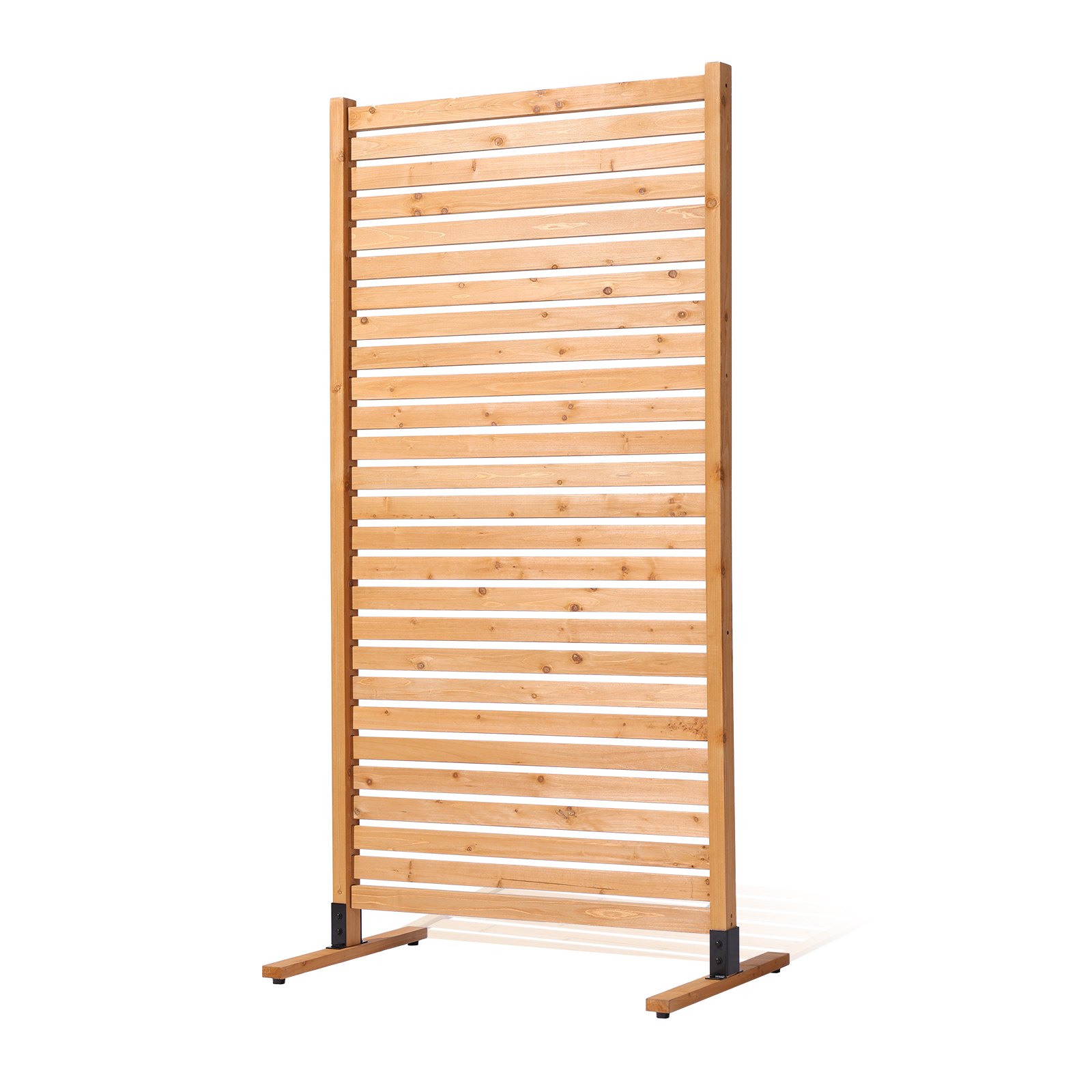 Wooden Privacy Screen 36' X 76' Freestanding Outdoor For Patio$100.99View on Mallflare
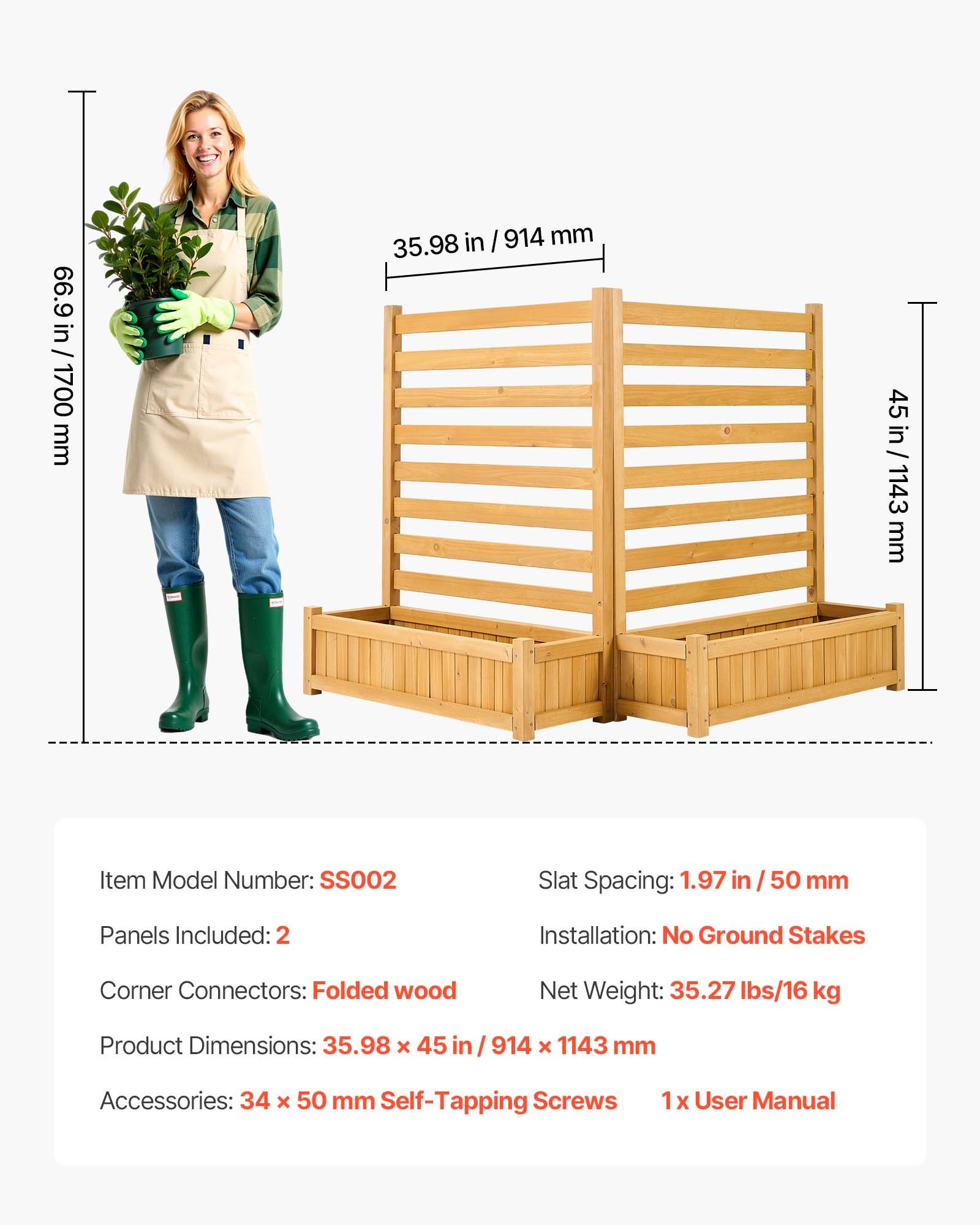 Wooden Privacy Fence, 36 X 45 Inch Air Conditioner 2 Slatted Panel Solid Outdoor Wood Screen With 2 Planters, Metal Stakes, Trash Can Hider Fences Suitable For Garden, Pool$113.99View on Mallflare
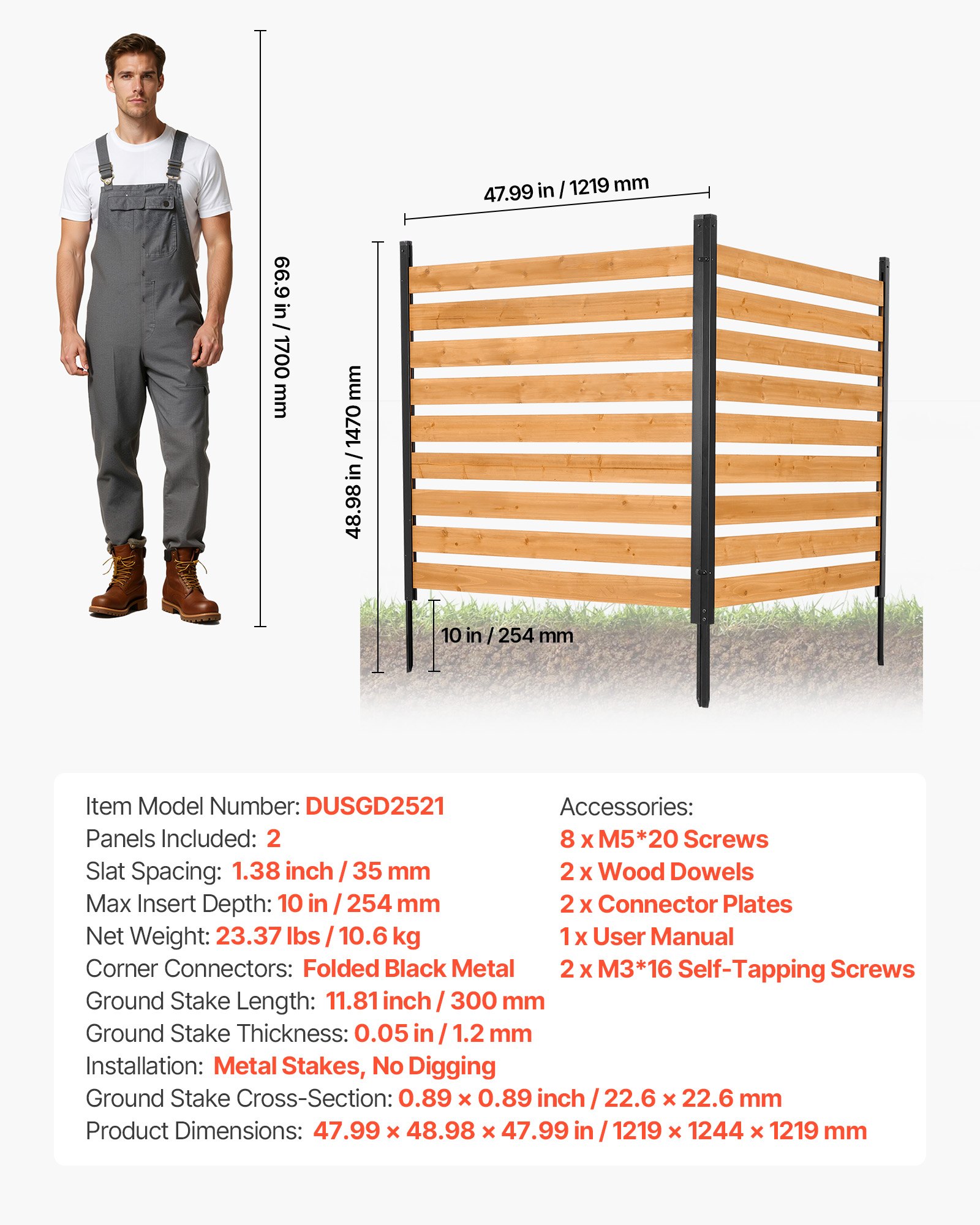 Wooden Privacy Fence, 48 X 49 X 28 Inch Air Conditioner 2 Panel Solid Outdoor Wood Screen With Metal Stakes, Steel Frame, Trash Can Hider Fences Suitable For Garden, Pool$117.99View on Mallflare
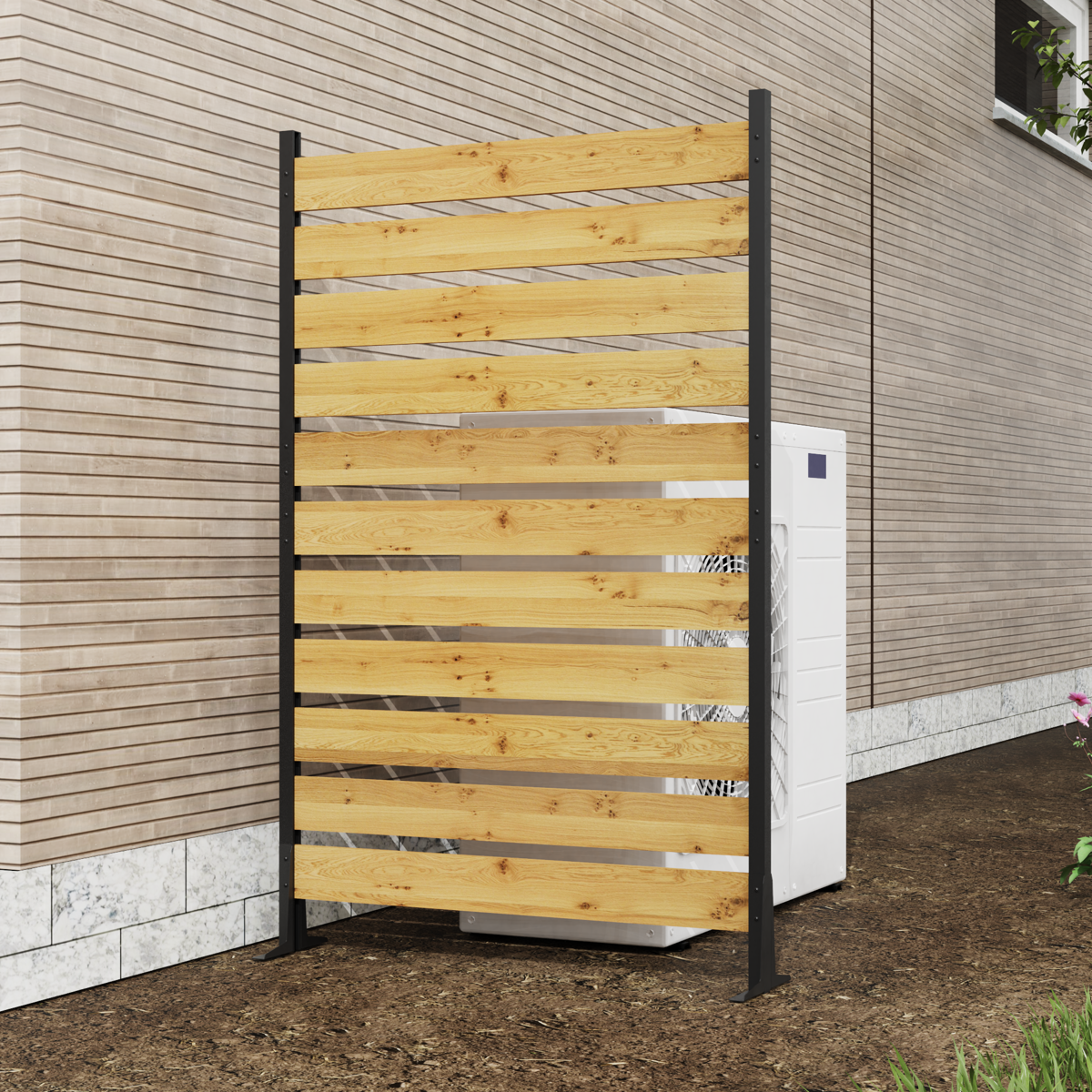 72.8"H x 38.5"W(1 Panel) Cedar Wood Privacy Screen, Outdoor Walls, Fence for Pool Equipment Enclosure, Trash Can Enclosures, Air Conditioner$136.99View on Mallflare
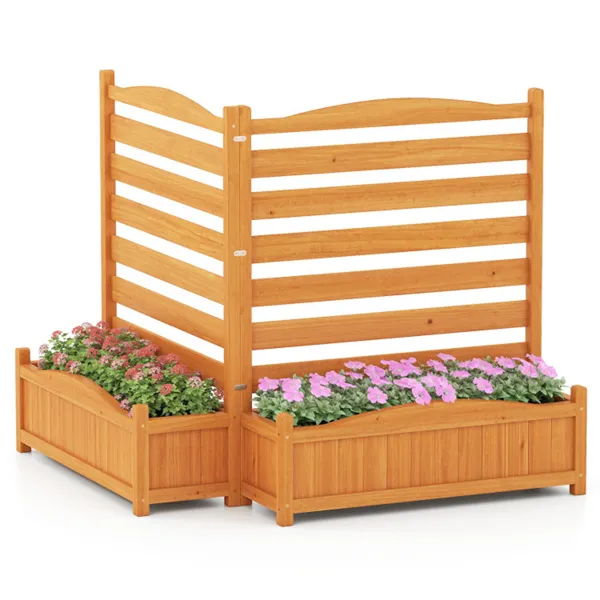 2-Panel No-Dig Fir Wood Privacy Fence With Planter Boxes, AC Unit/Trash Can Screen For Outdoor Patio$189.99View on Mallflare
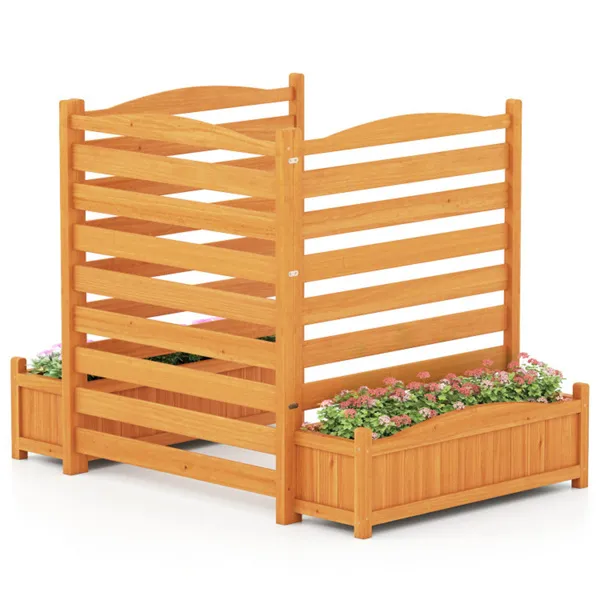 No-Dig Fir Wood Privacy Fence With Planter Boxes, 3-Panel AC Unit Screen For Outdoor Trash/Pool Equipment Concealment$230.99View on Mallflare
Highlights
- Cedar (Thuja occidentalis) natural oils resist rot and insects for 15-20 years; fir needs annual sealing and lasts 5-10 years untreated.
- Panel height drives wind load: a 72.8-inch screen catches roughly twice the wind force of a 38-inch screen at the same width, so tall panels need ground stakes or weighted planter bases.
- Slat thickness matters more than width: 0.5-inch or thicker boards resist warping, while 0.25-0.4-inch slats cup and bow within two seasons.
- Fastener grade separates durable from disposable: stainless or hot-dip galvanized screws and through-bolted frames outlast stapled slats that pull out in freeze-thaw cycles.
Best use cases
- Conceal a ground-level AC unit or trash cans: pick a 32-39 inch wide by 38-61 inch high panel with metal ground stakes; skip 72-inch panels that block airflow and service access.
- Screen pool equipment or a hot tub on a windy site: choose a cedar panel with through-bolted frame and planter-box base for ballast; skip lightweight fir panels with only stake anchors.
- Create a patio privacy wall or neighbor screen: select 72-inch tall cedar panels set in planter boxes or bolted to a deck; skip 38-inch panels that only hide equipment at eye level.
- Rooftop or balcony screening: use freestanding planter-box panels with weighted bases; skip stake-mounted panels that require soil penetration.
Buying tips
- Size by sightline: measure from ground to eye level (about 60-66 inches) and add 6 inches; panels under 61 inches hide equipment but not standing neighbors.
- Stake length rule: ground stakes should sink at least 12 inches into soil and be hot-dip galvanized or stainless; painted steel rusts through in two seasons.
- Species check: cedar resists rot naturally; fir and pine require annual water-repellent sealer and still cup faster in wet climates.
- Airflow clearance: leave at least 12 inches between the screen and AC condenser coils; solid panels closer than that recirculate hot air and raise compressor load.
Specs
| Wood Species | Cedar (rot-resistant) vs Fir (seal yearly) |
|---|---|
| Panel Height | 38-48 in equipment / 61-72 in privacy |
| Mounting Type | Ground stakes vs planter-box ballast |
| Slat Thickness | 0.5 in+ boards vs 0.25-0.4 in thin slats |
Related searches
What to check before buying
- Measure the equipment footprint plus 12 inches of clearance on all sides to confirm the panel width and depth clear service access.
- Confirm your ground type: soil accepts 12-inch stakes, but concrete, pavers, or decking require a planter-box or bolted base.
- Check local wind exposure: open lots and coastal sites need planter-ballast or bolted anchoring, not just stakes.
- Verify panel height against any HOA or fence ordinance limit, typically 6 feet in many residential zones.
FAQ
Data sources: eBay / Amazon listings and product attribute feeds. Updated Nov 29, 2026.
Some links on this page are affiliate links. If you buy after clicking one, we may earn a commission at no extra cost to you. This does not change which products appear here or their order. Affiliate disclosure.