
Photos from current listings. Actual item, color, and included accessories may vary.
Garden Fence With Gate Buying Guide
Garden fences with a gate combine a boundary panel system with a hinged or sliding access point, so the primary trade-off is gate hardware strength versus panel durability under repeated cycling. Metal systems (welded wire, hardware cloth, aluminum) resist corrosion and animal pressure; plastic/PP decorative panels are edging-grade and fail under load or wind. The decision rule: any gate wide enough for people, mowers, or pets requires a rigid frame, braced hinge posts, and metal latch hardware—skip spike-in plastic kits for gated openings.
Median $100.99
Key takeaways
- Gate hardware class determines lifespan: forged or galvanized steel hinges and self-latching latches outlast stamped zinc-plated tabs that bend and rust at the pivot.
- Hinge-post anchoring dictates sag: posts set in concrete at least 2 ft deep with a 4x4 wood or 2 in steel post prevent gate drop; spike-mounted plastic posts cannot carry a swinging gate.
- Wire mesh gauges separate animal containment from decoration: 19-gauge hot-dip galvanized hardware cloth (1/2 in openings) stops rabbits and poultry; thin PVC/PP decorative panels are edging only.
At a glance
- Category
- Garden Fencing & Privacy Screens
- Last updated
- Nov 27, 2026
Current offers
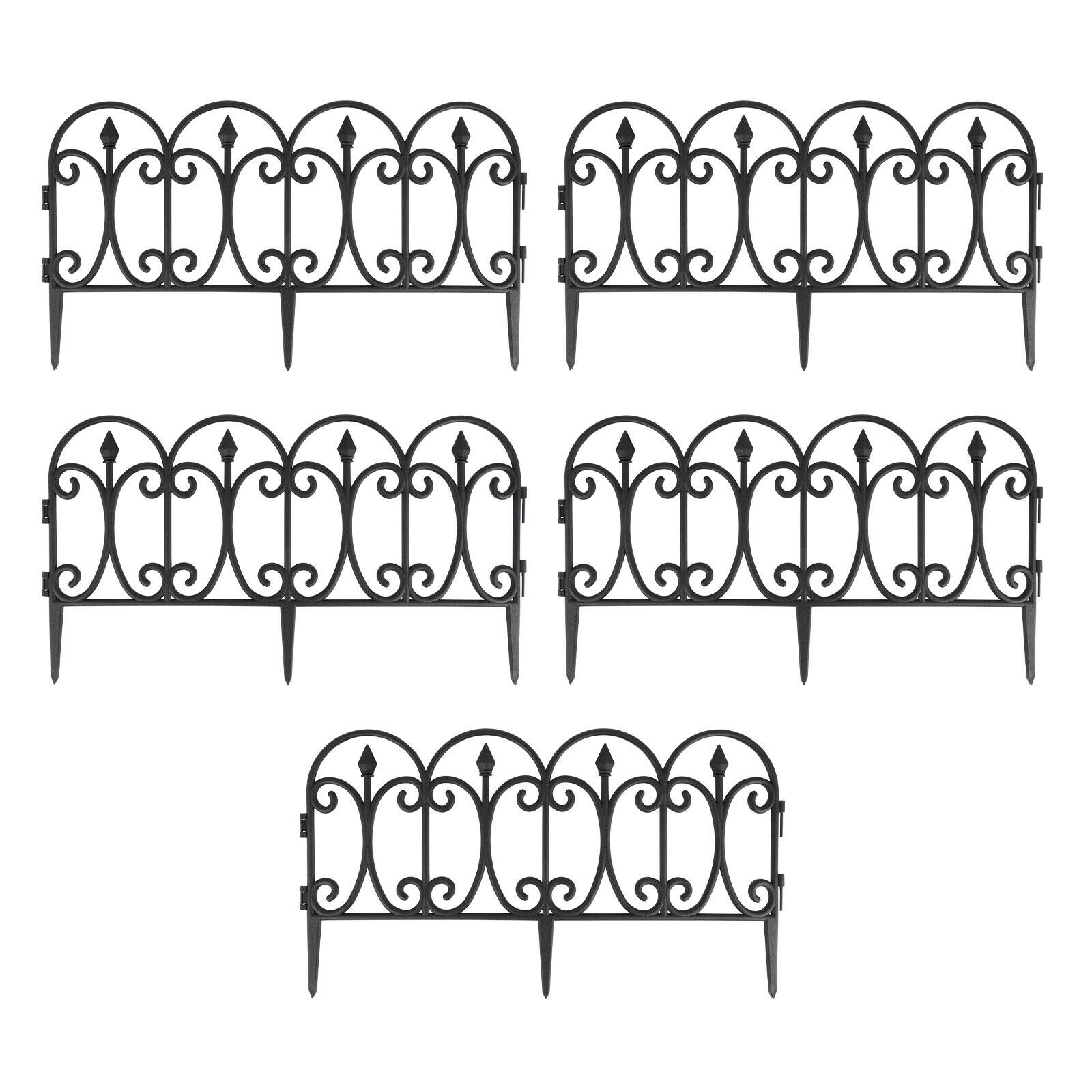 5pcs/set Garden Plastic Fence Panels Lawn Edging Border Panel Edge Fencing Yard$21.99Last checked Nov 25, 2026View on eBay
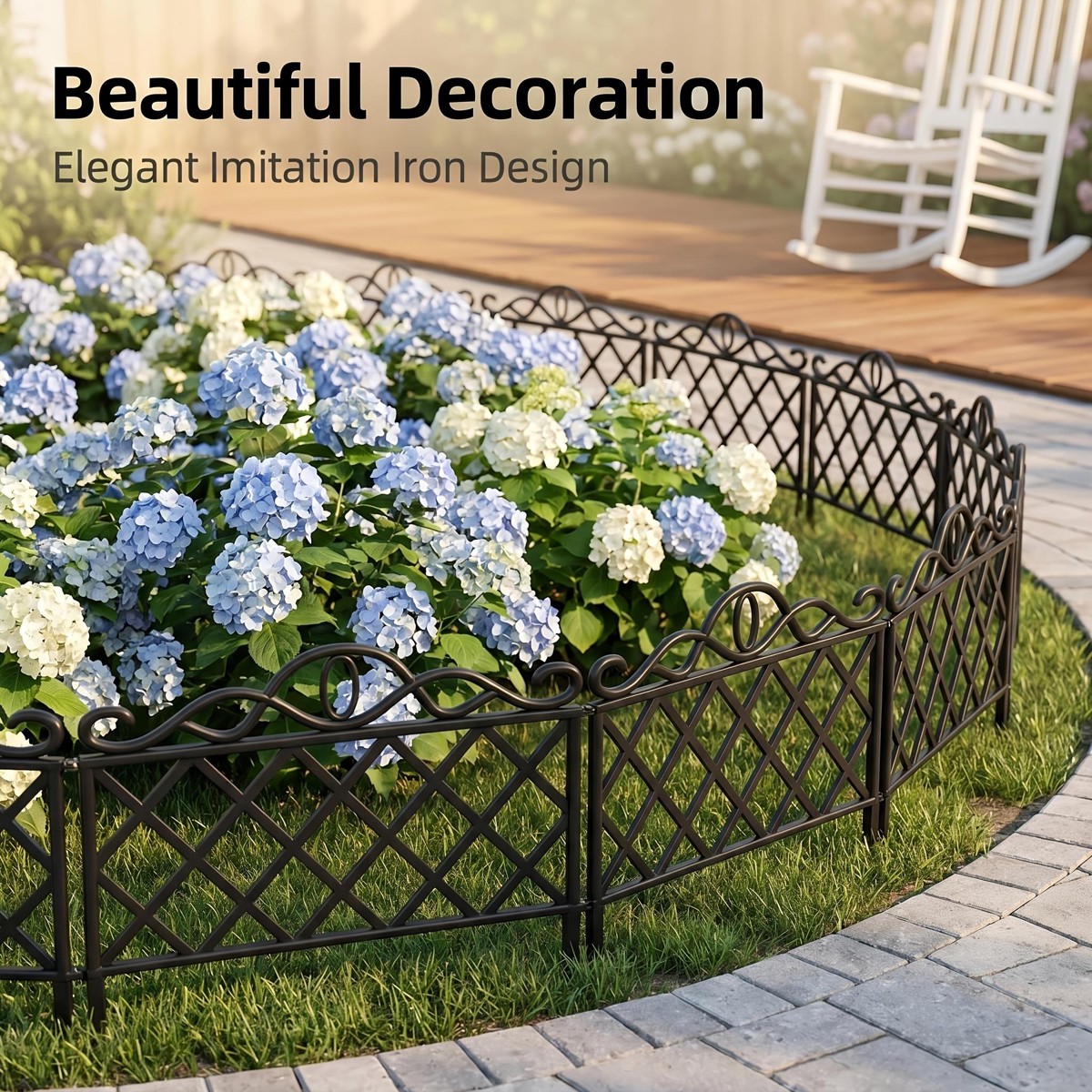 10-Pack Decorative Garden Fence, Black Mesh Metal Landscape Interlocking And Connectable Outdoor Patio Flower Bed Lawn Terrace Fence,Made Of Plastic, With A Metallic Paint Finish.$30.99View on Mallflare
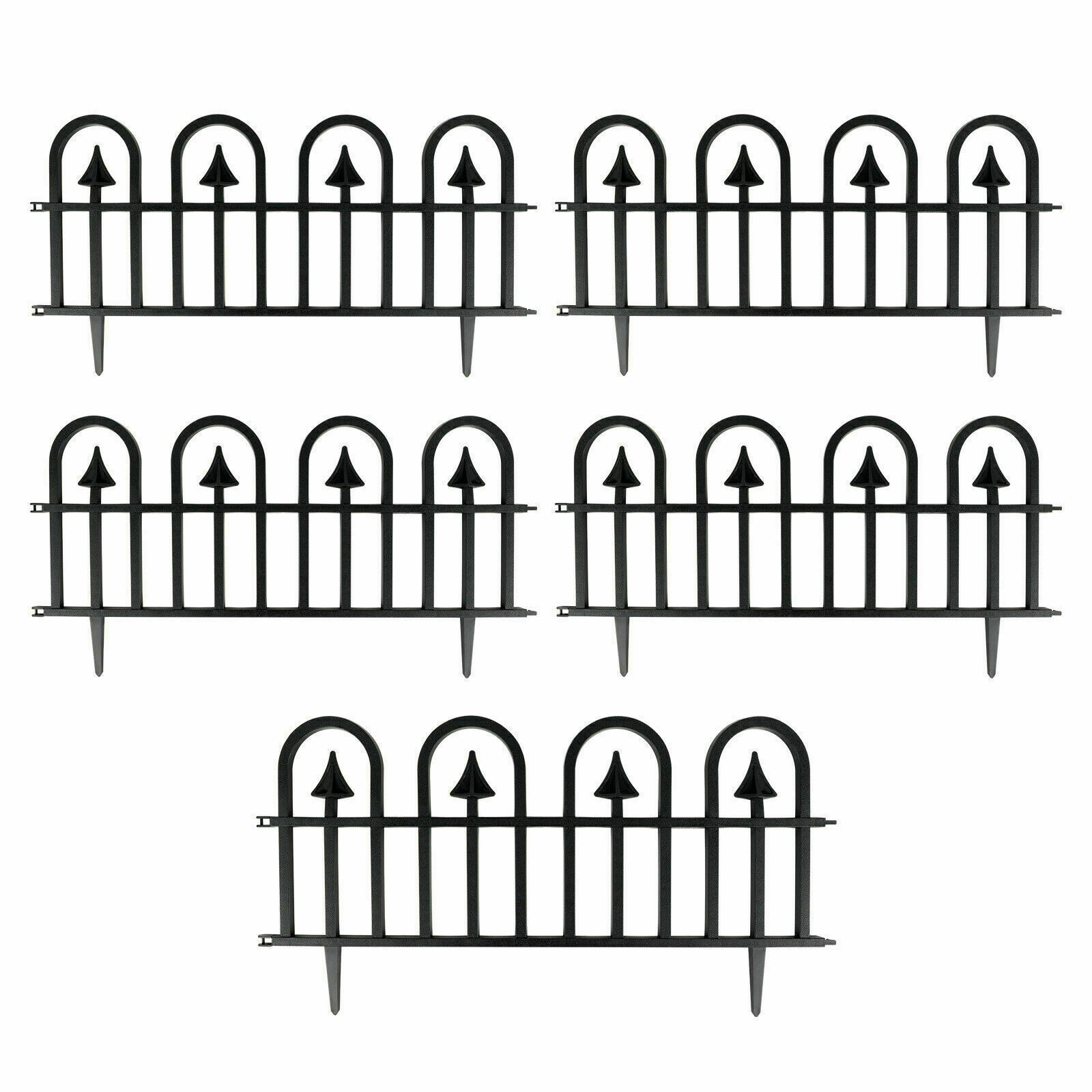 10pcs 12pcs 24pcs Garden Plastic Fence Panels Lawn Edging Border Yard Decor$22.49Last checked Nov 23, 2026View on eBay
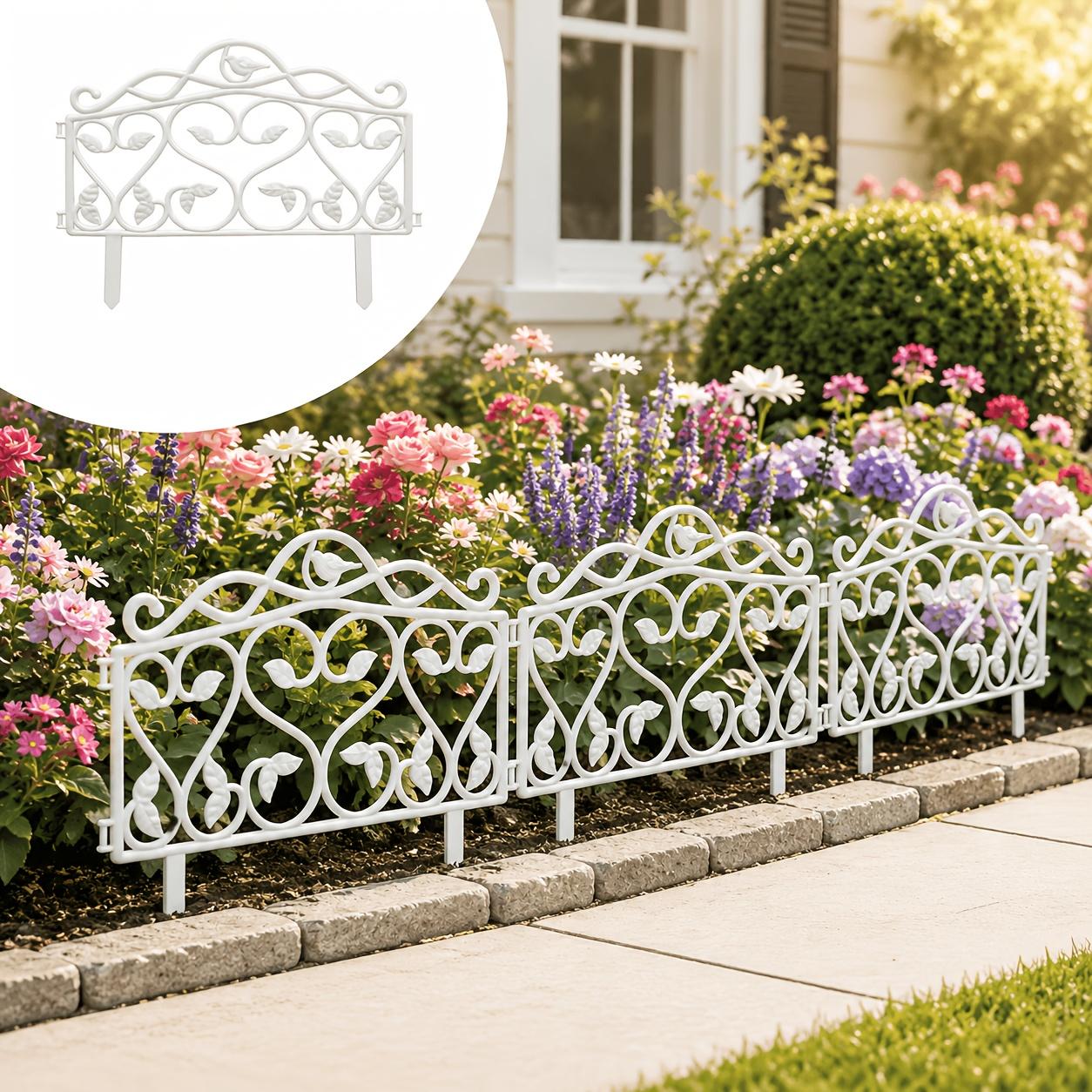 Set Of 10 New Decorative Garden Fences European-Style Plastic Courtyard Fencing With Floral, Bird, And Scrollwork Motifs Outdoor Landscape Edging For Lawns And Flowerbeds$32.99View on Mallflare
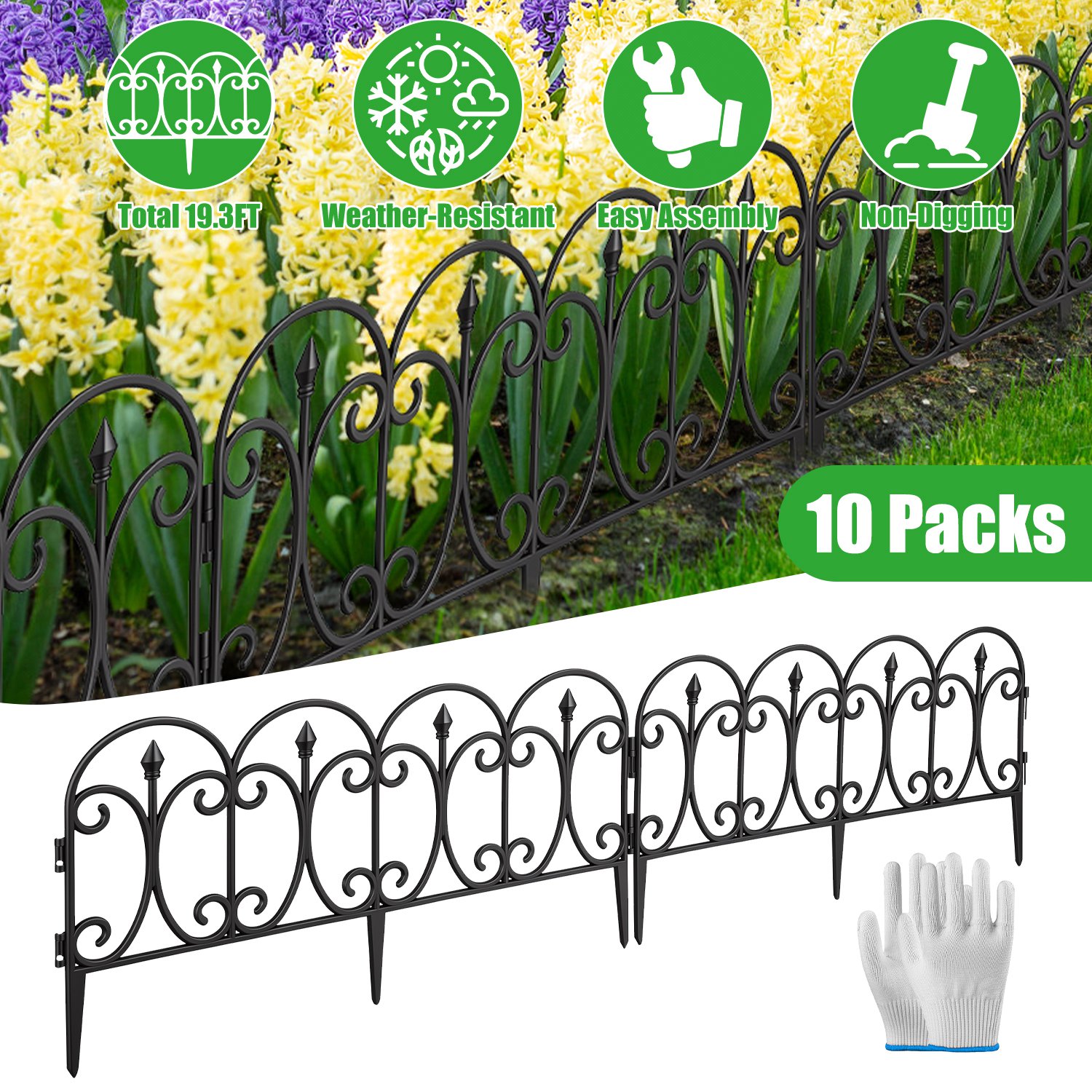 10 Packs Garden Decorative Lawn Edging Border PP Fence Panels Easy Assembly Outdoor Flower Bed Landscape Fencing No-Dig Spikes With Gloves Total 19.3FT$41.99View on Mallflare
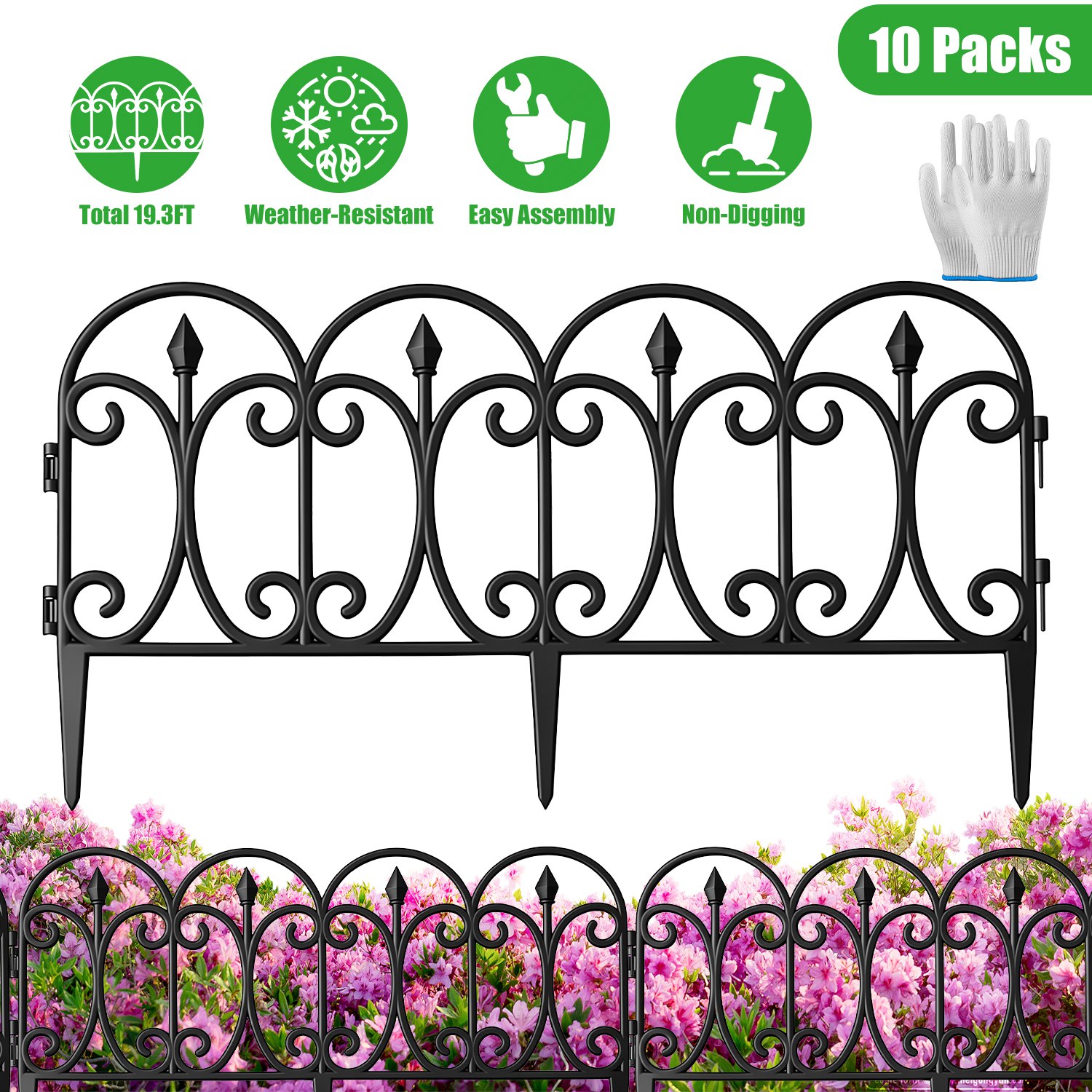 19.3FT Decorative Landscape Edging, 10 Panels Flexible Interlocking PP Lawn Border, Angle Adjustable Weather Resistant Garden Fence for Yard Flower Bed Path$69.99View on Mallflare
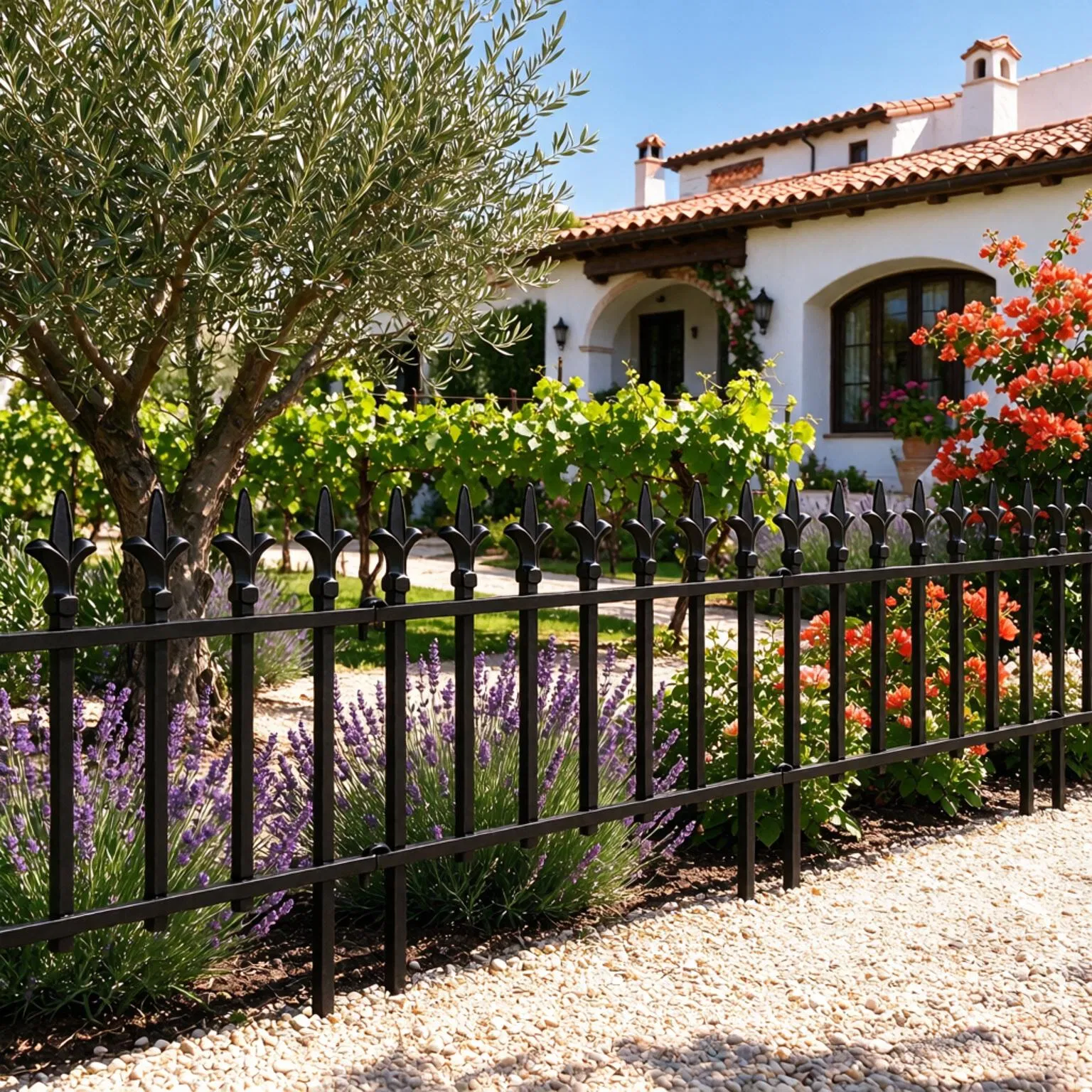 5-Pack Decorative Metal Garden Fence No Dig Landscape Fencing for Lawn Easy Install Greenery Protection$85.99View on Mallflare
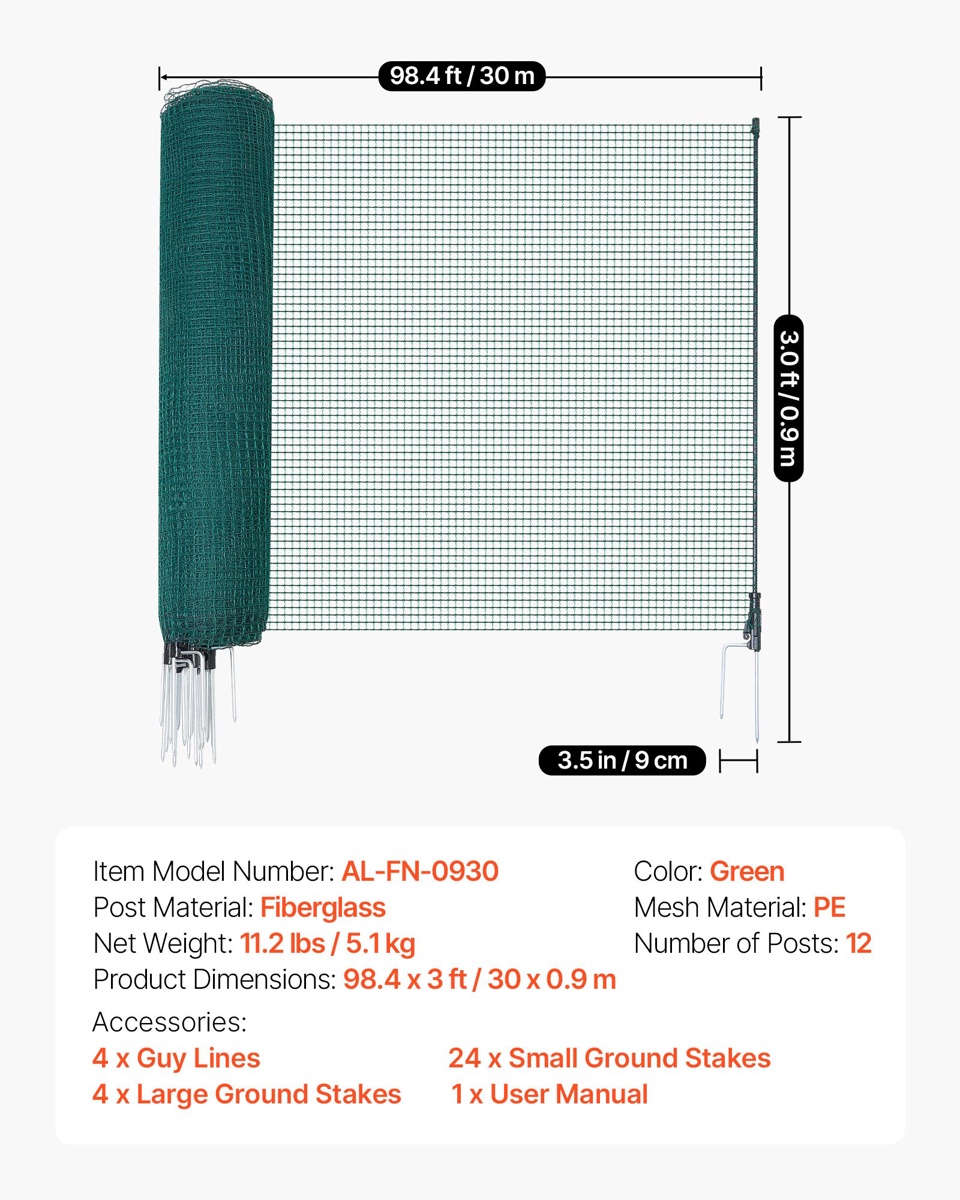 Temporary Fence With Posts, 3 X 98.4 FT Plastic Mesh Fencing, Garden Safety Fences Netting Double-Spike Stakes & Guy Ropes, For Dogs, Chickens, Plants, Outdoor Yards$86.99View on Mallflare
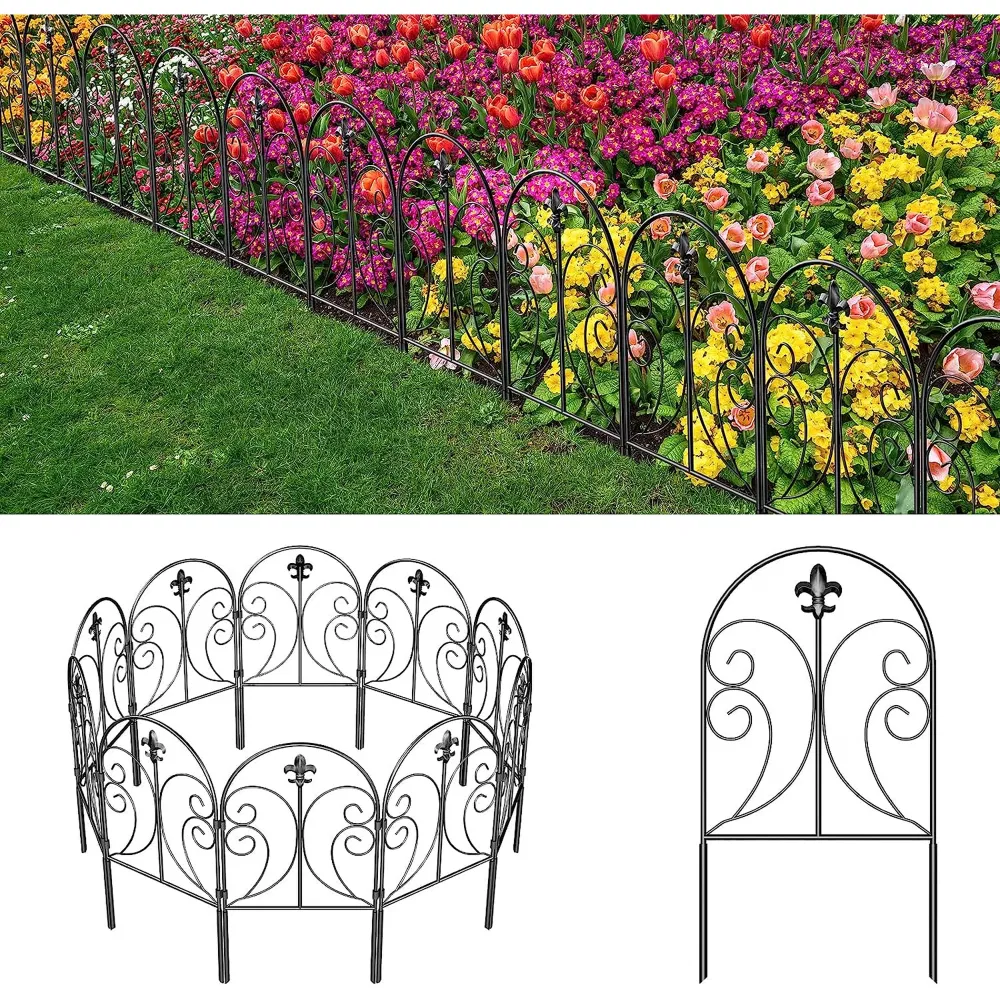 Decorative Garden Fence 10 Pack, 24in (H) x 10ft (L), Rustproof Metal Fencing, Arched$91.99View on Mallflare
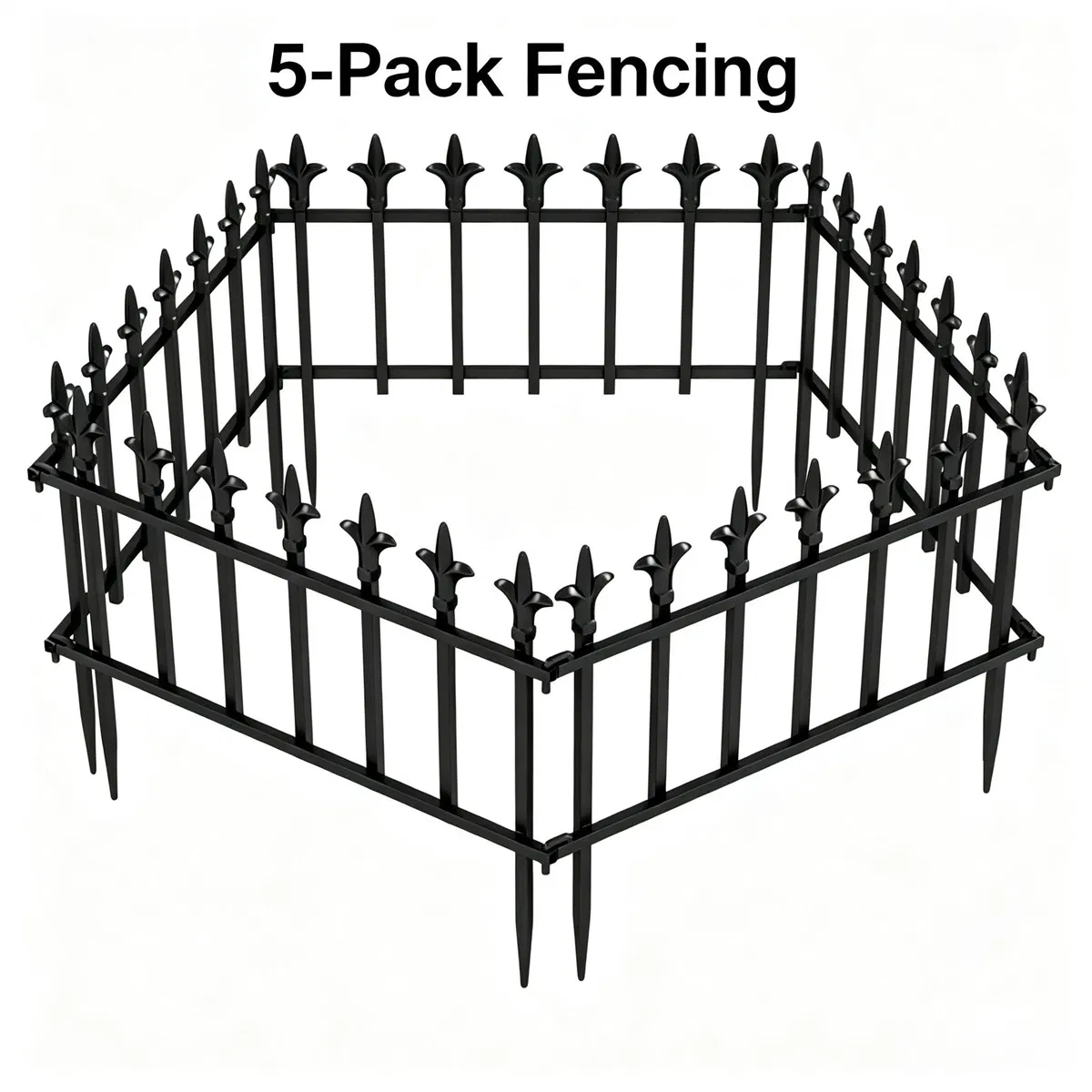 Black Foldable Garden Border Fence, 5 Pack No Dig Animal Barrier, Decorative Metal Fencing for Lawn Pathway Outdoor Landscaping$91.99View on Mallflare
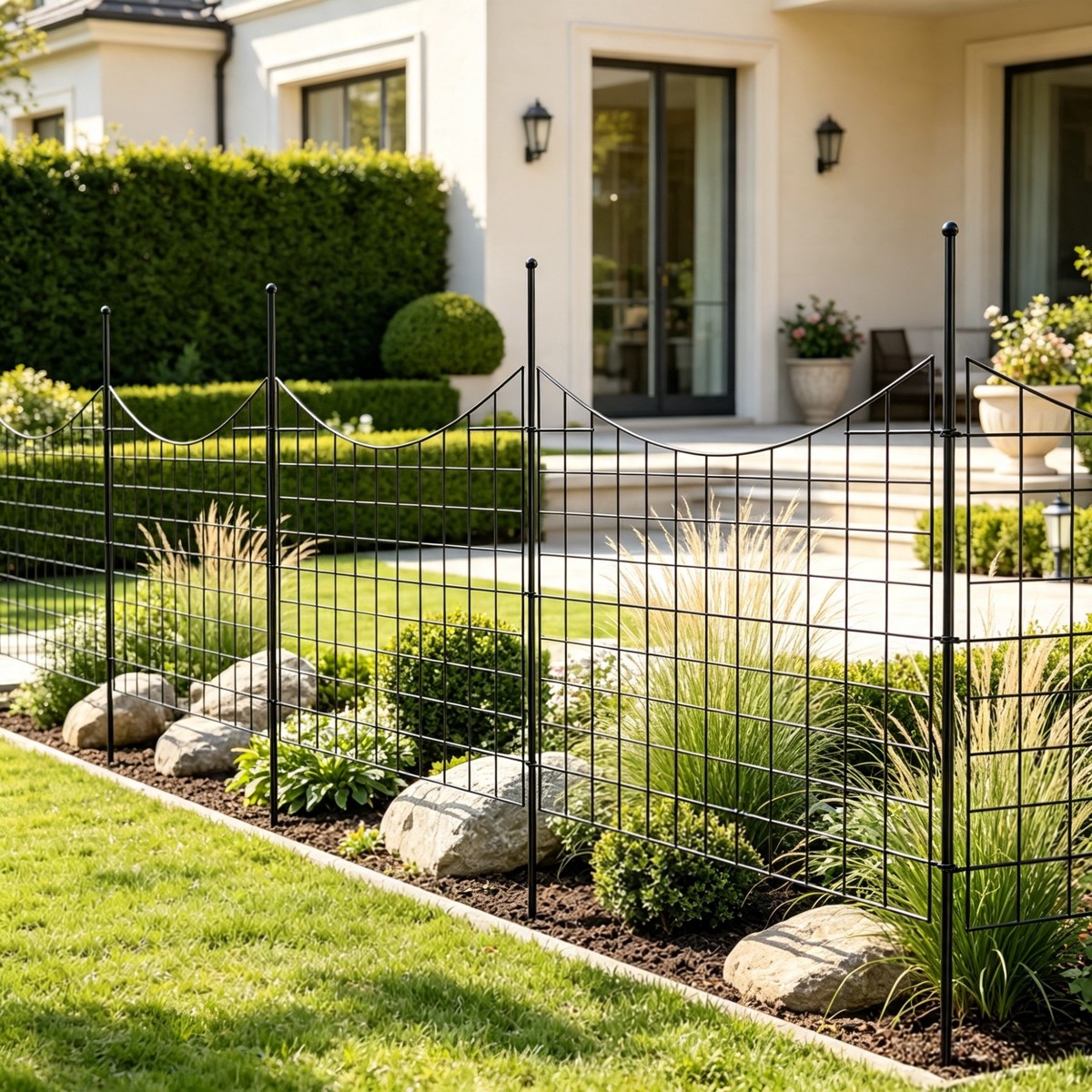 5-Pack Metal Garden Fence (36.6" x 29.5"), Animal Barrier & Dog$100.99View on Mallflare
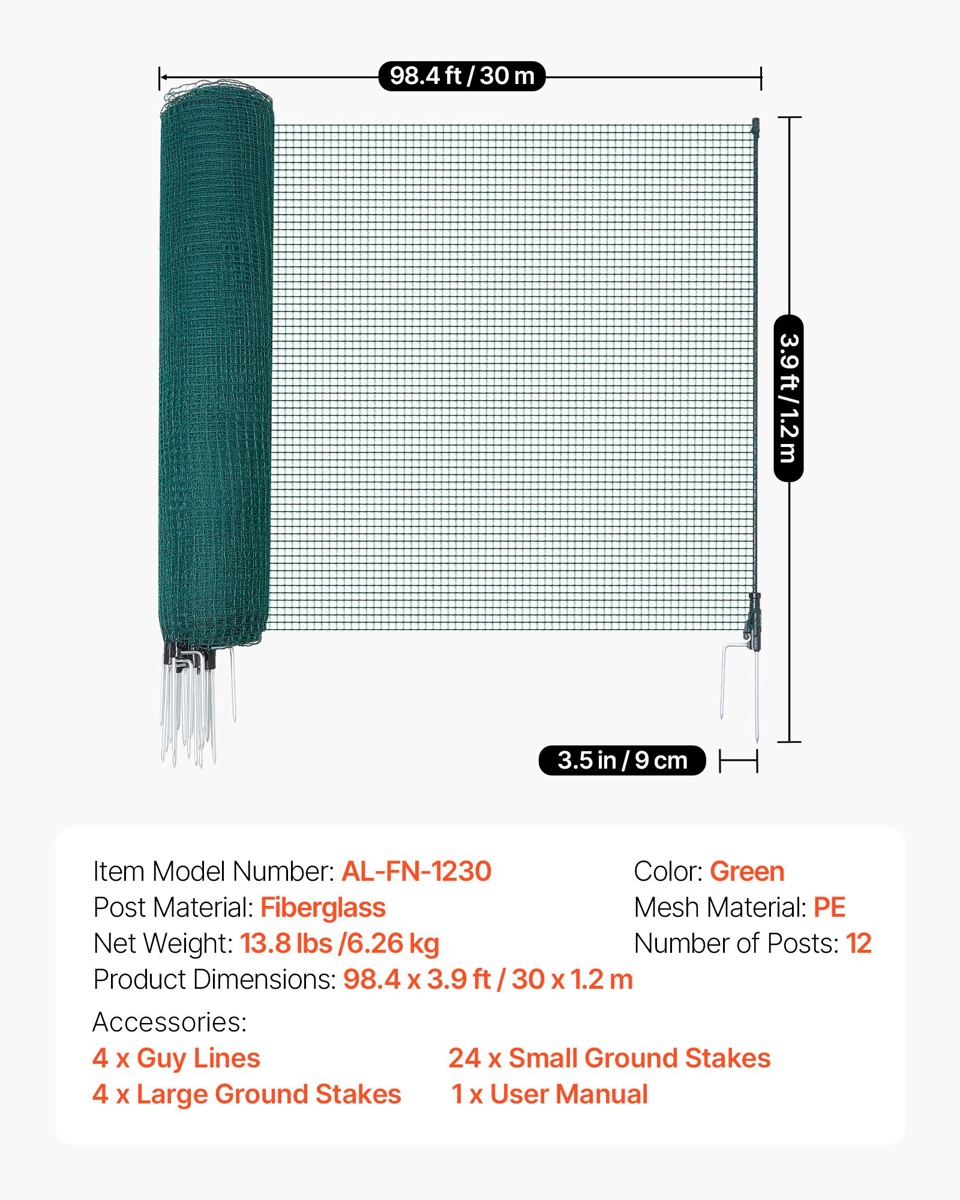 Temporary Fence With Posts, 3.9 X 98.4 FT Plastic Mesh Fencing, Garden Safety Fences Netting Double-Spike Stakes & Guy Ropes, For Dogs, Chickens, Plants, Outdoor Yards$100.99View on Mallflare
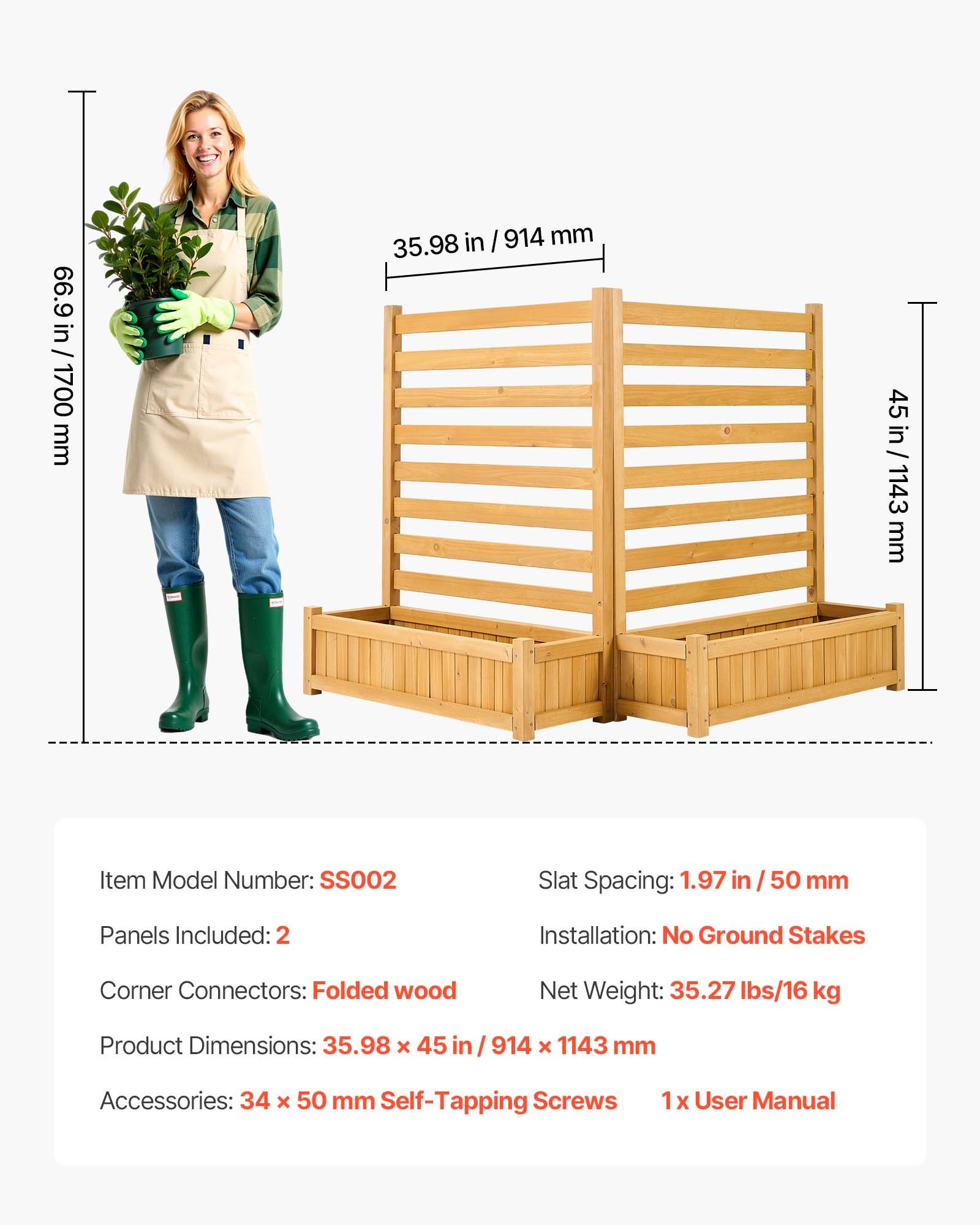 Wooden Privacy Fence, 36 X 45 Inch Air Conditioner 2 Slatted Panel Solid Outdoor Wood Screen With 2 Planters, Metal Stakes, Trash Can Hider Fences Suitable For Garden, Pool$113.99View on Mallflare
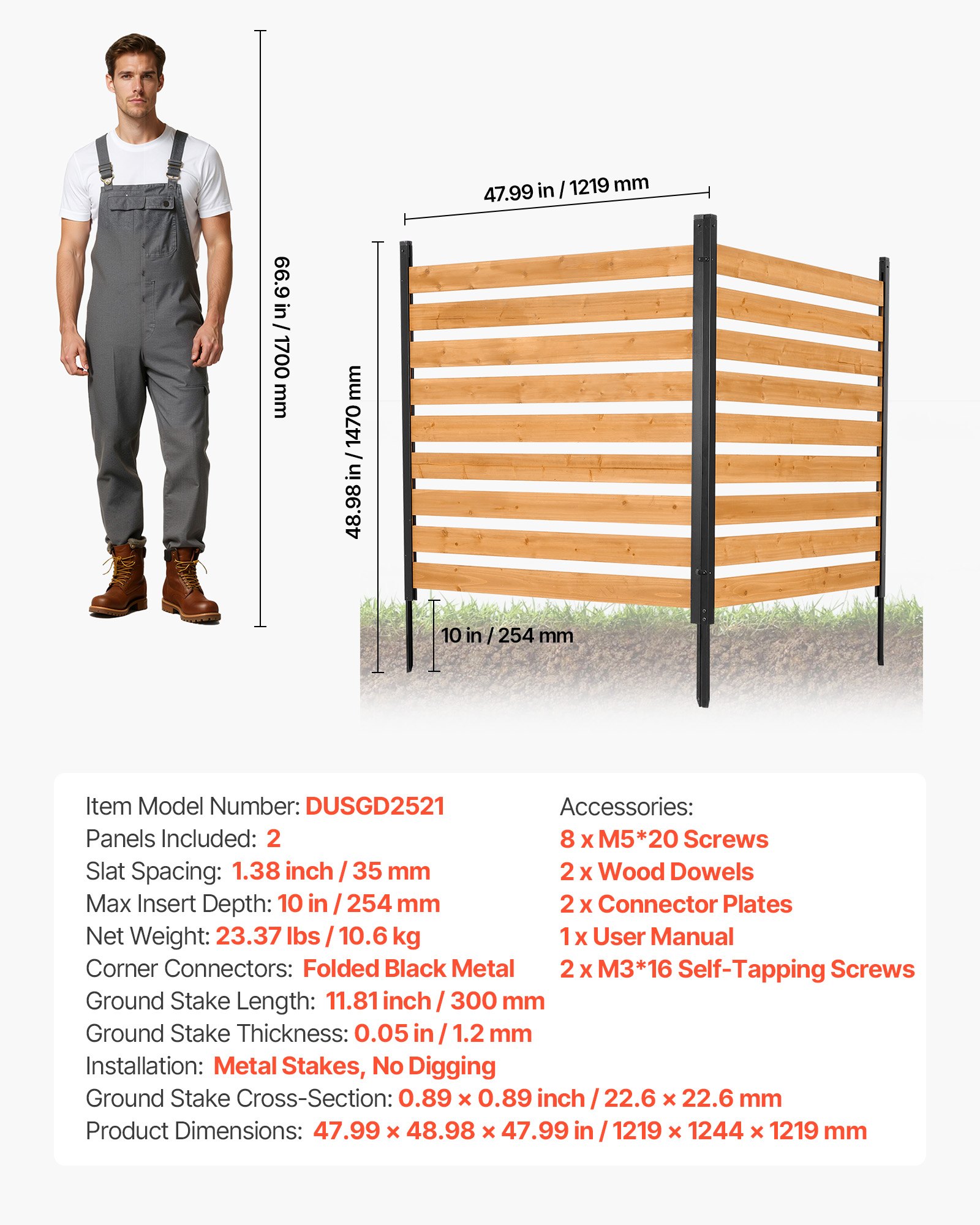 Wooden Privacy Fence, 48 X 49 X 28 Inch Air Conditioner 2 Panel Solid Outdoor Wood Screen With Metal Stakes, Steel Frame, Trash Can Hider Fences Suitable For Garden, Pool$117.99View on Mallflare
 2pcs Iron Garden Fence, Pretty Vintage Green Rustic Style Decorative Pannels, Outdoor Yard Landscape Pathway Border Panels Anti Animal Flowers Plants Barrier Climbing Trellis ,29.25''*17.51''$125.99View on Mallflare
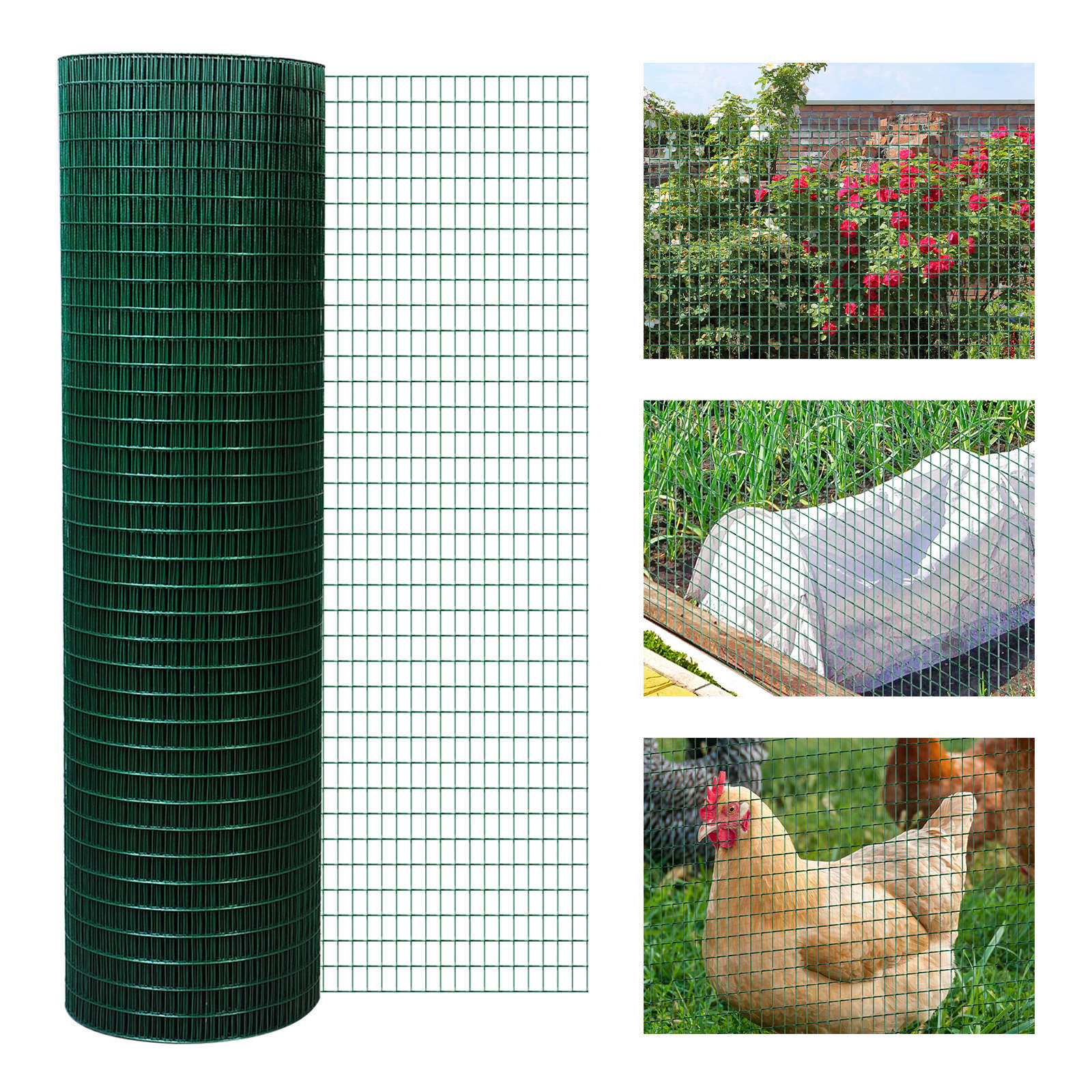 PVC Coated Steel Chicken Rabbit Mesh Fencing Wire Garden Galvanized Fence Border$138.99View on Mallflare
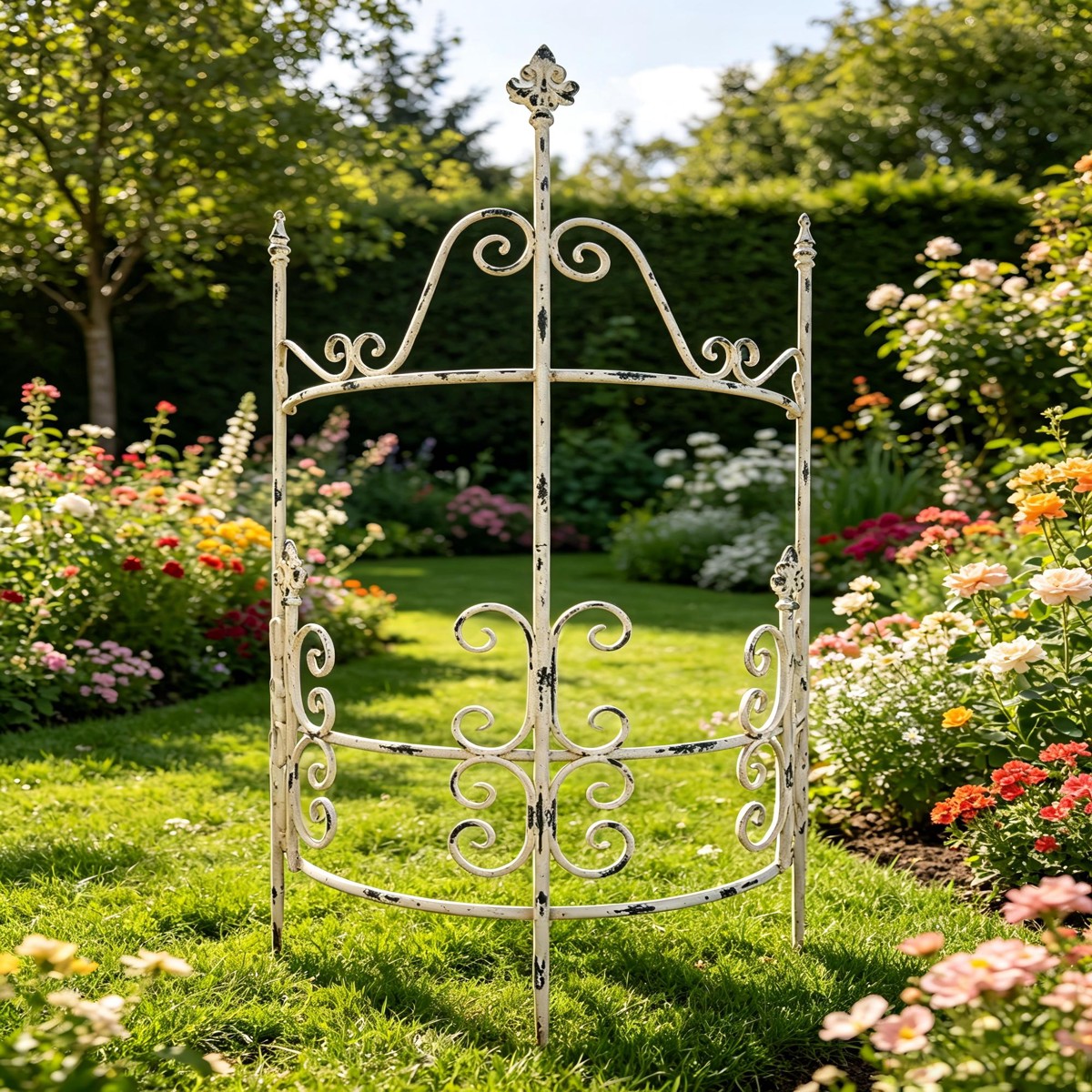 Size 48.21'' * 27.16''Iron Garden Fence, Pretty Vintage White Rustic Style Decorative Pannels, Outdoor Yard Landscape Pathway Border Panels Anti Animal Flowers Plants Barrier Climbing Trellis$138.99View on Mallflare
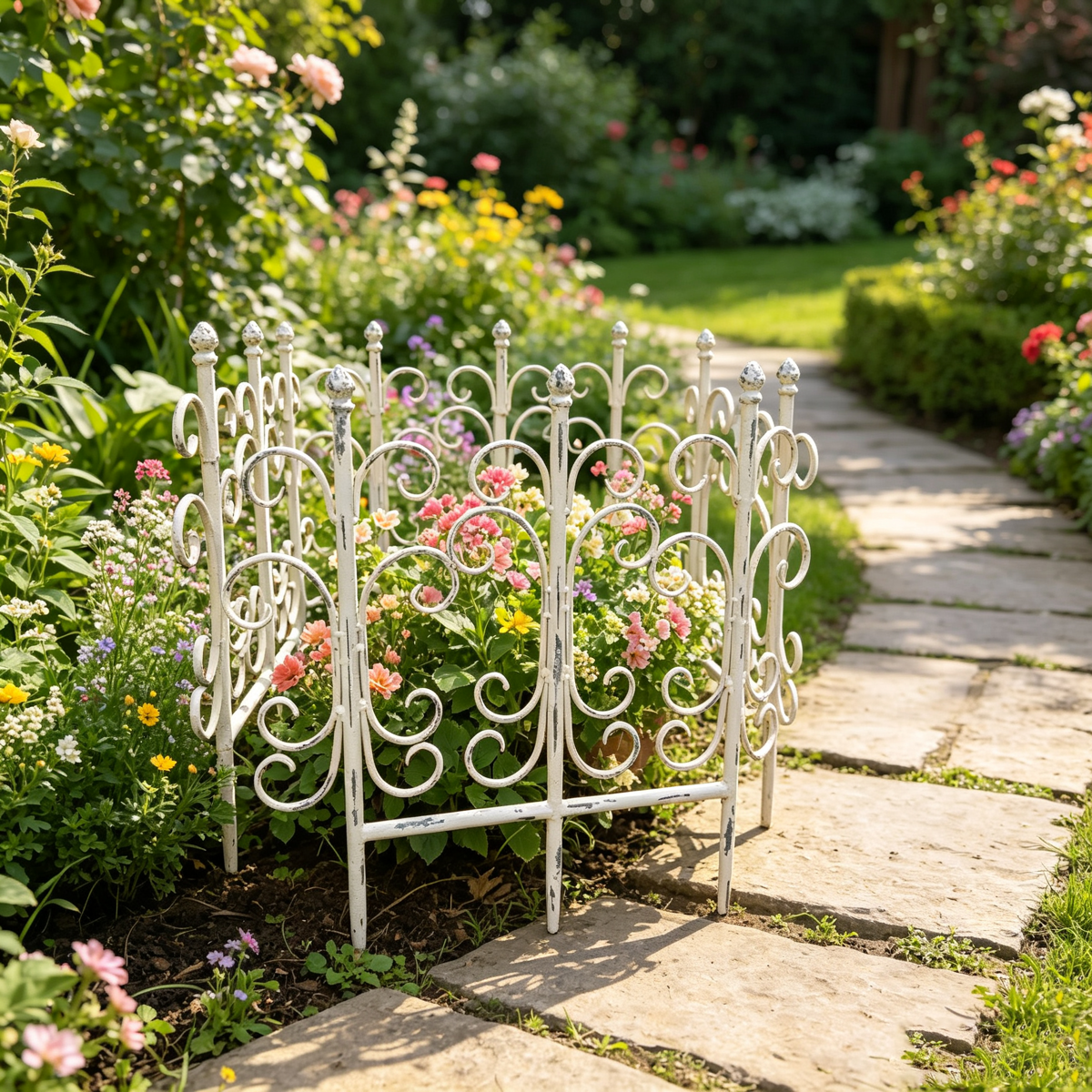 4pcs Iron Garden Fence, Pretty Vintage Green Rustic Style Decorative Pannels, Outdoor Yard Landscape Pathway Border Panels Anti Animal Flowers Plants Barrier Climbing Trellis,19.48'' *19''$138.99View on Mallflare
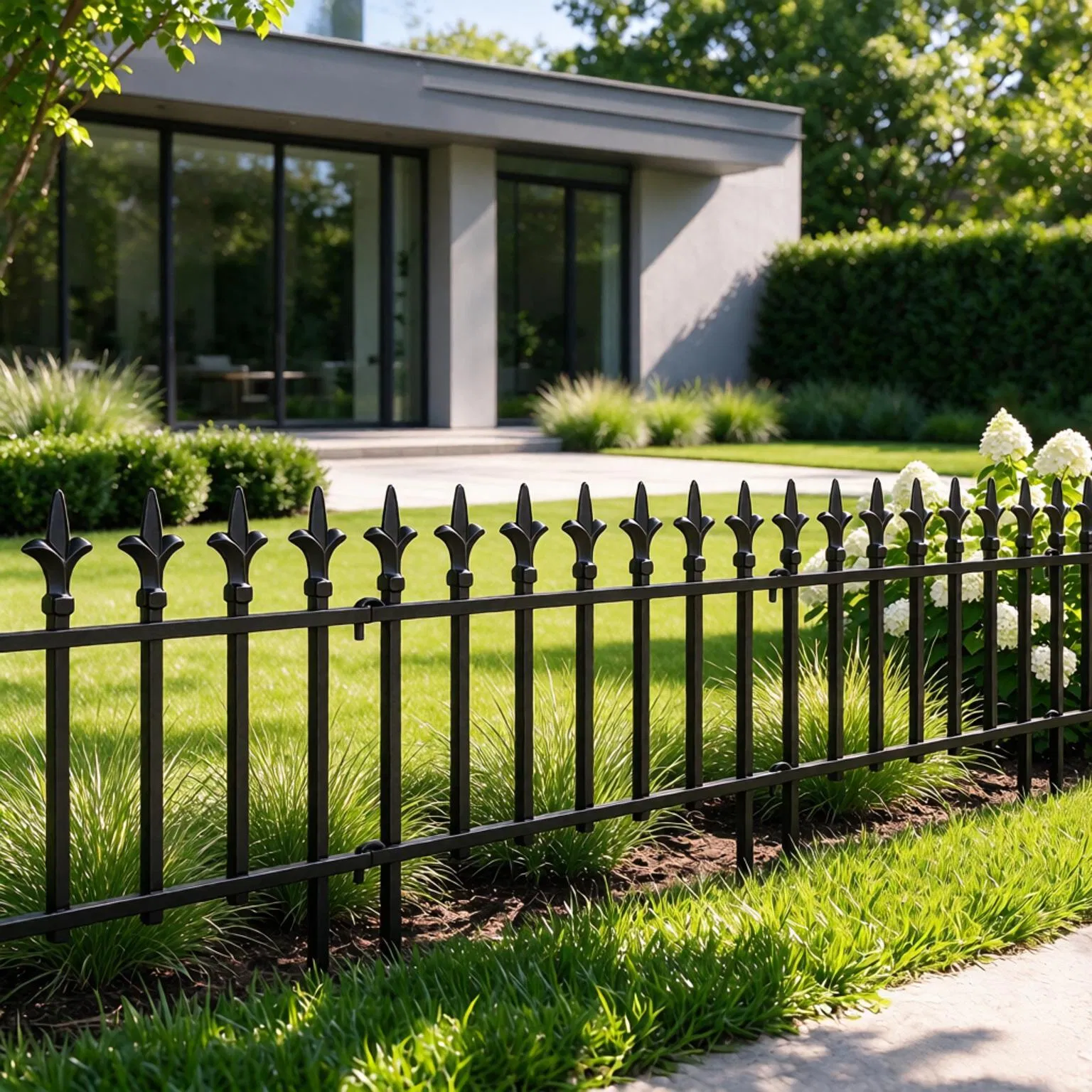 10-Pack Decorative Metal Garden Fence No Dig Landscape Fencing for Lawn-M - Easy Install$151.99View on Mallflare
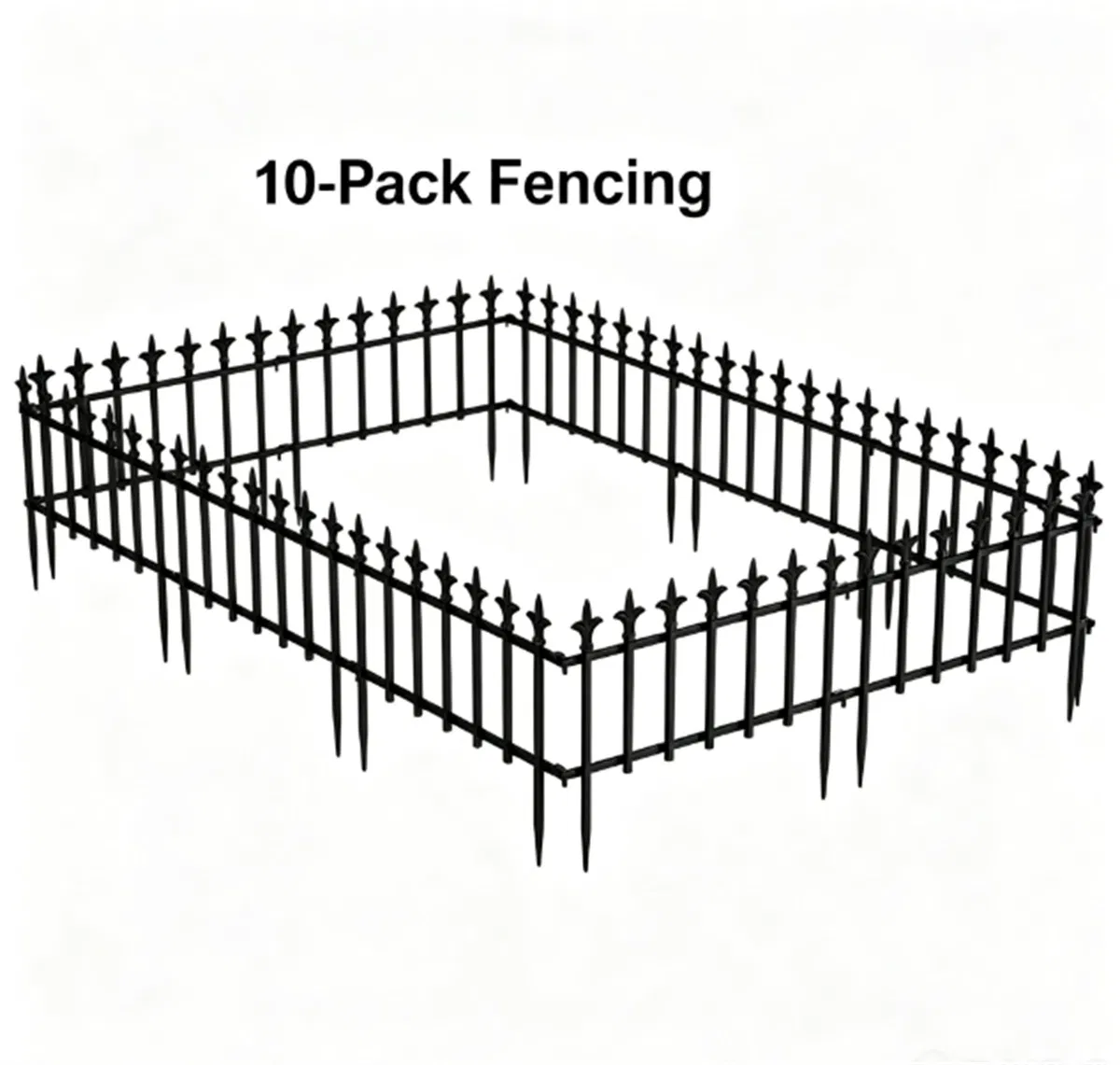 Black Foldable Garden Border Fence, 10 Pack No Dig Animal Barrier, Decorative Metal Fencing for Lawn Pathway Outdoor Landscaping$160.99View on Mallflare
Highlights
- Gate hardware class determines lifespan: forged or galvanized steel hinges and self-latching latches outlast stamped zinc-plated tabs that bend and rust at the pivot.
- Hinge-post anchoring dictates sag: posts set in concrete at least 2 ft deep with a 4x4 wood or 2 in steel post prevent gate drop; spike-mounted plastic posts cannot carry a swinging gate.
- Wire mesh gauges separate animal containment from decoration: 19-gauge hot-dip galvanized hardware cloth (1/2 in openings) stops rabbits and poultry; thin PVC/PP decorative panels are edging only.
- Panel-to-gate continuity requires matched heights and rail spacing; mixing a 24 in decorative border with a 48 in gate leaves a climbable gap and looks misaligned.
Best use cases
- Pet or poultry containment: choose welded wire or 19-gauge hardware cloth panels with a framed metal gate and self-latching hinge—skip decorative PP edging, which animals push through.
- Garden bed border with occasional foot traffic: a low PP or metal edging run works, but add a separate framed gate section at the path; do not hinge a gate on interlocking spike panels.
- Privacy screen with access point: pair an artificial hedge or shade-cloth screen with a rigid framed gate on braced posts; a fabric roll alone has no gate structure and will tear at hinge points.
Buying tips
- Size the gate opening first: a clear walkway needs 32-36 in; add the frame thickness and hinge offset to the panel run before ordering, or the gate will bind on the post.
- Match post gauge to gate weight: a 4 ft metal gate needs a 2-3/8 in steel post or 4x4 lumber; a light 3 ft decorative gate can use 2x2 steel or 4x4 wood, never a spike base.
- For animal fencing, specify mesh opening and gauge: 1/2 in x 19-gauge hardware cloth excludes rabbits; 2 in x 14-gauge welded wire is for larger animals only.
- In coastal or humid climates, choose hot-dip galvanized after welding or aluminum; painted or electro-galvanized wire rusts at cut ends and hinges within a season.
Specs
| Gate Frame | Rigid metal/wood frame vs spike-in panel |
|---|---|
| Mesh Gauge | 19-ga hardware cloth vs 14-ga welded wire |
| Hinge Hardware | Galvanized steel vs stamped zinc tabs |
| Post Anchoring | Concrete-set 2-3 ft vs spike base |
Related searches
What to check before buying
- Measure the gate clear opening width and the total fence run; confirm panel height matches gate height within 1-2 in for a continuous top line.
- Confirm ground conditions: concrete-set posts for any swinging gate; soft soil or slope requires deeper footings and a gate that clears the grade swing arc.
- Check latch and hinge side clearance: gate must swing freely without hitting the fence panel, planter, or slope; allow 2-3 in swing clearance.
- Verify panel and gate materials are the same corrosion class (both hot-dip galvanized or both aluminum) to avoid galvanic corrosion at the hinge connection.
FAQ
Data sources: eBay / Amazon listings and product attribute feeds. Updated Nov 27, 2026.
Some links on this page are affiliate links. If you buy after clicking one, we may earn a commission at no extra cost to you. This does not change which products appear here or their order. Affiliate disclosure.