
Photos from current listings. Actual item, color, and included accessories may vary.
Freestanding Outdoor Privacy Screen Buying Guide
A freestanding outdoor privacy screen is a self-supporting panel or panel set that blocks sightlines on patios, decks, balconies, and gardens without digging post holes or attaching to a structure. The core trade-off is stability versus portability: lighter panels move easily but tip in wind, while heavier steel or solid-wood frames stay put but require anchoring and two-person handling. Buy a weighted-base or ground-stake-capable metal or hardwood frame for exposed sites, and reserve thin hollow panels for sheltered, temporary use.
Median $127.49
Key takeaways
- Panel construction splits into three tiers: welded steel/aluminum slat frames (most rigid), hollow metal frames with plastic or mesh inserts (lightest, least wind-resistant), and solid wood or composite panels (heaviest, best privacy).
- Freestanding stability depends on base design: weighted feet, ground stakes, or fold-out A-frame legs determine wind rating far more than panel height alone.
- Standard panel heights cluster at roughly 72-76 inches for full standing privacy and 47-70 inches for seated or balcony screening; widths run about 36-47 inches per panel.
At a glance
- Category
- Garden Fencing & Privacy Screens
- Last updated
- Nov 27, 2026
Current offers
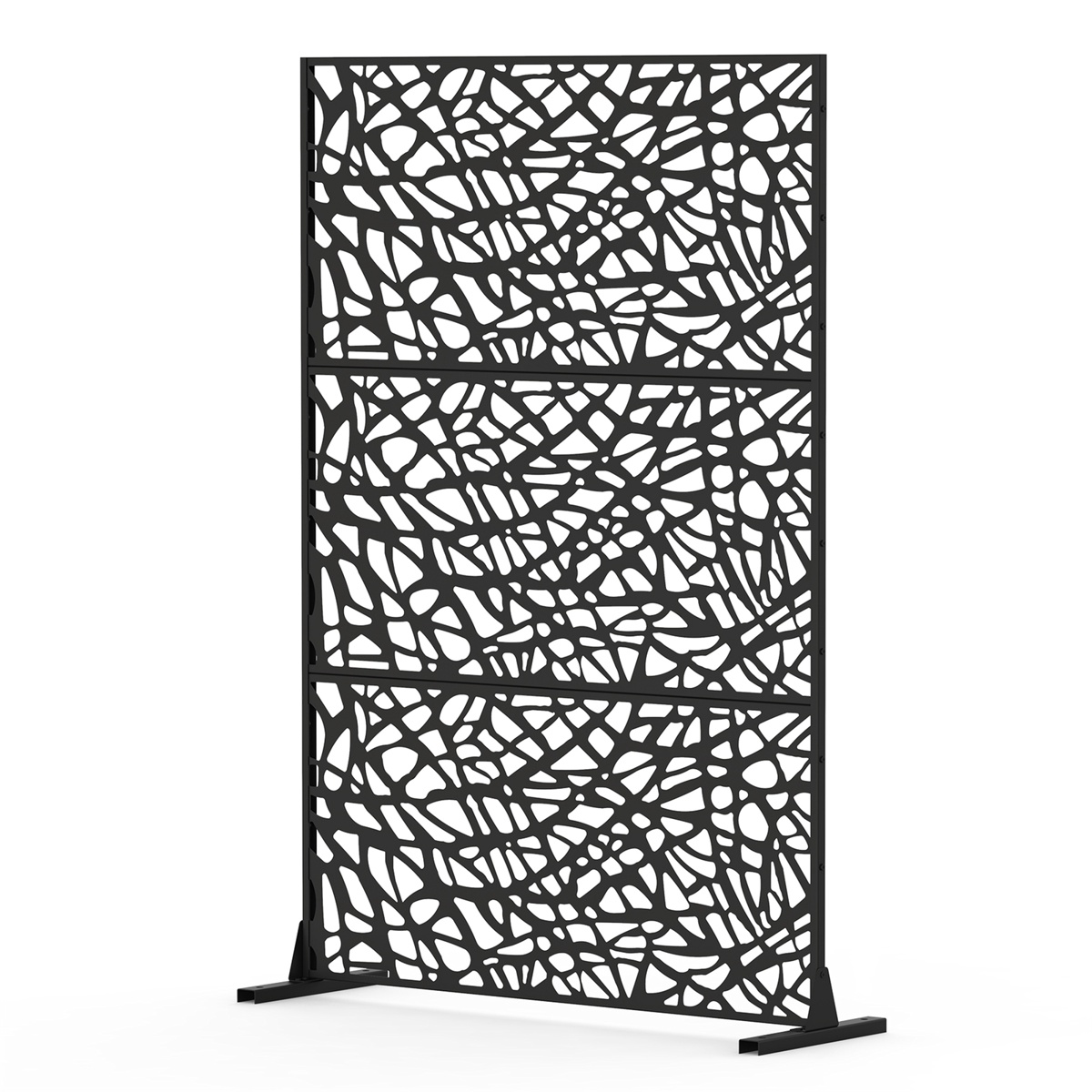 4'x6' Decorative Fence, Indoor &Outdoor Freestanding Metal Privacy Screen Panels$164.86Last checked Nov 24, 2026View on eBay
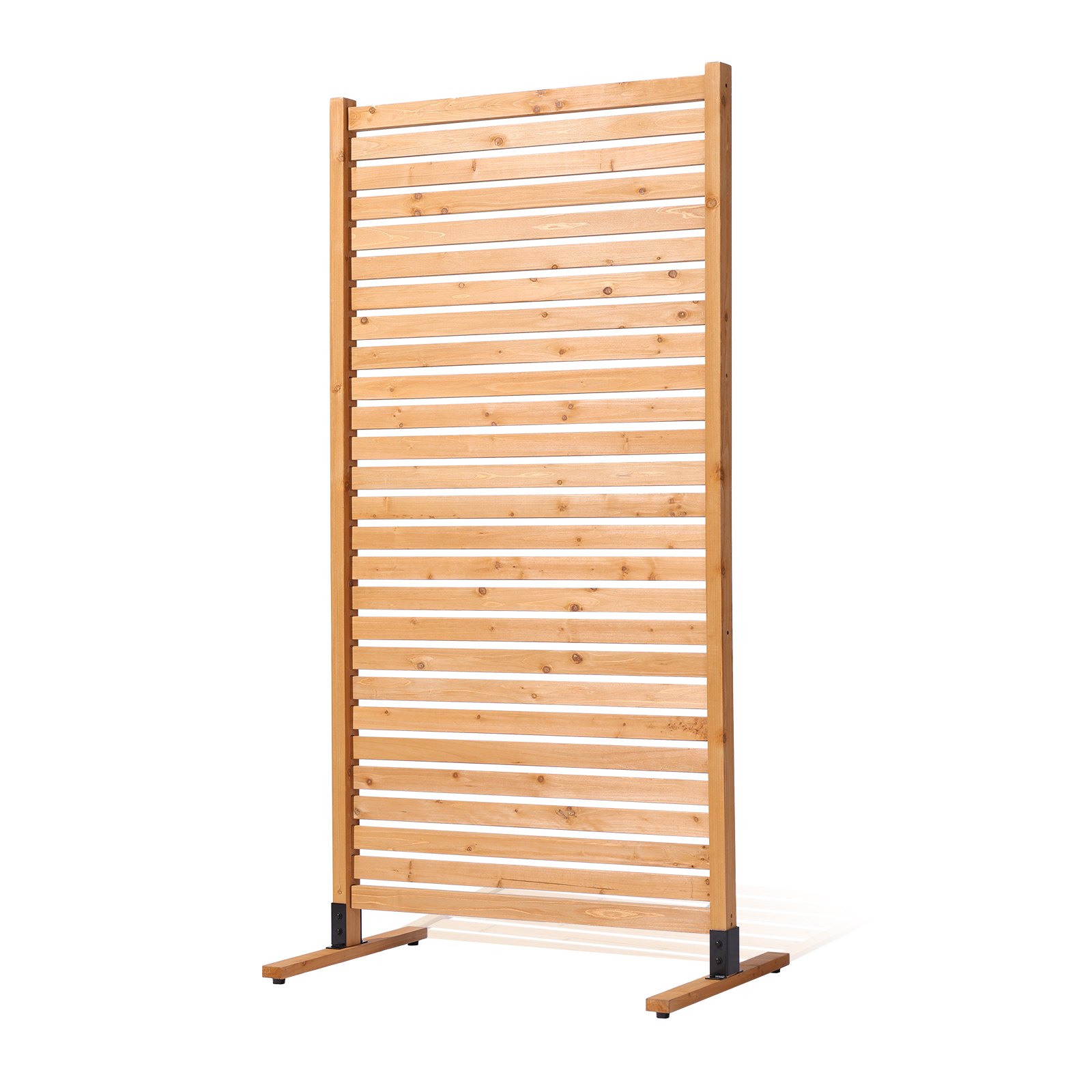 Wooden Privacy Screen 36' X 76' Freestanding Outdoor For Patio$100.99View on Mallflare
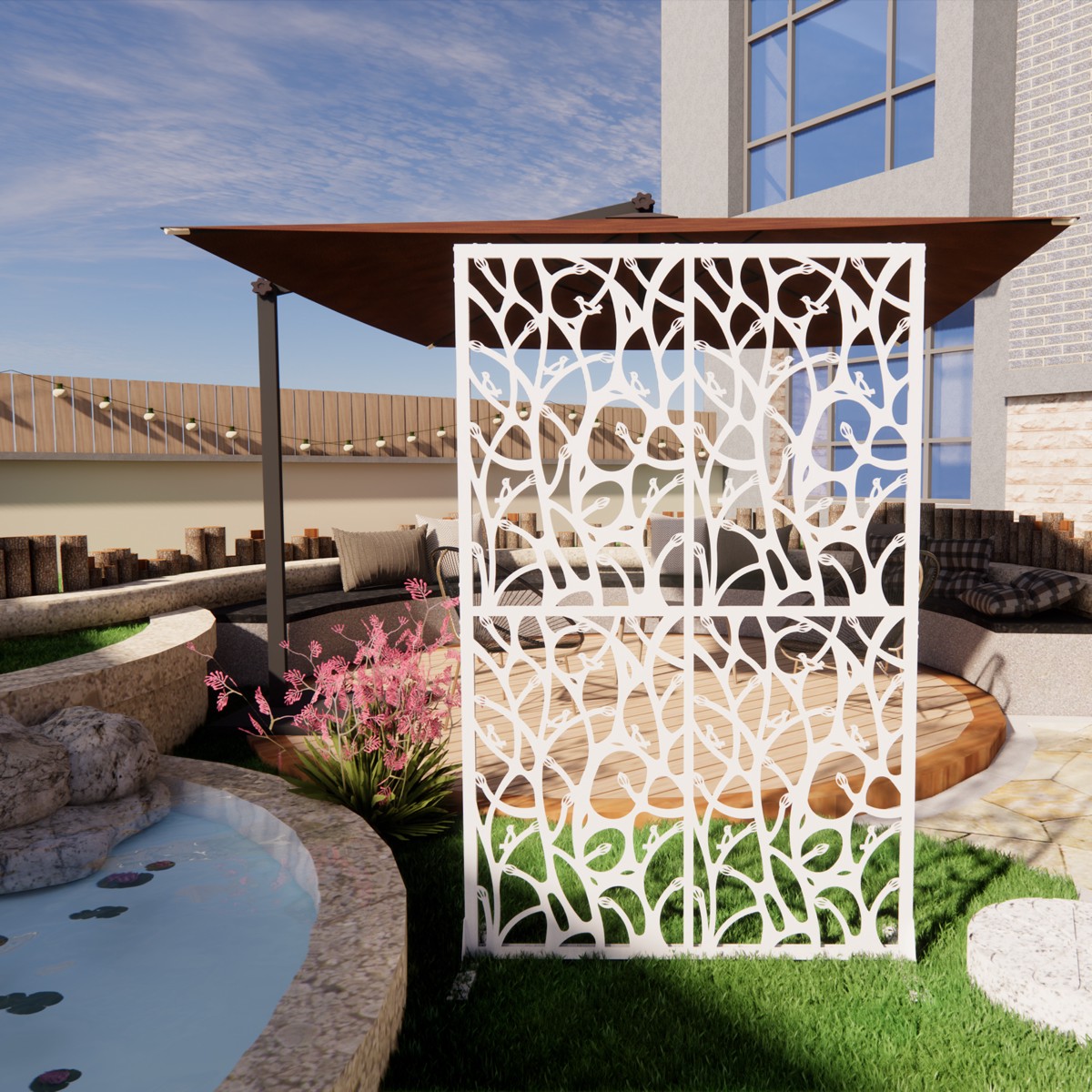 Metal Privacy Screens W3.8Ft X H6Ft Outdoor And Indoor Divider With Free Standing Decorative Screen For Balcony Patio Garden Room White Bird Shape$105.99View on Mallflare
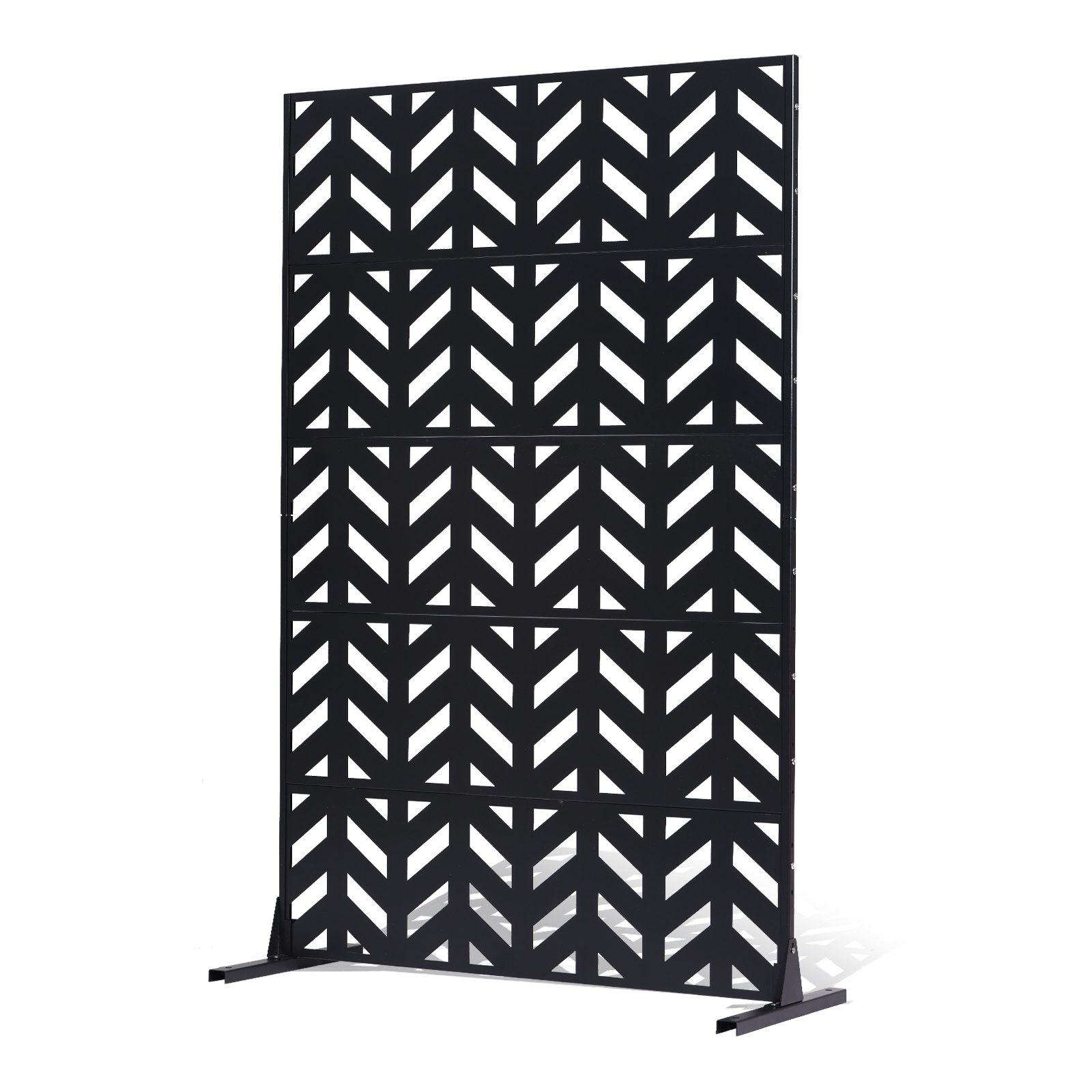 Metal Privacy Screen 47' X 72' Freestanding Outdoor Screens For Patio$107.99View on Mallflare
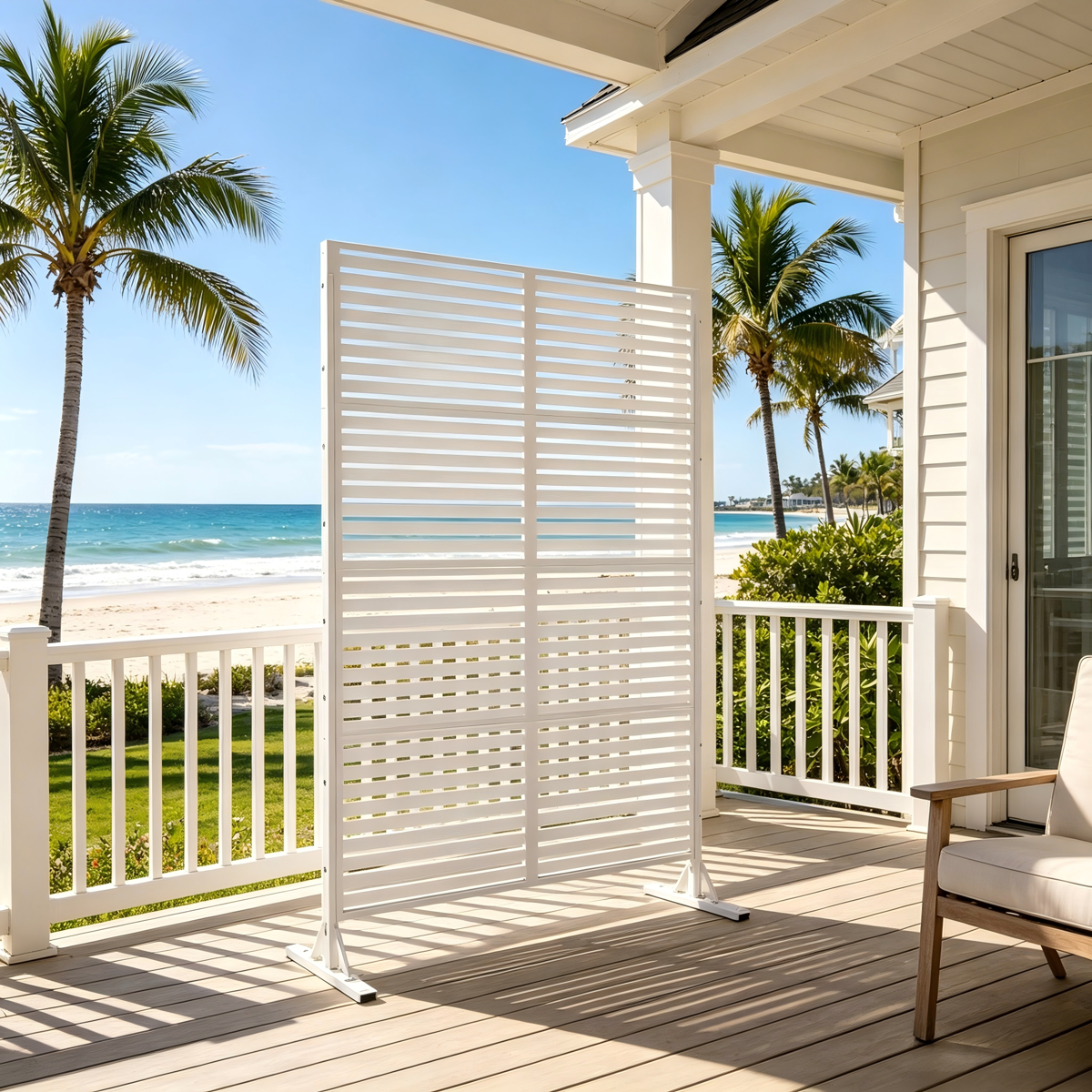 70.87" H × 46.06" W White Metal Privacy Screen, Freestanding Slatted Patio Divider Fence, Coastal & Beach House Decor, Indoor Room & Sunroom Partition, Kid Play Yard & Pet Safe Outdoor Deck Balcony Ba$146.99View on Mallflare
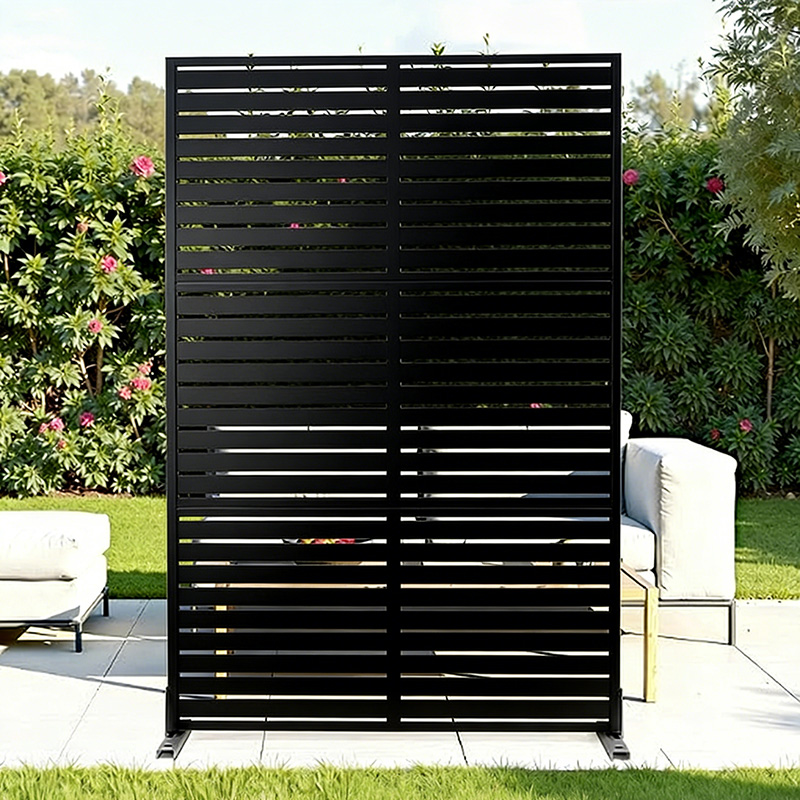 70.87" H × 46.06" W Black Metal Outdoor Privacy Screen, Freestanding Slatted Patio Decorative Fence Divider for Balcony Backyard Deck$146.99View on Mallflare
Highlights
- Panel construction splits into three tiers: welded steel/aluminum slat frames (most rigid), hollow metal frames with plastic or mesh inserts (lightest, least wind-resistant), and solid wood or composite panels (heaviest, best privacy).
- Freestanding stability depends on base design: weighted feet, ground stakes, or fold-out A-frame legs determine wind rating far more than panel height alone.
- Standard panel heights cluster at roughly 72-76 inches for full standing privacy and 47-70 inches for seated or balcony screening; widths run about 36-47 inches per panel.
- Slatted and mesh designs trade full privacy for airflow and lower wind load, while solid or tightly spaced panels block sightlines but catch wind and need anchoring.
Best use cases
- Best fit: exposed, windy decks and patios — choose a welded steel or aluminum slat panel with weighted feet or ground stakes; skip hollow frames with plastic inserts.
- Best fit: renters and balcony users needing temporary screening — pick a lightweight folding or panel-and-foot design that disassembles without tools; skip solid heavy panels that need permanent anchoring.
- Best fit: garden and yard privacy along property lines — use taller 72-76 inch hardwood or steel panels set on stakes or weighted bases; skip short 47-inch panels where standing sightlines matter.
- Wrong fit: playground or pet containment — decorative screens are not load-bearing barriers; use rated fencing instead of privacy panels for safety enclosure.
Buying tips
- Match panel height to the sightline you block: about 72-76 inches for standing adult privacy, 47-60 inches for seated patio or balcony screening.
- For wind exposure, prioritize welded steel or aluminum frames with weighted bases or stake loops; hollow frames with plastic panels flex and tip above roughly 40 mph gusts.
- Check panel width against your space: a single 36-47 inch panel screens a small corner, while property-line coverage needs two or more panels or a hinged multi-panel set.
- Choose powder-coated steel or aluminum for outdoor year-round use; untreated wood needs sealing, and plastic inserts degrade under sustained UV.
Specs
| Frame Material | Powder-coated steel / aluminum / wood |
|---|---|
| Panel Height | 47-76 in (seated to standing privacy) |
| Base Type | Weighted feet / ground stakes / folding legs |
| Panel Style | Slatted / mesh / solid insert |
Related searches
What to check before buying
- Measure the gap or sightline you need to block, then confirm panel height and width cover it with the base footprint included.
- Confirm the base type (weighted feet, stakes, or folding legs) suits your surface — concrete and decking cannot take stakes, so use weighted bases there.
- Check wind exposure at the site; open corners and upper balconies need heavier panels or anchoring hardware.
- Verify assembly and anchoring hardware is included and that the panel fits through gates, doors, and elevators for delivery and moving.
FAQ
Data sources: eBay / Amazon listings and product attribute feeds. Updated Nov 27, 2026.
Some links on this page are affiliate links. If you buy after clicking one, we may earn a commission at no extra cost to you. This does not change which products appear here or their order. Affiliate disclosure.