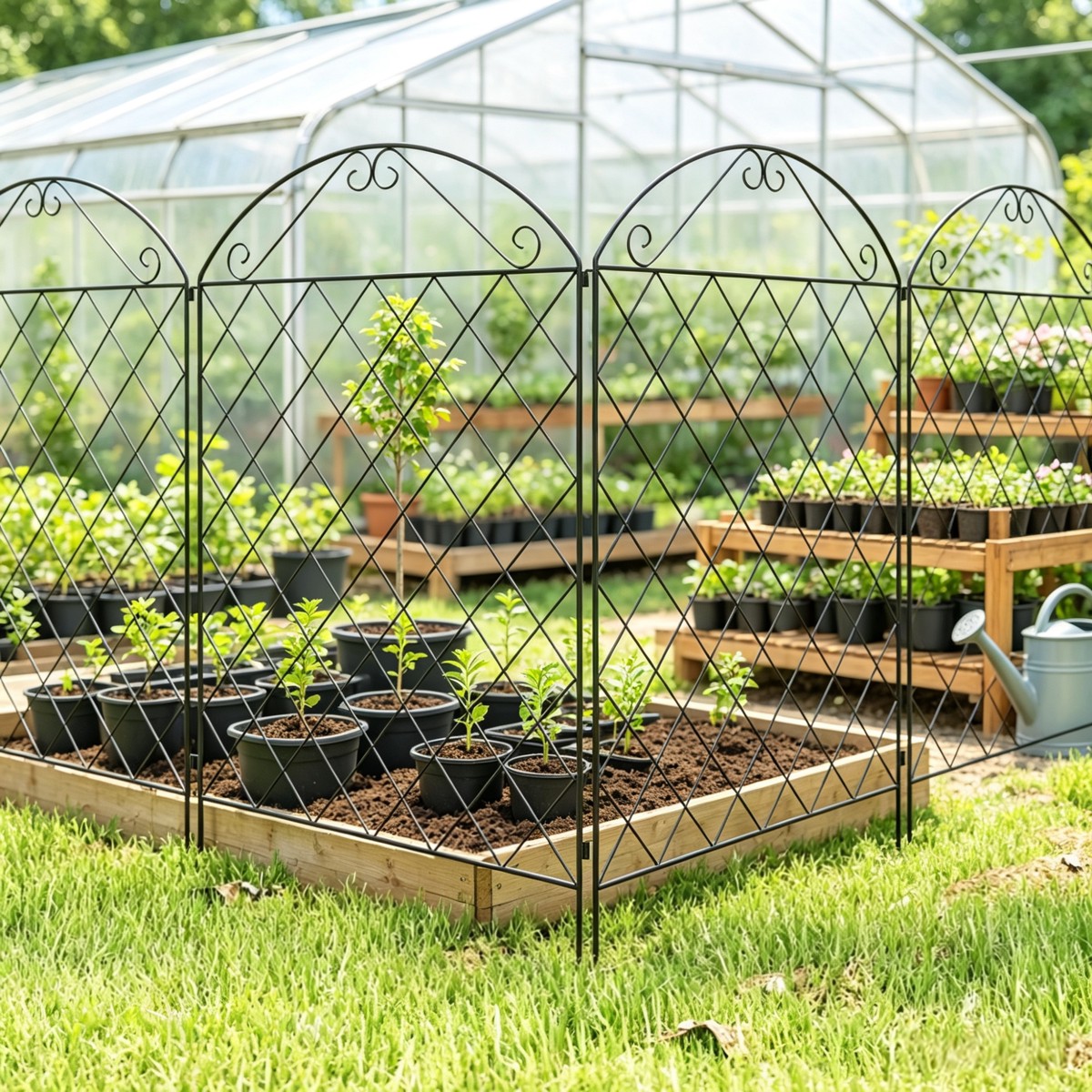

Photos from current listings. Actual item, color, and included accessories may vary.
Decorative Garden Panel Buying Guide
Decorative garden panels are non-structural accent fencing — short border edging, trellis-style iron panels, and freestanding privacy screens — used for bed definition, plant support, and patio screening rather than security or containment. The core trade-off is material and anchoring: thin PP plastic edging is flexible and cheap but UV-degrades and bows, while powder-coated iron panels hold shape and support climbing plants but rust at cut edges and need real ground contact. Buy plastic edging for defined flower-bed curves and iron or boxwood panels wherever load, height, or lifespan beyond a few seasons matters.
Median $306.49
Key takeaways
- PP edging panels interlock with adjustable-angle hinges and push-in spikes — no digging — but rely on spike depth and soil firmness, not panel strength, for stability.
- Powder-coated iron trellis panels carry climbing plants and resist wind load; bare or thinly coated cut edges are the first rust point in wet climates.
- Artificial boxwood panels (roughly 24x16 in per tile) give instant opaque screening and zero watering, but UV-fade and shed over seasons and must be backed by a frame.
At a glance
- Category
- Garden Fencing & Privacy Screens
- Last updated
- Nov 29, 2026
Current offers
Highlights
- PP edging panels interlock with adjustable-angle hinges and push-in spikes — no digging — but rely on spike depth and soil firmness, not panel strength, for stability.
- Powder-coated iron trellis panels carry climbing plants and resist wind load; bare or thinly coated cut edges are the first rust point in wet climates.
- Artificial boxwood panels (roughly 24x16 in per tile) give instant opaque screening and zero watering, but UV-fade and shed over seasons and must be backed by a frame.
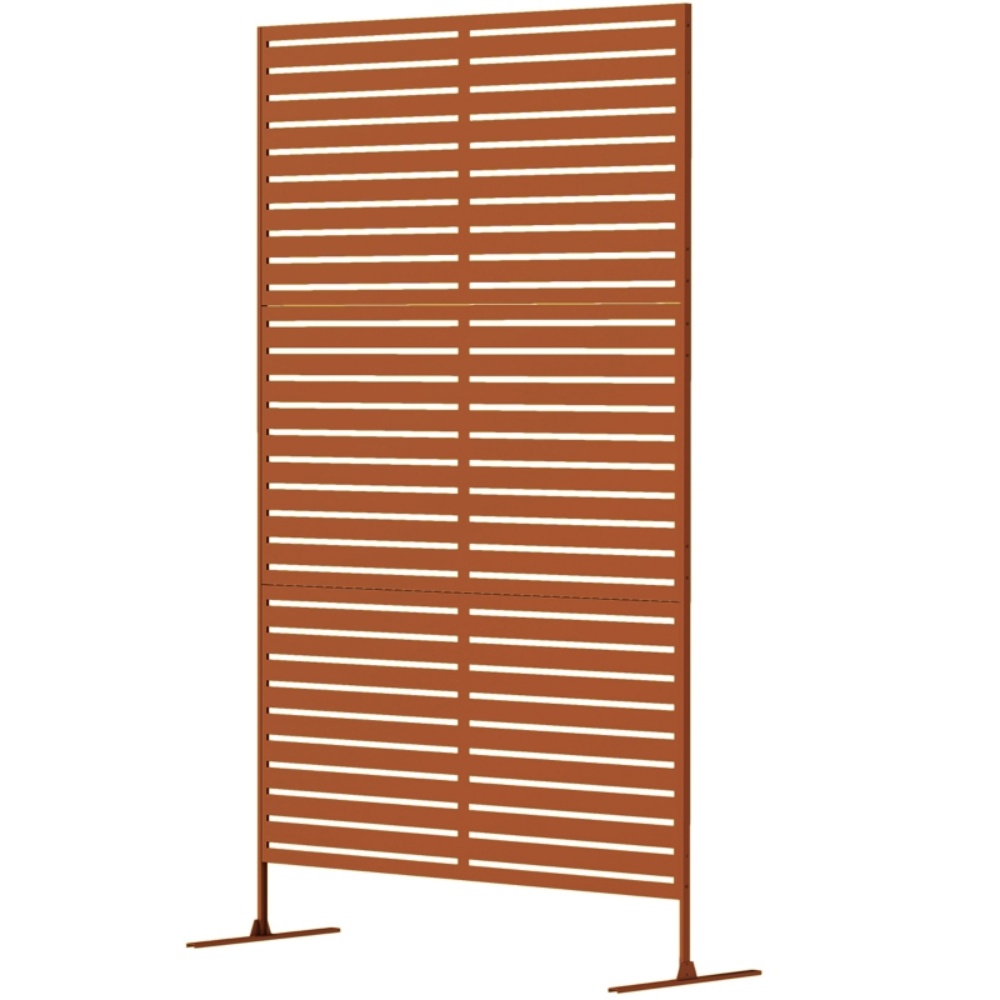
- Freestanding metal-and-mesh screens need weighted bases or ground stakes; a screen over roughly 4 ft tall without anchoring tips in gusty, exposed sites.
Best use cases
- Curved flower beds and path borders: pick flexible interlocking PP edging with push-in spikes — skip rigid iron, which cannot follow tight radii.
- Climbing roses, ivy, or vine screens: choose powder-coated iron trellis panels anchored into soil or a wall — skip plastic edging, which flexes and cannot bear vine weight.
- Balcony or patio privacy and instant green backdrop: use freestanding metal screens or artificial boxwood tiles on a rigid frame — skip spike edging, which needs soil.
- Temporary seasonal bed definition or rental yards: PP panels assemble and pull up without tools; permanent property borders should go straight to iron with concrete-set posts.
Buying tips
- Match panel height to purpose: 6–10 in edging defines beds, 17–29 in iron panels screen low and support plants; anything over 4 ft needs posts or weighted bases.
- For iron, specify fully powder-coated welds and thicker wire; thin gauge with exposed weld points rusts within a season in humid or coastal air.
- Compute linear coverage from panel count × panel width plus hinge overlap — a 10-panel interlocking set covers roughly 19 ft, so buy by measured run, not pack count.
- Artificial boxwood tiles are rated by face area, not density: pack more tiles to hide gaps, and mount on lattice or fence backing so panels do not sag.
Specs
| Panel Material | Powder-coated iron / PP / PE boxwood |
|---|---|
| Mounting Style | Push-in spike / freestanding / wall |
| Typical Panel Height | 6–10 in edging / 17–29 in iron |
| Coverage Per Set | ~19 ft per 10 interlocking panels |
Related searches
What to check before buying
- Measure the exact linear run and desired height before choosing panel count and tier; add 5–10% for curves and corners.
- Check soil depth and firmness for spike-anchored edging — spikes need several inches of penetrable ground, not hardpan, gravel, or concrete.
- Confirm the screen's base type for patios and balconies: weighted feet or wall brackets, since spike edging cannot anchor on hard surfaces.
- For coastal, humid, or high-UV sites, choose powder-coated iron over bare metal and UV-stabilized plastic over thin PP to slow fading and rust.
FAQ
Data sources: eBay / Amazon listings and product attribute feeds. Updated Nov 29, 2026.
Some links on this page are affiliate links. If you buy after clicking one, we may earn a commission at no extra cost to you. This does not change which products appear here or their order. Affiliate disclosure.