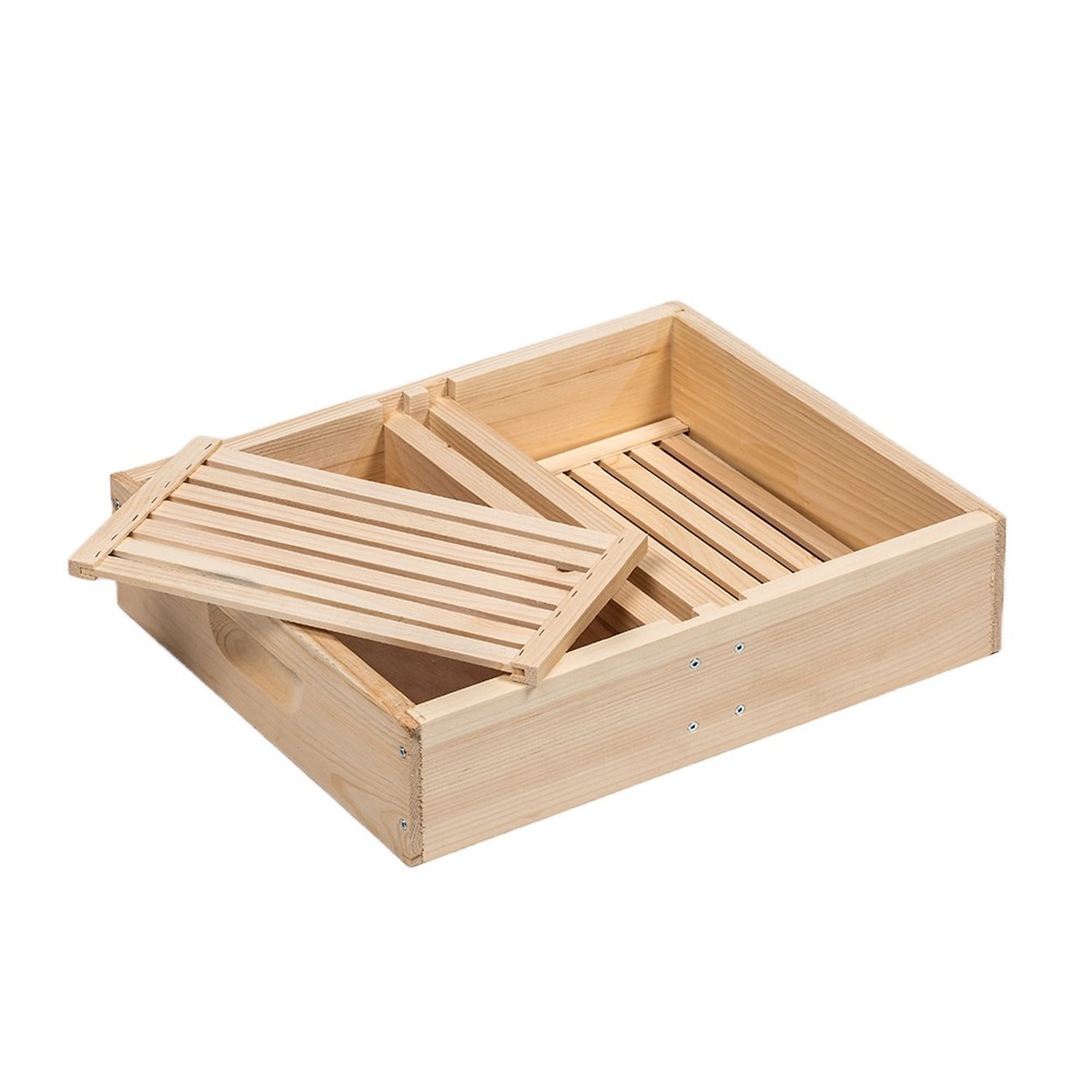

Photos from current listings. Actual item, color, and included accessories may vary.
Hive Feeder Buying Guide
A hive feeder is an in-hive or top-mounted reservoir that delivers sugar syrup to bees without drowning them, and the core trade-off is capacity and access speed versus bee safety and hive-fit precision. Durable feeders use food-grade HDPE or sealed pine with CNC-cut bee ladders, while compromises rely on thin thermoformed plastic or open troughs that cause drowning. The decision rule: pick a top feeder with a screened or laddered access zone and exact 8- or 10-frame body dimensions, and skip anything without a bee-safe float or climb-out surface.
Key takeaways
- Top feeders sit inside a standard hive body and are sized to 8-frame (13¾ in wide) or 10-frame (16 in wide) boxes; a mismatch creates bee space gaps that trigger burr comb.
- Bee-safe access depends on a screened ladder or textured climb-out ramp; open trough designs without floats cause drowning losses that scale with colony size and syrup depth.
- Food-grade HDPE and sealed pine resist warping and mold; thin thermoformed plastic and unsealed particleboard degrade within one to two seasons of syrup exposure.
At a glance
- Category
- Bee Feeders & Mite Treatment
- Last updated
- Nov 23, 2026
Current offers
Highlights
- Top feeders sit inside a standard hive body and are sized to 8-frame (13¾ in wide) or 10-frame (16 in wide) boxes; a mismatch creates bee space gaps that trigger burr comb.
- Bee-safe access depends on a screened ladder or textured climb-out ramp; open trough designs without floats cause drowning losses that scale with colony size and syrup depth.
- Food-grade HDPE and sealed pine resist warping and mold; thin thermoformed plastic and unsealed particleboard degrade within one to two seasons of syrup exposure.
- Assembled wooden top feeders with interlocking joints and exterior-grade glue hold syrup weight (roughly 1 gallon ≈ 8 lb) without racking, unlike stapled butt joints.
Best use cases
- Pick a 10-frame top feeder with a screened access zone for strong spring buildup colonies in standard Langstroth deep boxes; skip it for 8-frame or Warré hives where the body width won't seal.
- Choose a sealed wooden assembled feeder for cold-climate overwintering prep where condensation and refreeze are risks; skip thin plastic troughs that crack at sub-freezing temperatures.
- Use an in-hive division-board or frame feeder for nucleus colonies and 5-frame nucs; a full-size top feeder wastes syrup volume and drowns small clusters.
- Select a top feeder with a central access hole and vented lid for hot-climate syrup feeding; skip open-top designs that invite robbing and ferment syrup above 90°F.
Buying tips
- Measure your hive body's inner width before ordering: 10-frame boxes are 16 in wide and 8-frame boxes are 13¾ in; a top feeder must rest flush on the box rim, not inside the bee space.
- Require a minimum 1-gallon syrup capacity for a full 10-frame colony; smaller ½-gallon units force refills every few days during heavy spring stimulation.
- Confirm food-grade HDPE or sealed pine construction; unsealed wood wicks syrup, swells, and grows mold, while recycled or thin plastic warps and cracks within a season.
- Look for a screened or laddered climb-out surface covering at least 30% of the interior; smooth-sided troughs without floats are the leading cause of drowning.
Specs
| Hive Fit | 8-frame (13¾ in) / 10-frame (16 in) |
|---|---|
| Syrup Capacity | ½–2 gal (1 gal ≈ 8 lb) |
| Bee Safety | Screened ladder vs open trough |
| Body Material | Food-grade HDPE / sealed pine |
Related searches
What to check before buying
- Measure the top rim of your brood box: a 10-frame Langstroth body is 16 in wide and 19⅞ in long; an 8-frame body is 13¾ in wide, and the feeder must span the rim without falling in.
- Verify your hive stand and lid clearance: a full top feeder adds 4–6 in of height, so an inner cover and outer lid must still seat without gaps.
- Check your winter climate: in zones below freezing, choose a feeder that empties completely and can be removed, since syrup left in place ferments and molds.
- Confirm you have a queen excluder or division board plan if feeding with supers on; syrup drips below the feeder and can be stored in honey supers if bees have access.
FAQ
Data sources: eBay / Amazon listings and product attribute feeds. Updated Nov 23, 2026.
Some links on this page are affiliate links. If you buy after clicking one, we may earn a commission at no extra cost to you. This does not change which products appear here or their order. Affiliate disclosure.