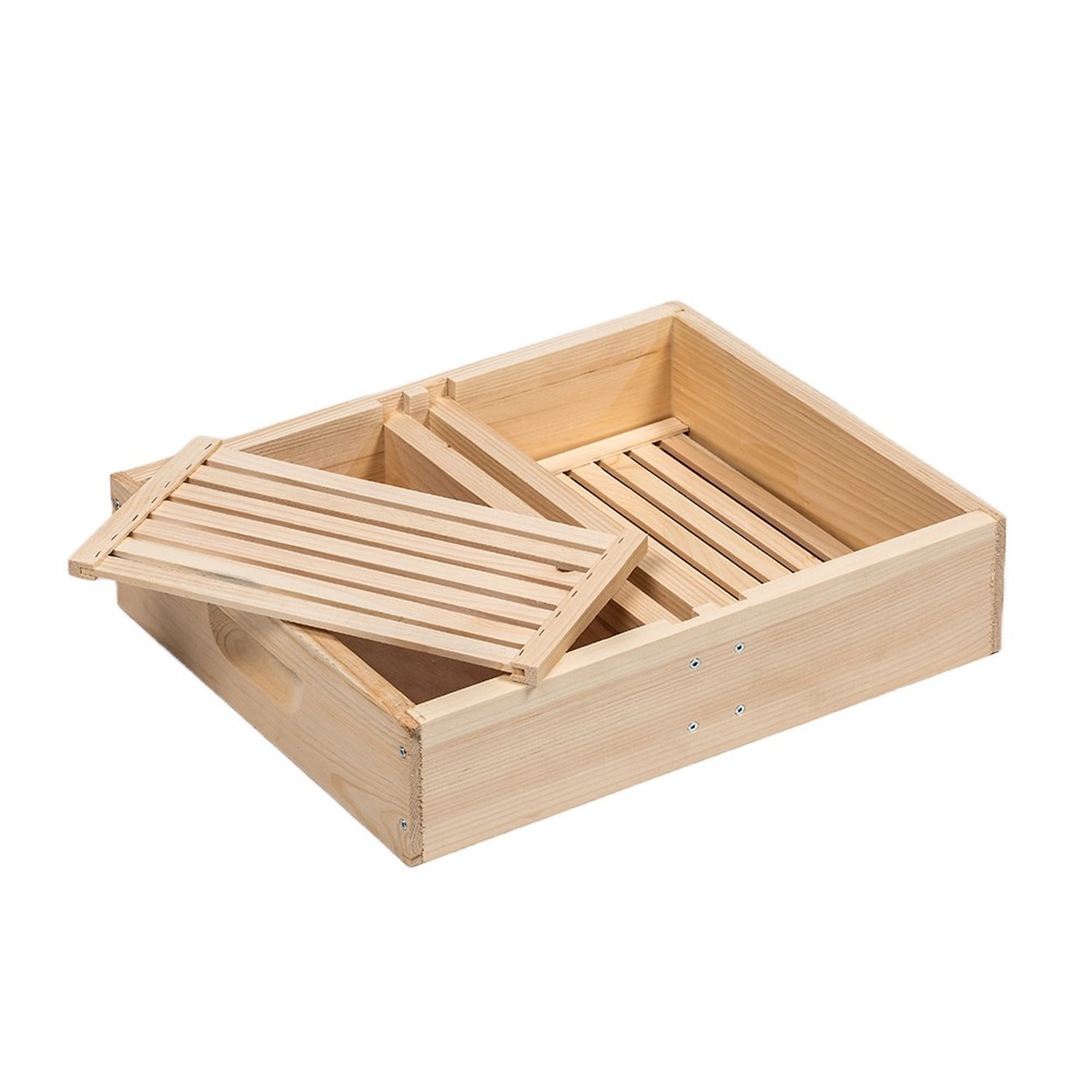

Photos from current listings. Actual item, color, and included accessories may vary.
Beekeeping Feeder Buying Guide
A beekeeping feeder delivers sugar syrup or fondant to a hive without drowning bees or triggering robbing, and the core trade-off is access method versus hive disruption: top feeders sit under the lid for refills without opening the brood chamber, while entrance and frame feeders demand more intrusive maintenance. Choose a top feeder sized to your exact box count and climate, and avoid open-trough or thin-plastic designs that leak, float bees, or crack within a season.
Key takeaways
- Top feeders replace the inner cover and hold 1-4 gallons; they let you refill from above without breaking the brood nest seal.
- Frame feeders hang in the brood box and hold roughly 1-2 gallons but require opening the hive and often float guards to prevent drowning.
- Entrance feeders are the cheapest tier but exposed syrup invites robbing and fermentation, so they suit only strong hives in dearth.
At a glance
- Category
- Bee Feeders & Mite Treatment
- Last updated
- Nov 23, 2026
Current offers
Highlights
- Top feeders replace the inner cover and hold 1-4 gallons; they let you refill from above without breaking the brood nest seal.
- Frame feeders hang in the brood box and hold roughly 1-2 gallons but require opening the hive and often float guards to prevent drowning.
- Entrance feeders are the cheapest tier but exposed syrup invites robbing and fermentation, so they suit only strong hives in dearth.
- Amish-built assembled wood top feeders use glued and nailed joints with screened or louvered bee access; unassembled plastic tiers warp and leak at seams.
Best use cases
- Pick a 10-frame wooden top feeder for fall/spring feeding of a full-strength colony where you want minimal disturbance and maximum syrup volume.
- Choose a frame feeder with a textured interior ladder for nucleus colonies or single deep boxes where a top feeder won't fit the lid profile.
- Skip entrance feeders for weak or newly installed packages, since exposed syrup at the entrance triggers robbing that can kill a small colony.
- Skip oversized 4-gallon top feeders in cold climates where syrup ferments before consumption; use 1-2 gallon capacity and feed thicker syrup.
Buying tips
- Match feeder footprint to your box: 10-frame Langstroth boxes need a 10-frame feeder, 8-frame boxes need an 8-frame feeder, or the lid will not seat flat.
- Use 1:1 sugar-to-water syrup in spring to stimulate brood and 2:1 in fall for storage; never feed honey or syrup with additives that harbor spores.
- Choose feeders with bee ladders, floats, or screened access so bees reach syrup without drowning; open troughs without floats lose bees fast.
- For mite treatment compatibility, remove syrup supers before applying oxalic acid vapor or formic acid, and never treat with honey supers on the hive.
Specs
| Feeder Type | Top / Frame / Entrance / Pail |
|---|---|
| Hive Fit | 10-frame or 8-frame Langstroth |
| Capacity | 1-4 gal (top); 1-2 qt (entrance) |
| Construction | Assembled wood / molded plastic |
Related searches
What to check before buying
- Measure your hive box exterior and lid overhang: top feeder width must match 10-frame (19-7/8 in) or 8-frame (13-3/4 in) box dimensions.
- Confirm the feeder sits level under the outer cover with no gaps that admit rain or robber bees.
- Check that your climate allows liquid feeding: below 50°F syrup thickens and bees stop taking it, so switch to fondant or dry sugar.
- Verify you have a queen excluder or inner cover plan so the feeder does not become comb-building space or a drowning trap.
FAQ
Data sources: eBay / Amazon listings and product attribute feeds. Updated Nov 23, 2026.
Some links on this page are affiliate links. If you buy after clicking one, we may earn a commission at no extra cost to you. This does not change which products appear here or their order. Affiliate disclosure.