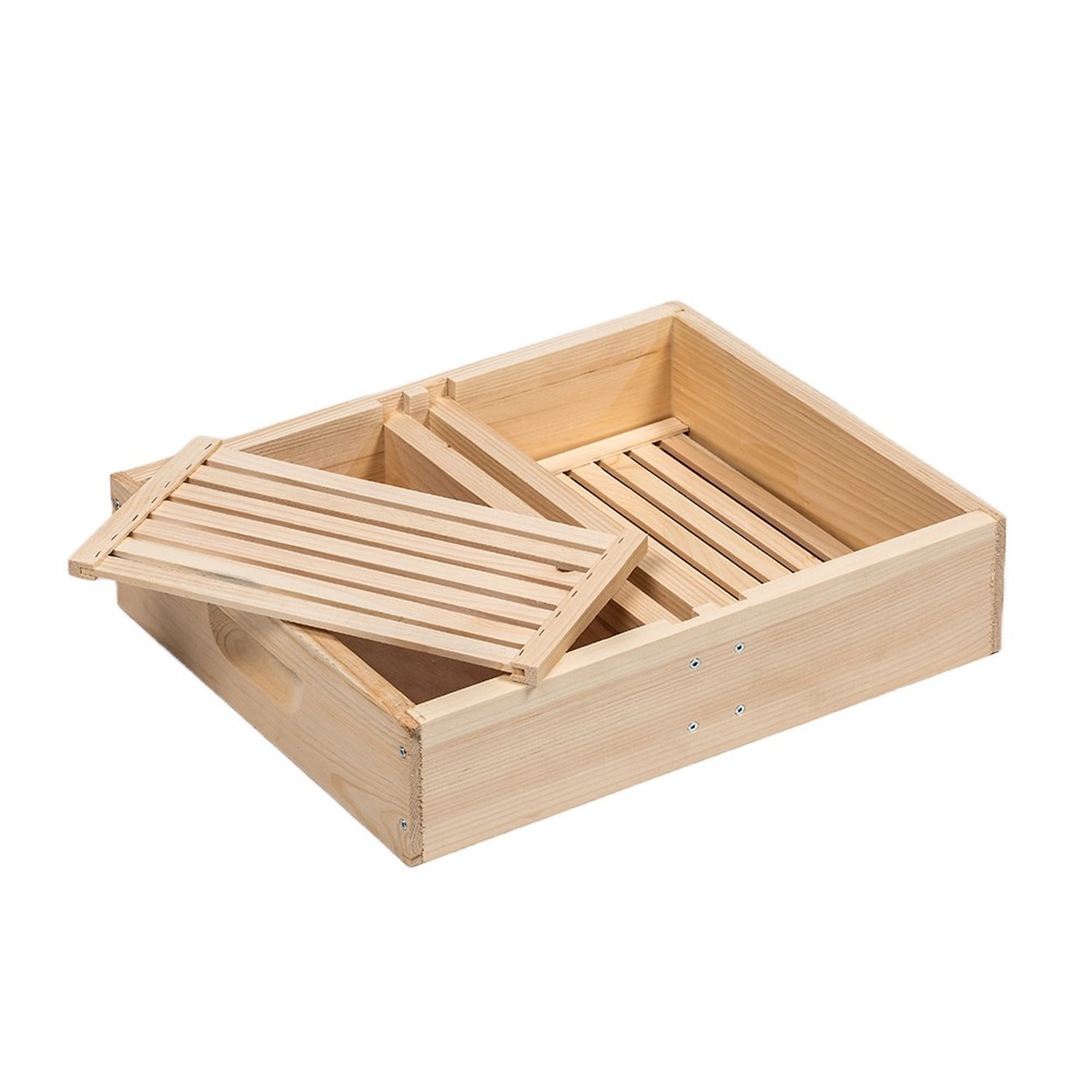

Photos from current listings. Actual item, color, and included accessories may vary.
Frame Feeder Bee Buying Guide
A frame feeder is a hive-body insert that replaces a frame to deliver syrup or pollen substitute directly inside the brood box, minimizing robbing and exposure compared to entrance or top feeders. The primary trade-off is capacity versus bee access: deeper wells hold more feed but risk drowning, while laddered or float-equipped designs trade volume for safety. The decision rule is simple—choose a frame feeder with a textured climbing surface, a tight-fitting lid, and a capacity matched to your inspection interval; skip open-trough or thin-walled units that warp, leak, or drown bees.
Key takeaways
- Frame feeders are molded polyethylene or wooden boxes sized to replace one deep or medium frame, typically holding 1–1.5 gallons (3.8–5.7 L) of syrup.
- Internal ladder count and texture are the critical safety feature—at least 3 vertical ribs or a floating raft are needed to prevent drowning.
- Wall thickness of 1/8 in (3 mm) or more resists warping and cracking; thin ABS or recycled plastic walls bow and leak at seams.
At a glance
- Category
- Bee Feeders & Mite Treatment
- Last updated
- Nov 23, 2026
Current offers
Highlights
- Frame feeders are molded polyethylene or wooden boxes sized to replace one deep or medium frame, typically holding 1–1.5 gallons (3.8–5.7 L) of syrup.
- Internal ladder count and texture are the critical safety feature—at least 3 vertical ribs or a floating raft are needed to prevent drowning.
- Wall thickness of 1/8 in (3 mm) or more resists warping and cracking; thin ABS or recycled plastic walls bow and leak at seams.
- A secure lid or inner cover is mandatory—open-top frame feeders encourage robbing and drowned bees on the syrup surface.
Best use cases
- Best fit: spring buildup or fall feeding in a single deep brood box—use a 1-gallon frame feeder with internal ladders for steady, protected syrup delivery.
- Best fit: nucleus colonies or splits in 5-frame boxes—choose a narrow 1-quart frame feeder that replaces one frame without crowding the cluster.
- Wrong fit: winter emergency feeding—frame feeders freeze solid and crack; use a top feeder or candy board instead.
- Wrong fit: rapid mass feeding of many hives—frame feeders require opening the hive; use a bucket or top feeder for bulk syrup.
Buying tips
- Match feeder height to your frame size: deep frame feeders are ~9-1/2 in tall, medium ~6-5/8 in—a mismatched feeder leaves a gap bees propolize or a lid that won't seat.
- Confirm the feeder width equals a standard frame's 1-3/8 in top bar thickness so it slides into the hive body without forcing or leaving a gap.
- Choose high-density polyethylene (HDPE) over thin ABS or recycled plastic—HDPE resists UV degradation and syrup acidity without cracking.
- Check that the lid locks or snaps over the feeder rim; a loose lid floats off and becomes a drowning surface.
Specs
| Feeder Capacity | 1 qt to 1.5 gal |
|---|---|
| Frame Fit | Deep or medium Langstroth |
| Climbing Surface | Ribbed ladder or float |
| Lid Type | Snap-on or inner cover |
Related searches
What to check before buying
- Measure your hive body interior: a standard 10-frame Langstroth box is 14-3/4 in wide inside—feeder must fit without binding against adjacent frames.
- Confirm frame count: removing one frame from a 10-frame box is fine; removing one from a 5-frame nuc crowds the cluster—choose a 1-quart nuc feeder.
- Verify your lid or inner cover clears the feeder top; some feeders sit flush with the frame top and a telescoping cover may not seat.
- Check your climate: plastic frame feeders crack below freezing—plan to remove them before temperatures drop below 40°F (4°C).
FAQ
Data sources: eBay / Amazon listings and product attribute feeds. Updated Nov 23, 2026.
Some links on this page are affiliate links. If you buy after clicking one, we may earn a commission at no extra cost to you. This does not change which products appear here or their order. Affiliate disclosure.