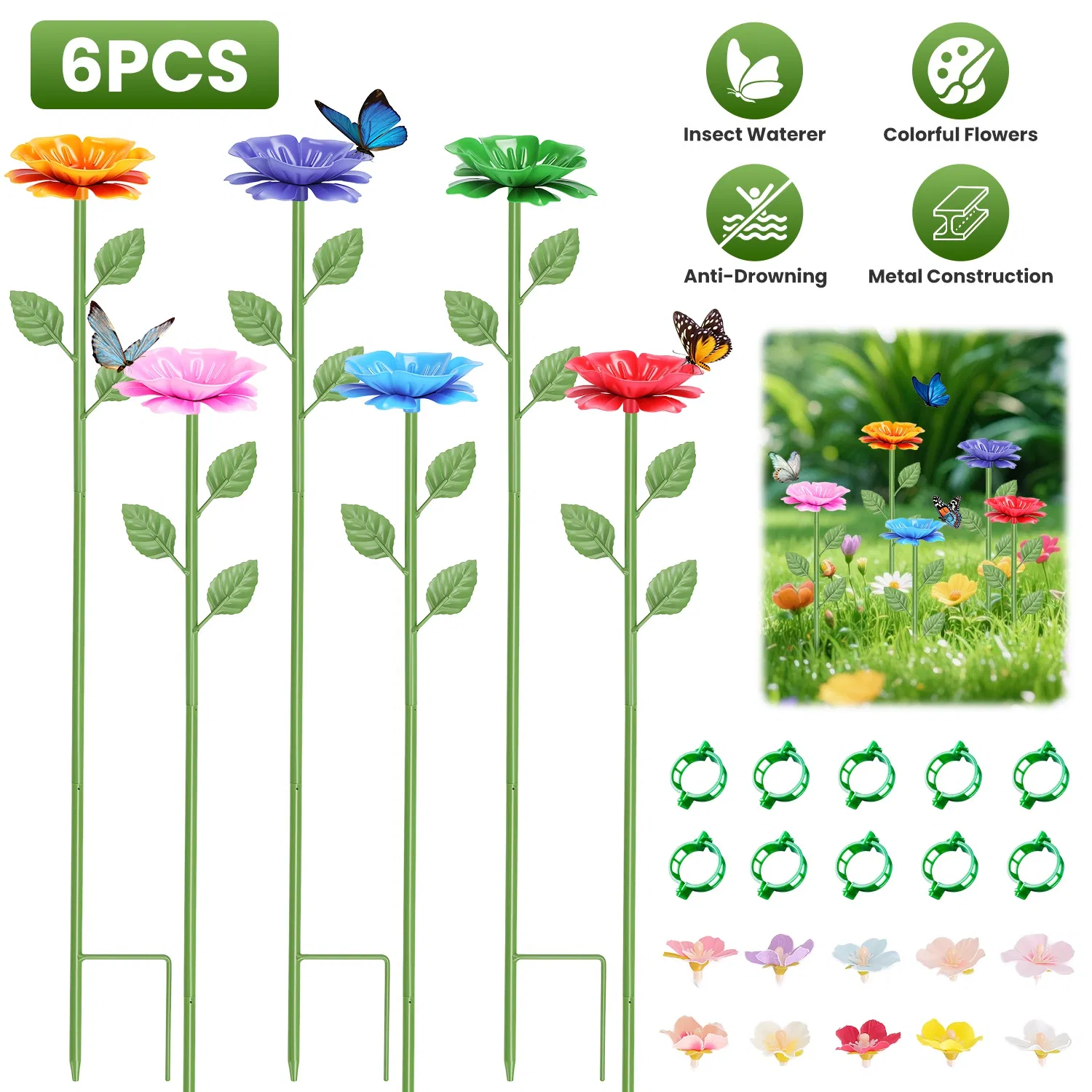

Photos from current listings. Actual item, color, and included accessories may vary.
Bee Feeder Bucket Buying Guide
A bee feeder bucket is an inverted-container gravity feeder (typically 1–5 gallon) that supplies sugar syrup to honeybee colonies through a perforated lid or screened cap. The primary trade-off is lid seal quality and feed-access geometry versus bucket wall thickness: a leaking or poorly vented lid drowns bees and sours syrup, while thin HDPE cracks at the rim under freeze-thaw and UV. The decision rule: buy a food-grade HDPE bucket with a gasketed, bee-tight lid and a screened or perforated access plate sized to the colony's consumption rate; skip any bucket whose lid relies on friction alone or whose feed holes exceed roughly 3 mm.
Key takeaways
- Food-grade HDPE (resin coded 2) resists UV and cracking; repurposed pickle or chemical buckets leach odors and fail at rim threads.
- Lid access geometry governs safety: screened caps or 1–3 mm perforations let bees feed without drowning; open holes above 4 mm flood the bucket.
- Gravity feed rate scales with head height: a 5-gallon bucket at full head delivers far more syrup per hour than a 1-gallon pail, so small nucs need small vessels.
At a glance
- Category
- Bee Feeders & Mite Treatment
- Last updated
- Nov 23, 2026
Current offers
Highlights
- Food-grade HDPE (resin coded 2) resists UV and cracking; repurposed pickle or chemical buckets leach odors and fail at rim threads.
- Lid access geometry governs safety: screened caps or 1–3 mm perforations let bees feed without drowning; open holes above 4 mm flood the bucket.
- Gravity feed rate scales with head height: a 5-gallon bucket at full head delivers far more syrup per hour than a 1-gallon pail, so small nucs need small vessels.
- Most bucket feeders are inverted over an inner cover hole or mounted outside the entrance; lid diameter must match the inner cover opening (typically 3–4 inches).
Best use cases
- Best fit: spring buildup or dearth feeding on a 10-frame Langstroth colony — use a 3–5 gallon food-grade HDPE bucket with a gasketed lid and screened access plate for multi-day unattended feed.
- Best fit: nucleus colonies and overwintered splits — use a 1–2 gallon bucket or jar feeder; a full 5-gallon head overwhelms a small cluster and risks drowning.
- Wrong fit: top-bar or Warré hives with no inner cover hole — skip inverted bucket feeders and use a entrance or frame feeder instead.
- Wrong fit: open-water or pollination stations — a syrup bucket is not a water source; use a dedicated watering station with landing floats for hydration.
Buying tips
- Match bucket volume to colony strength: 1–2 gallons for nucs and splits, 3–5 gallons for established 10-frame colonies during heavy buildup.
- Specify food-grade HDPE (resin code 2) with a minimum 1.5 mm wall; thin walls deflect under full load and crack at the rim within a season.
- Require a gasketed or screw-band lid: friction lids pop under solar heat gain and leak syrup down the hive body.
- Choose screened or 1–3 mm perforated access plates over drilled open holes; open holes above 4 mm allow bees to cluster and drown.
Specs
| Bucket Material | Food-grade HDPE (resin code 2) |
|---|---|
| Capacity Tier | 1–2 gal nuc / 3–5 gal full colony |
| Lid Type | Gasketed or screw-band, bee-tight |
| Feed Access | Screened cap / 1–3 mm perforations |
Related searches
What to check before buying
- Measure your inner cover hole or entrance opening: bucket lid diameter must seat over it with at least 1/4 inch overlap to prevent seepage.
- Confirm hive stand height and clearance: a full 5-gallon bucket weighs roughly 40 lb and needs a level, reinforced top or external bracket.
- Check climate: below 50°F syrup thickens and flow stops; plan to switch to fondant or a winter feeder rather than a bucket.
- Verify food-grade resin code 2 on the bucket base and confirm the lid includes a gasket or screw band before purchase.
FAQ
Data sources: eBay / Amazon listings and product attribute feeds. Updated Nov 23, 2026.
Some links on this page are affiliate links. If you buy after clicking one, we may earn a commission at no extra cost to you. This does not change which products appear here or their order. Affiliate disclosure.