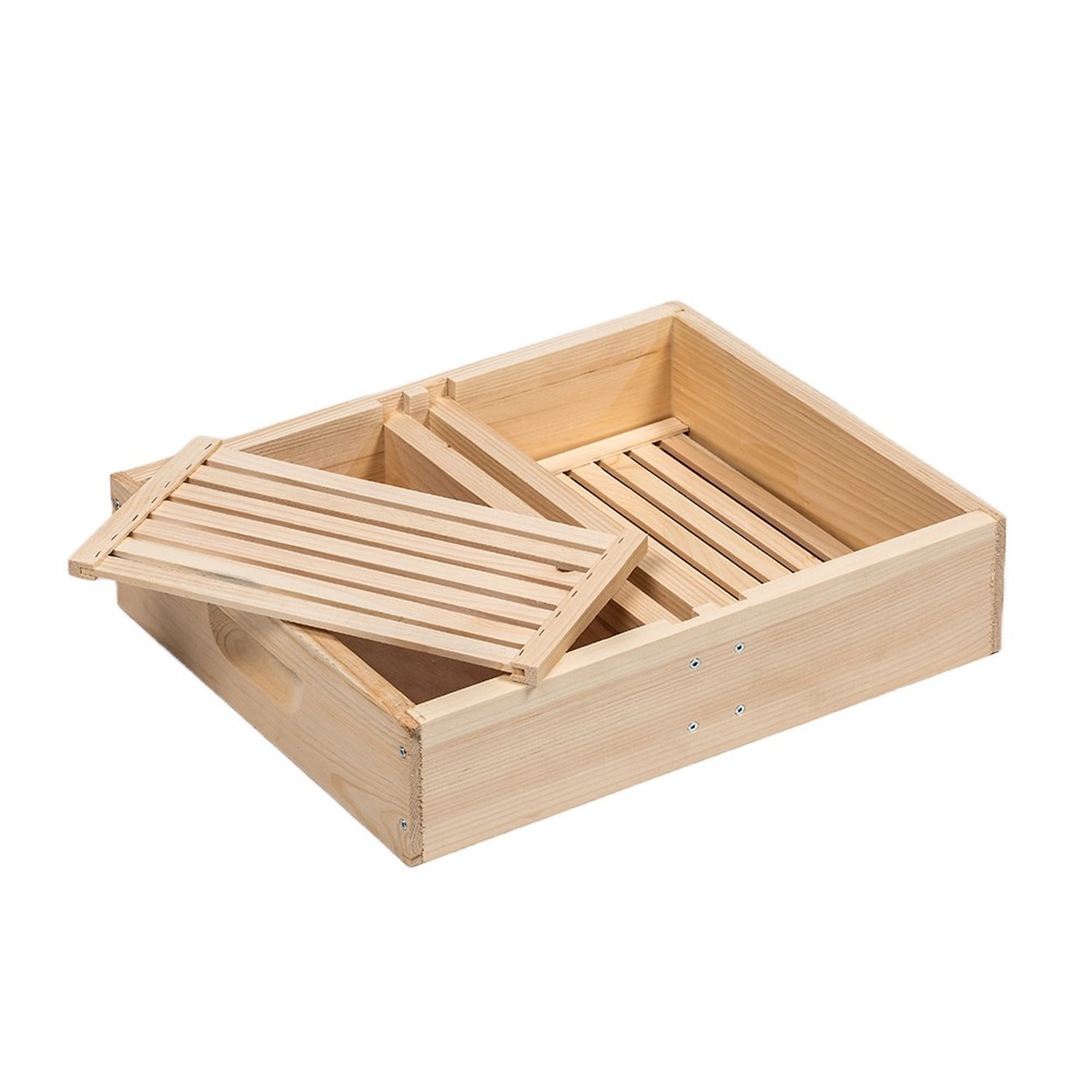

Photos from current listings. Actual item, color, and included accessories may vary.
10 Frame Feeder Buying Guide
A 10-frame feeder is a hive-top or in-hive accessory sized to fit a standard 10-frame Langstroth box, used to deliver sugar syrup without opening the brood nest. The primary trade-off is capacity and access versus bee drowning risk and hive-body compatibility; durable units use sealed wood joints, fine mesh or float rafts, and precise 10-frame outer dimensions (19-7/8" × 16-1/4"). Pick a feeder with a screened or rafted landing surface and a lid that seals, and skip open-trough or undersized units that leak, drown bees, or leave gaps.
Key takeaways
- Standard 10-frame Langstroth outer dimensions are 19-7/8" long × 16-1/4" wide, so any hive-top feeder must match this footprint or it will leave robbing gaps.
- Top feeders with internal floats, ladders, or fine mesh (≤3 mm openings) reduce drowning; open-trough designs without climb-out texture kill bees at scale.
- Wood top feeders rely on sealed joinery (dado/rabbet plus waterproof glue) and exterior-grade finishes; unsealed butt joints swell, warp, and leak syrup into the hive.
At a glance
- Category
- Bee Feeders & Mite Treatment
- Last updated
- Nov 23, 2026
Current offers
Highlights
- Standard 10-frame Langstroth outer dimensions are 19-7/8" long × 16-1/4" wide, so any hive-top feeder must match this footprint or it will leave robbing gaps.
- Top feeders with internal floats, ladders, or fine mesh (≤3 mm openings) reduce drowning; open-trough designs without climb-out texture kill bees at scale.
- Wood top feeders rely on sealed joinery (dado/rabbet plus waterproof glue) and exterior-grade finishes; unsealed butt joints swell, warp, and leak syrup into the hive.
- In-hive division-board feeders use less vertical space but hold less syrup; hive-top 10-frame feeders typically hold 1–2 gallons and are refilled less often.
Best use cases
- Best fit: a 10-frame hive body with a flat, level top and a secure outer cover — choose a screened hive-top feeder for fall/spring syrup feeding with minimal disturbance.
- Best fit: beekeepers running multiple 10-frame hives who want one refill to last 1–2 weeks — pick a 1–2 gallon hive-top model with float rafts and a sealed lid.
- Wrong fit: 8-frame hives, top-bar hives, or hives with warped/uneven boxes — a 10-frame feeder will not seat flush and will trigger robbing; size down or fix the box first.
- Skip: open-trough feeders without floats or mesh, and thin plastic units that flex and leak — they drown bees and drip syrup onto the cluster.
Buying tips
- Measure the hive body's outer length and width before buying: 10-frame standards are 19-7/8" × 16-1/4"; a feeder within 1/8" of this seats without gaps.
- Match feeder capacity to colony strength: 1 gallon suits a nuc or weak split, 2 gallons suits a strong double-deep colony consuming syrup quickly.
- Choose screened or rafted syrup access over open troughs; fine stainless or plastic mesh with ≤3 mm openings lets bees drink without falling in.
- For wood feeders, require exterior-grade glue and a waterproof finish (beeswax, food-safe oil, or exterior paint) and sealed joints — unsealed wood warps and leaks within a season.
Specs
| Hive Frame Size | 10-frame Langstroth (19-7/8" × 16-1/4") |
|---|---|
| Feeder Type | Hive-top vs in-hive division board |
| Syrup Capacity | 1–2 gal (hive-top) / 1–2 qt (in-hive) |
| Anti-Drown Feature | Floats / ladders / ≤3 mm mesh |
Related searches
What to check before buying
- Confirm your box is a true 10-frame Langstroth: outer footprint 19-7/8" × 16-1/4" and the top rails are flat and level.
- Verify the feeder lid or outer cover seals against robbing bees and rain; a loose lid invites robbing and dilutes syrup.
- Check that the feeder's syrup access is reachable from the cluster side and that the inner cover or lid still fits above it.
- Plan for winter: empty, clean, and dry the feeder before storage; residual syrup ferments and attracts pests.
FAQ
Data sources: eBay / Amazon listings and product attribute feeds. Updated Nov 23, 2026.
Some links on this page are affiliate links. If you buy after clicking one, we may earn a commission at no extra cost to you. This does not change which products appear here or their order. Affiliate disclosure.