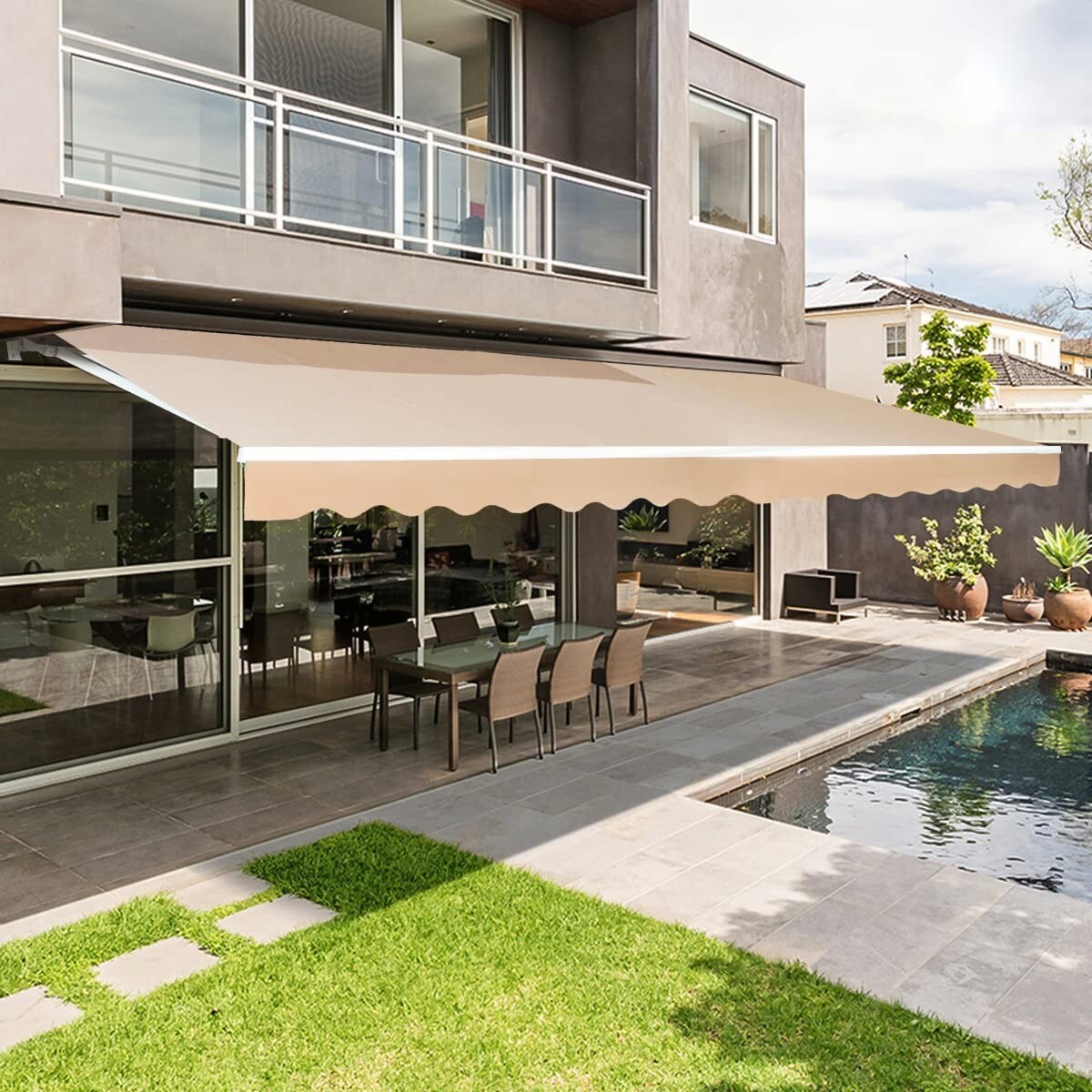

Photos from current listings. Actual item, color, and included accessories may vary.
Waterproof Sun Shade Buying Guide
A waterproof sun shade is a tensioned fabric canopy engineered to block UV and shed rain, where the critical trade-off is waterproof coating durability versus breathability and UV block rate. Durable options use solution-dyed HDPE with a tight weave or PVC-coated polyester with heat-sealed seams; compromises rely on thin polyurethane coatings that crack and peel within a season. The decision rule: buy for the coating chemistry and seam construction first, because a waterproof rating without welded or taped seams leaks at every stitch line.
Key takeaways
- Waterproof fabric splits into two architectures: PVC-coated polyester (fully waterproof, heavy, low breathability) and HDPE shade cloth with PU coating (water-resistant, breathable, lighter).
- Seam quality decides real waterproofing: heat-welded or seam-taped joins hold hydrostatic pressure, while plain stitched seams wick water through needle holes regardless of fabric rating.
- UV block correlates with fabric density and color: dense HDPE weaves block 85–95% UV, and dark or solution-dyed colors resist fading and UV degradation longer than surface-dyed light fabrics.
At a glance
- Category
- Outdoor Structures, Shade & Awnings
- Last updated
- Nov 28, 2026
Current offers
Highlights
- Waterproof fabric splits into two architectures: PVC-coated polyester (fully waterproof, heavy, low breathability) and HDPE shade cloth with PU coating (water-resistant, breathable, lighter).
- Seam quality decides real waterproofing: heat-welded or seam-taped joins hold hydrostatic pressure, while plain stitched seams wick water through needle holes regardless of fabric rating.
- UV block correlates with fabric density and color: dense HDPE weaves block 85–95% UV, and dark or solution-dyed colors resist fading and UV degradation longer than surface-dyed light fabrics.
- Hardware tiers differ by attachment: stainless-steel D-rings and turnbuckles outlast zinc-plated or plastic grommets, which deform and rust under permanent tension and rain load.
Best use cases
- Permanent patio or pergola cover in a rainy climate: choose PVC-coated polyester with heat-welded seams and stainless grommets; skip breathable HDPE shade cloth, which sheds light rain but saturates in sustained downpour.
- Garden, chicken run, or nursery shade where airflow matters: choose PU-coated HDPE shade cloth at 85–90% block; skip PVC-coated fabric, which traps heat and blocks breeze.
- Retractable awning replacement or manual awning canopy: match the fabric weight and width to the existing frame's tension arms and roller; skip generic shade cloth, which lacks the dimensional stability and flex tolerance of awning-grade fabric.
Buying tips
- Size the shade with 10–15% extra width and length beyond the anchored span: fabric stretches under tension and rain load, and a snug cut leaves exposed gaps at the edges.
- Match fabric weight to exposure: 160–260 GSM HDPE for seasonal shade, 300–500 GSM PVC-coated polyester for permanent rain-shedding cover; lighter grades flutter and abrade at grommets.
- Confirm grommet spacing of 18–24 inches on all edges plus reinforced corner patches; wider spacing concentrates stress and tears the fabric in wind.
- For retractable awnings, verify the canopy width matches the roller and the valance drop matches the frame; awning fabric is cut and seamed for a specific arm geometry and will not fit a different frame.
Specs
| Fabric Architecture | PVC-coated polyester vs PU-coated HDPE |
|---|---|
| Waterproof Rating | Waterproof (welded) vs water-resistant |
| UV Block Range | 70–95% by weave density and color |
| Seam Construction | Heat-welded / taped vs stitched |
Related searches
What to check before buying
- Measure the exact anchor-to-anchor span on all four sides, then add 10–15% for stretch and edge coverage before selecting a size.
- Confirm anchor points are solid masonry, structural timber, or steel posts; drywall, vinyl siding, and thin fence pickets pull out under tension and wind load.
- Check the mounting surface for rain runoff direction and slope: a flat or inward-sloping shade pools water and sags regardless of fabric waterproof rating.
- Verify your frame or kit includes tension hardware (turnbuckles, springs, or ratchets) and that grommet count matches your anchor points; fabric alone does not tension itself.
FAQ
Data sources: eBay / Amazon listings and product attribute feeds. Updated Nov 28, 2026.
Some links on this page are affiliate links. If you buy after clicking one, we may earn a commission at no extra cost to you. This does not change which products appear here or their order. Affiliate disclosure.