
Photos from current listings. Actual item, color, and included accessories may vary.
Retractable Awning Buying Guide
Retractable awnings are wall-mounted fabric canopies that roll out on a spring-tensioned or motorized roller to shade patios, decks, and windows on demand. The core trade-off separates manual crank units with lighter aluminum frames from motorized units with heavier steel arms and wind sensors; fabric grade (solution-dyed acrylic vs PU-coated polyester) and arm construction decide lifespan. Buy manual for occasional, budget-conscious window or small-deck shade, and step up to a motorized, steel-framed unit with acrylic fabric for full-sun decks used daily.
Median $214.99 · New listings
Key takeaways
- Frame material drives rigidity: steel frames resist arm sag on wide spans above 13 ft, while aluminum frames suit spans under 10 ft and coastal installs where rust matters.
- Fabric is the wear layer: PU-coated 100% polyester sheds water but fades and cracks in 2-3 seasons of direct UV; solution-dyed acrylic (e.g., Sunbrella-class) holds color 5-10 years.
- Manual crank units use torsion-spring roller tubes that need pre-tensioning at install; motorized units pair a tubular motor with a remote and often a manual override crank.
At a glance
- Category
- Outdoor Structures, Shade & Awnings
- Last updated
- Nov 27, 2026
Current offers
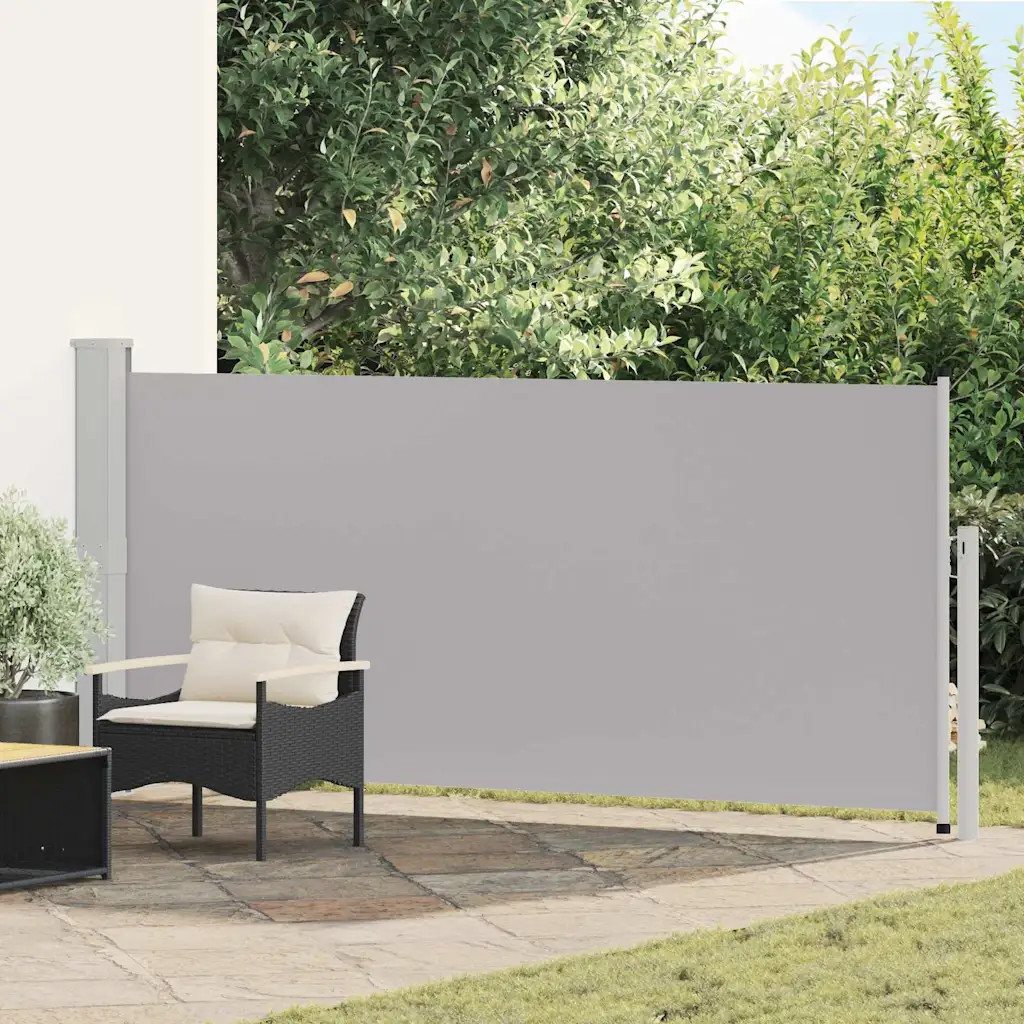 vidaXL Patio Retractable Side Awning 55.1 x 118.1 Gray Outdoor Privacy Shade$89.12View on eBay
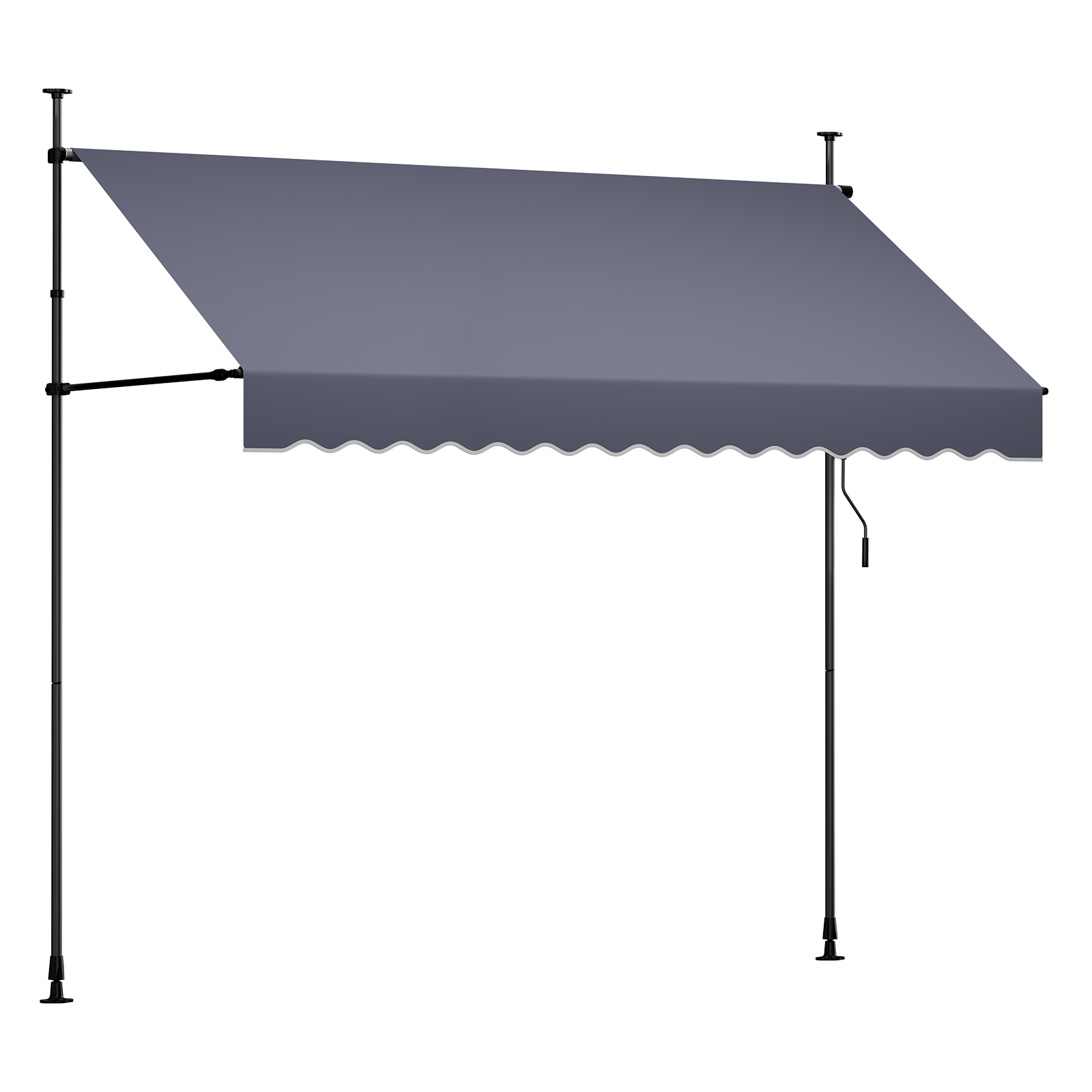 Manual Retractable Awning, 118" Outdoor Patio Sunshade Shelter, Height Adjustable Door Window Canopy With Crank Handle For Backyard, Garden, Balcony, Dark Gray$82.99View on Mallflare
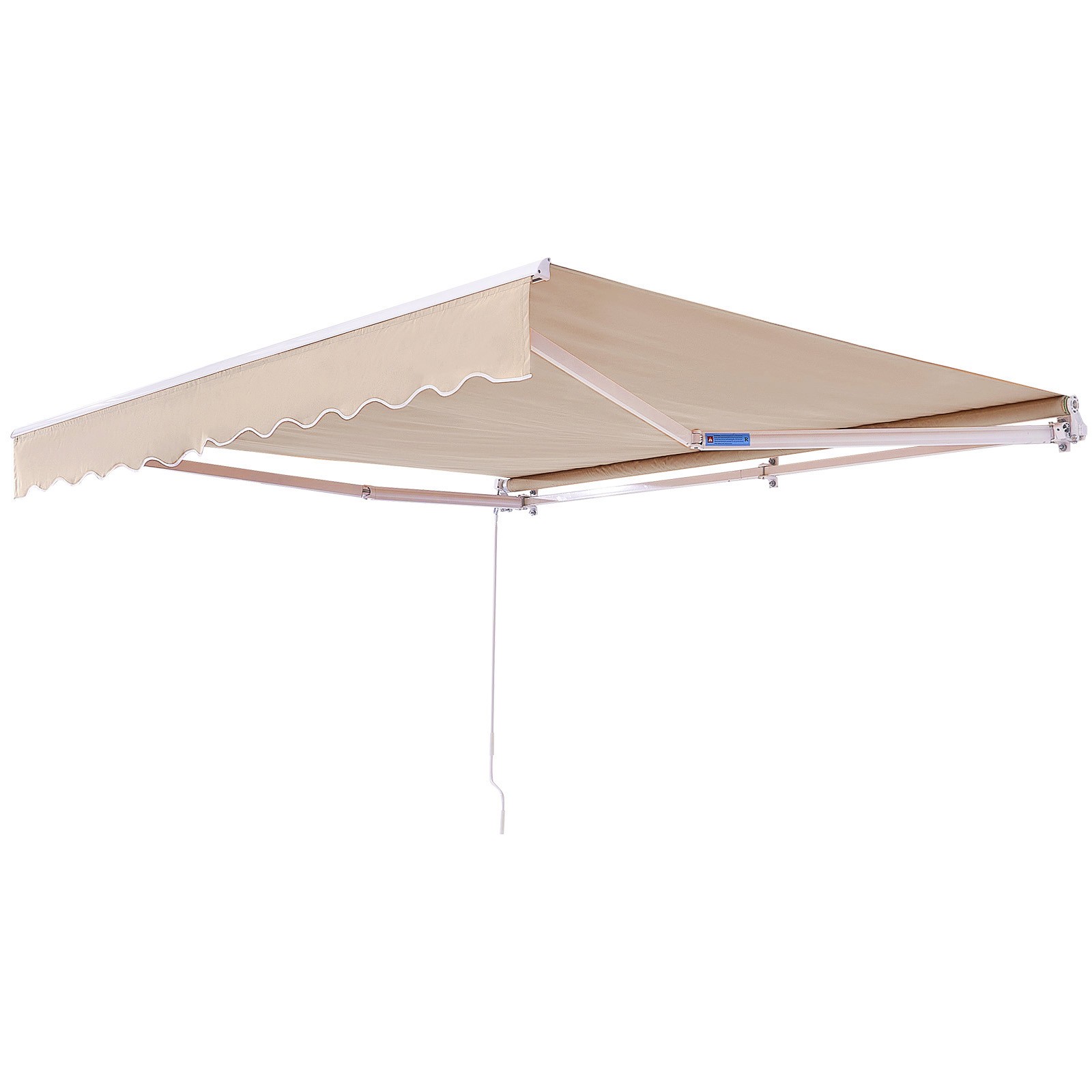 Uimoso Patio Awning Retractable 10'x8' Awning Sunshade Shelter with Crank Handle$147.99View on eBay
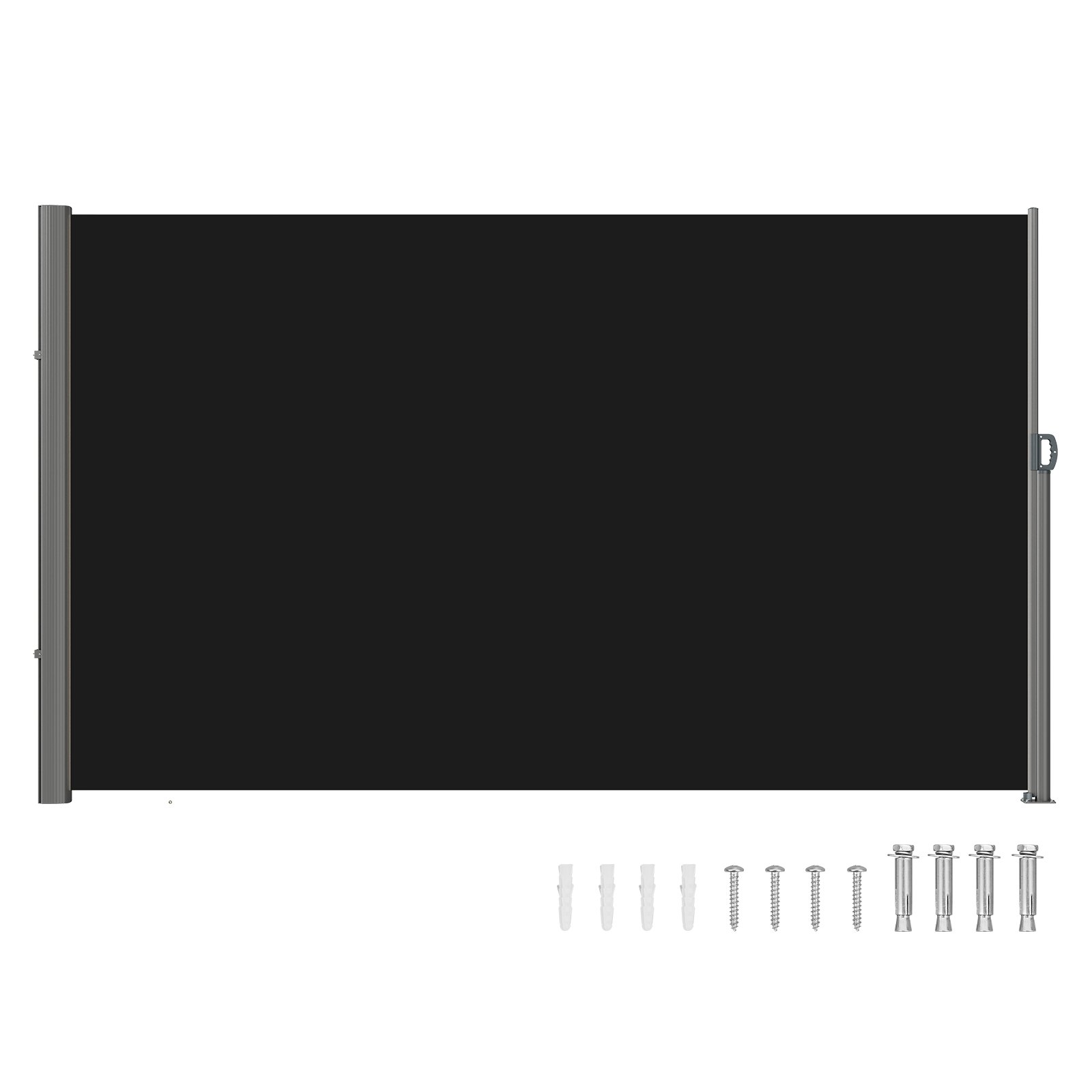 Retractable Side Awning 118' X 71', Patio Screen Waterproof, Room Divider Black For Privacy, Garden, Outdoor, And Terrace$94.99View on Mallflare
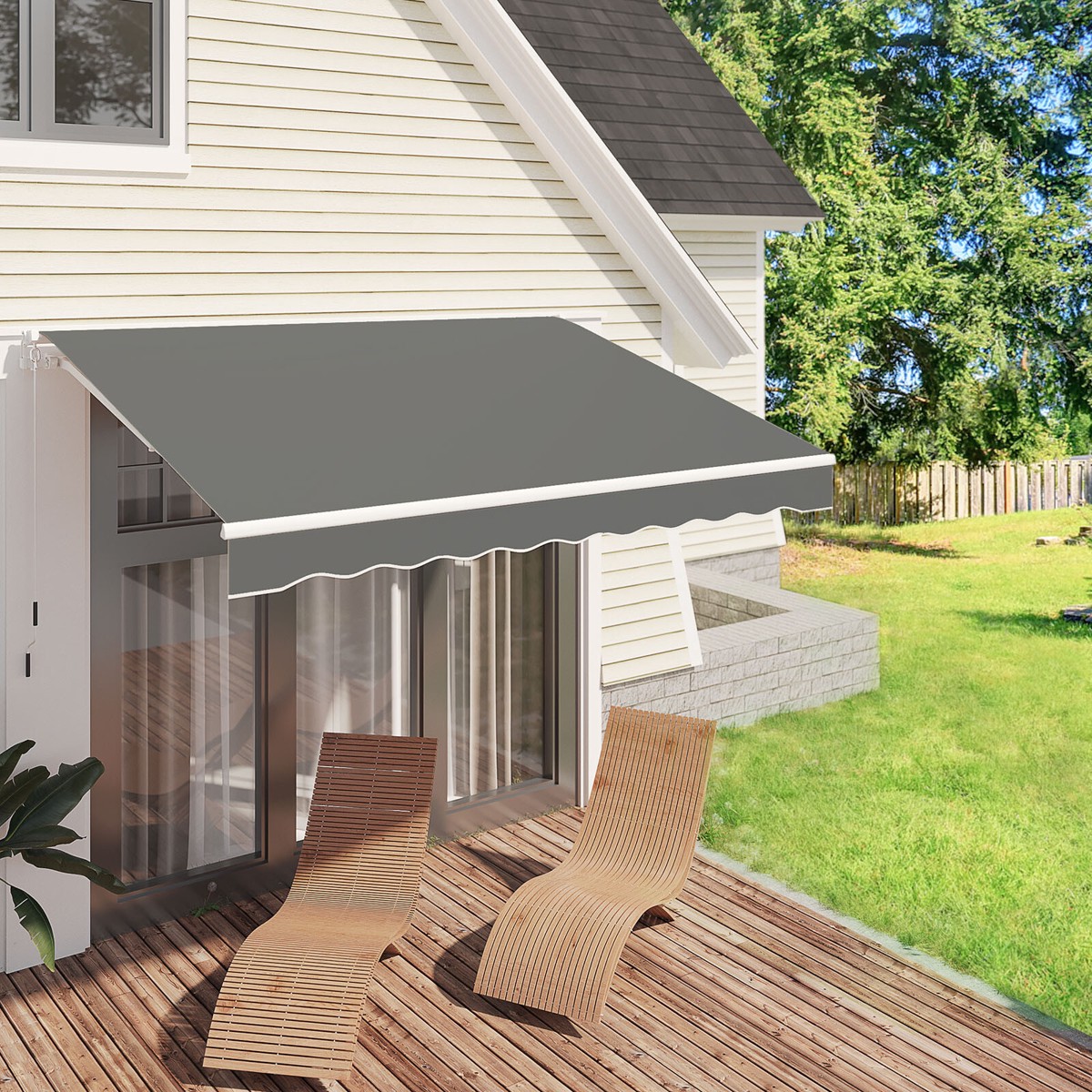 Patio Awning Manual Retractable Sun Shade Canopy Outdoor Deck Shelter 4 Size$149.99View on eBay
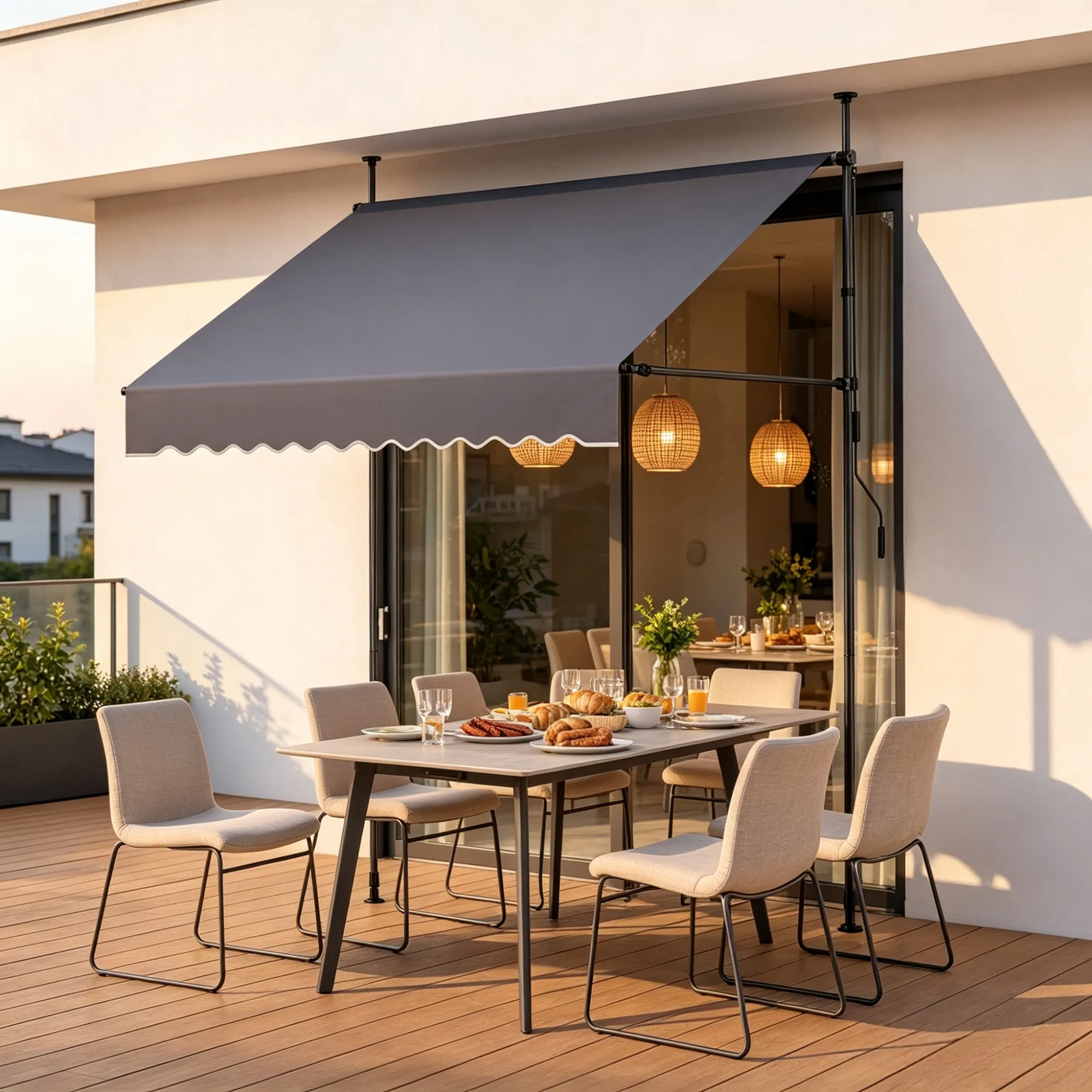 78" Manual Retractable Patio Awning, Height Adjustable Sunshade Canopy with Crank Handle for Backyard & Balcony$136.99View on Mallflare
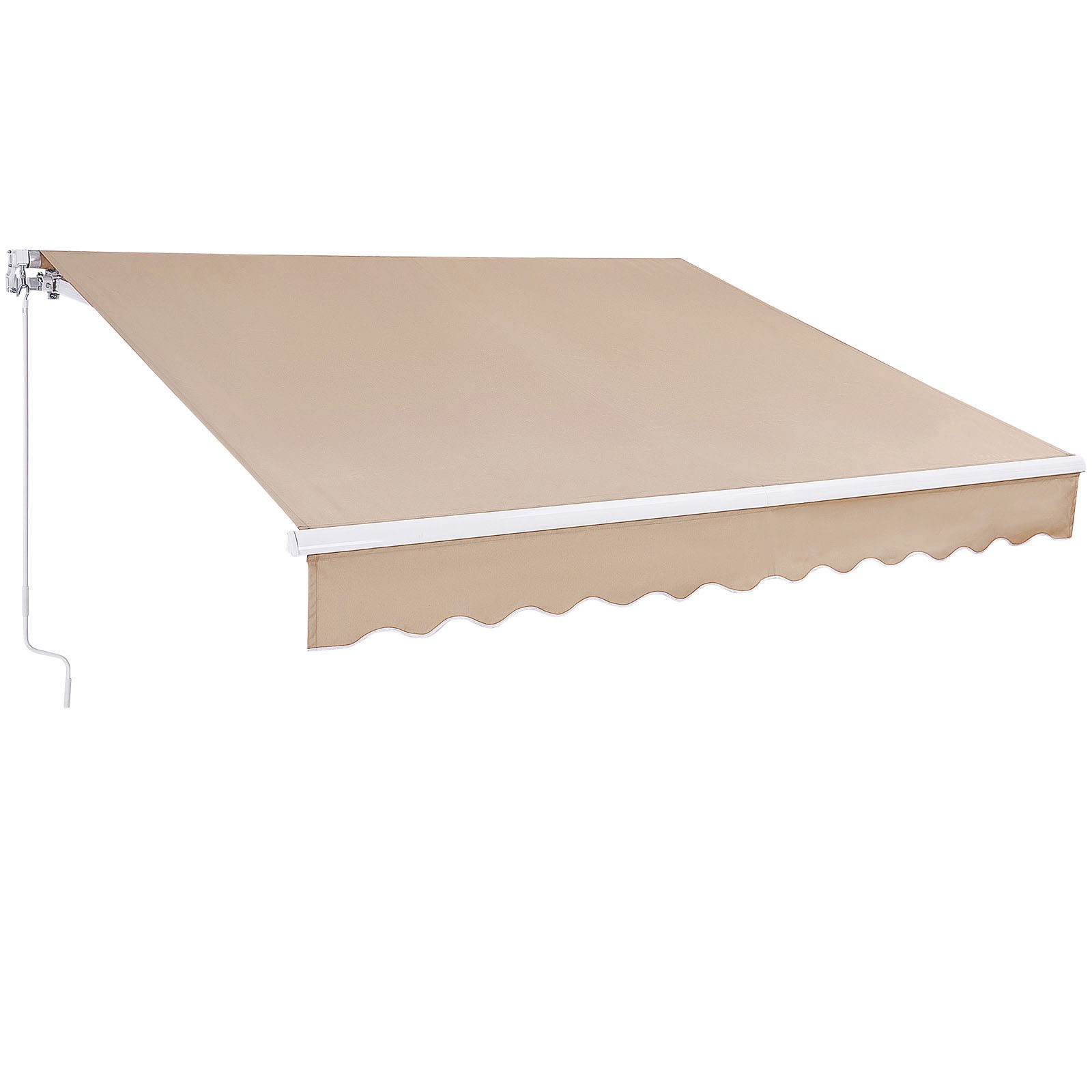 VEVOR Patio Awning Retractable 13'x8' Awning Sunshade Shelter with Crank Handle$165.90View on eBay
 78inch Manual Retractable Patio Awning, Height Adjustable Sunshade Canopy With Crank Handle For & Balcony$161.99View on Mallflare
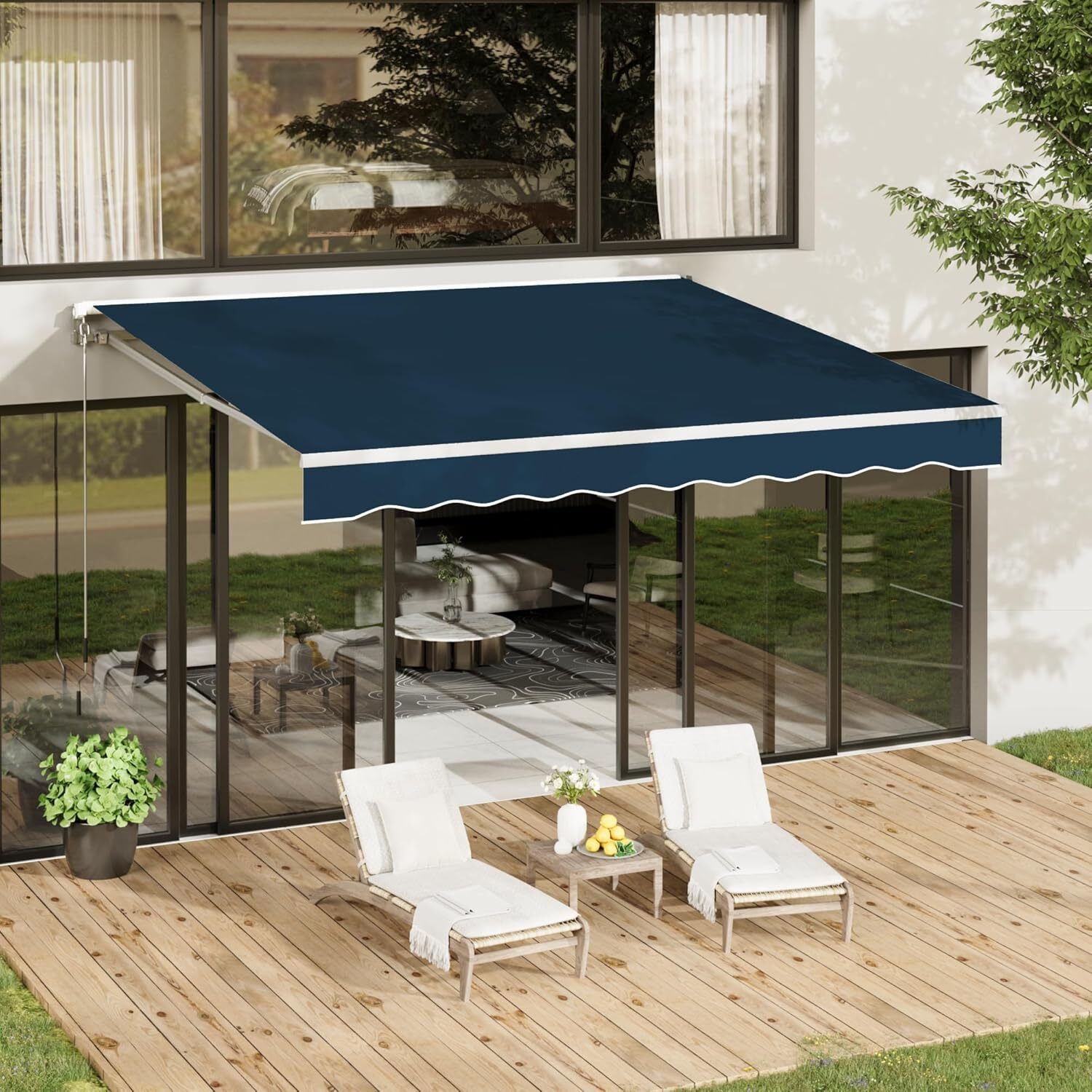 Retractable Awning 10'x8' Outdoor Manual Awnings for Patio Sun Shade Shelter$169.99View on eBay
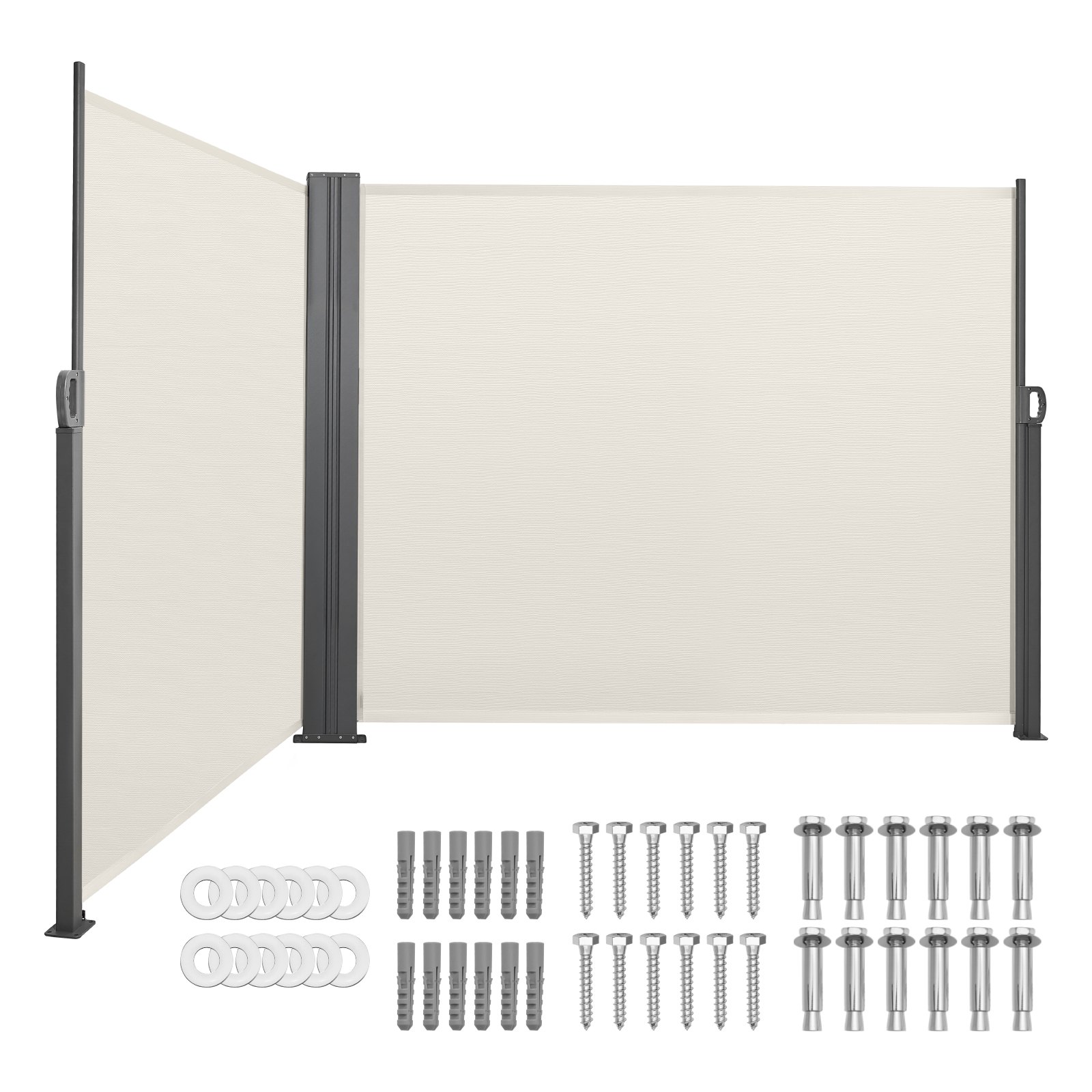 Retractable Side Awning, 71 X 236 Patio Screen With 180 G M Polyester Fabric, Waterproof Sunshade Outdoor Privacy Room Divider For Garden, Balcony, Pools, Deck, Beige$162.99View on Mallflare
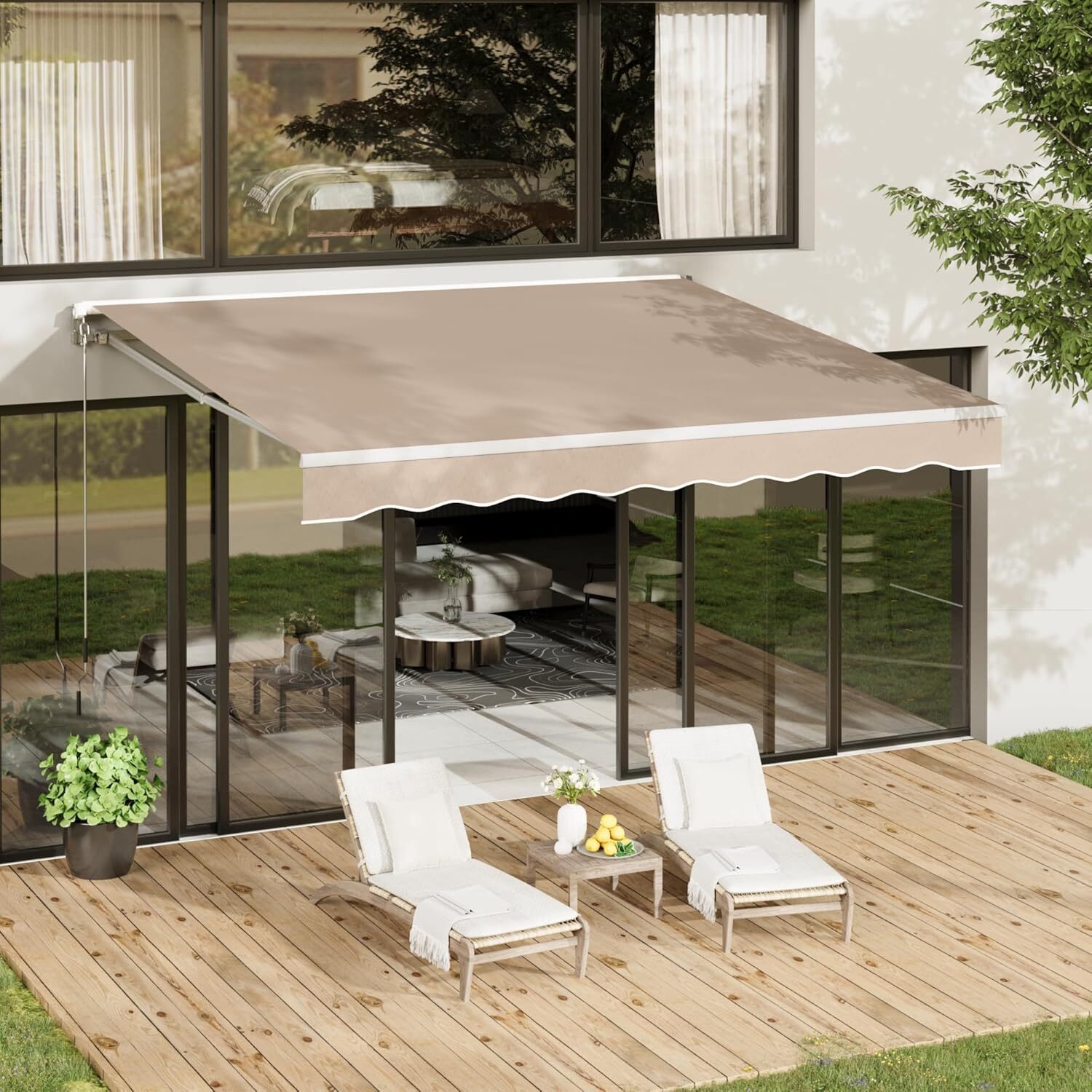 13 X 8 FT Patio Awning Manual Retractable Sun Shade Canopy Outdoor Deck Shelter$189.99View on eBay
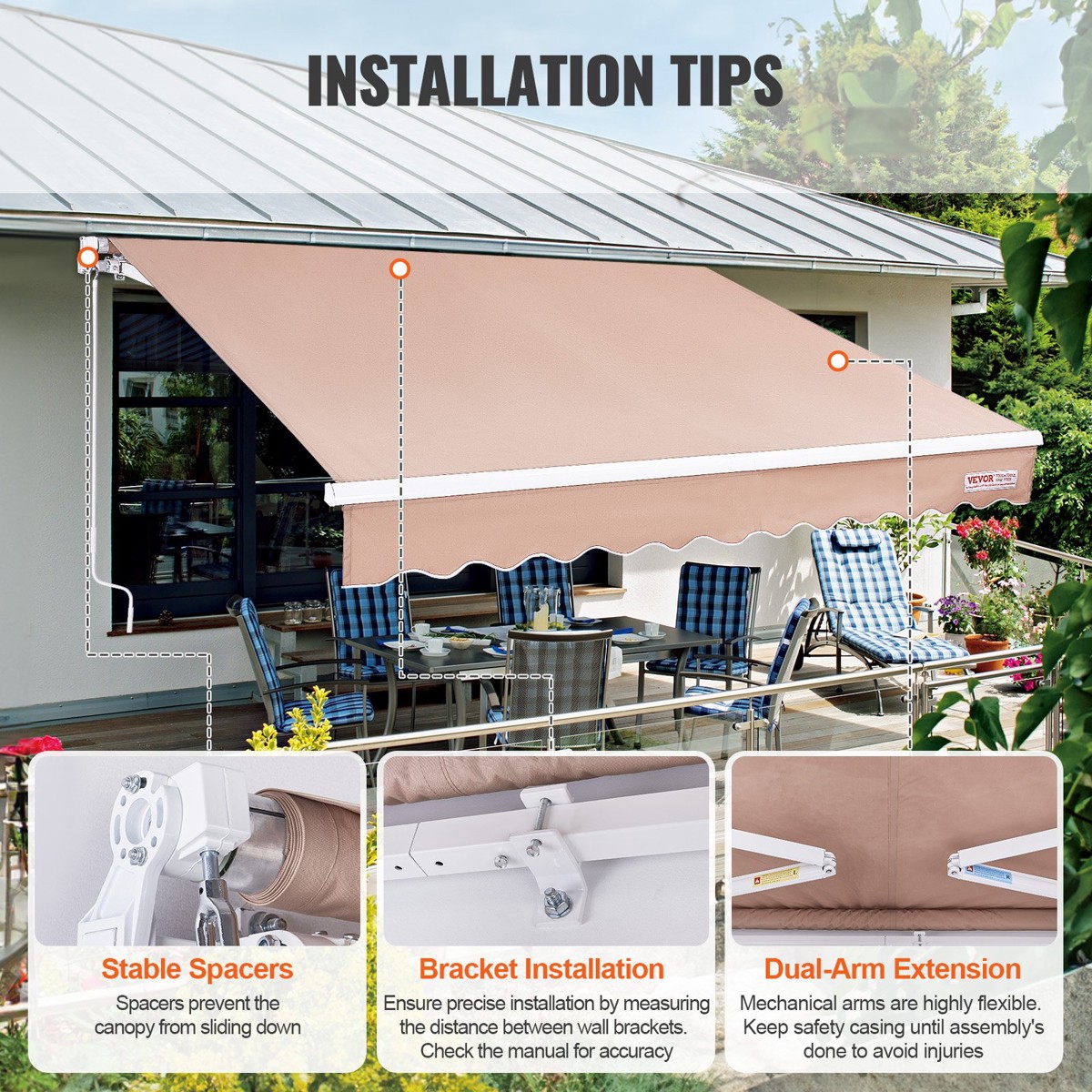 Manual Retractable Awning, 12 X 10 Ft Outdoor Patio Sun Shade, Water-Resistant Polyester Door Window Sunshade Shelter With Crank Handle For Backyard, Balcony$178.99View on Mallflare
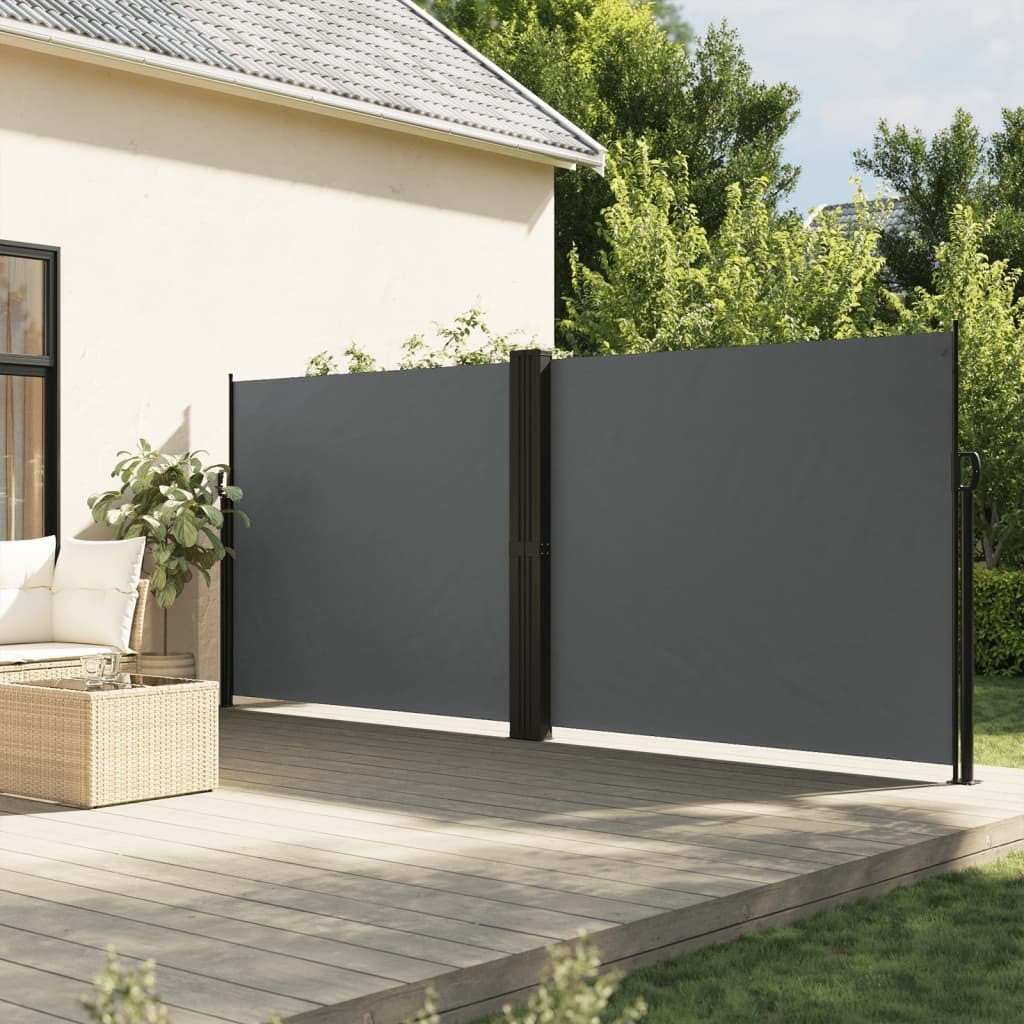 Anthracite Retractable Side Awning 5 x 39 Ft Polyester Steel Aluminum$208.99New · Last checked Nov 24, 2026View on eBay
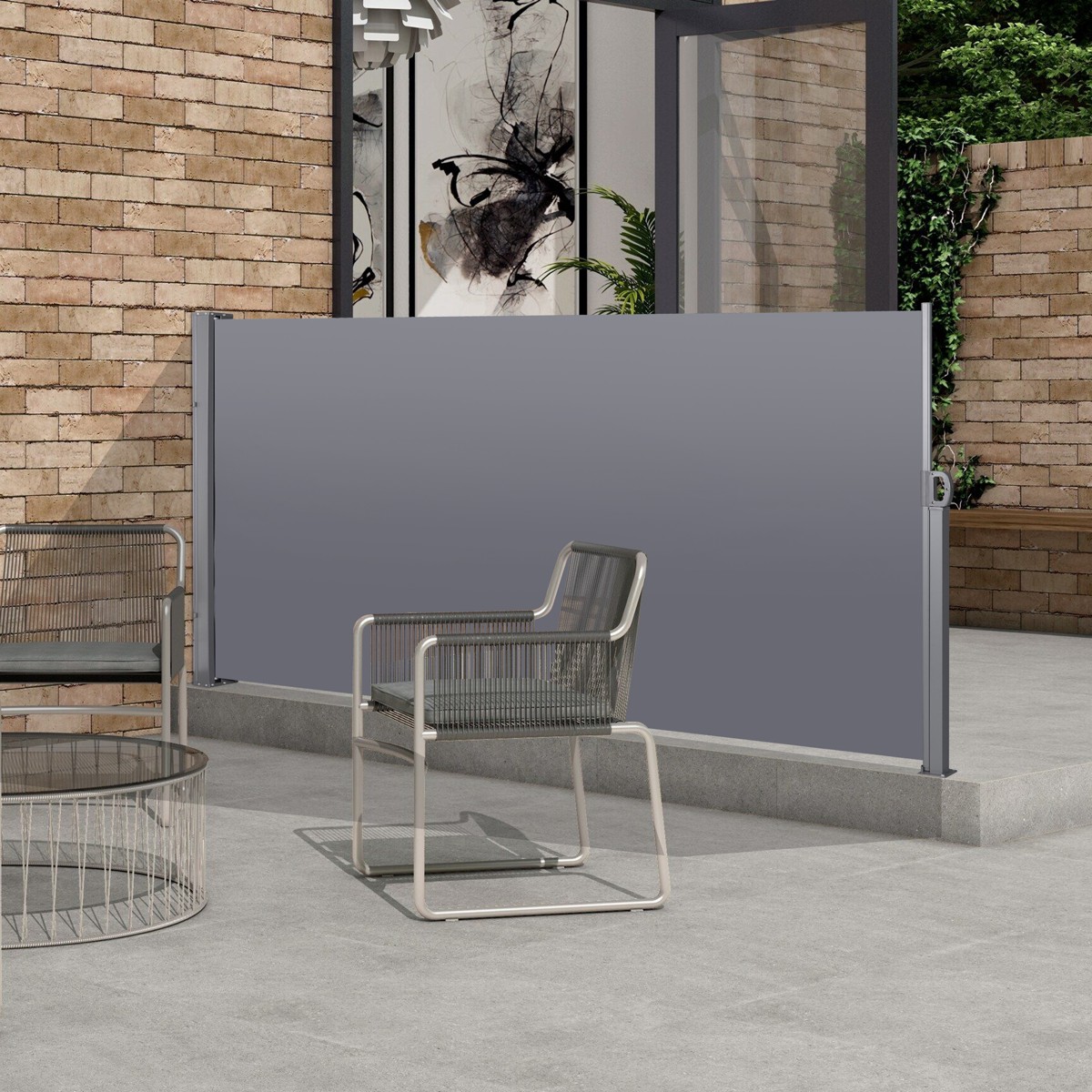 Retractable Side Screen Awning, UV Resistant, Waterproof, Patio Privacy for Garden, Balcony, Courtyard(Dark Grey), 118.1" x 62.99"$200.99View on Mallflare
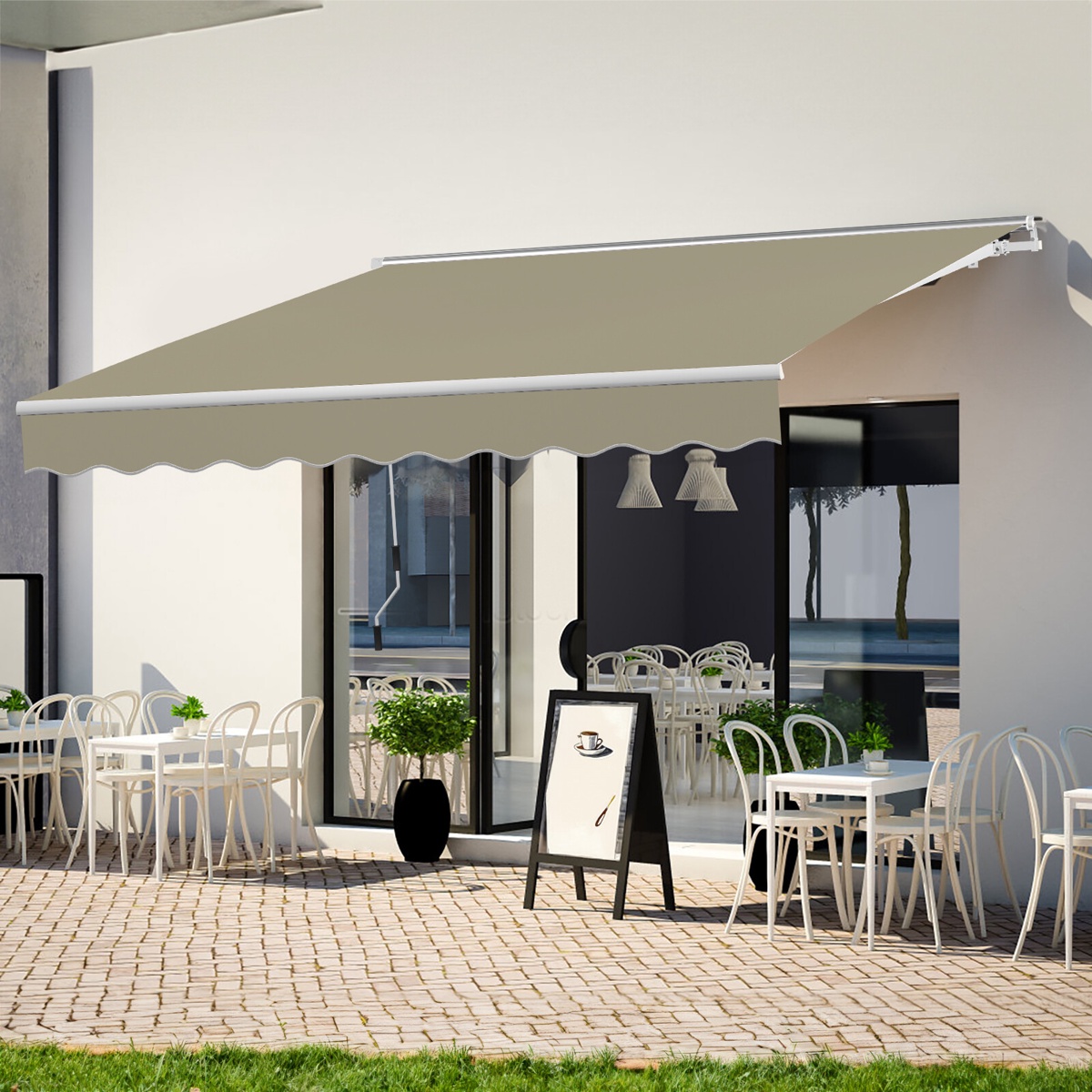 Patio Awning Manual Retractable Sun Shade Canopy Outdoor Deck Shelter 3 Size$214.99New · Last checked Nov 24, 2026View on eBay
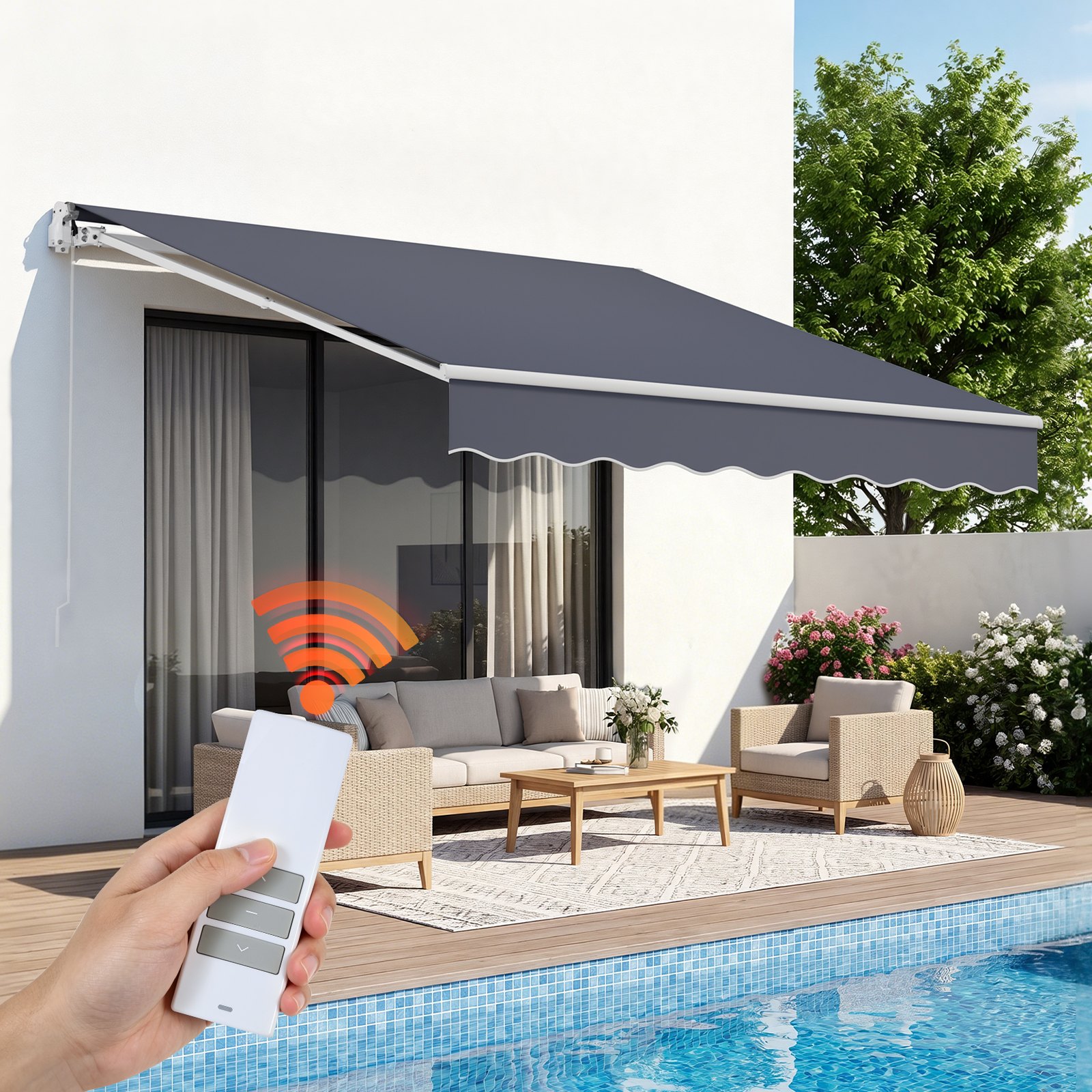 Electric Retractable Awning, 9.8' x 8.2' Motorized Patio Sunshade Shelter with Remote Controller & Manual Crank Handle, Waterproof Polyester Fabric for Outdoor Deck, Balcony, Yard, Gray$295.99View on Mallflare
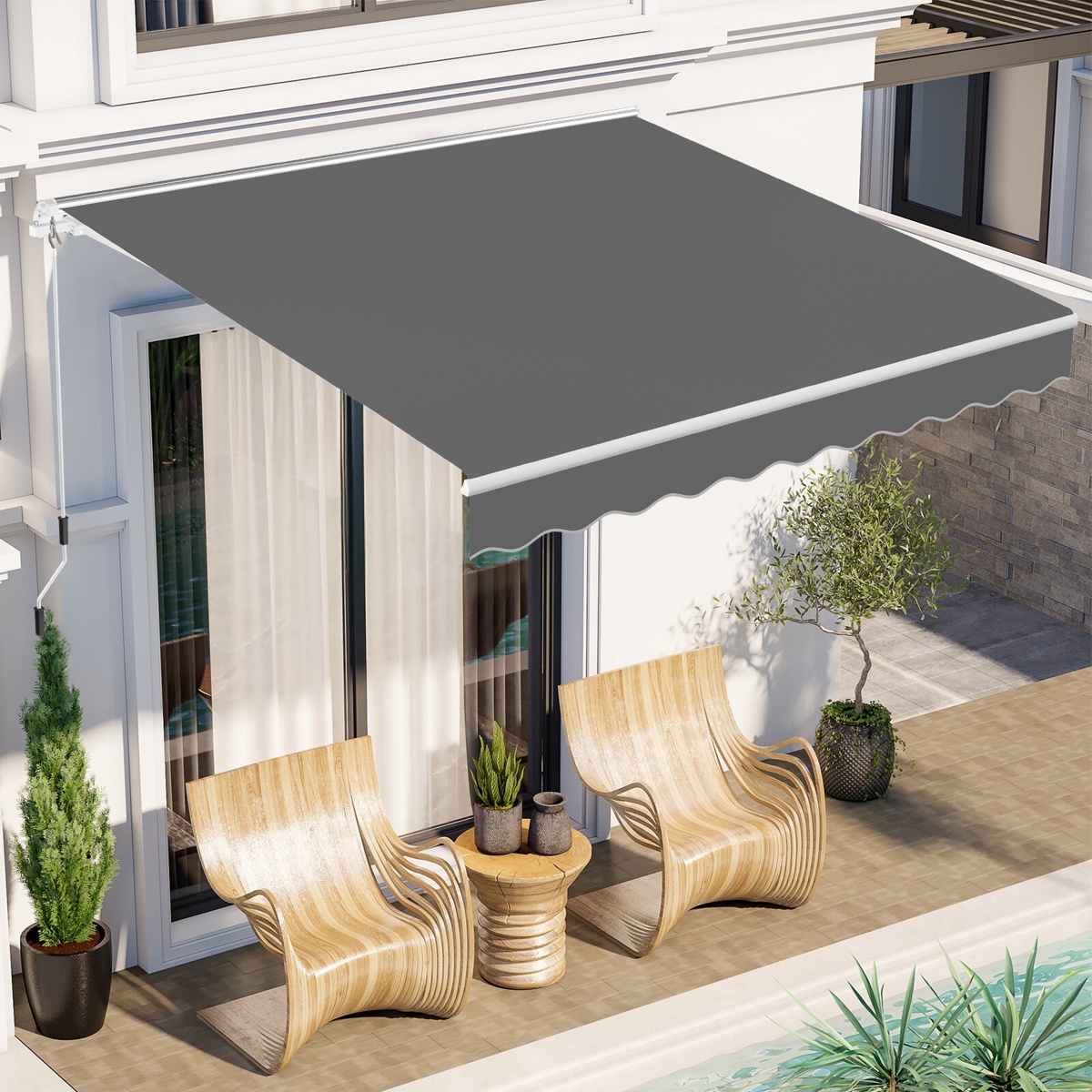 Retractable Patio Awning Outdoor Canopy Deck Door Sun Shade Shelter 3 Size,Crank$215.99New · Last checked Nov 24, 2026View on eBay
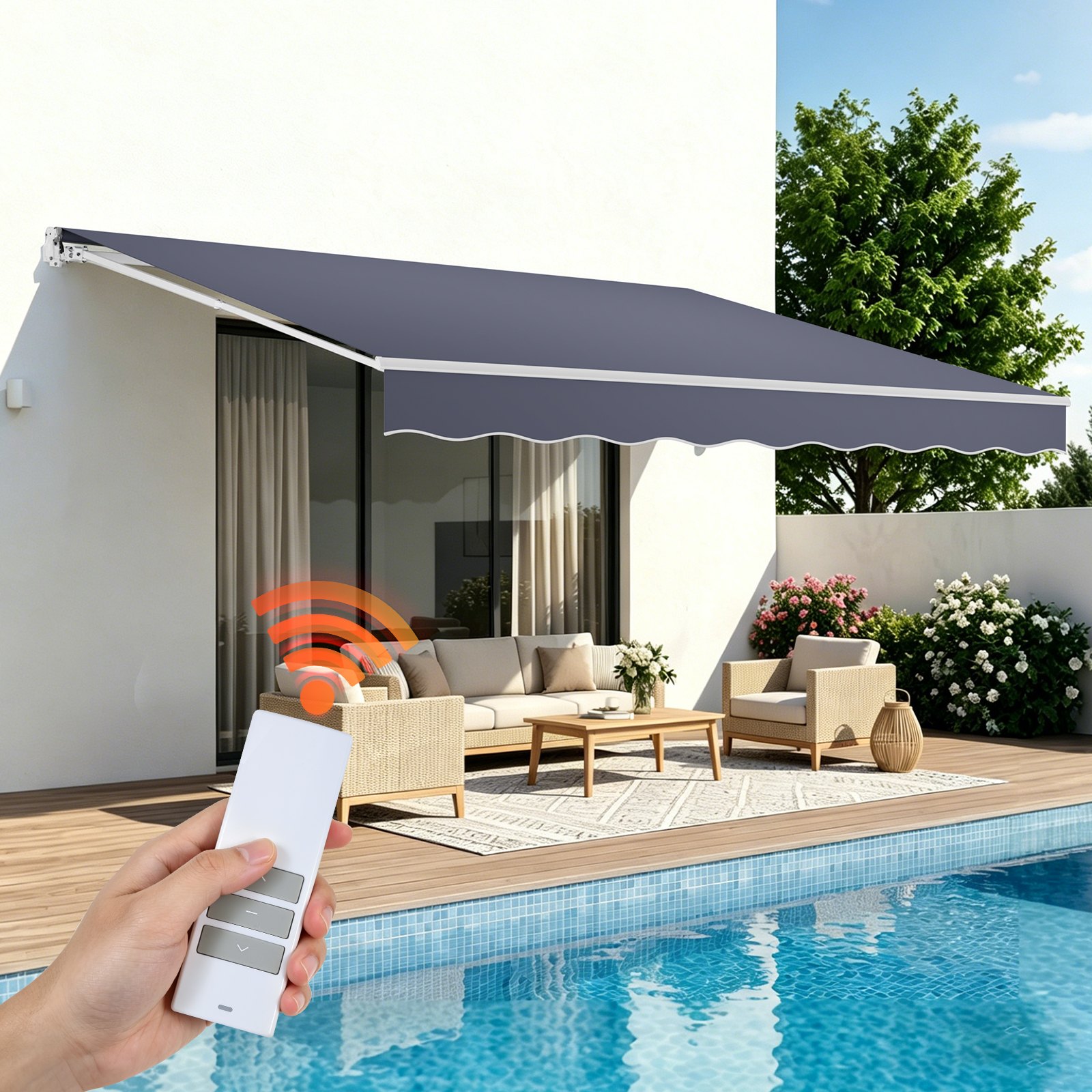 Electric Retractable Awning, 14.1' x 9.8' Motorized Patio Sunshade Shelter with Remote Controller & Manual Crank Handle, Waterproof Polyester Fabric for Outdoor Deck, Balcony, Yard, Gray$394.99View on Mallflare
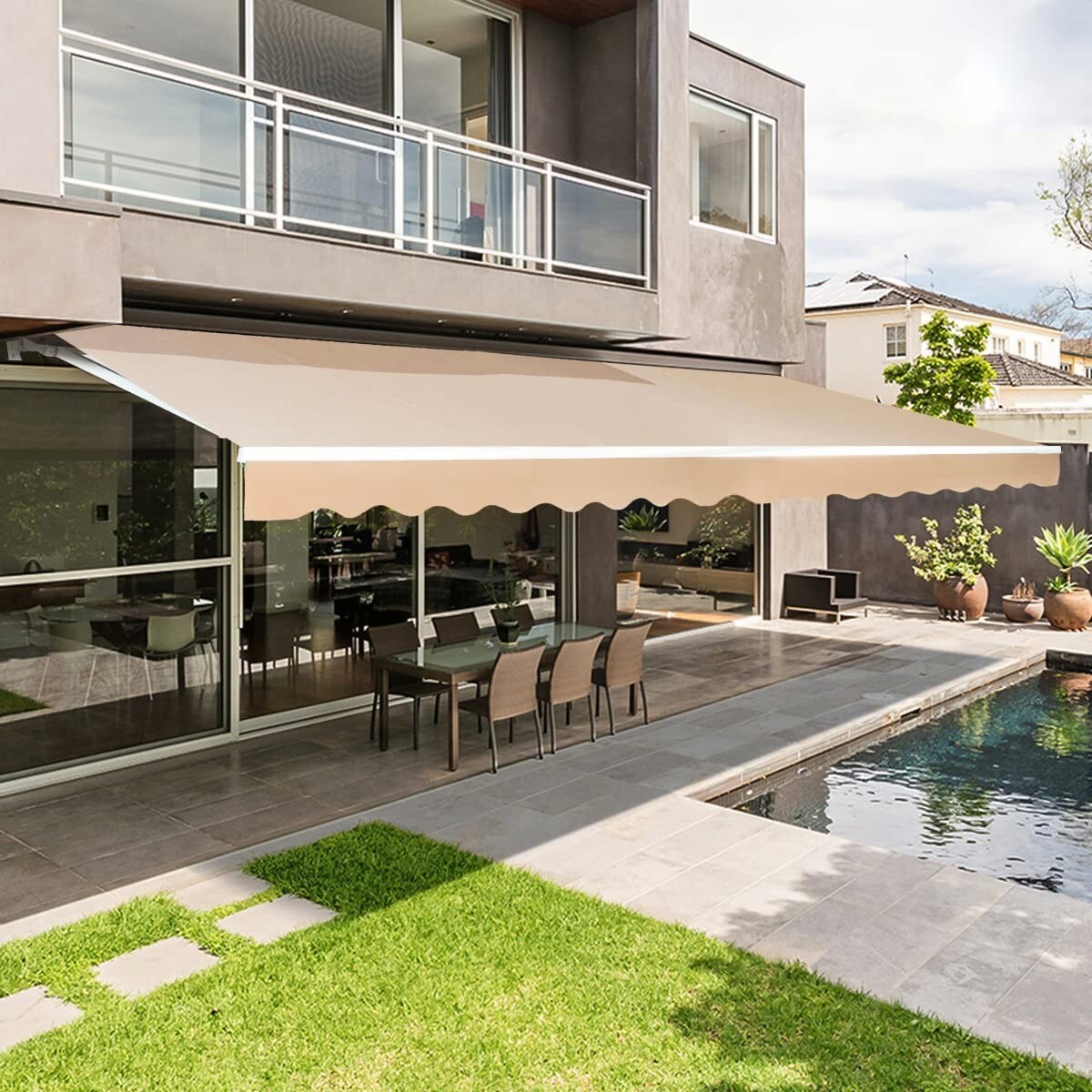 13'×10' Patio Awning Manual Retractable Outdoor Sun Shade Shelter Waterproof$219.99New · Last checked Nov 24, 2026View on eBay
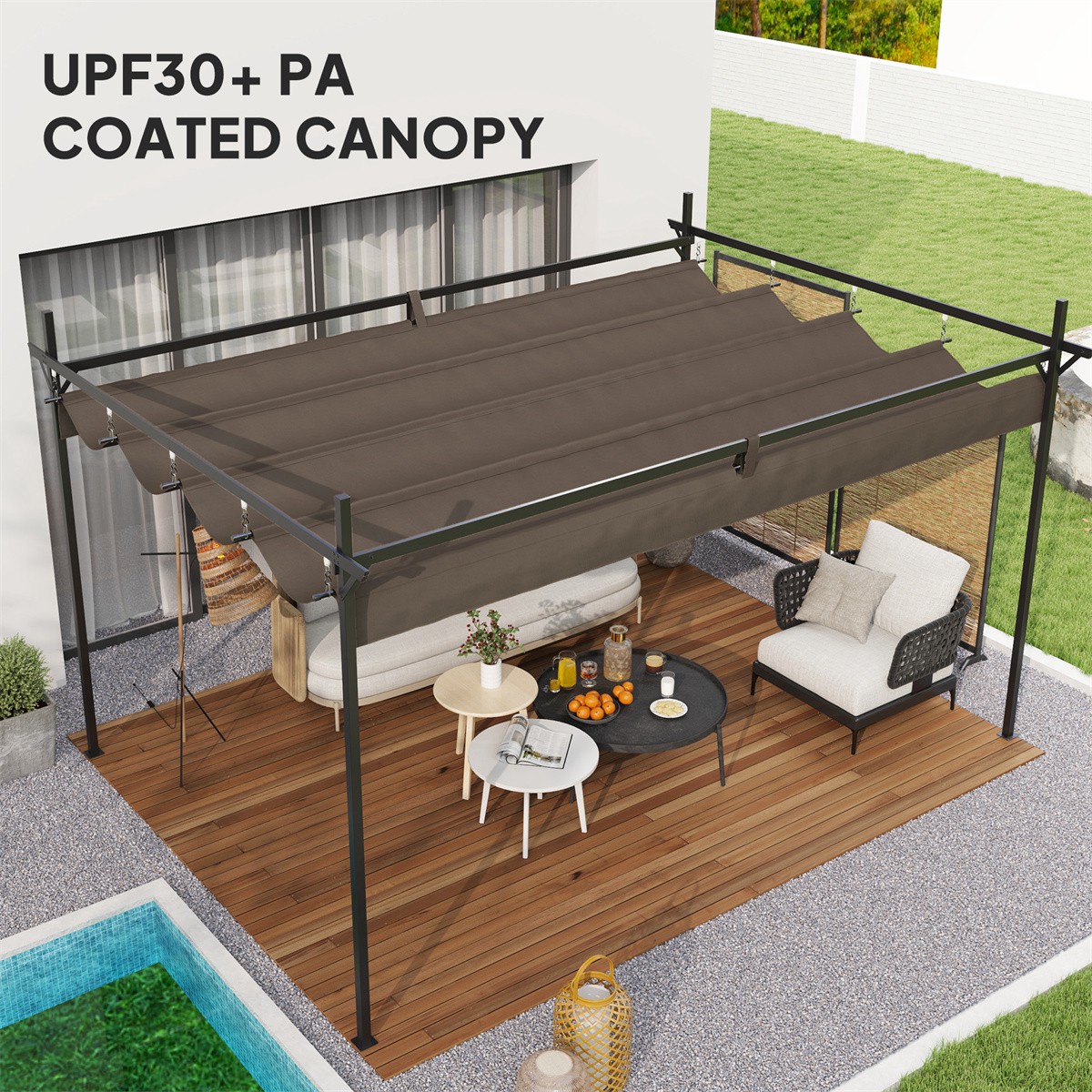 10' x 13' Retractable Metal Pergola, Outdoor Canopy for Patio, Garden, Backyard & Deck, Brown$507.99View on Mallflare
Highlights
- Frame material drives rigidity: steel frames resist arm sag on wide spans above 13 ft, while aluminum frames suit spans under 10 ft and coastal installs where rust matters.
- Fabric is the wear layer: PU-coated 100% polyester sheds water but fades and cracks in 2-3 seasons of direct UV; solution-dyed acrylic (e.g., Sunbrella-class) holds color 5-10 years.
- Manual crank units use torsion-spring roller tubes that need pre-tensioning at install; motorized units pair a tubular motor with a remote and often a manual override crank.
- Valance style and pitch adjustment matter: adjustable-pitch arms let you drop the front bar to block low afternoon sun, while fixed-pitch units only shade high sun angles.
Best use cases
- Best fit: a south- or west-facing deck 10-13 ft wide — choose a 10x8 or 12x10 ft steel-framed motorized unit with acrylic fabric and a wind sensor; skip cheap polyester manual units that fade within two summers.
- Best fit: a balcony, window, or door canopy under 8 ft wide — a manual 78-inch or 118-inch aluminum crank awning delivers shade at low cost; skip motorized units where the roller and motor bulk crowds small headers.
- Best fit: privacy or wind screening on a terrace — a retractable side awning (vertical roll, 55-118 inch widths) is the right product; a standard overhead patio awning is the wrong fit for side screening.
- Wrong fit for any setup: exposed ridgeline sites with gusts above 20-25 mph — retractable awnings must be rolled in during high wind, so pick a fixed pergola instead if you cannot retract daily.
Buying tips
- Size the awning to the wall, not the furniture: projection should be about half the wall height above the mounting point; an 8 ft projection shades roughly 6-7 ft out at midday.
- Match frame to span: aluminum arms flex on widths over 13 ft, so specify steel arms for 13x10 ft and larger units; below 10 ft aluminum is fine and lighter to mount.
- Insist on solution-dyed acrylic or at least 280 g/m² PU-coated polyester; thinner 180-220 g/m² fabric tears at the roller hem within a season.
- For motorized units, confirm a manual crank override and a 120V outdoor-rated plug or hardwire option; a motor without override leaves you stuck if the remote or motor fails.
Specs
| Operation | Manual crank vs motorized remote |
|---|---|
| Frame Material | Steel (wide spans) vs aluminum (light/coastal) |
| Fabric Grade | PU polyester vs solution-dyed acrylic |
| Typical Size | 8x6 to 14x10 ft (width x projection) |
Related searches
What to check before buying
- Measure mounting width and the clear wall height above the door or window; the cassette and brackets need 6-10 inches of flat, solid masonry or stud-backed surface.
- Check the projection against the patio depth: an 8 ft projection needs at least 8 ft of clear floor and should not foul doors, grills, or steps.
- Confirm your wall type (brick, stucco, wood siding) and that the included anchor hardware suits it; masonry needs sleeve anchors, siding needs blocking behind it.
- For motorized units, verify a 120V GFCI-protected outdoor outlet within cord reach, or plan a hardwired circuit; manual units need no power at all.
FAQ
Data sources: eBay / Amazon listings and product attribute feeds. Updated Nov 27, 2026.
Some links on this page are affiliate links. If you buy after clicking one, we may earn a commission at no extra cost to you. This does not change which products appear here or their order. Affiliate disclosure.