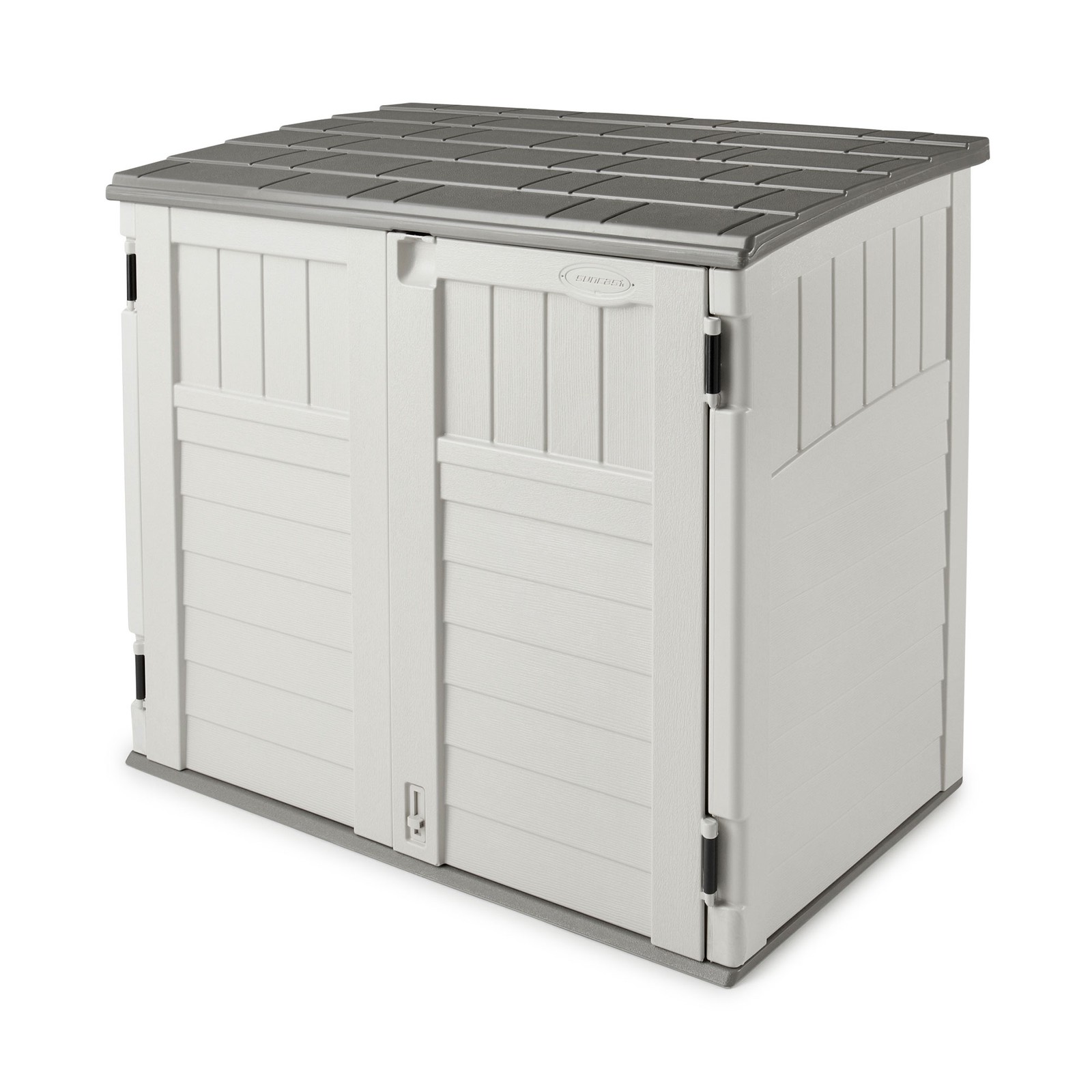

Photos from current listings. Actual item, color, and included accessories may vary.
Suncast Resin Shed Buying Guide
Suncast resin sheds solve the need for quick-assembly, low-maintenance outdoor storage without the rot, rust, or painting that wood and metal demand. Buyers often misjudge the real interior depth lost to double-wall panel ribs and misread horizontal vs. vertical footprints, leading to fit problems with ladders and mowers. Focus on panel thickness, floor inclusion, and door swing clearance before choosing a model.
Key takeaways
- Double-wall resin panels with foam or air-gap cores resist dents and insulate better than single-wall blow-molded plastic.
- Horizontal models like the BMS2500 series use a wide, low footprint (approx. 53 in W x 31.5 in D) suited to long-handled tools and patio cushions.
- Floor kits are often sold separately; models with included floors (e.g., BMS2500) simplify anchoring and keep stored items off damp ground.
At a glance
- Category
- Outdoor Structures, Shade & Awnings
- Last updated
- Nov 28, 2026
Current offers
Highlights
- Double-wall resin panels with foam or air-gap cores resist dents and insulate better than single-wall blow-molded plastic.
- Horizontal models like the BMS2500 series use a wide, low footprint (approx. 53 in W x 31.5 in D) suited to long-handled tools and patio cushions.
- Floor kits are often sold separately; models with included floors (e.g., BMS2500) simplify anchoring and keep stored items off damp ground.
- UV-stabilized HDPE resin prevents fading and cracking, but dark colors absorb more heat—ivory and light taupe stay cooler inside.
Best use cases
- Best fit: narrow side-yard storage for rakes, shovels, and a push mower—pick a horizontal model with a floor and lockable hasp. Skip tall vertical sheds if you lack 6 ft of wall height.
- Best fit: patio cushion and grill-tool storage near a deck—choose a 4–6 ft wide horizontal unit with double doors for easy loading. Avoid if you need to store a riding mower; footprint is too shallow.
- Wrong fit: heavy snow-load regions or high-wind coastal areas—resin sheds need anchoring into a slab or ground stakes, and roof snow capacity is limited; consider a metal or wood structure instead.
Buying tips
- Compare exterior and interior dimensions—wall thickness and roof pitch reduce usable height by several inches, so measure your tallest item first.
- Check whether a floor panel is included; models without one require a level gravel or concrete pad to prevent settling and water intrusion.
- Prioritize UV-stabilized resin and double-wall construction for longevity; single-wall units flex and crack in freeze-thaw cycles.
- Inspect door hardware and hasp compatibility for a padlock; cheap latches are the first failure point on resin sheds.
Specs
| Material | Double-wall UV-stabilized resin |
|---|---|
| Orientation | Horizontal vs. vertical footprint |
| Floor | Included resin floor vs. floorless |
| Anchoring | Ground stakes or slab lag bolts |
Related searches
What to check before buying
- Measure your pad or gravel area against the shed's exterior footprint plus 12 inches clearance for door swing and assembly.
- Confirm your tallest stored item fits under the interior roof peak, accounting for 4–6 inches lost to roof framing.
- Verify local wind and snow loads; resin sheds require anchoring to a hard surface or ground stakes in exposed sites.
- Check that the base is level within 1/8 inch per foot—resin panels misalign and doors bind on uneven ground.
FAQ
Data sources: eBay / Amazon listings and product attribute feeds. Updated Nov 28, 2026.
Some links on this page are affiliate links. If you buy after clicking one, we may earn a commission at no extra cost to you. This does not change which products appear here or their order. Affiliate disclosure.