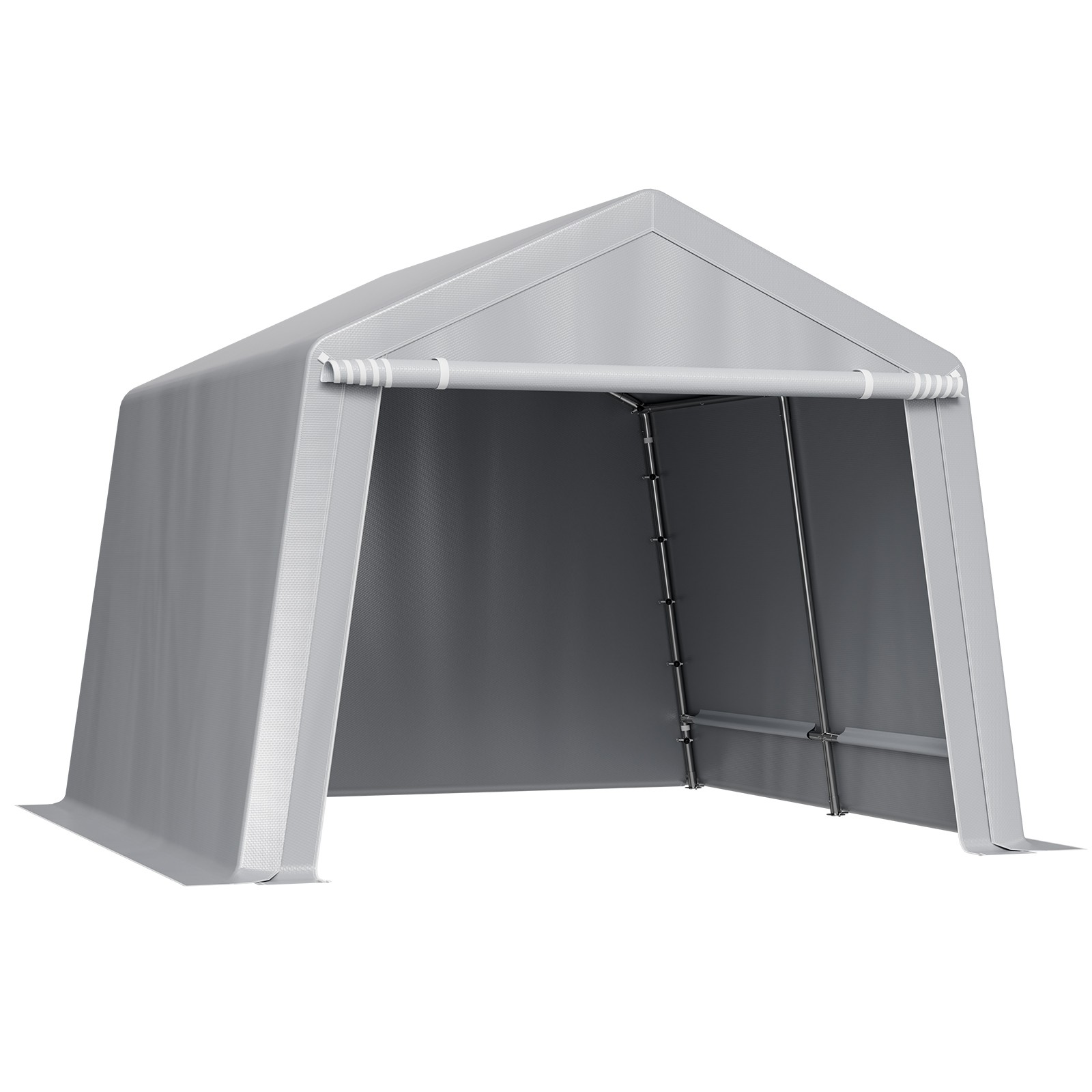

Photos from current listings. Actual item, color, and included accessories may vary.
Shed 10x10 Buying Guide
A 10x10 shed is a footprint commitment that most buyers underestimate: the slab or base must be square and level before assembly, and local permit rules often trigger at 100 sq ft. Portable canopy and soft-top shelters occupy the same 10x10 envelope as rigid resin or metal sheds but differ completely in wind rating, anchoring, and lifespan—choose the structure class before comparing floor plans.
Key takeaways
- Rigid sheds use resin, galvanized steel, or wood panels; soft-top shelters use polyethylene or PVC tarps over a steel tube frame, with drastically lower wind and snow ratings.
- The 10x10 footprint equals 100 sq ft, a common threshold where many municipalities require a building permit or impose setback rules from property lines.
- Soft-top canopy shelters rely on ground anchors or ballast and typically carry seasonal or temporary use ratings, not year-round structural certification.
At a glance
- Category
- Outdoor Structures, Shade & Awnings
- Last updated
- Nov 28, 2026
Current offers
Highlights
- Rigid sheds use resin, galvanized steel, or wood panels; soft-top shelters use polyethylene or PVC tarps over a steel tube frame, with drastically lower wind and snow ratings.
- The 10x10 footprint equals 100 sq ft, a common threshold where many municipalities require a building permit or impose setback rules from property lines.
- Soft-top canopy shelters rely on ground anchors or ballast and typically carry seasonal or temporary use ratings, not year-round structural certification.
- Resin and metal sheds specify snow-load and wind-speed ratings in their engineering documents; exceed either and the warranty and structural integrity are void.
Best use cases
- Best fit for a portable 10x10 canopy shelter: seasonal car cover, firewood, or garden equipment where you can anchor into soil or ballast and remove the cover before heavy snow.
- Wrong fit for a canopy shelter: permanent workshop or year-round storage in high-wind or heavy-snow regions—choose a rigid resin or steel shed with a published snow-load rating instead.
- Best fit for a rigid 10x10 resin or metal shed: a backyard tool and bike store on a level slab where HOA and permit rules allow a permanent structure up to 100 sq ft.
- Skip any 10x10 shed if your base is out of level by more than a couple of inches or you cannot anchor—door alignment and panel seals fail early regardless of structure class.
Buying tips
- Prioritize the structure class first: soft-top canopy for temporary or seasonal cover, rigid resin or steel for permanent storage with a published snow and wind rating.
- Check the peak height and door clearance against your tallest stored item and your own reach—many 10x10 soft-top shelters have a low eave height that limits walk-in access.
- Inspect the frame gauge and anchor kit: thin-wall steel tube frames with stakes only suit temporary use; ground anchors or ballast are mandatory for anything left up through storms.
- Avoid any 10x10 shed purchase before confirming your local permit threshold and setback distance—100 sq ft is the most common trigger point for a building permit.
Specs
| Structure Class | Soft-top canopy vs rigid resin/steel |
|---|---|
| Footprint | 10x10 ft / 100 sq ft |
| Wind & Snow Rating | Published rating vs none (temporary) |
| Anchoring | Ground stakes/augers vs slab/ballast |
What to check before buying
- Measure the exact 10x10 pad and confirm it is square, level, and compacted—soft-top and rigid sheds both telegraph base errors into door and panel alignment.
- Check local zoning for 100 sq ft permit thresholds, setback distances, and HOA rules before ordering any shed in this footprint.
- Verify your ground type supports the anchoring method: soil for stakes or augers, concrete slab or ballast for canopy shelters, and a level slab for rigid sheds.
- Confirm the structure's published wind and snow ratings meet your climate, and clear overhead branches or wires before raising a 10x10 peak-height frame.
FAQ
Data sources: eBay / Amazon listings and product attribute feeds. Updated Nov 28, 2026.
Some links on this page are affiliate links. If you buy after clicking one, we may earn a commission at no extra cost to you. This does not change which products appear here or their order. Affiliate disclosure.